

October 2025 Print Edition
The Brief with Laura Beth
Laura Beth Waller, NOSSCR Interim Chief Executive Officer & Deputy General Counsel
As NOSSCR’s Interim CEO, I can confidently say that my membership in this organization has been a defining factor in my career and in building my professional community.
It all started with a simple push from my then-boss, Past-President George Piemonte, leading me to become a co-chair of NextGen. This role gave me the chance to organize a meaningful retreat in Boulder, and the connections I made there were immediate and profound. It led to new friendships, including with now-Board members Ashley Sappenfield and Christine Burnside. The best part? Though we lived just a few hours from each other, we had never met in person! Now, we serve as each other’s sounding board for tricky case issues, meet up for lunch, and even get our kids together to play.
Building my community within NextGen provided more than just networking; it gave me the courage to present on federal court issues—first at NextGen, then at the next national conference in Austin. My involvement ultimately inspired me to run for the Board. I like to joke that I started as a volunteer and got carried away!
Beyond my personal journey, I’ve seen NOSSCR’s growth over the last few years. I am incredibly proud of our advocacy accomplishments, which have made real improvements in disability practices and secured better outcomes for claimants. From friendships and mentorship to professional growth and advocacy, these building blocks are what make NOSSCR truly unique.
My journey is a perfect example of what can happen when you invest in your NOSSCR membership. Now, I challenge you to make the most of your community! Get involved by joining our Mentorship Program as a mentor or mentee, or connecting with colleagues at our local and national conferences. Submit a proposal to share your expertise in Baltimore this spring, Salt Lake City this fall, or in a webinar. Is there a community in NOSSCR you’d like to see but that doesn’t exist yet? Let us know! NOSSCR is what we make it.

President’s Corner
Paul Burkhalter, NOSSCR President
So sure, so wrong
We have all met new representatives excited about how well they are doing representing claimants, who may claim “how easy this is.” What is scarier is when you meet representatives who have been doing this for many years that make this same claim. Often people make claims about great accomplishments that would have happened anyway.
When this happens, you are seeing the Dunning–Kruger effect in action. This describes a well-documented cognitive bias in which individuals with limited knowledge or competence in a domain overestimate their ability. First identified by psychologists David Dunning and Justin Kruger in 1999, the effect arises because the same lack of skill that leads to poor performance also impairs a person’s ability to recognize their own deficiencies. Nowhere is this more consequential than in the realm of Social Security disability representation, where claimants depend on representatives to navigate a dense, rule-bound system that blends law, medicine, and administrative procedure. The stakes are high—both for the claimants’ livelihoods and for the integrity of the adjudicatory process—and yet the barriers to entry for representatives are comparatively low.
In the Social Security disability system, non-attorney representatives and newly licensed attorneys alike often begin taking cases with little training beyond an introductory course or limited observation of hearings. Many develop a misplaced sense of confidence after a handful of favorable outcomes, mistaking luck or a lenient ALJ for mastery of the law. They start to believe they have it all figured out. This early success reinforces the illusion of competence that the Dunning–Kruger effect predicts. Without a deep understanding of the sequential evaluation process, vocational analysis, or medical equivalency rules, such representatives may advise clients poorly, fail to develop the record properly, or make procedural errors that are invisible to them but fatal to the claimant’s case.
That early success is where the Dunning–Kruger trap really sets in. Because hearings are technically “non-adversarial,” the system doesn’t always expose errors right away. Administrative Law Judges often help fill in the gaps to make sure the record is complete, and sometimes even weakly prepared cases get approved. When that happens, the inexperienced representative walks away thinking, “I must be doing something right.” In reality, they may have missed critical issues — like onset dates, RFC analysis, DLI issues or proper development of treating source opinions — but no one told them. The Dunning–Kruger effect thus flourishes in an environment where feedback loops are weak and results are not directly tied to the quality of performance.
Another manifestation of this effect arises when representatives misunderstand the depth of medical or vocational evidence required to meet the evidentiary standards under Social Security Rulings or regulations. A representative who has never read HALLEX or POMS in detail may confidently declare that a claimant “meets a listing” or that “the vocational expert will have to find no jobs,” without realizing the complexity of medical equivalency analysis or the nuances of transferable skills. This overconfidence not only misleads claimants but also damages professional credibility with ALJs, vocational experts, and the Social Security Administration staff who must process flawed submissions.
Conversely, experienced representatives—those who have spent years reviewing denials, drafting briefs, and analyzing unfavorable decisions—often experience the opposite bias: a recognition of how little certainty exists in the process. These practitioners tend to be more cautious, more meticulous in record development, and more willing to seek expert opinions or vocational evidence. In Dunning and Kruger’s terms, they “know enough to know how much they don’t know.” Ironically, this humility can make them appear less confident than less-skilled peers, even though their competence is far greater.
So how can we counter this effect? Awareness is the first step. Just knowing that overconfidence is a predictable trap helps representatives pause before assuming they’ve mastered the process. Mentorship and continuing education — like what NOSSCR provides — are also key. Representatives who actively seek feedback, study unfavorable decisions, and stay up to date on new rulings are far less likely to fall victim to Dunning–Kruger.
At the end of the day, Social Security disability work is humbling. Every case is different, every ALJ has their own approach, and the rules are constantly evolving. The best representatives are the ones who approach the process with curiosity and respect — who understand that confidence should come from preparation, not from assumption. The Dunning–Kruger effect reminds us that the biggest danger in this field isn’t ignorance itself; it’s not realizing that we might be ignorant.


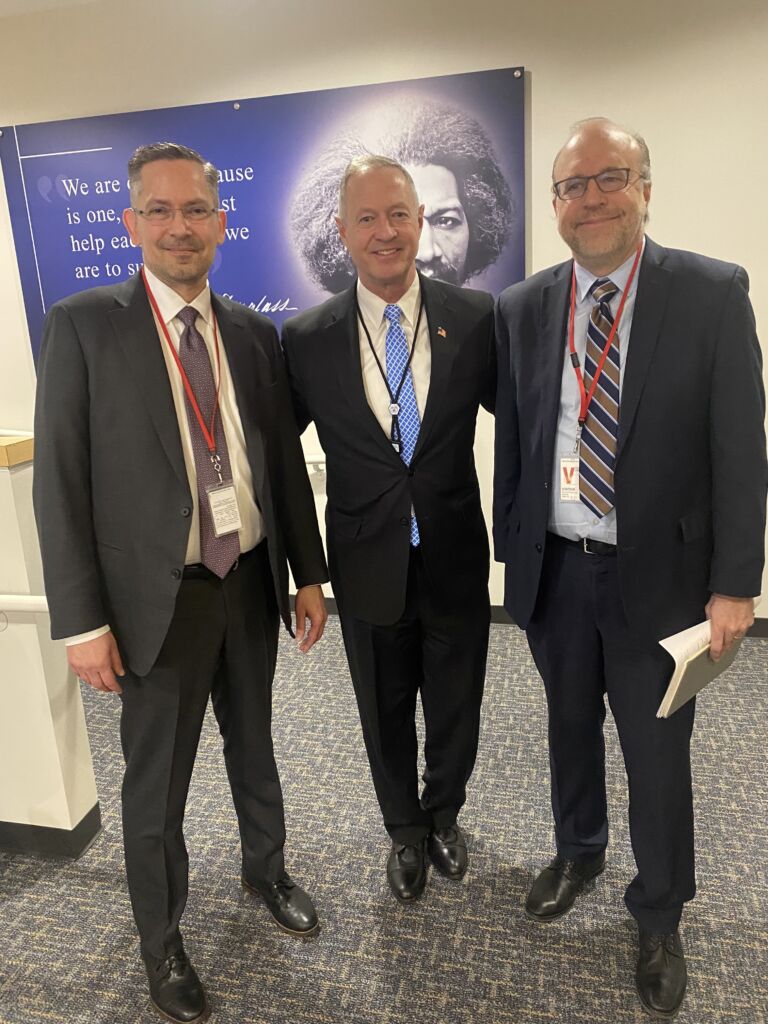
Dispatches from Camp
David Camp, NOSSCR Senior Policy Advisor & General Counsel
The MegaReg Looms and Rumors Abound
Hopefully many of you have an opportunity, later today, to hear from Steve Rollins—a former NOSSCR member who went on to work for many years within Social Security, including being in charge of disability policy. For those of you who miss the session, I’ll use this column to give you an outline of what we know. As always, feel free to reach out to us if you have more questions—we’re here to keep you informed.
Is this a statute? No. Is this a regulation? Not yet. What’s up? The “MegaReg” is a large package of proposed regulation changes that have been in development for years. It’s been the subject of leaks, rumors, public comments, lobbying, and media reports for as long as I’ve been practicing. Generally, the topics are summarized online in the “Unified Agenda” of upcoming proposals—this one is 0960-A167—found here.
SSA’s summary is “We are proposing improvements to the disability adjudication process to ensure our disability program remains current and can be more efficiently administered. This includes proposing policy updates to occupational data sources and optimizing their use to serve our customers and preserve the trust funds.” The timetable has been moved many times, and it now projects publication in December 2025—but we very much doubt that timeline.
When I say this regulatory package has been a topic since I started to practice, that’s because it covers the move away from the DOT and to the new DOL-contracted data, known as ORS. After several years of receiving stakeholder feedback (remember “OIDAP”?) from NOSSCR and others, SSA has been looking to sunset reliance on the DOT for more than a generation. NOSSCR has always been supportive of ending use of the DOT, but insistent that any new data needs to capture the true functional restrictions experienced by our clients (time off task, absenteeism, attendance issues, etc.) while avoiding a repeat of the statistical validity problems of the DOT and various methods such as “equal distribution.” We believe this package will introduce full reliance on updated data from DOL—but much remains to be seen about how that is accomplished.
We believe the MegaReg includes language providing RFC-based methods for establishing an inability to adjust to other work particularly for younger individuals suffering from impairments in focus, reliability, sensory impairment, social interaction, or other restrictions that commonly frame “no jobs” hypothetical questions in ALJ hearings. These updates—combined with the longer periods of eligibility for younger beneficiaries—could explain the rumors that the most recent informal “scorings” of this package are that it results in an increase in total SSDI benefits issued.
We’re concerned the MegaReg could address the recent improvement in the period considered for past relevant work—a topic that NOSSCR and Mark Warshawky disagreed about in congressional testimony in 2023. We support the current 5-year assessment as both theoretically sound (the modern job market changes rapidly) and efficient (gathering information about jobs farther back is inaccurate and costly). If the MegaReg increases the past relevant work period it will harm both claimants and SSA, with decreased accuracy.
We share the significant concern raised by many other advocacy groups (including leaders on the Hill) that the MegaReg is likely to eliminate some or all of the Medical-Vocational Guidelines (“grids”). Rumors for years have described this package as eliminating consideration of age in the grids and elsewhere—such as the “adverse vocational status” rules. This, combined with new definitions of education and skill levels, likely will have a negative impact on the decisions issued to older claimants—while economic and disability-focused researchers strongly disagree that such a change is warranted. We’re keenly interested to see what other regulatory structure SSA proposes instead of the efficient tables we use now. Not everything needs to be in the form of a grid—but older claimants find that age is a barrier to returning to work and SSA’s regulations must reflect that reality. Given the significance of this topic and the public’s concern, SSA would be well-served by more collaborative stakeholder feedback and studying the issue openly prior to proposing regulatory changes. The last solicitation of comments on this issue was a decade ago, and since then the labor market has obviously changed.
Earlier leaks describe this regulatory package as updating standards for full time work (from 40 hours to 30 to match the surveyed data for job incidence), considering work done abroad in PRW, disregarding licensure, and other changes that will be the subject of NOSSCR’s careful review for whether there is justification for such changes.
This package of regulation updates has been in the works through more than a half dozen Commissioners and multiple Presidential administrations. While the political discussion will focus on the Commissioner who signs off on publication and the President who appointed him—NOSSCR’s membership should know that this is actually a very long advocacy effort on many topics, combined with years of work from those within SSA’s policy component. The work won’t end with publication of proposed rules. That’s the beginning of a comment period (we are already outlining ours) and review on a large political and media stage. Extensive disability regulations such as this have a history of significant SSA edits in response to comments.
This package could end up being published on time (December), later (the shutdown has certainly stalled SSA staff’s work on regulations), much later at a more politically expedient time (e.g., after an election), pulled off the Unified Agenda completely, or broken into parts for publication as a series of connected regulatory updates (e.g., one package on vocational evidence, another on past relevant work, another on mental aspects of RFC, and another on age). With many possible options, we advise skepticism about pronouncements of final wins or losses on this front—many of the component parts of this set of regulations cannot go away forever because they are the mandatory modernization work SSA performs by statute. With uncertainty as to what will happen and when, the constant work of advocacy remains for NOSSCR and all of our allied groups in a community. One aspect is comforting—it will take time before a regulation becomes final. You’ll have many months (possibly more than a year) to adjust accordingly.
For daily updates on the latest Social Security happenings, follow me:
MegaReg—Separating Fact From Fiction—Join Us at 4pm Eastern TODAY!
Has David Camp’s column piqued your interest? Don’t miss your chance to learn more directly from someone with inside knowledge!
Join us for a free, members-only exclusive webinar with Steve Rollins, former Associate Commissioner for Disability Policy at the Social Security Administration.
As conversation intensifies around SSA’s proposed “Improvements to the Disability Adjudication Process: Sequential Evaluation Process” (MegaReg), this session brings clarity and context—not speculation.
Hear directly from an insider about what’s been proposed, what it could mean for your clients and your practice, and what to expect next.
At NOSSCR, we bring you facts first—offering perspective you can trust amid the noise.
Join us TODAY, Thursday, October 30, at 4:00 PM Eastern for this important members-only session.
The session is free for members, but registration is required to receive the webinar link—so please register now to reserve your spot!
Practice Tip: Mastering the POMS
Ed Olson & Tom Krause
Every Social Security practitioner has encountered the Program Operations Manual System, universally known as the POMS. Yet understanding precisely what this resource is, how to use it effectively, and what legal weight it carries can significantly enhance your practice. For attorneys navigating the complexities of Social Security law, the POMS serves as an indispensable tool.
The POMS is the Social Security Administration’s comprehensive internal manual containing instructions and policies that govern how agency staff process claims and administer the Social Security and Supplemental Security Income programs. It translates the Social Security Act, regulations published in the Code of Federal Regulations, and agency policy into operational guidance for the thousands of employees who make daily decisions about benefits. The manual covers everything from wage verification procedures to complex disability determinations, providing the practical framework that turns statutory requirements into administrative action.
The POMS is publicly accessible online at policy.ssa.gov, where it can be searched by section number, keyword, or topic. The manual is organized into multiple series, each designated by a two-letter prefix: DI sections cover disability insurance, SI sections address supplemental security income, GN sections contain general program information, and RM sections govern earnings and records maintenance, among many others. The site allows practitioners to search current provisions and, importantly, to access historical versions—a critical feature when addressing claims involving past periods or when the agency applied different standards. The POMS is also available on Westlaw.
Successfully navigating the POMS often depends on knowing the agency’s terminology for the problem you’re trying to solve. The POMS contains guidance for countless specific situations, but finding the right provision requires searching for the precise phrase SSA uses internally. When you encounter a client whose earnings record mistakenly includes wages that belong to someone else—or whose own earnings appear on another person’s record—the relevant POMS section won’t appear under searches for “incorrect earnings” or “mixed up records.” Instead, you need to search for “scrambled earnings,” the agency’s technical term for this situation, which leads directly to POMS RM 03870.045. Similarly, when you represent a claimant with a Title II claim pending before an Administrative Law Judge and that claimant becomes newly eligible for Supplemental Security Income, you want both claims heard together rather than having the SSI claim languish at the initial level while the Title II appeal proceeds. The solution lies in a specific procedure, but you won’t find it by searching for “combining claims” or “consolidating appeals.” The key term is “escalating,” which brings you to the POMS provisions explaining how to move the Title XVI claim from the field office to the hearing level so both claims can be decided together. Learning these internal terms—whether through experience, conversations with agency staff, or guidance from more seasoned practitioners—transforms the POMS from an overwhelming database into a genuinely useful resource.
The primary audience for the POMS is Social Security Administration employees. The manual provides detailed instructions for claims representatives, disability examiners, field office staff, and agency decision-makers at all levels. It tells these employees what information to gather, how to evaluate evidence, what policies to apply, and how to document their decisions. In this sense, the POMS functions as the operational playbook for the agency’s day-to-day work.
The question of whether the POMS is binding, however, depends entirely on who is reading it. For SSA employees, the POMS represents mandatory agency policy. Staff members are expected to follow POMS instructions in processing claims and making determinations. When agency employees fail to follow POMS provisions, it can form the basis for challenging their decisions within the administrative process.
For ALJs, the picture becomes more nuanced. ALJs are bound by the Social Security Act, the regulations, Social Security Rulings, HALLEX, and POMS. The POMS is arguably binding on adjudicators, including ALJs. See Soc. Sec. Ruling, SSR 13-2p.; Titles II & XVI: Evaluating Cases Involving Drug Addiction & Alcoholism (DAA), SSR 13-2p (S.S.A. Feb. 20, 2013). While many ALJs give it considerable weight—particularly when it offers reasonable interpretations of ambiguous regulatory provisions—ALJs are not strictly bound by POMS instructions in the same way agency staff members are. The distinction matters: an ALJ may decline to follow a POMS provision that conflicts with the statute, regulations, or SSRs, or that represents an unreasonable interpretation of those authorities.
Federal courts have consistently held that the POMS does not have the force of law. In Schweiker v. Hansen, 450 U.S. 785 (1981), the Supreme Court made clear that internal agency manuals like the POMS cannot expand or contract statutory or regulatory requirements, nor can they create rights that bind the agency beyond what the law itself provides.[1] Courts that view the POMS as persuasive guidance may inform their understanding of how the agency interprets its own regulations, but the POMS does not constitute binding authority. Buck v. Berryhill, 869 F.3d 1040, 1050–51 (9th Cir. 2017) (POMS is “persuasive authority”).
Despite these limitations, the POMS remains extraordinarily valuable for practitioners. It reveals how the agency interprets ambiguous regulatory language, shows what evidence SSA considers sufficient for various determinations, and demonstrates the procedures the agency follows in processing claims. When the POMS provides a reasonable interpretation of a regulation, courts often defer to that interpretation under principles established in cases like Chevron, U.S.A., Inc. v. Nat. Res. Def. Council, Inc., 467 U.S. 837 (1984), overruled by Loper Bright Enters. v. Raimondo, 603 U.S. 369 (2024).[2] The POMS can also be powerful in challenging agency decisions: when SSA staff fail to follow their own manual, it may constitute procedural error or arbitrary decision-making under the Administrative Procedure Act, 5 U.S.C. § 706.
Effective use of the POMS requires understanding both its utility and its limits. When drafting appeals or briefs, practitioners should cite the POMS to show that the agency’s own policies support a client’s position, while simultaneously grounding arguments in the statute, regulations, and case law. The POMS works best as supporting authority that demonstrates the agency’s own interpretation, not as the sole foundation for a legal argument.
For Social Security attorneys, the POMS represents an essential window into agency operations. It provides the detailed guidance that explains how policy becomes practice, even as practitioners remain mindful that its provisions serve as internal instruction rather than binding law. Master the POMS, but never mistake it for the statute or regulations it implements.
[1] Courts have consistently rejected the “elephant-in-a-mousehole” argument that SSR 13-2p established or expanded the enforceability of POMS or HALLEX in a judicial proceeding. See Dawn M. v. Comm’r of Soc. Sec., No. 3:24-CV-02, 2024 WL 3568859, at *5 (S.D. Ohio July 29, 2024), aff’d sub nom. Mabry-Schlicher v. Comm’r of Soc. Sec., No. 24-3811, 2025 WL 1604376 (6th Cir. June 6, 2025); Jeanne E. v. Saul, No. 6:18-CV-01722-SB, 2020 WL 602279, at *6 (D. Or. Feb. 7, 2020) (collecting cases).
[2] Last year, the Supreme Court overruled Chevron. Loper Bright Enters. v. Raimondo, 603 U.S. 369 (2024). A quick survey of recent cases failed to reveal a significant change in the weight given to the POMS.
The views and opinions expressed in this article are the authors’ own and do not necessarily reflect the views of NOSSCR, its leadership, or staff.
Piemonte’s Perspective
George Piemonte, NOSSCR Past President
Why Sedentary Jobs Aren’t Always an Option for Morbidly Obese Claimants
Administrative Law Judges often limit morbidly obese claimants to sedentary work. At first glance, that might sound reasonable; after all, sedentary jobs require minimal physical exertion. But here’s the critical flaw: even sedentary jobs can be impossible for individuals with extreme obesity.
The Chair Problem: A Hidden Barrier
According to BIFMA standards, the typical office chair is tested for 275 pounds. That means anyone weighing more than that requires a special bariatric chair—and those chairs aren’t standard in most workplaces. Providing such a chair is considered a reasonable accommodation under the ADA, but here’s the kicker: Social Security cannot factor accommodations into its disability determination.
As SSR 11-2p § II(D)(1)(e) states:
“When we determine whether a person can do other work that exists in significant numbers in the national economy, we do not consider whether he or she could do so with accommodations, even if an employer would be required to provide reasonable accommodations under the Americans with Disabilities Act of 1990.”
So if the job requires a bariatric chair, it’s not truly available to the claimant under SSA rules.
How to Expose This in Cross-Examination
When the vocational expert (VE) testifies that sedentary jobs exist, drill down:
- Start with the facts:
- CDC reports the average U.S. adult male weighs 197.9 lbs, and the average female 170.6 lbs.
- Ask: What is the maximum weight a standard office chair must support without damage?
- If the VE disputes, demand the source and request a supplemental hearing if necessary.
- Push the economic reality:
- Ask: Wouldn’t you agree that most businesses do not stock bariatric chairs due to their high cost?
- Then: Wouldn’t you agree that providing such a chair is an ADA accommodation?
Go Beyond the Chair
Ask the VE to describe how the sedentary job is actually performed. Then follow up:
- Can morbid obesity interfere with reaching a desk or workbench?
- If the workspace must be rearranged, that’s another ADA accommodation SSA cannot consider.
Strengthen Your Case Post-Hearing
If necessary, get pictures of typical workstations (Google is your friend) and submit them as rebuttal evidence. Request a supplemental hearing to show the physical impracticality.
Remember, uncontroverted bogus testimony is substantial evidence. Don’t worry about the 5-day rule; you have the right to submit rebuttal evidence:
- Administrative Procedures Act – 5 U.S.C. § 556(d) “[a] party is entitled to present his case or defense by oral or documentary evidence, to submit rebuttal evidence, and to conduct such cross-examination as may be required for a full and true disclosure of the facts.”
- SSR 96-9p fn 8 – “Whenever a VE is used, the individual has the right to review and respond to the VE evidence prior to the issuance of a decision.”
- 81 Fed. Reg. 90987, 90991 (Dec. 16, 2016) – “if an ALJ introduces new evidence at or after a hearing, the claimant could use the exception in 20 CFR 404.935(b)(3) and 416.1435(b)(3) to submit rebuttal evidence. The claimant could also rebut evidence introduced at or after the hearing by submitting a written statement to the ALJ. As previously mentioned, we added language to 20 CFR 404.949 and 416.1449 to clarify that the 5-day requirement applies only to pre-hearing written statements, not to post-hearing written statements.”
Bottom Line
For the morbidly obese, even sedentary jobs may be functionally impossible. Your cross-examination must make that crystal clear. The ALJ needs to understand: this isn’t about willingness, it’s about feasibility under SSA’s own rules.
The views and opinions expressed in this article are the author’s own and do not necessarily reflect the views of NOSSCR, its leadership, or staff.
A Judge’s Perspective: Final SSR 24-3p Sessions + Next Topic Announced!
NOSSCR is excited to announce the next topic in our highly-acclaimed A Judge’s Perspective series. Join former ALJ Gina Carpenter as she highlights the critical phases immediately before and during the hearing. Learn to shape the narrative of your case and master the hearing room dynamics with a judge’s perspective on what truly moves a disability claim toward a favorable decision.
In this interactive virtual session, you will learn to:
- Craft a Winning Pre-Hearing Memorandum: Understand what ALJs actually want to see—and what they don’t—in a pre-hearing memo. Learn how to strategically use your brief to frame the key issues, address negative evidence proactively, and focus the judge’s attention on the strongest aspects of your claimant’s case.
- Structure Powerful Arguments: Get an expert breakdown on how to construct persuasive and concise opening and closing arguments. Discover techniques to set the tone, manage complex medical evidence, and weave the claimant’s testimony into a cohesive legal argument that resonates with the decisional standards.
Small-Group Format: Nine Opportunities to Attend
This popular session is being offered on three separate dates with three distinct time slots on each date: December 5, 12, and 19, at 9am, 11am, and 1pm Eastern. We’re doing this to keep the attendance small and interactive, maximizing your opportunity for direct Q&A and personalized feedback from the former ALJ.
But wait, there’s more!
If you haven’t had the chance yet, there are also a few spots left in the judge’s extremely popular SSR 24-3p sessions, happening October 31 and November 14 at 9am, 11am, and 1pm Eastern. These sessions have been receiving outstanding feedback from attendees:
“Due to her experience as an ALJ, I found her perspective valuable and appreciated the fairness of her approach.”
“This was great for hearing level attorneys.”
These interactive webinars give you the chance to gain practical insights, apply real-world strategies, and receive direct feedback from Judge Carpenter herself. Participants highlight her balanced and empathetic approach:
“I really appreciated the empathetic vantage point Judge Carpenter had between all the conflicting occupational sources that the VE’s use.”
Click on the buttons below to register now!
Remaining Sessions for SSR 24-3p:
- October 31 | 9:00 AM, 11:00 AM, 1:00 PM (ET)
- November 14 | 9:00 AM, 11:00 AM, 1:00 PM (ET)
Newly Announced Sessions for Pre-Hearing Memos / Opening & Closing Statements:
- December 5 | 9:00 AM, 11:00 AM, 1:00 PM (ET)
- December 12 | 9:00 AM, 11:00 AM, 1:00 PM (ET)
- December 19 | 9:00 AM, 11:00 AM, 1:00 PM (ET)
Registration Information:
To register, select your preferred date below, then select your preferred time. You must be signed in to register.
Seats are limited, only a handful of spots remain for tomorrow’s sessions, so don’t delay!
Registration Now Open for TWO Incredible NOSSCR Conferences in 2026!
Spring Conference | April 21–24, 2026 | Baltimore, MD
Start your year strong at our Spring 2026 Conference in Baltimore—a city rich with history, waterfront views, and vibrant energy. This conference will feature a full schedule of CLE sessions, hands-on workshops, and opportunities to connect with fellow Social Security disability representatives from across the country. Whether you’re looking to sharpen your practice, learn the latest developments, or exchange real-world strategies, Baltimore is the place to be.
Registration is now open for both in person and virtual attendees. Click on the buttons below to register today!
Fall Conference | October 13–16, 2026 | Salt Lake City, UT
Then, get ready for an unforgettable Fall 2026 Conference in Salt Lake City. Surrounded by stunning mountain views and crisp autumn air, Salt Lake will offer the perfect backdrop for deep discussions, new ideas, and professional connection.
For Salt Lake City, we’re offering a Super Early Bird rate exclusively for those joining us in person—a special thank-you for committing early to travel! This rate is available now through December 15, 2025. Once this period ends, our Early Bird rates will open for both in-person and virtual attendees through January 31, 2026, so everyone can still save by registering early.
NextGen Retreat Recap + Join Our Casual Coffee Check-In November 4
Stephen Sloan, Outgoing NextGen Co-Chair
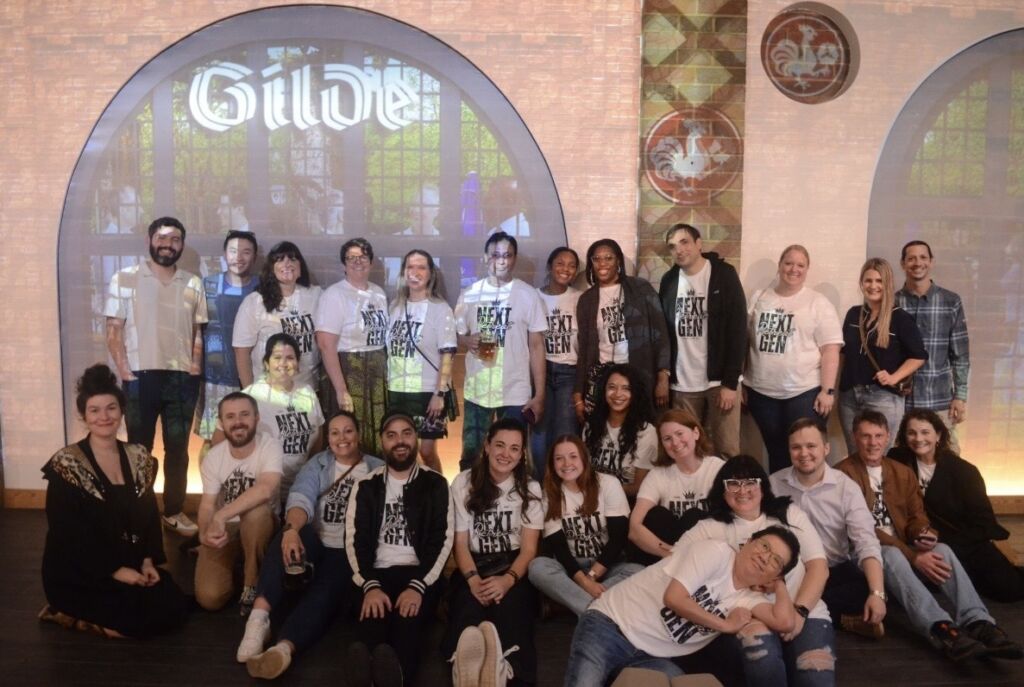
Just wrapped up an incredible few days in Charlotte for the NOSSCR NextGen Retreat!
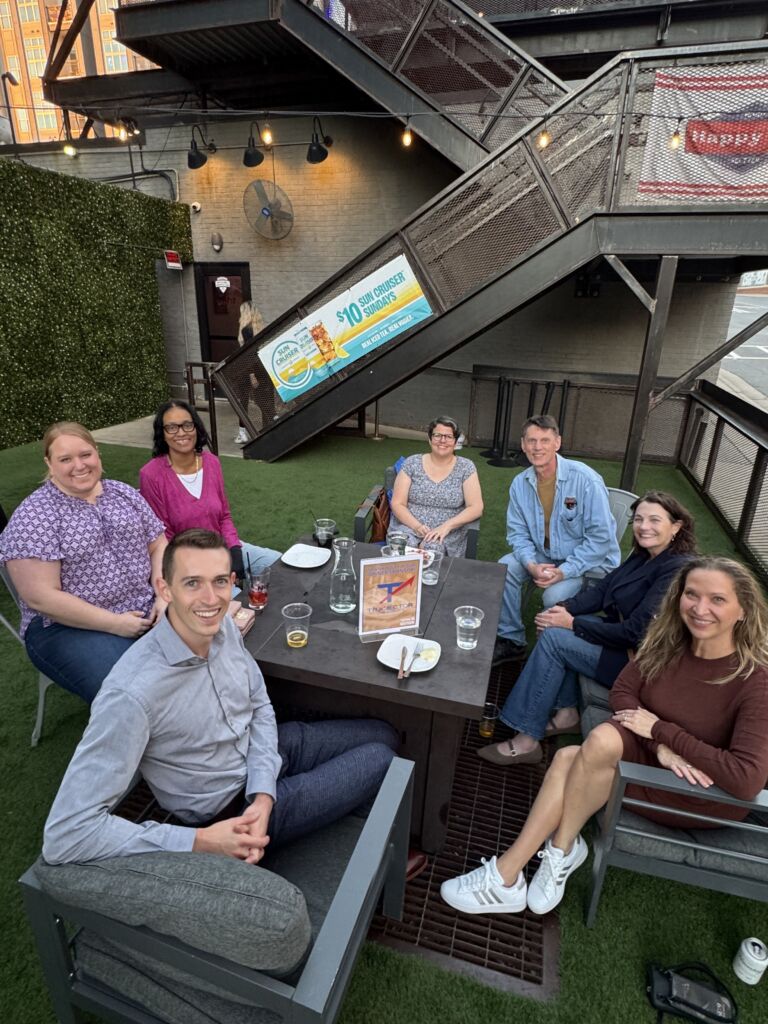
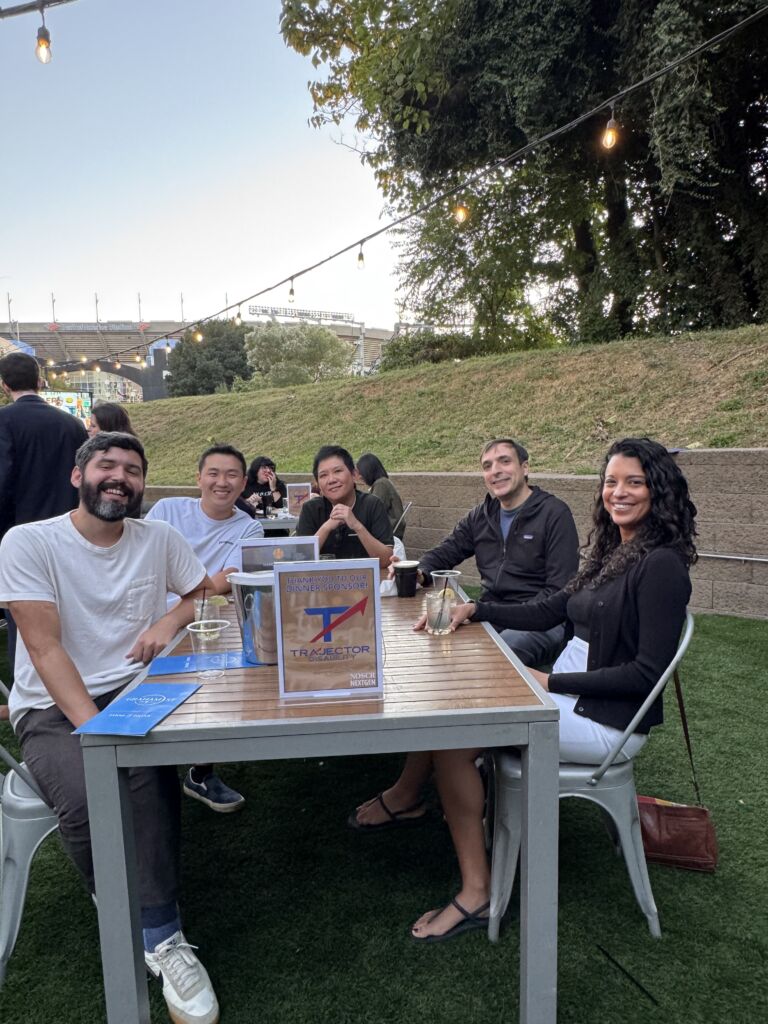
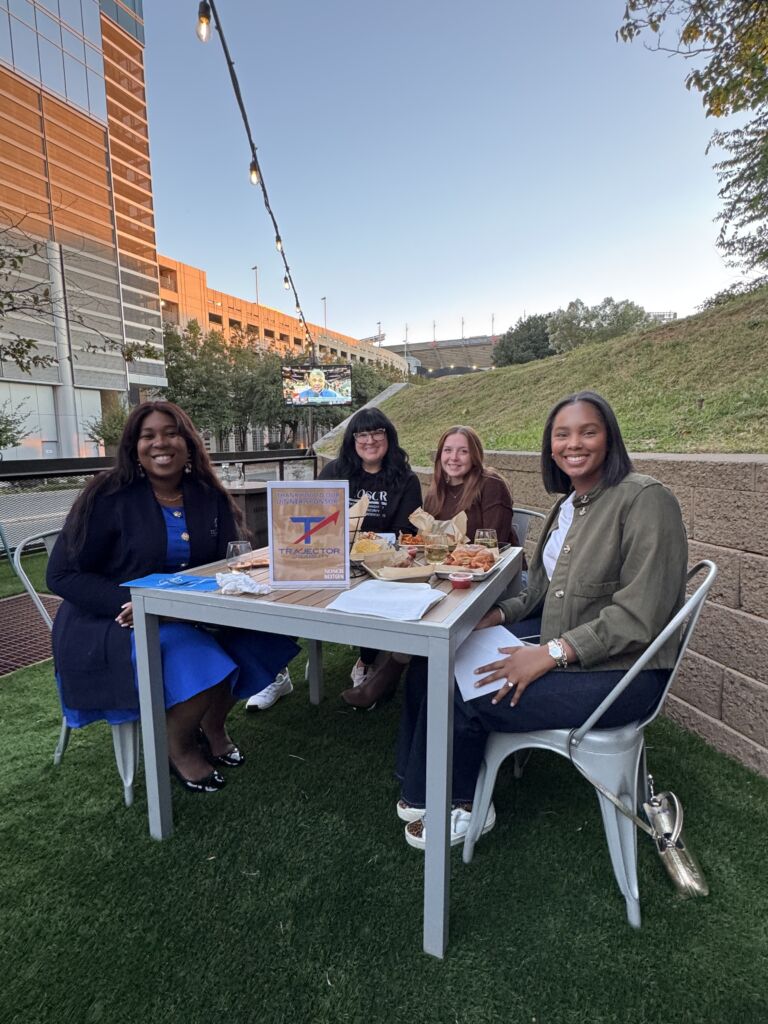
We kicked things off Thursday evening with dinner and drinks at Graham St. Pub & Patio, courtesy of Trajector Disability, where we enjoyed the warm Charlotte weather and plenty of great conversation. It was the perfect way to meet new faces and reconnect with colleagues before diving into two full days of learning, sharing, and collaboration.
Friday morning began with breakfast and our first session where Kara Neaton of Legal Aid of North Carolina led an insightful discussion on age-18 redeterminations — exploring the unique challenges that arise as child claimants transition to adult disability standards, and offering practical strategies for managing these complex cases. Next up, Ashley Sappenfield of Lanier Law Group walked us through common additional medical documentation requests, with useful tips on identifying missing records, coordinating with providers, and strengthening evidentiary support before hearings. After a quick break, Joanna Smykowski of Green and Greenberg Law presented “Breaking into Federal Court from Admin Court,” a fantastic session on recognizing appeal-worthy issues and preserving error at the ALJ level. We wrapped up the morning with Christine Burnside of Deuterman Law Group, who tackled “Work Activity After Onset Date”—breaking down how work attempts, SGA, and nuanced earnings records can impact claims and credibility.
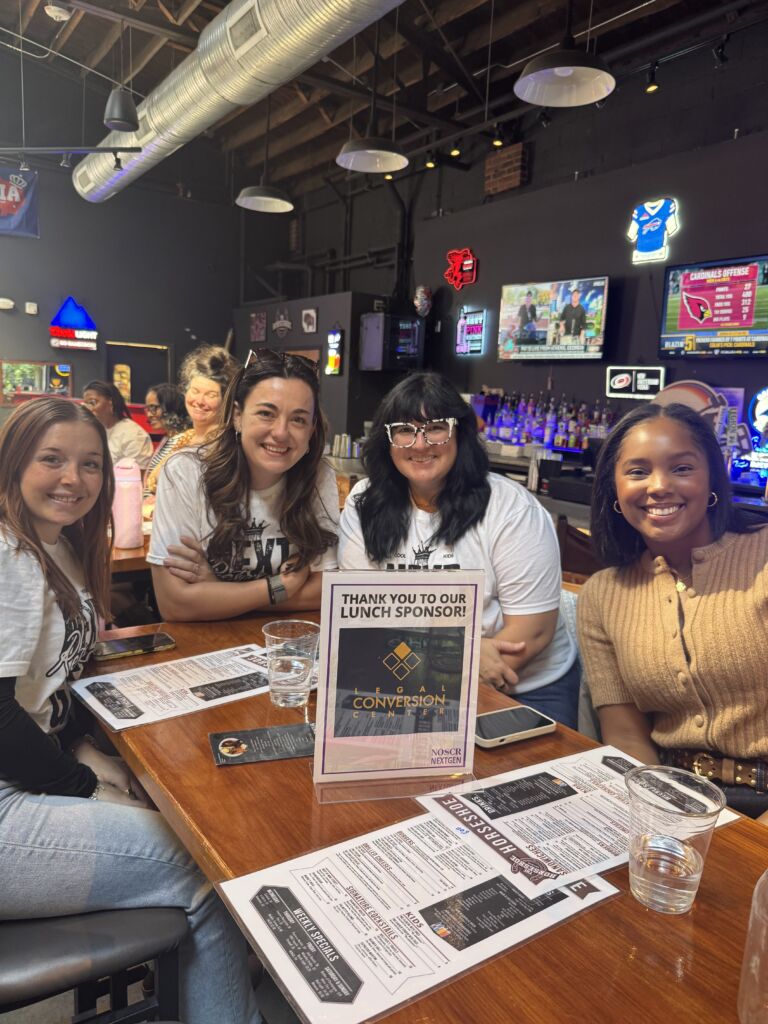
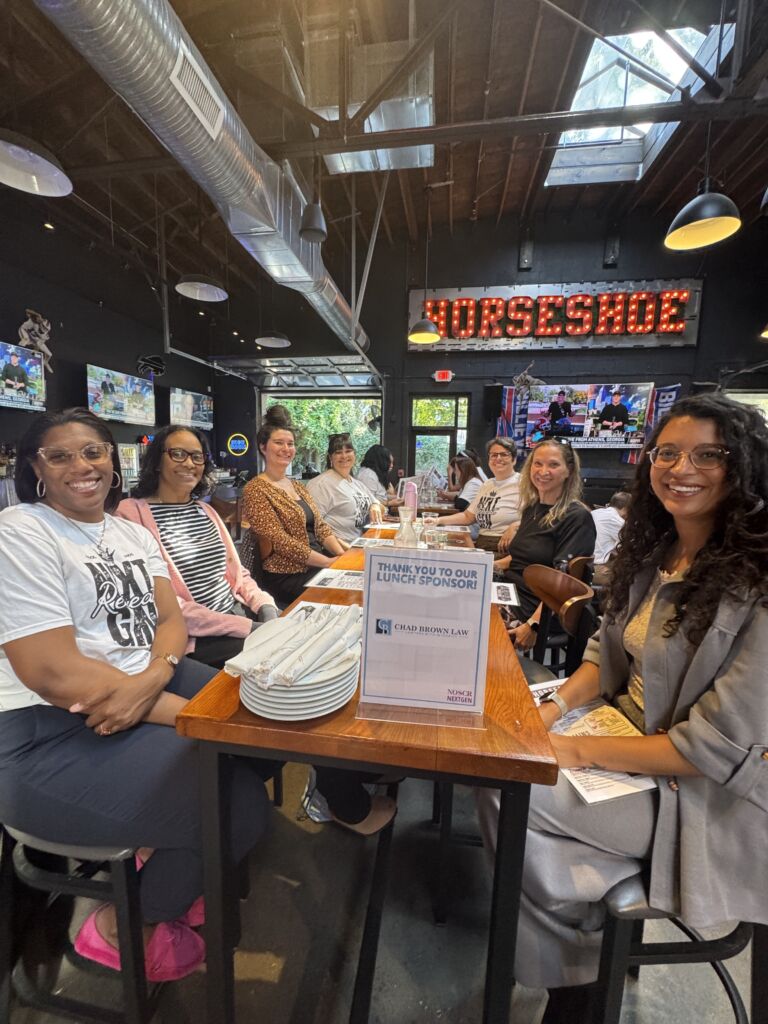
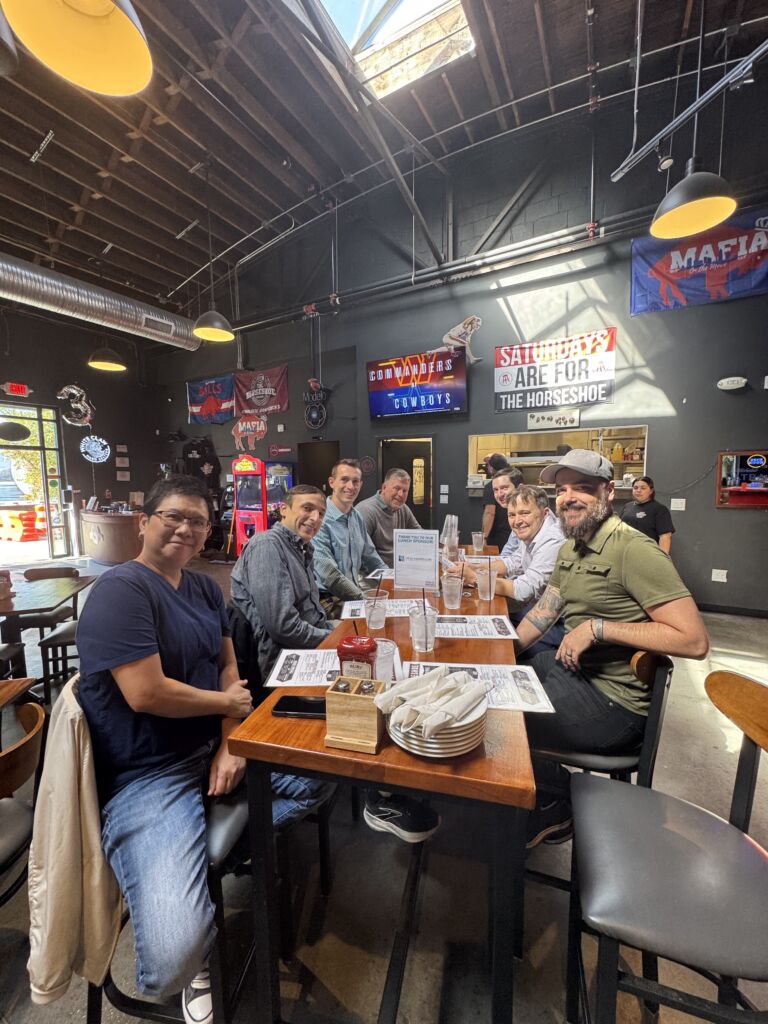
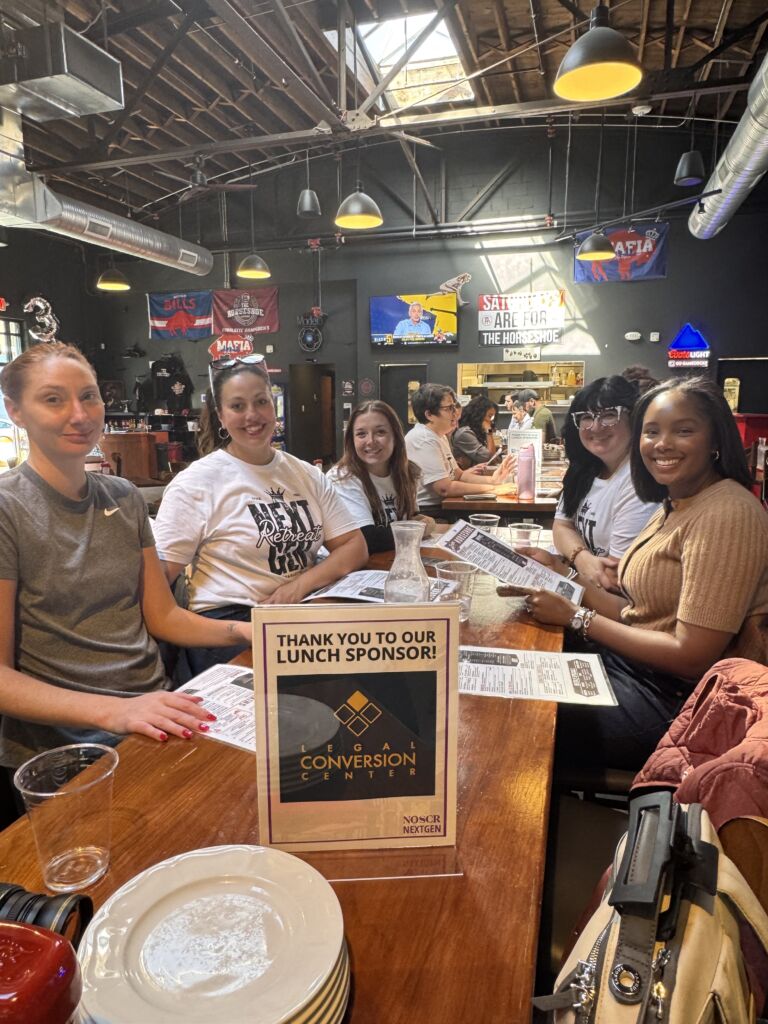
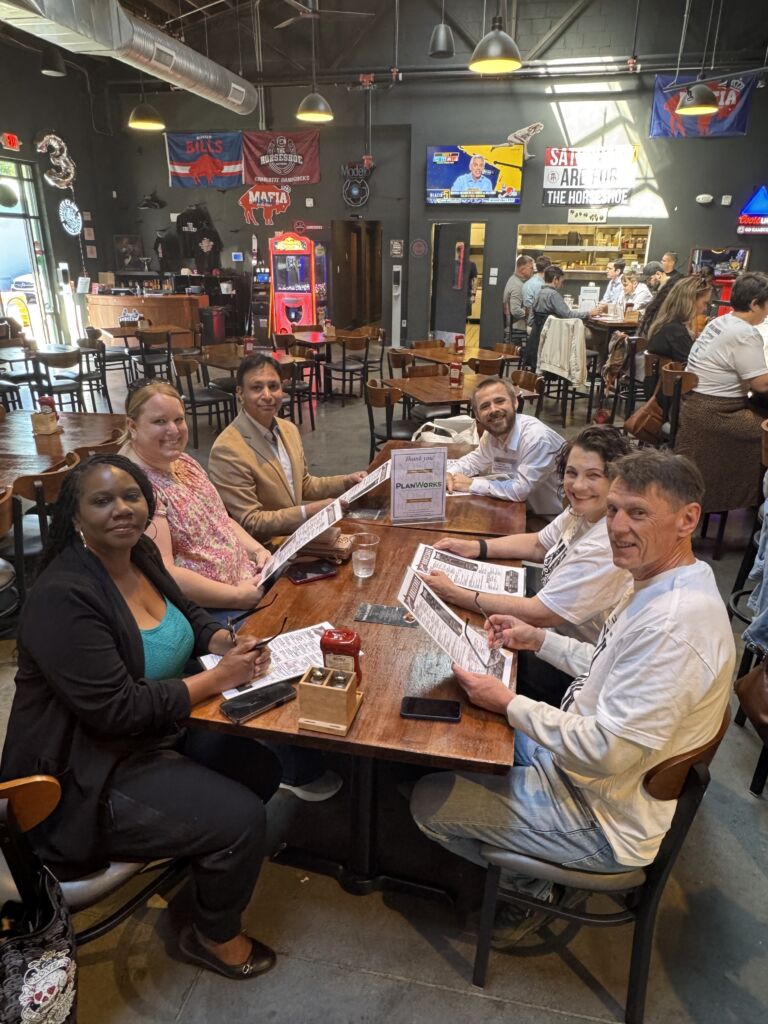
Lunch at The Horseshoe was generously sponsored by Legal Conversion Center and Chad Brown Law. Some were fortunate enough to be able to squeeze in a quick nap (or some email answering and phone calls) before we teamed up for Beat the Bomb, a creative, high-energy team-building event that perfectly captured the collaborative spirit of the retreat. The evening continued with happy hour at Gilde Brewery sponsored by Legal Conversion Center, more networking, and casual dinners and informal adventures around town with new friends.
Saturday morning kicked off with an engaging session from Vocational Expert Katherine Jett, who shared timely insights about VE testimony, labor market data, and the implementation of SSR 24-3p, helping attendees better understand and challenge vocational evidence in hearings. Next, Dr. John Schwabe’s “Medical Records Demystified” session bridged the gap between law and medicine, explaining how to read complex records, identify inconsistencies, and interpret test results from a clinical perspective. Then Meghan Gallo of GCC Law Firm shared her expertise in Step 5 strategies, walking through the new challenges of the “simple probability method” gaining wider traction among vocational experts in the 24-3p era. The retreat concluded with an interactive “Ask Us Anything” panel featuring NextGen co-chairs Christine Burnside of Deuterman Law and Stephen Sloan of Osterhout Berger Daley where attendees raised thoughtful questions about issues of particular concern to their practice, including advocacy techniques, avoiding embarrassing pitfalls, and how to build lasting careers in this rewarding area of law.
While NOSSCR NextGen emphasizes providing substantive tools for advocates to take back to their practices, The NextGen Retreat is more than just providing CLE; it’s about ensuring that newer practitioners know they have a community of peers and mentors who are eager to support one another. Between the laughter, shared stories, and creative problem-solving, it was a reminder that we’re all in this together.
It’s inspiring to see the next generation of advocates stepping up—bringing new ideas, energy, and commitment to improving the Social Security disability process and standing up for those who need it most.
Ashley and I have loved our opportunity to lead this vibrant community, and we’re excited to pass the torch to Krysti Monaco and Katrina Tomer, next year’s NOSSCR NextGen Co-Chairs. We know they will do a stellar job continuing to grow and foster this special group.
Starting November 4, the NextGen Community will be gathering for virtual monthly coffee/lunch breaks, held the first Tuesday of each month at 12pm Eastern. These gatherings are informal and are a chance to network, ask questions, run hypotheticals, and just check-in with our community. It’s free, but registration is required to get the link—so please register today, mark your calendars, and join us!


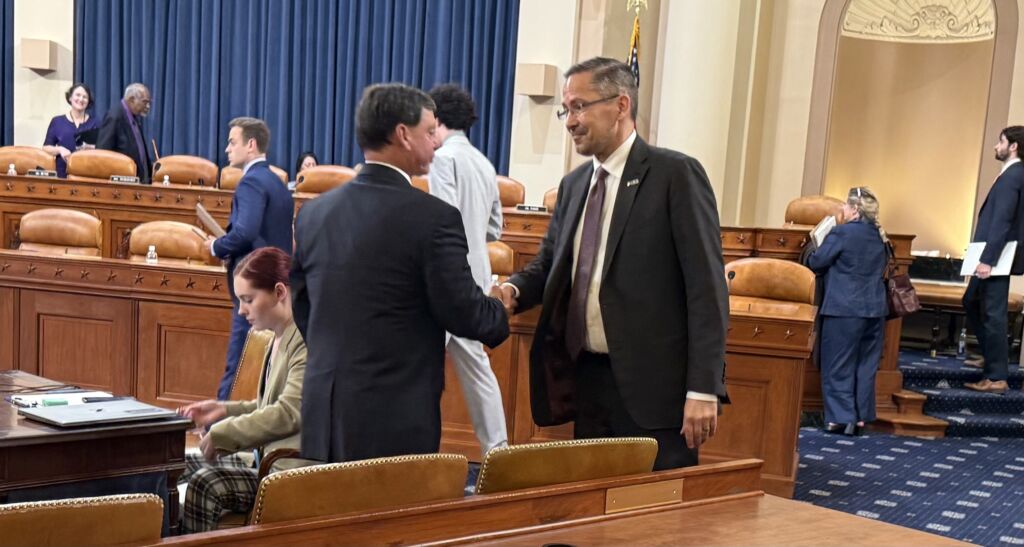
Senate Finance Committee Holds Hearing to Consider Arjun Mody as Deputy Commissioner Social Security
On Wednesday, October 29, 2025, the Senate Finance Committee held a hearing to consider the nomination of Arjun Mody to be the Deputy Commissioner of Social Security for the term expiring January 19, 2031. The President nominated Mr. Mody for this role on July 1, 2025.
Mr. Mody has a long history of Republican political service having worked for Senators Elizabeth Dole and Kay Bailey Hutchinson, as the Policy Director of the Senate Republican Policy Committee, and as the Staff Director of the Senate Republican Conference. In his testimony, Mr. Mody expressed the importance of public service while sharing his vision for the agency:
I see the work of the Social Security Administration as two inseparable imperatives: service and control. On service, deliver the best possible experience for every American, whether at a field office, over the phone with a representative, or online through mySSA. We must equip our workforce with the leadership, the systems, and processes to excel in every channel of service. On control, be timely and accurate in payments, drive down error rates, constantly monitor outlays, understand the actuarial analysis, get our backlogs cleared, and update our rules. We must safeguard SSA’s data systems, protect personal information, and ensure the public’s trust. This is an immense operational and financial challenge. A 50,000 person workforce, over 1200 field offices, and a 1.5 trillion annual spend, the largest in our government. It demands experienced leadership, operational excellence, and pragmatic problem-solving. If confirmed, I will take on this challenge in partnership with Commissioner Bisignano. Together, we will make Social Security great and it will be historic.
You can read his full testimony here.
During the hearing, Senator Wyden (D-OR) expressed concern that Mr. Mody will be the de facto head of Social Security given that Commissioner Bisignano is now serving as both the Commissioner of Social Security and Chief Executive Officer of the IRS, while Chairman Crapo expressed his confidence that Mr. Mody’s “extensive background in government service will allow him to maneuver effectively at SSA and assist Commissioner Bisignano in delivering the high-quality service that beneficiaries deserve.”
Speaker Proposals for NOSSCR’s Spring Conference in Baltimore are Due December 1!
We’re looking for dynamic, diverse, and innovative presenters to join us in Baltimore this April 21-24 for NOSSCR’s Spring National Conference. This is your opportunity to share insights, strategies, and specialized knowledge with fellow Social Security disability practitioners from across the country.
We welcome proposals across a wide range of topics, including:
• Practical tips and tools for improving advocacy
• Niche areas of Social Security disability law and practice
• Business development strategies for a thriving practice
• Medical expertise to strengthen RFCs and case outcomes
• Cutting-edge updates and creative problem-solving
If you have ideas that will energize, educate, and equip practitioners, we want to hear from you. Whether you’re a seasoned expert or have a fresh perspective to share, your voice can help shape the future of disability representation.
Submit your proposal today and help us build an engaging, practical, and diverse program in Baltimore! The deadline for proposals is December 1.
Not ready for the podium but have thoughts on content that could enhance your experience? Share them with us today! NOSSCR staff will use these ideas to solicit speakers on topics about which our members are eager to learn.
Excited to submit a speaker proposal but prefer a webinar format? Submit a year-round webinar CLE proposal here. If selected, NOSSCR staff will reach out to you to select a date for this future online presentation.
Social Security and the Shutdown
As we hit the full month mark of this government shutdown, we know your practices are feeling the pain of an agency that is only partially open—questions aren’t being answered, phone calls are going unanswered, medical records requests and consultative evaluations are being delayed, and misinformation abounds. In a field where too often it’s already extremely challenging to guide cases through proper processing, now even those normal work processes are being frustrated. However, we urge you to keep in mind that the pain you are experiencing is also being felt by field office workers and DDS employees, many of whom are now reporting to work without the hope of a paycheck arriving anytime soon. Yes, 1696s should be processed and attached to cases, and yes, field offices and payment centers should still process disability claims and award notices and answer representative questions, but please remember, when you are able to get someone on the phone, that they are facing uncertain times too, and, like many of us, they are operating without the proper support networks and oversight in place. So keep advocating for your clients, keep reporting issues (both to NOSSCR and to the Regional Communications Directors), but please also practice patience and compassion during these uncertain times. Now here’s a reminder of where things stand:
What we know:
- Field Offices are supposed to appropriately field inquiries from appointed representatives. We are not considered third parties.
- Field Offices are also supposed to interact with the staff of appointed representatives.
- SSA’s System of Records Notice (SORN) gives the agency authority to disclose information to the staff of appointed representatives based on the Privacy Act routine uses. This has not changed with the shutdown.
- SSA should continue fielding inquiries from both appointed representatives and appointed representatives’ staff.
- At NOSSCR’s urging, the Regional Communications Directors (RCDs) have now sent multiple memos to Field Offices reminding them of the above.
What can you do if you’re experiencing field office issues:
- If you are still experiencing issues with Field Office communication, please report the details of each incident to the appropriate Regional Communications Director.
- The RCDs are working during the shutdown and are acting on issues (even if they don’t respond directly to you).
What can you do about payment center / fee issues:
- The RCDs also oversee the payment centers and can help on any non-discontinued payment issue during the shutdown.
- However, due to the shutdown, those who oversee the RCDs have largely been furloughed, limiting NOSSCR’s ability to further escalate individual fee issues for our members.
- While improving SSA’s effectuation process remains a vital part of NOSSCR’s mission, please be mindful that usual processes are currently disrupted.
- Once the government fully reopens, if you have ongoing individual case issues that require NOSSCR’s intervention (and the usual means of escalation, including the RCDs, have not been able to resolve the issues), please reach out to jennifer.cronenberg@nosscr.org.
What if a new representative just started at your entity or you need to update your personal information (including switching to direct deposit):
- The agency is processing Form SSA-1699 during the shutdown.
- New representatives or those needing to update information (personal / business contact information, direct deposit, firm affiliation, etc.) should continue to fax Form SSA-1699 to the Office of Central Operations at 877-268-3827 during the shutdown.
- New representatives or those needing to update information (personal / business contact information, direct deposit, firm affiliation, etc.) should continue to fax Form SSA-1699 to the Office of Central Operations at 877-268-3827 during the shutdown.
- However, OHO is not scheduling the meetings to set up new ARS/ERE access. If you’re a new hearing/AC representative who is trying to get ARS/ERE access for the first time, you will have to wait until after the shutdown ends.
- In the meantime, you should reach out to OHO directly for any cases where you are listed as the representative. OHO will send you the eFile via alternative means (likely encrypted email).
- Representatives who already have ARS/ERE access will continue to be attached to individual claimant’s eFiles as usual.
We know that this is a confusing and frustrating time; however, we urge patience and understanding as you interact with those left at the agency who are still working. SSA’s contingency plan does not spell out every possible situation and dictate what will and will not happen in those situations. We are learning as we go, and so are agency staff.
Please continue to bring issues to NOSSCR’s attention, both by emailing jennifer.cronenberg@nosscr.org and by discussing issues on our listserv. We are doing everything we can to immediately troubleshoot widespread issues and find answers to your questions during these uncertain times. Hang in there, continue zealously advocating for your claimants, and, when all else fails, contact your elected representatives and tell them to get back to work!
NOSSCR Attends “Smoked ’n Oaked” Reception with Senator Tim Kaine
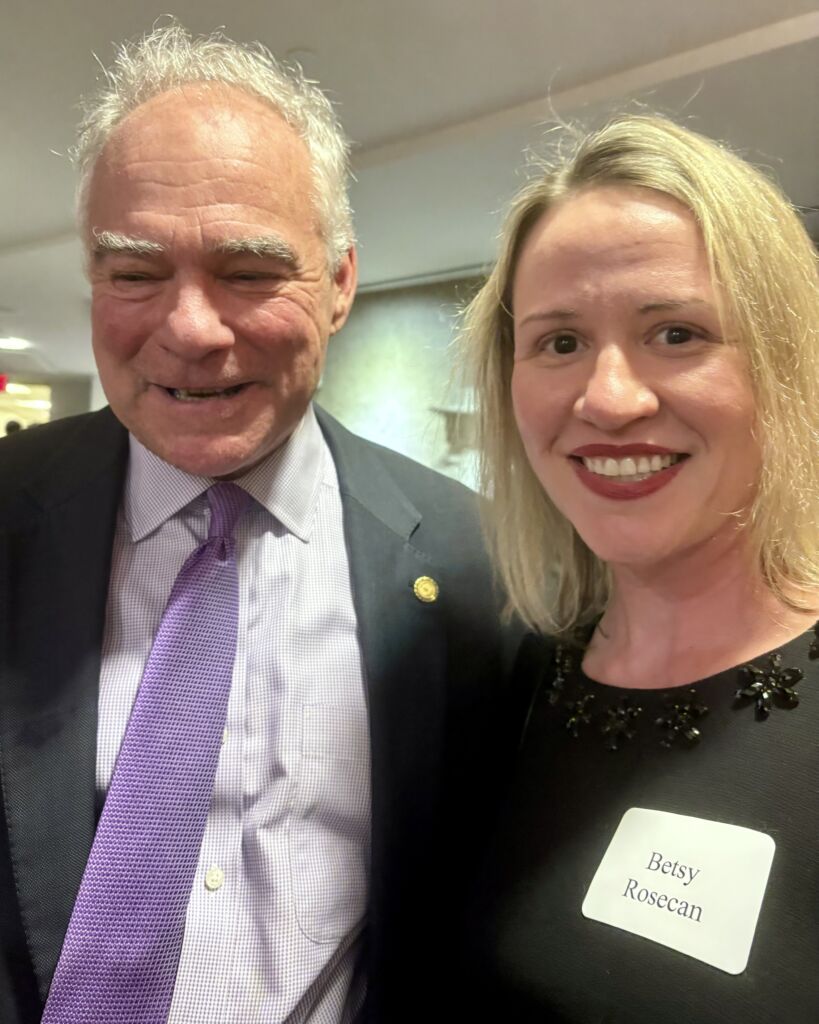
On October 7, 2025, NOSSCR Government Relations Director Betsy Rosecan attended Smoked ’n Oaked with Senator Tim Kaine (D-VA), a small reception held at a law firm office near Capitol Hill. The event provided an opportunity for candid discussion with Senator Kaine and other attendees on the current political climate and the challenges facing Congress.
During his remarks, Senator Kaine described this moment as an “existential test of American democracy,” emphasizing the importance of principled leadership and bipartisanship in resolving the ongoing government shutdown. He explained his reasons for standing firm on the issue, stressing the need to safeguard essential government operations and uphold confidence in the nation’s democratic institutions.
Rosecan also thanked Senator Kaine for his continued work on long COVID—a condition that continues to affect many Social Security claimants—and for his leadership on policies that strengthen the Social Security program and the services it provides.
Events like this reception provide NOSSCR with the opportunity to engage directly with policymakers and discuss the real-world impact of federal decisions on claimants and their representatives. These efforts are made possible through the generous contributions of NOSSCR members to the organization’s PAC, which funds opportunities to connect with lawmakers and advocate for improvements to the Social Security system.
NOSSCR remains committed to maintaining strong, bipartisan relationships across Capitol Hill—including with leaders such as Senator Kaine and Congressman Ron Estes (R-KS), Chairman of the Social Security Subcommittee of the House Ways and Means Committee—to advance policies that protect and strengthen Social Security for all who depend on it.
Contributions to the National Organization of Social Security Claimants’ Representatives PAC (NOSSCR PAC) are not tax-deductible as a charitable contribution for federal income tax purposes. Contributions to NOSSCR PAC will be used to support federal and state candidates, political parties, and other political committees. Contributions are strictly voluntary. You may refuse to contribute without reprisal. Any proposed contribution level is merely a suggestion, and you are free to contribute more or less than suggested. You will not benefit or be disadvantaged by reason of the amount of your contribution or a decision not to contribute. Federal law requires NOSSCR PAC to use its best efforts to collect and report the name, mailing address, occupation and employer of persons whose contributions exceed $200 in a calendar year. You must be a U.S. citizen or lawfully admitted for permanent residence in the U.S. to contribute.
Virtual CLE Alert! November 5 at 3pm Eastern
Join Ashley Sappenfield and Emma Webb for an exciting virtual CLE on November 5 at 3pm Eastern as they take a look at Common Additional Medical Docs to Request.
Learn how to go beyond medical records to strengthen your Social Security claims! Emma and Ashley will cover:
• The All Evidence Rule and subpoena requests
• Employment, LTD/STD, Veterans’, and Workers’ Compensation files
• SSA forms like the Work History Report and Function Report
• Submitting photos and other supporting documents
Maximize every piece of evidence and give your clients the strongest possible case. Don’t miss this practical, strategy-packed session!
*myLawCLE subscription required
NOSSCR’s Mentorship Program Opens November 1st!
Ready to connect and grow? Applications for the NOSSCR’s Mentorship Program will be opening on November 1! Whether you’re seeking guidance or eager to share your expertise, this is your chance to make a difference.
Participants enter into a voluntary relationship facilitated through NOSSCR in which the mentor is one aspect of a new practitioner’s support network. In monthly individual mentor/mentee video/teleconference sessions, the mentor is available to provide support to the mentee on career-related issues including subject matter, career development, and work/life questions from the mentee.
The program is ten (10) calendar months, from January through October. The enrollment period is from November 1 through November 30. Participants will be informed of their matches, or their placement on the waiting list, on or about December 15 for the following program year.
Beginning November 1, please click on the button below to submit your application for NOSSCR’s mentor/mentee program. We need both mentors and mentees to make this program a success, so please don’t hesitate to join us! For more information about the mentorship program, visit our site here.


2026 Cost of Living Adjustment Announced
Last week, Social Security announced a 2.8% benefit increase for 2026. This will increase the average monthly Social Security benefit for disability beneficiaries from $1,586 to $1,630. The COLA will take effect beginning in January 2026.
You can view additional information about these changes on SSA’s 2026 COLA Fact Sheet (also copied below).
The Substantial Gainful Activity (SGA) threshold will increase from $1,620/month to $1,690/month for non-blind individuals, and the Trial Work Period (TWP) threshold will increase from $1,160/month to $1,210/month.
The SSI Federal Payment Standard will increase to $994/month for an individual and $1,491/month for a couple. The SSI Resource limits are fixed by statute and will remain unchanged.
While it has not yet been announced, an increase in the “user fee” assessed to representatives receiving direct payment typically follows any COLA announcement, and we will update you as soon as that information becomes available.
Ann’s Useful Chart (Updated for 2026)—SGA/TWP/SSI
NOSSCR Sustaining Member Ann Atkinson has graciously shared her handy downloadable chart for quick access to the SGA/TWP/SSI numbers for each year—now updated for 2026!
Ann generously maintains and shares this chart with our members each year, and this year she’s requesting that our members consider paying that generosity forward. Here’s a note from Ann:
I’m asking this year that anyone who finds it useful to please give a cash donation to the food bank that serves their clients. (Mine are all in a panic about the cut off of SNAP benefits looming on Nov. 1.) Although not a complete list, Feeding America has a tool you can use to find the ones closest to your clients.
2026 SSI Deeming Chart
NOSSCR is pleased to share the SSI Deeming Chart for 2026. We hope that this reference tool will be useful in your practice.
Big thanks, as always, to NOSSCR member Michael Wener for keeping this chart updated and allowing us to share it with all of you.
Legislative Spotlight
Betsy Rosecan, NOSSCR Government Relations Director
On October 6, 2025, Representative Emilia Sykes (D-OH) introduced H.R. 5701, the Fair Social Security for Domestic Violence Survivors Act. The bill has no cosponsors and has been referred to the House Committee on Ways and Means.
If enacted, the legislation would amend title II of the Social Security Act to reduce the marriage duration requirement for divorced spouses and surviving spouses seeking benefits in cases involving domestic violence. Under the proposal, individuals who provide a court finding that they were victims of domestic violence committed by their spouse during the marriage would be eligible for spousal or survivor benefits after five years of marriage, rather than ten. The amendments would apply equally to men and women and would take effect for monthly insurance benefits beginning at least 18 months after the date of enactment.
Bill Details:
SECTION 1. Short title.
This Act may be cited as the “Fair Social Security for Domestic Violence Survivors Act”.
SEC. 2. Modification of 10-year marriage rule in cases of domestic violence.
(a) In general.—Section 216(d) of the Social Security Act (42 U.S.C. 416(d)) is amended by adding at the end the following:
“(9) (A) In the case of a divorced woman described in paragraph (1) or (2) or a divorced man described in paragraph (4) or (5) who provides to the Commissioner of Social Security a finding made by a court of law that the divorced woman or divorced man was the victim of domestic violence committed by the spouse during the course of the marriage, such paragraph as may be applicable with respect to such divorced woman or divorced man shall be applied for purposes of this title by substituting ‘5 years’ for ‘10 years’.
“(B) For purposes of subparagraph (A), the term ‘domestic violence’ has the meaning given such term in section 40002(a) of the Violence Against Women Act of 1994.”.
(b) Termination of wife’s insurance benefits.—Section 202(b) of the Social Security Act (42 U.S.C. 402(b)) is amended by adding at the end the following:
“(5) In the case of any divorced wife who provides to the Commissioner of Social Security a finding made by a court of law that the divorced wife was the victim of domestic violence (as defined in section 216(d)(9)(B)) committed by the spouse during the course of the marriage, clause (ii) of paragraph (1)(G) shall be applied by substituting ‘5 years’ for ‘10 years’.”.
(c) Termination of husband’s insurance benefits.—Section 202(c) of the Social Security Act (42 U.S.C. 402(c)) is amended by adding at the end the following:
“(5) In the case of any divorced husband who provides to the Commissioner of Social Security a finding made by a court of law that the divorced husband was the victim of domestic violence (as defined in section 216(d)(9)(B)) committed by the spouse, clause (ii) of paragraph (1)(G) shall be applied by substituting ‘5 years’ for ‘10 years’.”.
(d) Effective date.—The amendments made by this section shall apply with respect to monthly insurance benefits for months beginning at least 18 months after the date of enactment of this Act.
Just Ask Jennifer: The Value of Workshops
Jennifer Cronenberg, NOSSCR Chief Counsel for Legal Education & Disability Law
At our conference in DC, a couple of our Board members shared that, historically, some of their favorite conference moments are casual conversations with colleagues in the hall—bouncing case strategy off one another, commiserating over hearings gone wrong, or sharing business techniques to improve office functionality. While we, of course, continue to welcome any and all hallway conversations, we also wanted to provide a home for these conversations—a room where colleagues can gather to discuss a certain topic, share ideas, and learn from one another in a more casual non-CLE setting. And thus, NOSSCR Conference Workshops were born.
In San Diego, we saw Workshops dive into topics like how to lobby your state legislature for changes in medical records payment rates, tips for practitioners looking to transition from government employment to private practice, and one fascinating session where all attendees took a DISC assessment to better understand themselves and how they interact with others. These sessions gave attendees the opportunity to form real connections, ask questions freely, and engage in meaningful dialogue on specific topics. Going forward, we plan to continue this “workshop” tradition, and we welcome your submissions to “host” one of these sessions.
Workshops are a great way to connect with colleagues and dive deeper into the topics that matter most to you. As a host, you’ll guide an informal, interactive conversation—your choice of format! Think:
• A Q&A session on a focused issue
• A deep dive into real or hypothetical cases
• Practicing questions for a VE or ME
• A role-playing exercise
• A short presentation followed by open discussion
These workshops offer a chance to share insights, exchange ideas, and learn from one another in a relaxed setting.
If you’d like to host a workshop, submit your idea today and help make this conference our most interactive yet!
Circuit Court Considerations: A Recent 9th Circuit Remand
Adriana de la Torre, NOSSCR Sustaining Member
Recycled Decisions, Real Consequences
The Ninth Circuit has made it clear: boilerplate doesn’t belong in disability decisions. In Swanson v. Bisignano (Sept. 30, 2025), the court took issue with an ALJ’s near carbon-copy remand decision and reminded us that meaningful review requires more than cosmetic edits.
Background
Swanson applied for Disability Insurance Benefits, alleging chronic pain and mobility limitations. After his first remand, the ALJ issued a new decision that looked strikingly familiar. The reasoning? Nearly the same as before.
Swanson appealed again, and the Ninth Circuit reversed (again), highlighting the persistent misuse of boilerplate reasoning in ALJ decisions.
Key Issues
1. Medical Opinion Evaluation (20 C.F.R. § 404.1520c)
The ALJ discounted opinions from multiple treating and examining physicians (Drs. Sidhu, Packer, Saue, Staley, and Ford) on grounds that simply didn’t hold up:
- The ALJ claimed the opinions relied on “old” records—but the record showed otherwise.
- He cited Swanson’s daily activities as inconsistent with medical findings—but failed to specify how often or to what extent those activities were performed.
- He ignored context from the treatment notes, which documented increased pain with activity and an abnormal gait.
The Ninth Circuit reiterated that treatment notes must be read in context (Holohan v. Massanari, 246 F.3d 1195 (9th Cir. 2001)) and that daily activities don’t automatically translate to sustained work capacity (Vertigan v. Halter, 260 F.3d 1044 (9th Cir. 2001)).
2. RFC and Step Five Errors
Once the medical opinions fell, so did the foundation of the RFC. The Step Five determination—built on that flawed RFC—could not stand. The court found that the ALJ’s findings lacked substantial evidence.
3. Claimant Testimony
Interestingly, the court upheld the ALJ’s credibility finding. The record was susceptible to more than one rational interpretation, and under the deferential “clear and convincing” standard, the ALJ’s finding survived. A reminder: even when the ALJ errs on other issues, credibility can still hold if adequately supported.
4. Lay Witness Evidence
Swanson failed to show that the lay witness statements would have altered the outcome. The Ninth Circuit found no harmful error here.
The Outcome
The court reversed and remanded for further proceedings. Because factual disputes remained unresolved, the Ninth Circuit declined to direct an award of benefits (Treichler v. Comm’r of SSA, 775 F.3d 1090 (9th Cir. 2014)).
But there was a twist, because Judge Callahan dissented in part. She agreed with most of the opinion but found substantial evidence supported the ALJ’s rejection of Dr. Ford’s opinion on mental adaptability.
Practice Pointers for Representatives
- Watch for recycled reasoning on remand. If a new decision mirrors the old one, flag it. SSA must address the prior errors, not just restate them.
- Frame activities of daily living in context. Explain how your client’s reported activities are limited, sporadic, or performed with assistance.
- Be explicit about irrational reasoning. When briefing, clearly explain why an ALJ’s interpretation isn’t rational—don’t assume the court will connect the dots.
- Preserve every issue. Even if the ALJ’s credibility finding seems weak, build your argument carefully. The Ninth Circuit continues to uphold those findings when they’re minimally supported.
Final Thoughts
Swanson is a reminder that a remand is not a reset button, it’s a mandate for meaningful reconsideration. As practitioners, we can use this case to push for decisions grounded in individualized analysis, not recycled text.
Got any questions? Schedule a consultation with us. I’m here to help. It’s a lot to take in, but we’ll get through it together. After all, navigating these waters is always easier when you’ve got someone to chat with.
The views and opinions expressed in this article are the author’s own and do not necessarily reflect the views of NOSSCR, its leadership, or staff.
One Week Away: Join Us in Minneapolis for the Eighth Circuit Conference!
There’s still time to register for NOSSCR’s Eighth Circuit Conference, happening November 6-7 in Minneapolis, MN—and you won’t want to miss it!
Spend two days surrounded by fall colors, bright ideas, and brilliant colleagues as we dive into the latest Social Security disability updates and advocacy strategies. Gain valuable CLE, hear from regional experts, and connect with professionals across the Eighth Circuit who share your passion for improving outcomes for claimants.
Between sessions, soak up Minneapolis’ cozy fall charm—great food, inviting coffee spots, and the crisp Midwest air just right for a post-conference stroll.
Register Now and join us next week for two days of learning, connection, and inspiration.
(And if you read the dates above and immediately pictured a bunch of middle school boys yelling 6-7 while inexplicably moving their hands up and down, then you should DEFINITELY join us in Minneapolis because you definitely deserve a couple of days devoted exclusively to adult conversation).
San Diego Conference Video Replays
The recordings from the Fall 2025 National Conference in San Diego are now available for conference attendees to watch. You should have received an email from myLawCLE titled:
“Your myLawCLE order from [Date] is complete.” This email will come from myLawCLE registration@mylawcle.com.
Important: The email might look like you purchased something, but you do not need to pay. Access is included with your conference registration.
If you don’t see this email:
- Check your spam or junk folder
- If it’s still not there, email registration@mylawcle.com for help
How to watch your recordings (step by step):
- Open the myLawCLE email
- Review this agenda to find the day and the track for the session you want to view
- Click on the corresponding link within the email that says “Please click this link to Access the Program”
- This will take you to the myLawCLE program page
- Refer back to the email for the PIN number next to that session
- Enter the PIN exactly as it appears in your email
- Click “Submit” or “Enter” (depending on the page)
- The session video will start and you can fast forward or rewind to access the session you want to view
Tips:
- Each day and track has its own PIN, so make sure you use the correct one from your email
- If something doesn’t work, double-check that you’re using the PIN from your email and not another session’s PIN
- Please send any questions to registration@mylawcle.com
Note:
- We have requested that the videos be organized by individual session, with titles and links clearly displayed. Our video partners are working to make this happen and estimate an additional 2 weeks until this display is available. Conference attendees will be notified when the newly formatted videos go live.
We hope you enjoy revisiting your favorite sessions—or catching any you may have missed!
PAC Contributor List
THANK YOU TO OUR NOSSCR PAC CONTRIBUTORS
As of October 2025
| First Circuit David Ferrari (C) Second Circuit Crysti Farra (CC) Sarah Frederick (CC) Maurice Maitland (C) Lino Medina Mendez (C) Third Circuit Maryjean Ellis (CC) Melissa Green (C) Alicia Hutchinson (CC) Timothy Mello (CC) Judson Perry (CC) Alan Polonsky (PC) Joseph Silver (C) Christine Trotz-Cosgrove (CC) Fourth Circuit Jonathan Blair Biser (C) Ben Clauson (CC) Vaughn Clauson (DC) Rick Fleming (DC) George Piemonte (CC) Michelle Pritchard (CC) Ashley Hartman Sappenfield (CC) Joanna Suyes (CC) Fifth Circuit Paul Burkhalter (CC) Matthew Edwards (C) Jacob Hugentobler (CC) Patrick O’Neal (CC) David Pogue (CC) David Lance White (CC) |
| Sixth Circuit Edward Ahlers (CC) Gary Bimberg (PC) Donald Busta (PC) Lorenzo D’Agostini (CAP) Bobby Ficklin, Jr. (C) Joseph Houle (PC) Michael Alexander Rake (CC) Debra Shifrin (CAP) Donna Simpson (CC) Seventh Circuit Eric Farr (CC) Richard Feingold (CC) Brian Harmon (PC) Joseph Houle (PC) Avram Sacks (CC) Lindsay Solon (CC) Thomas Thompson (CC) |
Key:
CAP=Capitol Club, $5,000/monthly contribution of $416
PC=Platinum Club, $2,500-$4,999/ monthly contribution of $208-415
DC=Diamond Club, $1,000-$2,499/monthly contribution of $83-207
CC=Century Club, $100-$999
C=Contributor, all other contributions
| Eighth Circuit Julie Burkett (DC) David Camp (CAP) Patrick Cavanaugh (CC) Sean Cuddigan (PC) Meghan Gallo (CC) Matthew Grundy (DC) Thomas Krause (PC) Theodore Norwood (PC) Kyle Sciolaro (CC) J. Asha Sharma (CC) Tim Tripp (CC) Felicia Von Holten (C) Ninth Circuit Mark Bunch (DC) Sara Carroll (CC) Paul Clark (CC) Richard Gutstadt (DC) Marc Kalagian (DC) Kevin Kerr (CC) Audrey Miller (C) Eric Penar (PC) Matthew Pope (CC) Jose Vera (C) Timothy Walker-Dupler (CC) Tenth Circuit Ann Atkinson (DC) Dan Bott (CC) Gary Jones (CC) Philip Ryan (PC) Gayle Troutman (DC) Steve Troutman (DC) William Viner (CC) Eleventh Circuit Jason Bailey (CC) Sarah Bohr (CC) Kevin Hall (CC) David Wright (CAP) |
Contributions to the National Organization of Social Security Claimants’ Representatives PAC (NOSSCR PAC) are not tax-deductible as a charitable contribution for federal income tax purposes. Contributions to NOSSCR PAC will be used to support federal and state candidates, political parties, and other political committees. Contributions are strictly voluntary. You may refuse to contribute without reprisal. Any proposed contribution level is merely a suggestion, and you are free to contribute more or less than suggested. You will not benefit or be disadvantaged by reason of the amount of your contribution or a decision not to contribute. Federal law requires NOSSCR PAC to use its best efforts to collect and report the name, mailing address, occupation and employer of persons whose contributions exceed $200 in a calendar year. You must be a U.S. citizen or lawfully admitted for permanent residence in the U.S. to contribute.
Daily Dose of Data from SSA
This month, data coming from Social Security was limited due to the ongoing government shutdown; however, the agency did release the following:
- Long-range financial estimates for various options to change the Social Security program (including changes to retirement age, payroll taxes, taxation of benefits, etc.), as proposed by members of Congress and other policy makers, have been updated using the intermediate assumptions of the 2025 OASDI Trustees Report.
Useful Resources
OHO Caseload Analysis Report — no report was released this month due to the shutdown
State Medical Records Payment Rates
Social Security Rulings and Acquiescence Rulings by Year
HALLEX Contents & Recent Changes