

April 2026 Print Edition
Just Ask Jennifer: So…When Can We Do That Again?

Jennifer Cronenberg, Interim CEO
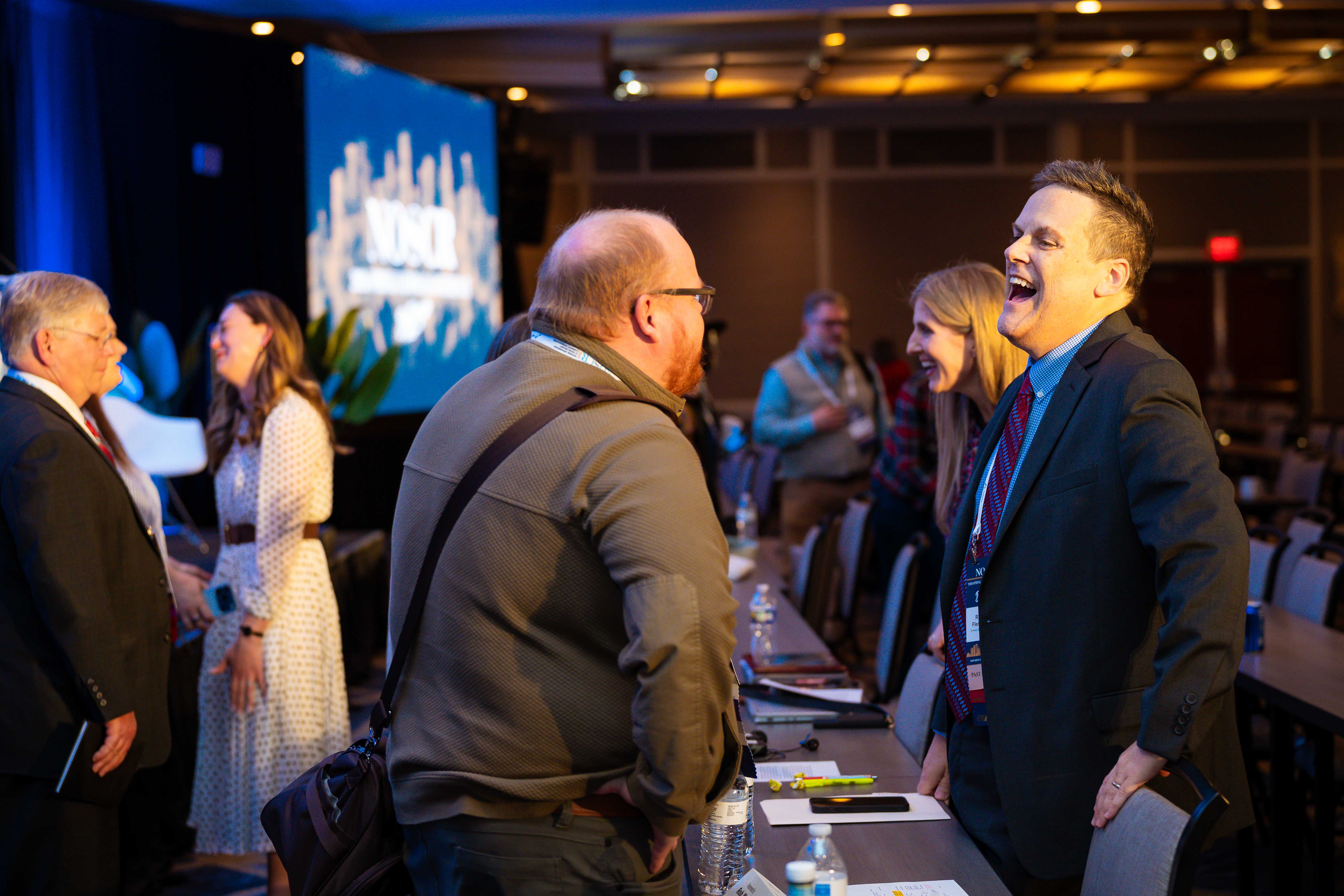
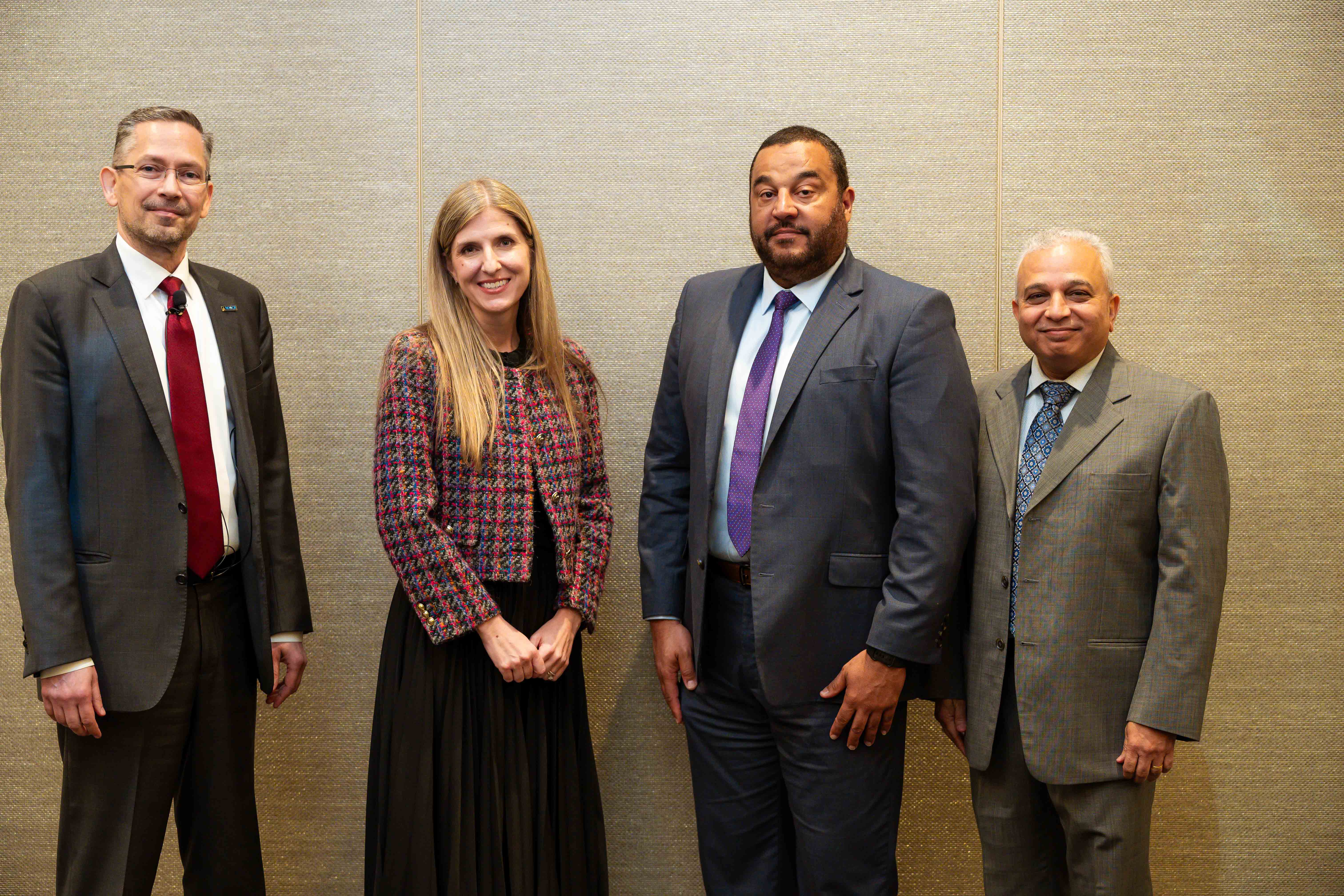
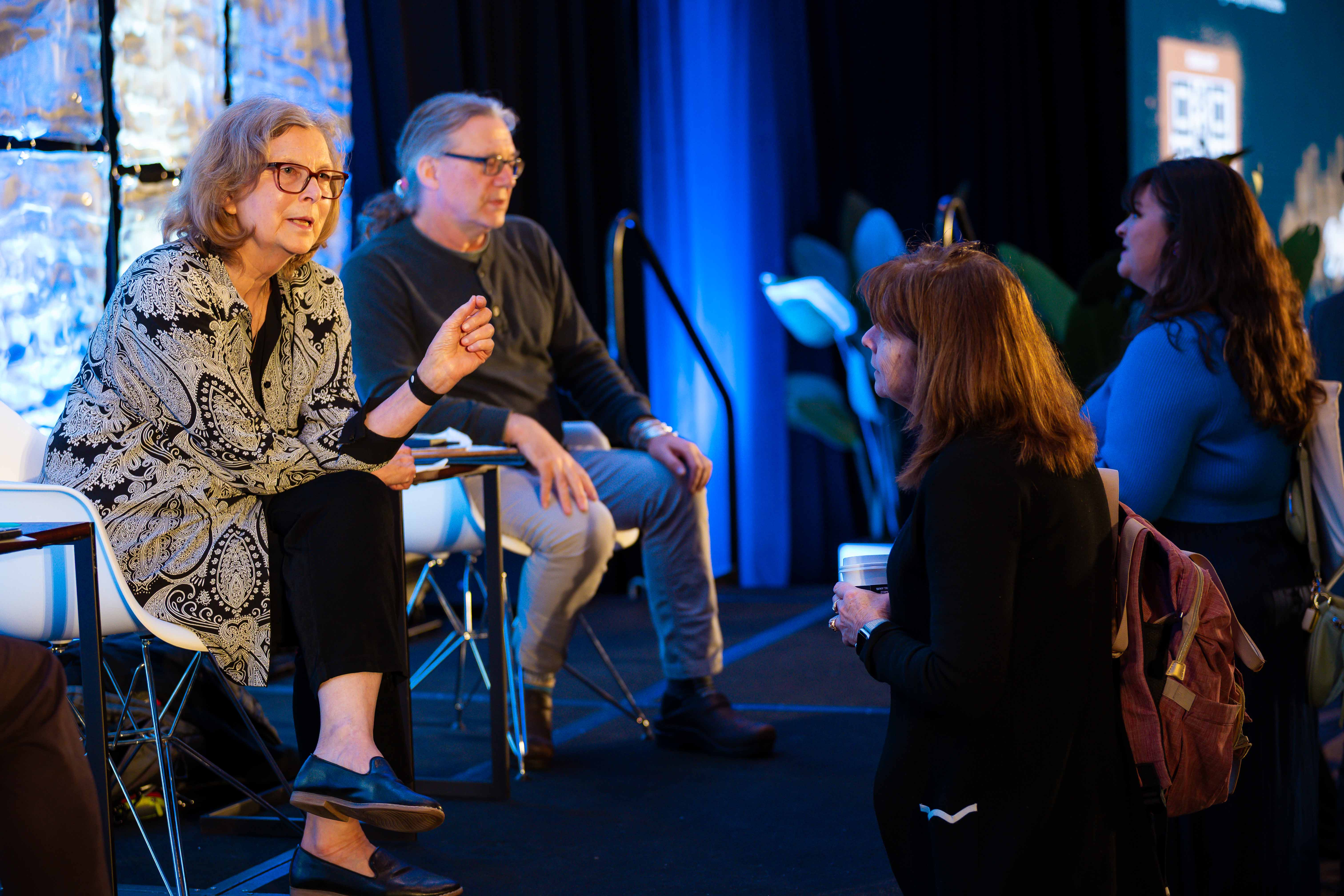
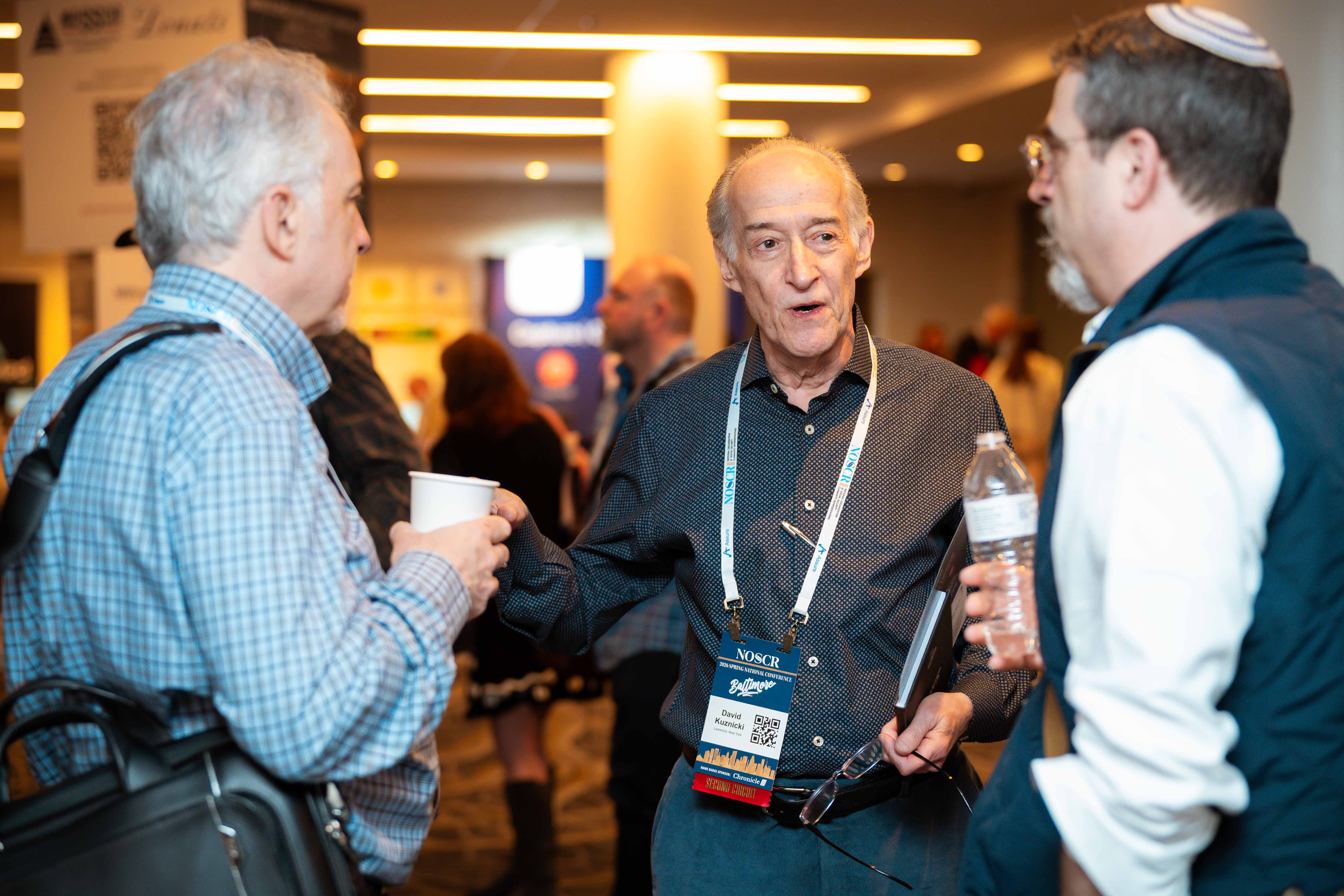
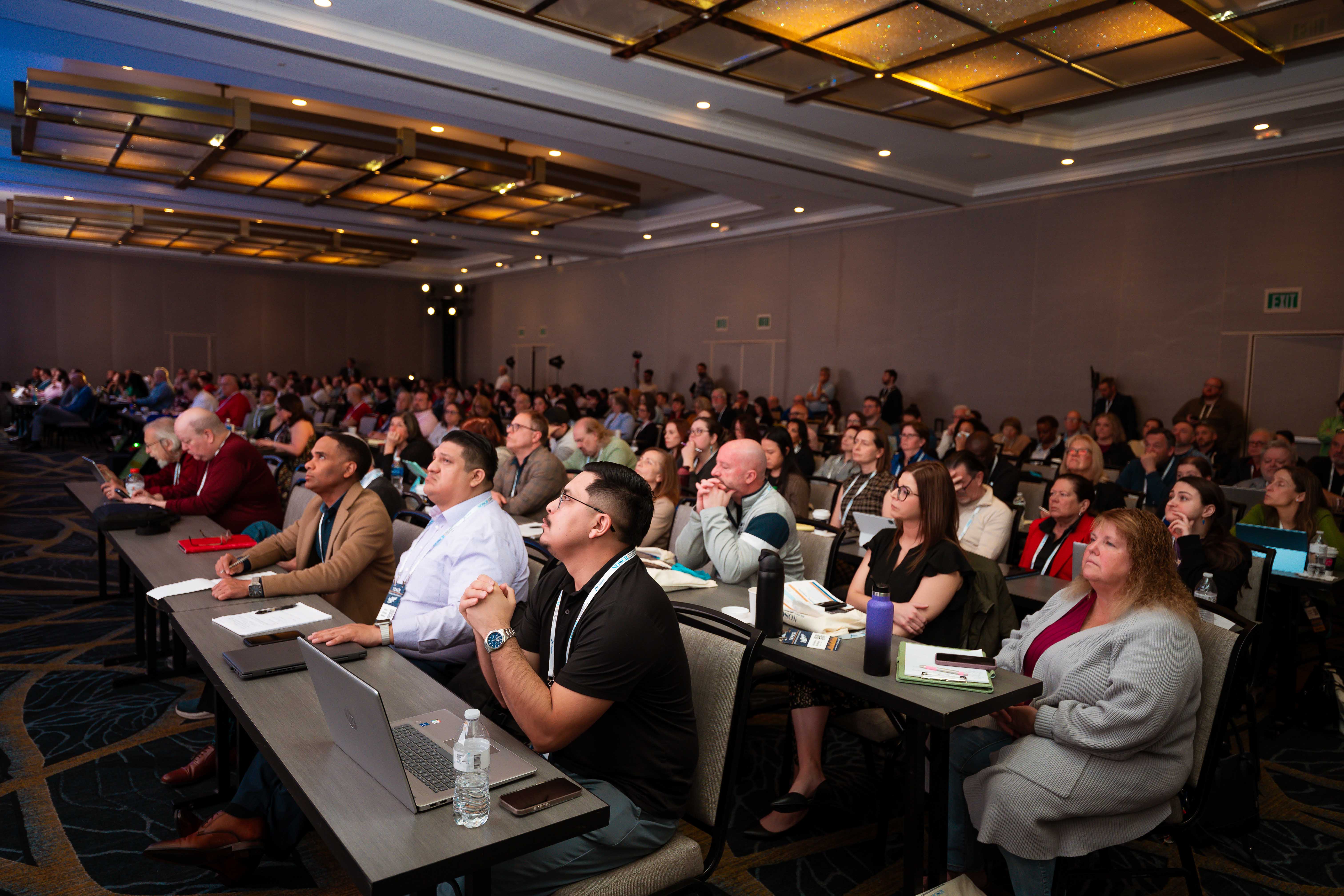
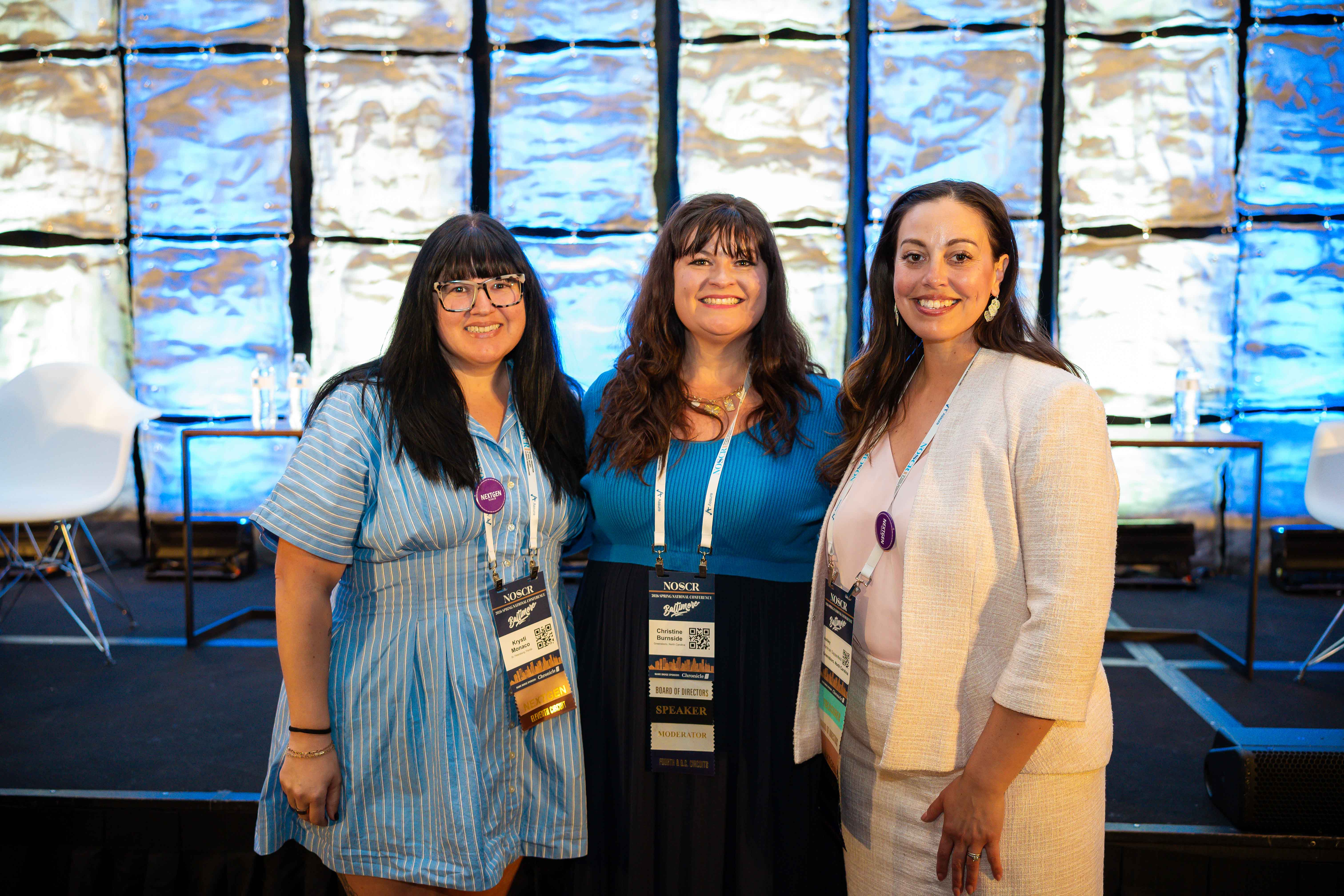
Here at NOSSCR, we’re still buzzing from the excitement of last week! Being together in Baltimore with so many of our members was truly a privilege. The energy, curiosity, and engagement that you brought was palpable, and we were thrilled to provide a space for you to learn, grow, and connect.
I’ve often said that one of my favorite things about NOSSCR is our commitment to providing ongoing education and quality trainings that our members can immediately put into practice – I’m proud to say that we delivered on this commitment. This conference saw our largest and most diverse slate of speakers ever. From newcomers to stalwarts of the NOSSCR stage, our content covered the basics proving disability at all levels, took deep dives into nuanced vocational matters, previewed AI tools that are certain to shape the future of our profession, and deepened our understanding of post-entitlement issues. Our workshops offered the opportunity for roundtable discussions on a variety of topics including how to become Board-certified in Social Security, what do to when unexpected issues arise at an ALJ hearing, how to best utilize ABLE accounts, and how to increase law firm productivity.
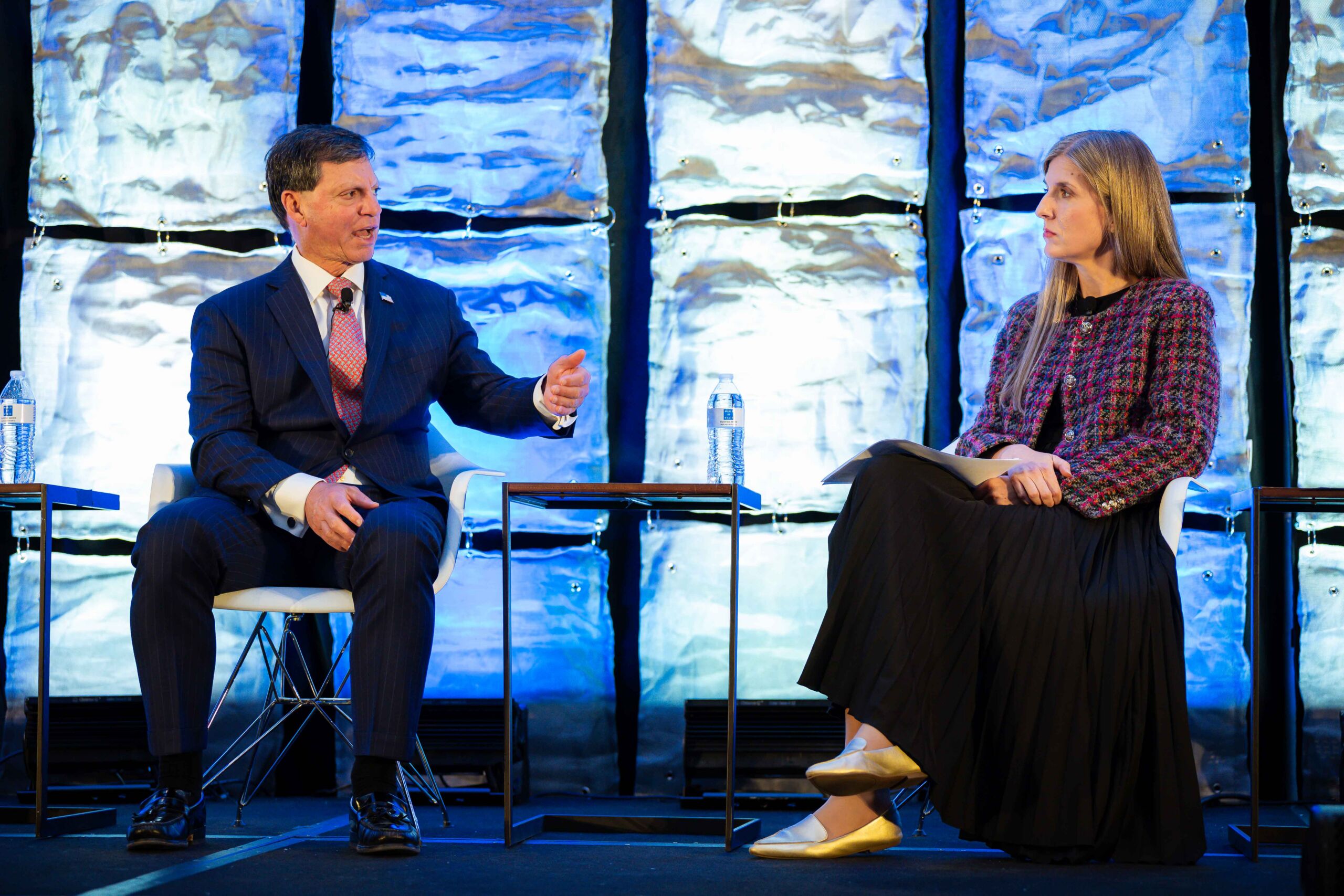
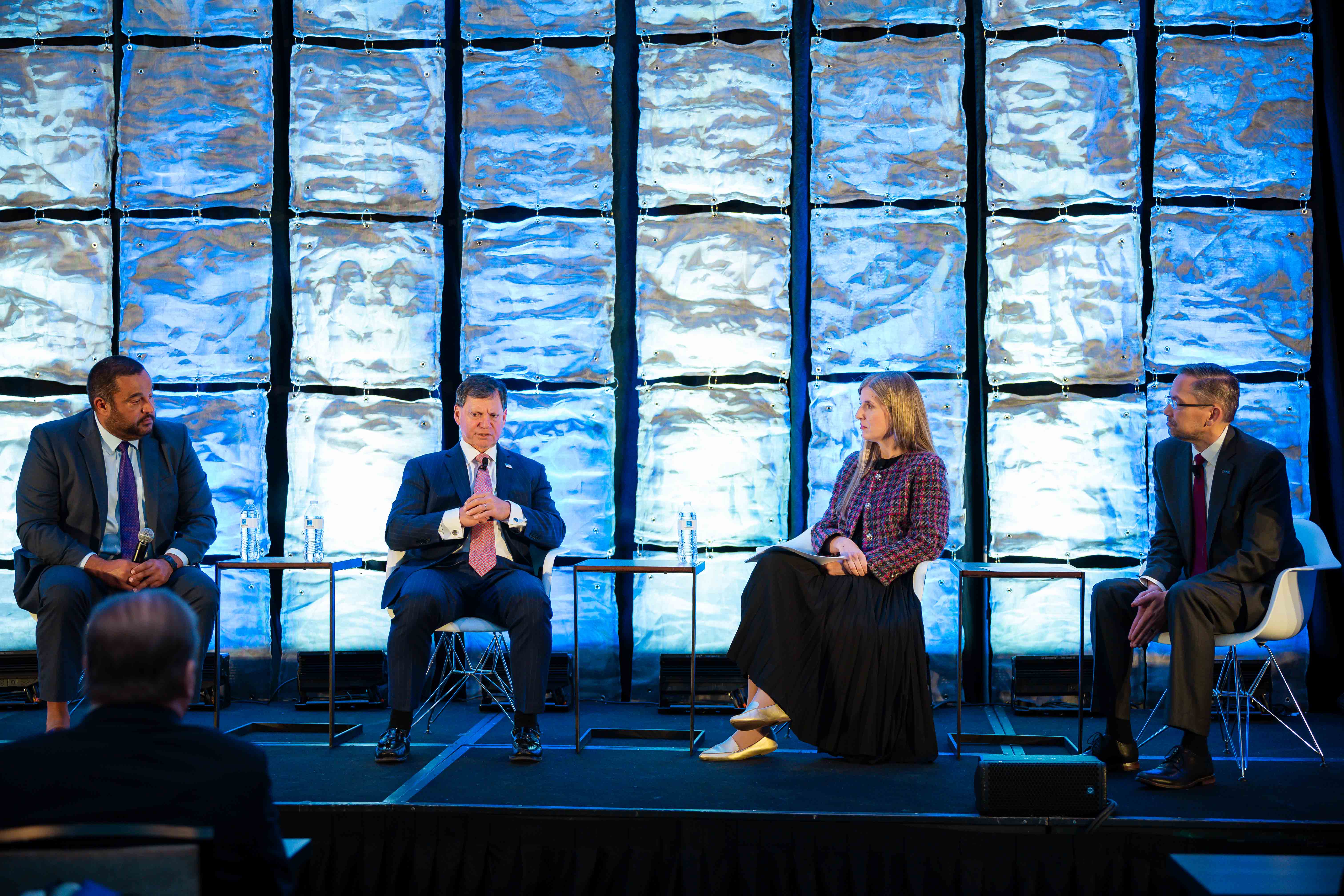
Our General Session brought a chance to hear directly from Commissioner Bisignano and Chief of Disability Adjudication Jay Ortis about the steps the agency is taking to address NOSSCR members’ concerns. As those in attendance witnessed, we asked the Commissioner and Judge Jay directly about the agency’s plans to digitize the endless forms that are currently required as part of the disability process, about their use of AI in decision-making, and about their plans to continue simplification of the SSI application. We called their attention to the inefficiencies caused by representatives’ inability to see the “status” provided to claimants on their mySocialSecurity account, we highlighted the immediate need for seeing wage report data earlier in the disability process and for digitally accessing the notice of award at the end of the claim, and we inquired about the possibility of moving additional application types online (like disabled widows and disabled adult children). The Commissioner and Judge Jay both responded thoughtfully to our questions and spoke about the agency’s current efforts to streamline the disability process while enhancing representatives’ access so that we can more effectively assist in the process. They both acknowledged that the role we play as representatives is crucial to the success of the disability program.
But it wasn’t all business! We gathered together with our fellow Circuit members to discuss local issues (and, as is tradition, the 7th Circuit impressed with their Happy Hour spread), we had a thrilling President’s Reception where our lucky Bingo by Benny winners were announced (with style, by NOSSCR member Freddie Effinger), and our NextGen members snuck out for some local culture (thanks to the generosity of Benny).
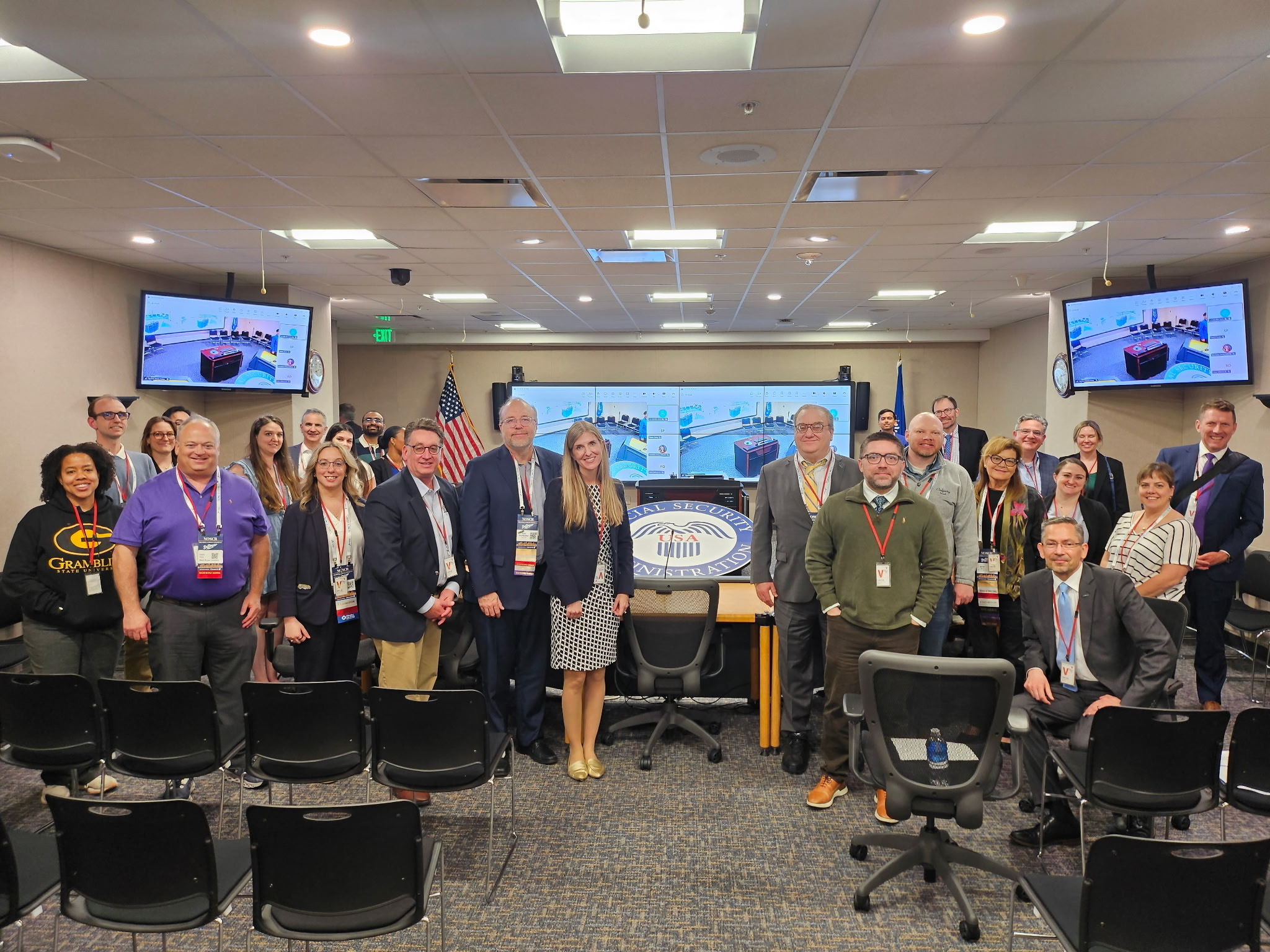
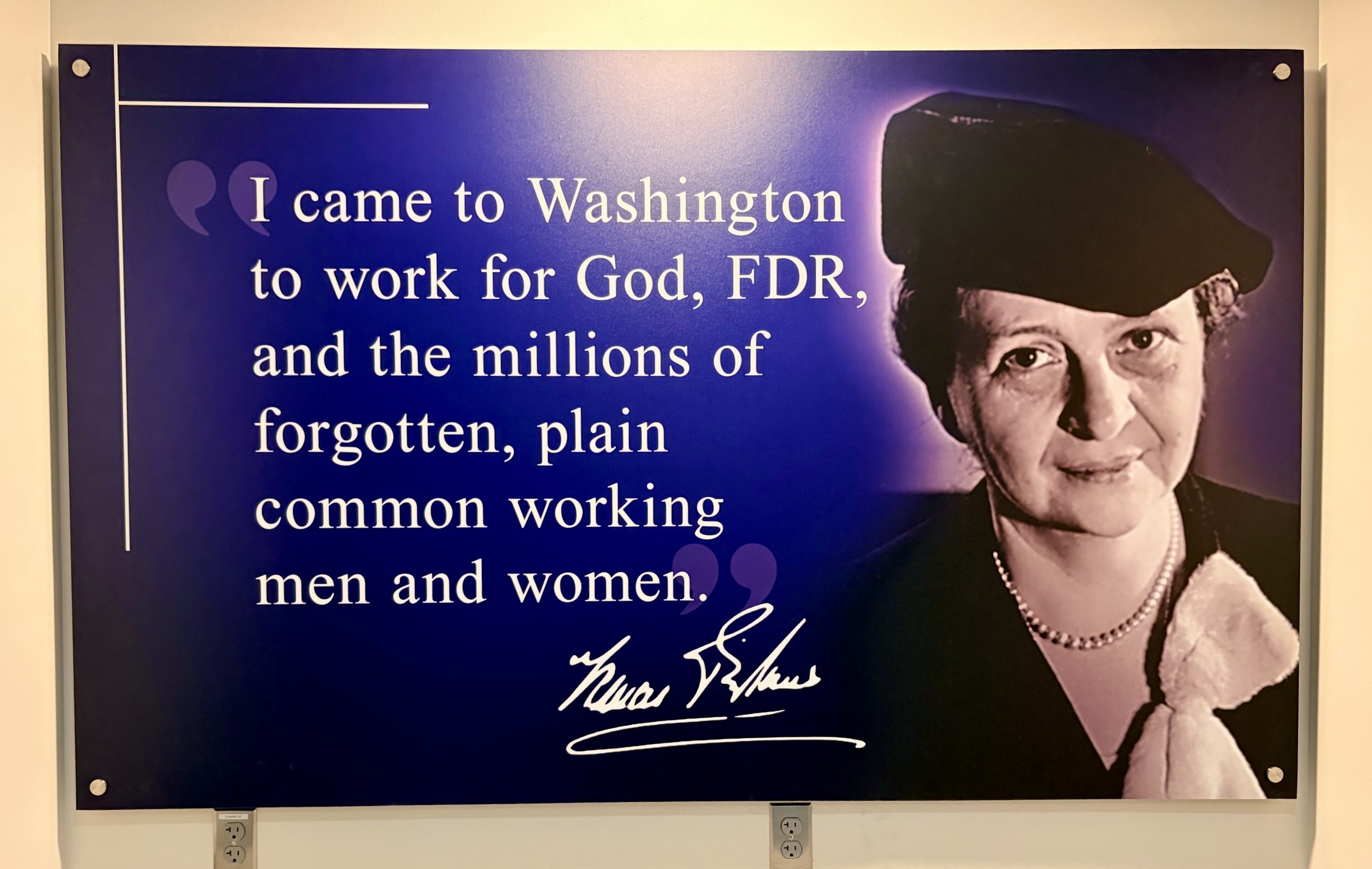
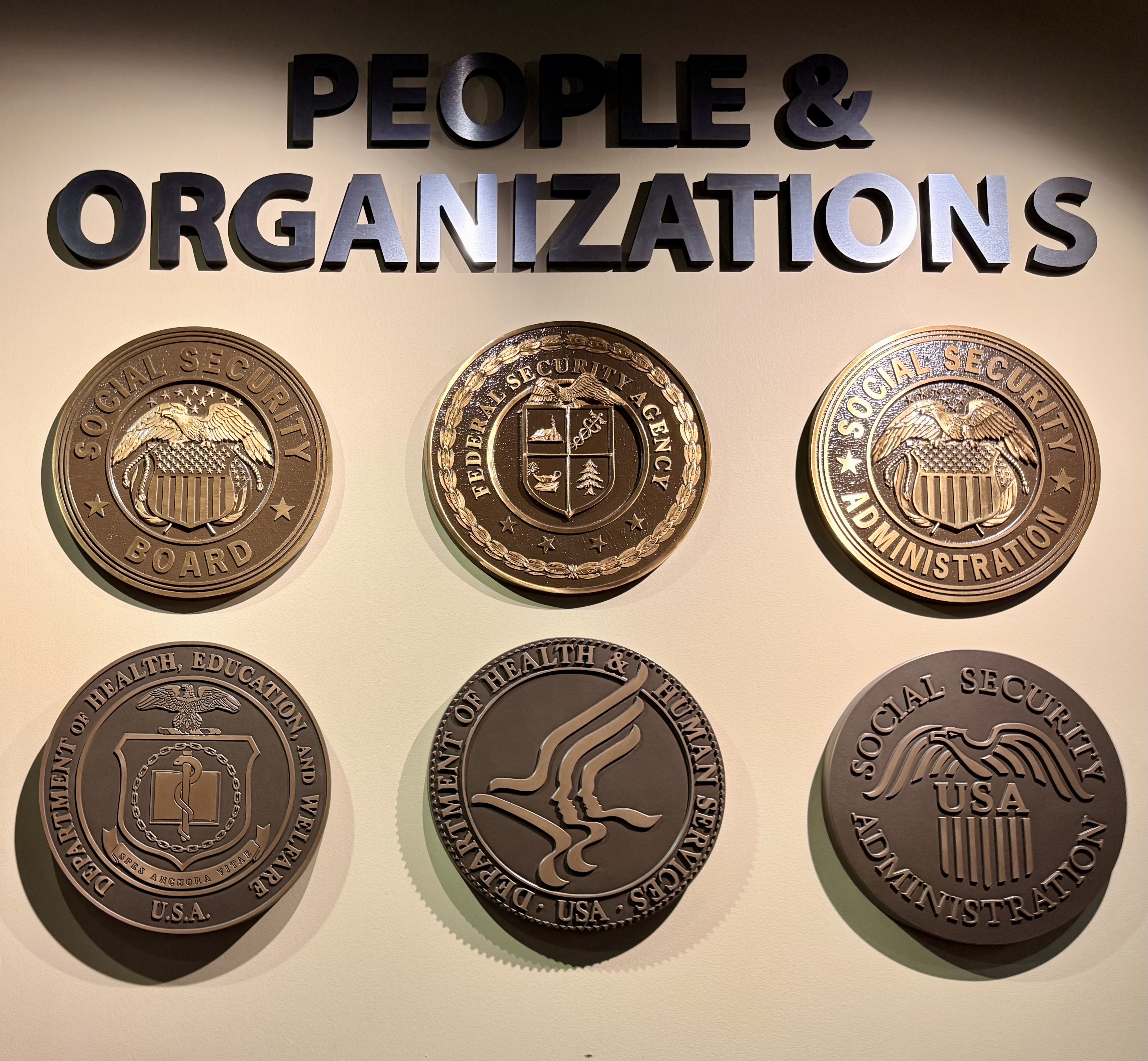
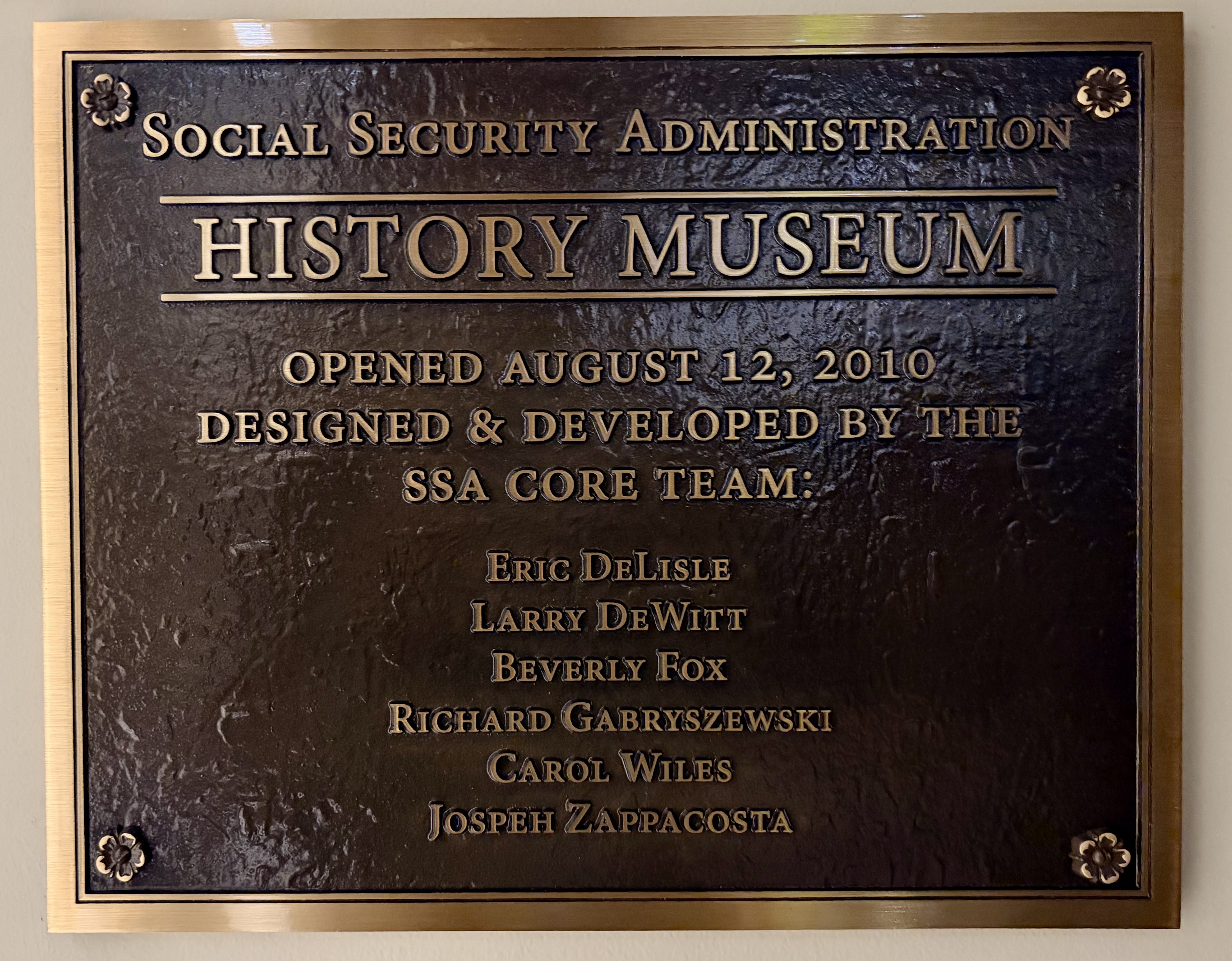
The week ended with a field trip to Social Security Headquarters where attendees received a detailed presentation from multiple SSA department heads about the improvements that are being made, including updates on the agency’s efforts to expand access to digital medical records, their forthcoming solutions for the processing of certain concurrent claims, their progress on reducing the pending case load, and their improvement to the efficacy of the Representative Call Center. SSA’s leadership generously fielded questions from our members, including inquiries about attorneys’ fees and post-entitlement issues, and we collectively engaged in a robust conversation about how to increase engagement with the Ticket to Work program. After the presentation, the agency opened the SSA History Museum just for our group, where we were treated to a tour from the agency’s chief museum docent, who dazzled us with endless fun facts – did you know there was once a Social Security board game? How about a series of comic books? And who could forget the SSA-themed radio shows starring Donna Fargo and her music? It was a thrilling capstone to an energizing week, we are grateful to those who were able to join us, and we are especially thankful to Atticus for providing our transportation.
If you were with us in person, we hope that you enjoyed your experience and have several tips and tricks you can put into practice right away. Now that you’ve had a couple of days to catch up on your inbox, we hope you’ll reach out to that new connection you made, or think more about the product that piqued your interest. Most importantly, we hope you’re inspired to come back for our next conference – and bring your colleagues with you! We’ll be gathering again from October 13-16, 2026 in Salt Lake City, Utah at the beautiful Grand America Hotel. We hope you’ll stay with us at the Grand America Hotel so that you don’t miss a moment of the action – we’re already busy planning new ways to take advantage of the beautiful surroundings! Registration is open – so lock in our best price today. And if Baltimore inspired you to take the stage, don’t miss your chance to be considered as a speaker for Salt Lake! Our speaker proposal window is open until May 31, 2026, so get those proposals in asap and help shape the conversation!
Whether you were with us in person, joined us online, or are looking ahead to the next chance you have to participate in one of our conferences, we are thankful for you, your membership, and your continued involvement in this great organization!

President’s Corner: From Baltimore, Then and Now
Rob Wendt, NOSSCR President
It was great to see so many of you last week in Baltimore at our national conference. Baltimore is the city where SSA’s operational headquarters were first opened in 1936, in the Candler Building, during the depths of the Great Depression and in the shadow of the rising threat of world war. In my remarks at the general session, I drew a parallel between the zeitgeist of that era from which the Social Security system was born, and the present time in which government leaders and citizens’ organizations including NOSSCR seek to renew and preserve this most successful and essential social contract.
President Roosevelt’s Social Security project drew a remarkable group of leaders and workers to build the nation’s first social insurance system from scratch, confronting the plague of poverty suffered by so many Americans, often through no fault of their own, from death, old age, and disability. Those men and women were inspired by a common purpose to improve the lives of their fellow citizens and future generations, and they quickly built the nation’s most successful anti-poverty program through a combination of imagination, innovation, and hard work.
In more recent times, SSA has suffered greatly from neglect and political controversy. Like an old house, its basic structure and purpose are sound, but it requires extensive renovation to avert collapse, and to restore its original beauty and usefulness. In many ways our current times are almost as dark and threatening as the 1930’s, but despite that darkness, and perhaps in response to it, there is a growing spirit of hope within the leadership of SSA, and in advocacy groups such as ours, that we can fix Social Security and extend its benefits for generations to come.
With that thought in mind, let’s reflect again on where NOSSCR is today, and what we can do together as an organization to renew and improve the disability program. Three years ago, when we moved to Washington, DC and rebuilt NOSSCR from the ground up, we resolved to unify the three major sectors within our community – small and medium-sized law firms and solo practitioners, large national disability firms, and legal services and non-profit organizations – to carry out our mission.
As challenging as that process has been, we have achieved many of our goals – an increase in the fee cap to account for inflation after almost 14 years of no increase, modern IT systems, an updated client referral system that generates significant income for NOSSCR while remaining affordable to the average NOSSCR member, and most importantly, becoming the leading advocates for improvement in the disability program before Congress and the Social Security Administration.
Last week, Commissioner Bisignano and his top leadership team in the newly organized Disability Adjudication division, appeared in person at the Baltimore conference and expressly acknowledged NOSSCR’s role as the agency’s valued partner in the ongoing overhaul of SSA’s operating procedures and systems. There is so much more work to be done and it’s imperative that NOSSCR continue to play a major role in the reformation of the disability program while we continue to provide first rate education and support to our members.
Every NOSSCR member brings something important to the joint project that is NOSSCR – your membership, your attendance at our national and regional conferences, your donations and sponsorships no matter how large or small, your volunteer time on committees or projects or in leadership positions, your presentations at CLE seminars, your advocacy for the disabled with members of Congress and in your community, and your diligent representation of your clients in administrative proceedings or in the federal courts.
I’d like to leave you with one final thought about your role as a NOSSCR member during this most unusual time. In her prize-winning book Empire of AI about the founding and evolution, or devolution, of OpenAI under the leadership of Sam Altman, author Karen Hao notes that in the early days of OpenAI, when the project was organized to change the world for the benefit of humanity, Altman had the following quotation, attributed to Admiral Hyman Rickover, the father of the US nuclear Navy, painted on the office walls:
I believe it is the duty of each of us to act as if the fate of the world depended on [them]. Admittedly, one [person] by [themselves] cannot do the job. However, one [person] can make a difference. Each of us is obligated to bring [their] individual and independent capacities to bear upon a wide range of human concerns. It is with this conviction that we squarely confront our duty to posterity. We must live for the future of the human race, and not of our own comfort or success.
No matter what you think of Admiral Rickover, Sam Altman, or OpenAI, the fact remains that the idea expressed in these words, was a driving force behind OpenAI’s extraordinary scientific achievements. We would do well to take this point of view to heart, as did the founders of Social Security so many years ago.
NOSSCR Awards the Eileen P. Sweeney Distinguished Service Award to Brian P. Hogan
The Eileen P. Sweeney Distinguished Service Award is designated for individuals whose outstanding service has resulted in a significant improvement in the quality of advocacy for Social Security claimants, an increase in the availability of advocacy for Social Security claimants, or an improvement in the Social Security adjudicatory process.
Eileen P. Sweeney was a nationally recognized expert on issues affecting people with disabilities who receive federal welfare benefits. From the time she was in college, through her work as a senior fellow at the Center on Budget and Policy Priorities in Washington, she sought to improve the lives of children, senior citizens, individuals with low income, and people with disabilities.
From 1998 until her death in 2006, her focus was the Temporary Assistance for Needy Families program and the Social Security and Supplemental Security Income programs. An advocate for the invisible in society, Ms. Sweeney assembled coalitions and coordinated litigation to help the people she thought needed it most. With this award, we honor her exemplary character and career.
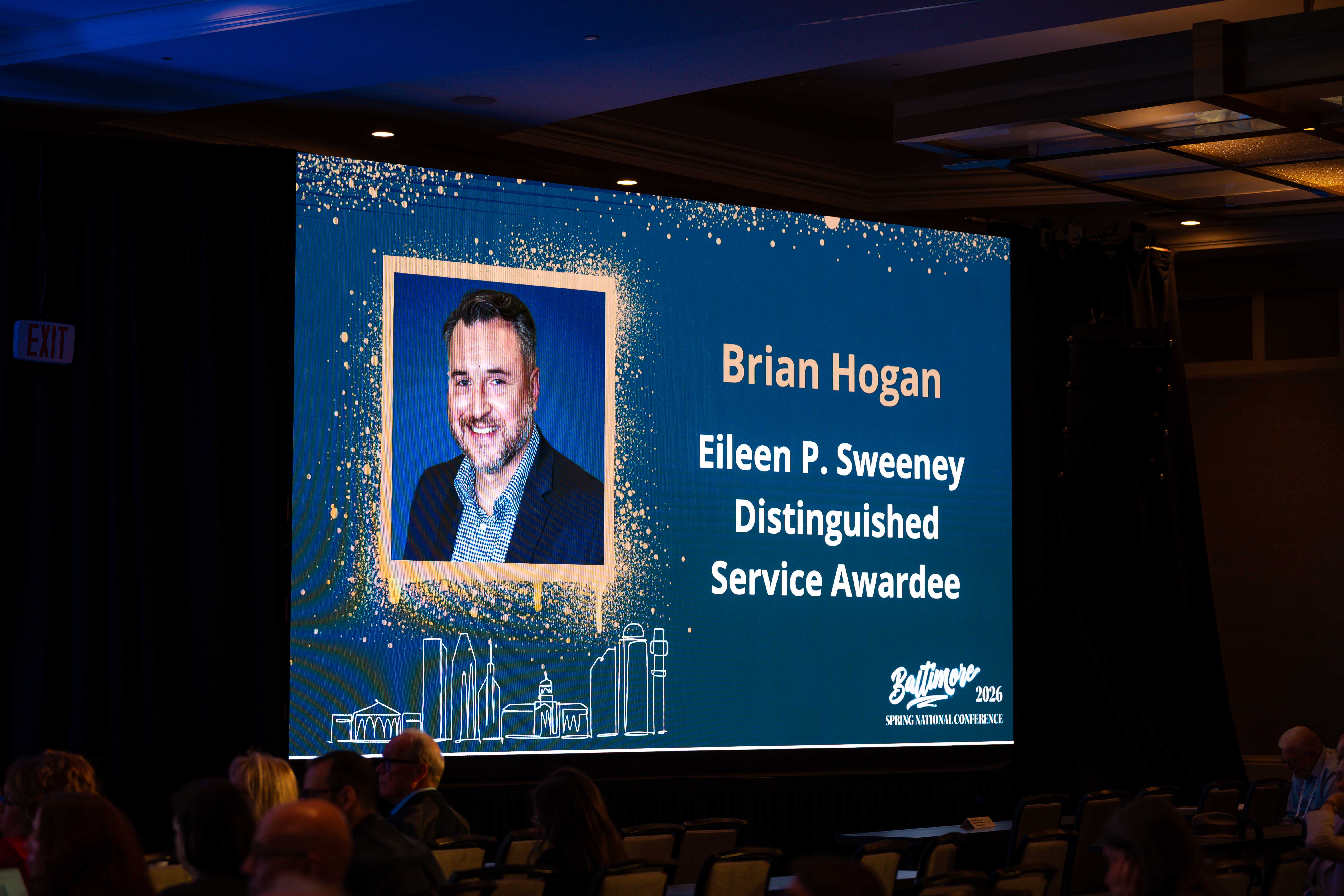
During NOSSCR’s 2026 Spring National Conference, it was our honor to award the Eileen P. Sweeney Distinguished Service Award to Brian P. Hogan.
Currently the Deputy Director of Nutrition, Division of Child and Family Well-Being at the North Carolina Department of Health and Human Services, Brian previously served as the Public Benefits Practice Group Manager at Legal Aid of North Carolina, where he dedicated over nine years to improving the lives of his fellow North Carolinians.
While at Legal Aid, Brian helped create Legal Aid of North Carolina’s statewide Medicaid advocacy project, the Medicaid Assistance Technical Team, and directly supervised the public benefits casework in the Triad Region, including the Medical-Legal Partnership casework in Greensboro.
He received his B.A. and J.D. from the University of North Carolina at Chapel Hill. He is licensed to practice in both North Carolina and California and is certified as a specialist in Social Security Disability Law by the North Carolina State Bar. He had been an active member of the North Carolina Advocates for Justice Disability Advocacy Section’s Executive Committee and an integral member of NOSSCR for many years.
Last year, when Hurricane Helene devastated parts of Western North Carolina, Brian worked tirelessly to ensure that affected North Carolinians would not face disrupted application processes. Brian initiated efforts to flag claims of those in impacted zip codes, met with the Regional Commissioner and Communications Director, and helped achieve key, measurable results. As a result, those in Western North Carolina impacted by Helene did not have their Social Security benefits adversely affected as a result of receiving FEMA relief, did not suffer penalties because of delays in forms, and did not lose out on benefits due to an inability to physically attend exams or appointments. Brian led a team composed of Legal Aid of North Carolina, Pisgah Legal Services, then-NOSSCR President Rick Fleming, and then-Chair of the North Carolina Advocates for Justice Disability Advocacy Section, Ashley Sappenfield. Together, this team took its message directly to Atlanta and Woodlawn, meeting with key players to ensure those at risk were protected. Brian is to be commended for his careful and deliberate advocacy.
Brian’s ongoing commitment to advocating individuals with low-income and people with disabilities who are navigating the complexities of public benefits, nutrition, and health law, his dedication to the people of North Carolina, and his quick and decisive actions in the immediate aftermath of Hurricane Helene make him the perfect recipient of this year’s Eileen P. Sweeney award. While Brian was unable to join us in Baltimore, fellow North Carolina practitioners Rick Fleming and Ashley Sappenfield presented and accepted the award on Brian’s behalf. Read Brian’s acceptance speech below:
Thank you to Jennifer Cronenberg and the NOSSCR Board for this extraordinary honor.
I want to say at the outset that this recognition doesn’t belong to me alone. When Commissioner O’Malley asked ‘how can we help,’ the response from North Carolina was a collective one, and this award belongs to everyone who answered.Ashley and Rick were central to that effort. My former colleagues at Legal Aid of North Carolina, especially Celia Pistolis, Alicia Edwards, and our Disaster Relief Project team, carried this work alongside our partners at Pisgah Legal Services in Western North Carolina. Thank you all for demonstrating what our bar and our legal aid community do best when it matters most.
It is a particular privilege to receive an award named for Eileen P. Sweeney, and humbling to have my current work connected to hers through CBPP. I’m grateful to Kathleen Romig, who made that bridge possible, and to my colleagues at NCDHHS, especially Director Yvonne Copeland and the Division of Child and Family Well-Being team, who were running toward Western North Carolina in those same weeks to address nutrition security.
Looking further back, I owe a great deal to Rubicon Programs, where Kelly Dunn and Rosemary Dady taught me the fundamentals of Social Security law. They didn’t just teach me the SSI regulations at 20 C.F.R Part 416; they showed me that being a lawyer and having a genuine love for those we serve are deeply connected. And to Jen Burdick, Kristin Dama, John Whitelaw, Kate Lang, Emilia Sicilia, Michelle Spadafore, and many, many others in the national SSI advocacy community these advocates have built at Community Legal Services of Philadelphia, NYLAG, and Justice in Aging: thank you for shaping the Social Security lawyer I became. Everyone in this room owes more to you than we know for steering the past, present, and future of SSI.To NOSSCR, to the NC Social Security Bar, and to everyone who answered the call after Helene: thank you.
Dispatches from Camp: The Value of Being There
David Camp, NOSSCR Senior Policy Advisor
I’ve always been focused on Social Security policy. For me, a NOSSCR conference is especially helpful–sometimes eye-opening, and always motivating. Our recent time together in Baltimore was more than just a series of CLE sessions; it was a strategy summit for us. As your advocate, I often spend my days navigating the hallways of the Hill or SSA’s HQ, but the “boots on the ground” insights I gather from you—in the exhibitor hall, over dinner, in hotel lobbies, and between CLE sessions—are what truly fuel NOSSCR’s advocacy engine.
We exist to be your voice. Whether you’re navigating SSA’s representative portals, gathering medical records, or dealing with a difficult case, it is our job to set you up for strong representation that focuses on the law and the facts–not bureaucratic friction.
The conversations in Baltimore helped sharpen our focus on several key legislative and policy fronts that we are pushing forward this spring. Several members discussed with me the cost of denying SSI to residents of Puerto Rico and other territories. Others emphasized the importance of eliminating the SSI “marriage penalty.” Many of you expressed concerns about the security of the sensitive information we entrust to the agency.
Our work goes on. NOSSCR is organizing advocacy days in Washington, D.C., to bring these “real world” practitioner stories directly to Members of Congress. There is no substitute for an appointed representative explaining to a congressional staffer exactly how an outdated asset limit prevents a disabled American from meeting their basic needs, or the effects of waiting a month for a box of paper medical records packaged with an invoice.
Please join us for our next national conference in Salt Lake City this October. These gatherings are the best way we can aggregate the collective wisdom of our membership to drive meaningful change. Register now for the 2026 Fall National Conference.
If you have insights from your practice that you believe should be on our legislative radar, or if you want to join our advocacy efforts in D.C., please reach out to us at nosscr@nosscr.org. Together, we’re turning individual frustrations into systemic solutions.
For daily updates on the latest Social Security happenings, follow me:
Conference + Adventure: See You in Salt Lake City
NOSSCR’s Fall National Conference is headed to Salt Lake City, Utah, October 13-16, 2026 — and we want you to bring your colleagues, your family, and your sense of adventure.
The conference wraps up mid-day Friday, October 16, but we’ve secured a few select rooms in our hotel room block through the weekend so you can stay Friday and Saturday night at our discounted group rate. October in Utah is spectacular: crisp mountain air, peak fall foliage, and no shortage of things to do.
Bring the kids (or have them join you Friday morning) and enjoy a special fall-tastic long weekend. Salt Lake City’s Natural History Museum of Utah spans five floors of incredible paleontology and Utah history. Or take a quick trip to Snowbird, just 30 minutes from downtown, and enjoy a mountain roller coaster, alpine slide, ropes course, and a scenic tram ride to 11,000-foot Hidden Peak. The Heber Valley Railroad runs fall foliage train rides throughout October, complete with pumpkin cookies and a pumpkin patch outing. And Antelope Island State Park on the Great Salt Lake makes for an unforgettable day trip.
Don’t miss your chance to combine a great conference with a great family trip. Register early, book your extra nights, and make a week of it — Salt Lake City will not disappoint.





Piemonte’s Perspective: Document Preparer VE Cross Examination Guide
George Piemonte, NOSSCR Past President
Last month, I gave some suggested cross-examination questions for the job Marker. This month, we are going after Document Preparer. Below is a suggested Cross‑Examination of the VE about this job. It is by no means exhaustive.You will not necessarily need to use every question, and you should expect to adapt, add to, or modify them based on the VE’s testimony. These questions are intended as a guide, tools to help you shape a focused and effective cross-examination, not a script to be followed verbatim.
DOT 249.587‑018 – Document Preparer
I. Foundation: Basis of the VE’s Testimony
- You testified that the DOT job of Document Preparer, Microfilming DOT 249.587‑018, still exists today primarily as a document scanning job, correct?
- And you testified that, despite technological changes, the job remains sedentary and unskilled, is that right?
- The DOT description of Document Preparer, Microfilming has not been updated since 1986, correct?
- So when you testify about how this job is performed in today’s economy, you are relying on sources other than the DOT, such as labor market experience, employer contacts, or job postings?
- The DOT description of Document Preparer does not mention modern imaging centers, production quotas, scanning equipment, or digital workflow systems, does it?
II. Exertional Demands: Standing, Walking, and Material Handling
- In your experience, modern document scanning jobs typically involve physically handling paper records, boxes, and files, correct?
- Employers generally require workers to remove staples, sort documents, organize pages, and prepare physical records for scanning, correct?
- That work is often done at tables or workstations that require standing, rather than seated work, correct?
- Many scanning jobs require employees to stand for much of the workday, sometimes for several hours at a time, don’t they?
- Would you agree that standing for most of the workday is not consistent with sedentary work as defined by Social Security regulations?
- Are you aware that employers frequently require scanner employees to lift and move boxes of documents?
- Isn’t it common for these boxes to weigh 40 to 50 pounds?
- Sedentary jobs, by definition, do not require frequent lifting of that magnitude, correct?
- So if a modern “document preparer” job requires standing most of the day and lifting boxes of paper records, it would exceed sedentary exertional limits, wouldn’t it?
III. Pace, Production Rates, and Work Pressure
- Modern scanning positions are typically production‑based, with daily or hourly productivity requirements, correct?
- Employees are expected to meet speed and accuracy quotas, measured by how many documents or images are processed, right?
- These quotas are tracked electronically and monitored by supervisors or software systems, aren’t they?
- If a worker falls behind in productivity, there may be disciplinary consequences, correct?
- Would you agree that working at a constant production pace, maintaining speed while ensuring accuracy, places greater demands on concentration and stress tolerance?
- The DOT description for Document Preparer does not describe fast‑paced, quota‑driven production work, does it?
IV. Skill and Cognitive Demands
- The DOT classifies Document Preparer as unskilled, correct?
- Unskilled work generally requires only simple duties that can be learned in a short period of time, correct?
- Modern scanning jobs require workers to review scanned images for quality, clarity, and completeness, don’t they?
- Workers must identify missing pages, scanning errors, or misfiled documents, correct?
- Isn’t that a form of quality control and error detection rather than simple repetitive labor?
- Many scanning jobs also require workers to operate computer systems, imaging software, and document management databases, correct?
- Would you agree that using multiple computer programs and validating image accuracy goes beyond the mental demands of simple, unskilled work?
- The DOT’s Document Preparer description does not reference computer‑based imaging systems or electronic quality verification, does it?
V. Environmental and Physical Stressors
- Modern document scanning is usually performed in production facilities or imaging centers, correct?
- These environments often involve moderate to high noise levels from scanning machinery, right?
- Workers are expected to maintain focus and accuracy despite those environmental distractions, correct?
- Sedentary unskilled jobs in the DOT typically do not involve sustained exposure to production‑floor noise or machinery, do they?
VI. Erosion of the Occupational Base
- You would agree that jobs evolve over time as technology changes?
- And when the essential functions of a job materially change, it may no longer match the DOT description, correct?
- Based on modern employer expectations: standing most of the day, lifting boxes, meeting production quotas, operating scanning equipment, and performing quality checks, would you agree that today’s “document scanning” jobs differ significantly from the DOT’s sedentary Document Preparer description?
- If those modern requirements exceed sedentary exertion or simple unskilled work, then the DOT occupation would not be a valid representative job for someone limited to sedentary, unskilled work, correct?
- And if the DOT title no longer accurately reflects how the job is performed, then the job numbers you provided based on that DOT code would be unreliable, wouldn’t they?
VII. Closing Concession
- So to be clear: if modern document scanning work requires standing most of the day, lifting boxes of paper records, sustaining fast production quotas, and using computer imaging systems, it would not be consistent with a sedentary, unskilled job as defined by Social Security regulations, correct?
Here are two job descriptions as of April 2026 from two different companies for the scanner job:
- Iron Mountain:
In this role, you will be responsible for accurately preparing and scanning physical documents into digital formats, playing a vital part in our information conversion objectives. You will be part of a dedicated team focused on transforming hard copy records into high-quality electronic images.
What You’ll Do – In this role, you will:
- Prepare hard copy records for scanning by accurately sorting, removing staples, and ensuring all documents are maintained in the correct order and sequence.
- Operate scanning equipment to convert physical files into high-quality electronic images, ensuring all output meets strict quality standards.
- Follow all production procedures, complete internal tracking documentation, and adhere to Imaging Center guidelines for a clean and secure work environment.
What You’ll Bring – The ideal candidate will have:
- A High School diploma or equivalent.
- The ability to remove staples, sort, file, and box records while maintaining accuracy, combined with basic familiarity with Personal Computers (PC).
- A strong focus on detail and accuracy , with the proven ability to work independently at a sustained pace to meet production rates.
- Proficiency in reading, writing, and communicating in English , the flexibility to work overtime (OT) or weekends as needed, and the physical ability to lift and move boxes up to 40 lbs frequently.
- Ricoh:
Job Description: Field Representative I, Document Imaging Position Profile
Ensures and maintains customer satisfaction according to company standards of quality and output by preparing, scanning, inspecting, compiling, and assembling documents.
Job Duties and Responsibilities:
- Performs full-performance level work in the conversion of hard copy letters, forms, and other paper documents into an electronic imaging format.
- Prepares documents for scanning by removing staples, paperclips, rubber bands, etc., for the document scanning process.
- Reviews the paper record against the electronic document to verify image quality and identify missing documents.
- Verifies and validates image/document errors and makes necessary changes as needed.
- Maintains productivity and quality levels in accordance with current standards.
- Reviews each scanned record for accuracy and clarity of the scanned product.
- Scans all new documentation received and loose paperwork.
- Meets deadlines in a fast-paced environment while maintaining quality and error-free work.
- Achieves time productivity statistics by meeting established standards.
- Maintains optimal machine performance, including basic maintenance (clearing jams, refilling toner, etc.).
- Completes all paperwork in a timely, accurate, and legible manner.
- Communicates problems effectively and promptly to the manager.
- Prevents assembly errors by maintaining an organized workstation.
- Achieves customer satisfaction by performing error-free jobs per customer specifications using various imaging technologies for Digital Mail and Imaging operations.
- Duties may include shipping and receiving, including handling of USPS materials.
- Additional duties may be assigned as needed.
Qualifications (Education, Experience, and Certifications):
- High school diploma or equivalent.
- Basic PC skills.
- Basic computer data entry experience.
- Basic typing and data entry skills.
- Intermediate computer skills, including but not limited to Microsoft Word, Outlook, and Excel.
Knowledge, Skills, and Abilities:
- Utilizes critical thinking and attention to detail.
- Ability to perform repetitive tasks while maintaining focus.
- Ability to retain information and maintain a high level of accuracy.
- Ability to work effectively in a team environment by maintaining positive, productive relationships with co-workers, management, sales, and production departments.
- Ability to adapt to changing situations and remain flexible.
- Strong organizational skills with the ability to multitask and meet deadlines.
- Ability to interact with EDMS, computer databases, and other computer software.
- Ability to analyze situations, problems, and information and take appropriate action.
- Ability to perform repetitive work by continuously executing different tasks according to set procedures, sequence, or pace while maintaining quality and output standards.
Working Conditions, Mental and Physical Demands:
- Ability to work multiple shifts, including nights, weekends, overtime, and holidays, depending on work volume and customer needs.
- Ability to work in a production facility with moderate to high noise levels.
- Ability to manage moderate stress levels and cope with stressful situations for extended periods of time.
- Position often requires standing for at least eight (8) hours per day.
- May be required to lift and move supplies weighing up to 50 lbs. from floor to waist height, carry them up to 10 feet, and lower them back to the floor.
The views and opinions expressed in this article are the author’s own and do not necessarily reflect the views of NOSSCR, its leadership, or staff.
A NOSSCR Top Advocacy Priority is Launched: The RECON Act and the Power of Choice
David Camp, Senior Policy Advisor
For decades, the NOSSCR community has had to help clients while they wait months for a “reconsideration” decision that everyone knows will be a near-verbatim copy of the initial denial. We have called it a “rubber stamp,” a “redundant step,” and a “built-in delay.”
Last week, our collective advocacy, fueled by your stories and the relentless efforts of our members, reached a milestone. On April 24, 2026, Congresswoman Valerie Foushee (NC-04) introduced the Respecting Every Claimant’s appeal Options Now (RECON) Act. This legislation represents a shift in our strategy—moving from a call for the total elimination of reconsideration to a more nuanced, “claimant-election” approach: making the process optional.
This is more than just a procedural change; it is an addition to the due process rights of the Americans who rely on the integrity of the disability claims system.
To understand why the RECON Act is necessary, we must look at the atrocious wait times currently facing our clients. As of 2026, Social Security still has a backlog of more than 800,000 pending applications. Currently, when an applicant receives an initial denial, they are required to complete the reconsideration review—a second look by the same state DDS office—before they can request a hearing before an ALJ. This step adds an average of roughly 8 months to the process, yet it produces a different outcome in under 20% of cases. For the overwhelming majority of claimants, reconsideration is simply a roadblock that keeps them away from the step where they have a genuine opportunity to be heard: a hearing before a judge.
The RECON Act: How it Works
The legislation is a focused and short amendment to the Social Security Act. The bill amends Title II and Title XVI, specifically Section 205(b)(1) (for SSDI) and Section 1631(c)(1)(A) (for SSI). The language is simple: “The Commissioner may not require reconsideration of the initial decision or determination prior to the hearing.” This one sentence transforms the entire claims process. It empowers the claimant to decide: “Do I want the DDS to take another look, or do I want to move directly to a hearing?” If passed, the amendments would apply to any initial decision or determination made on or after the date that is one year after the date of enactment. This gives the SSA a necessary “runway” to adjust its internal systems and staffing. There would be no change to the reconsideration step on termination/cessation cases.
Why Choice Wins
NOSSCR’s position on reconsideration has evolved. In 2023, we testified before the House Ways and Means Subcommittee, advocating for the total elimination of the stage. We pointed to the success of the 20-year pilot program (1999–2018) in 10 states where reconsideration was eliminated, which allowed claimants to receive benefits months sooner without sacrificing accuracy. However, by 2026, our advocacy strategy has refined. We now support optional reconsideration.
Why the Change?
Some cases are successfully resolved at reconsideration—roughly 7.8% of all awarded claims in FY 2024. For a claimant with new, definitive medical evidence, a quick “recon” award could be better than a wait for a hearing. By making it optional rather than eliminating it, we maintain every avenue of review while allowing most to bypass the delay. Social Security spends a billion dollars every two years on reconsideration–funds better allocated to quality. By allowing claimants to waive reconsideration, Social Security can redirect resources—and examiners—to the backlog of initial claims, where an increase in quality is so badly needed.
Our Allies and Advocates
NOSSCR is not alone in this fight. The RECON Act is a product of a broad coalition of advocates who recognize that the current system is failing our clients. We look ahead to working with our advocacy partners on this compelling improvement. A special shout-out is due to our North Carolina members, whose local advocacy was instrumental in Rep. Foushee’s leadership on this bill. Rick Fleming, NOSSCR Past President, noted that “Empowering claimants with the option to skip a year of unnecessary delay… will save lives.” Ashley Sappenfield, NOSSCR Treasurer, echoed this, stating, “we enthusiastically endorse this effort to improve the due process options for disabled claimants.”
Collaboration with Social Security
As I wrote to Commissioner Frank Bisignano in 2025, NOSSCR views Social Security as a partner. We know the agency is struggling with operations improvements and the effects of decades of stagnated policy. The RECON Act is a constructive solution. It doesn’t ask for more money; it asks for more efficiency. By removing the mandatory nature of reconsideration, we can move DDS examiners from redundant reconsideration reviews to the initial claim backlog.
How You Can Help
The introduction of the RECON Act is the latest advance, but not the end. We have the bill text; now we need the votes. NOSSCR is organizing a multi-front advocacy push, and we need your expertise as practitioners. There is no substitute for an advocate explaining to a Congressional staffer exactly how an 8-month delay in a “rubber stamp” review prevents a disabled American from meeting their basic needs. If your local Representative isn’t yet on the bill, we need you to reach out. We can provide talking points and data specific to your state’s DDS wait times. We’re organizing advocacy days in Washington, D.C., later in 2026 and 2027. We want to bring our members to the Hill to meet with decision-makers face-to-face. Contact your Congressional offices in your home states. Let them know how the RECON Act would help your clients—their constituents.
Please email us at nosscr@nosscr.org if you are ready to help us move this legislation forward. The RECON Act is about more than just numbers and regulations. It is about due process.
Highlights from the Exhibit Hall
Esterien Keet, NOSSCR Chief Strategy Officer
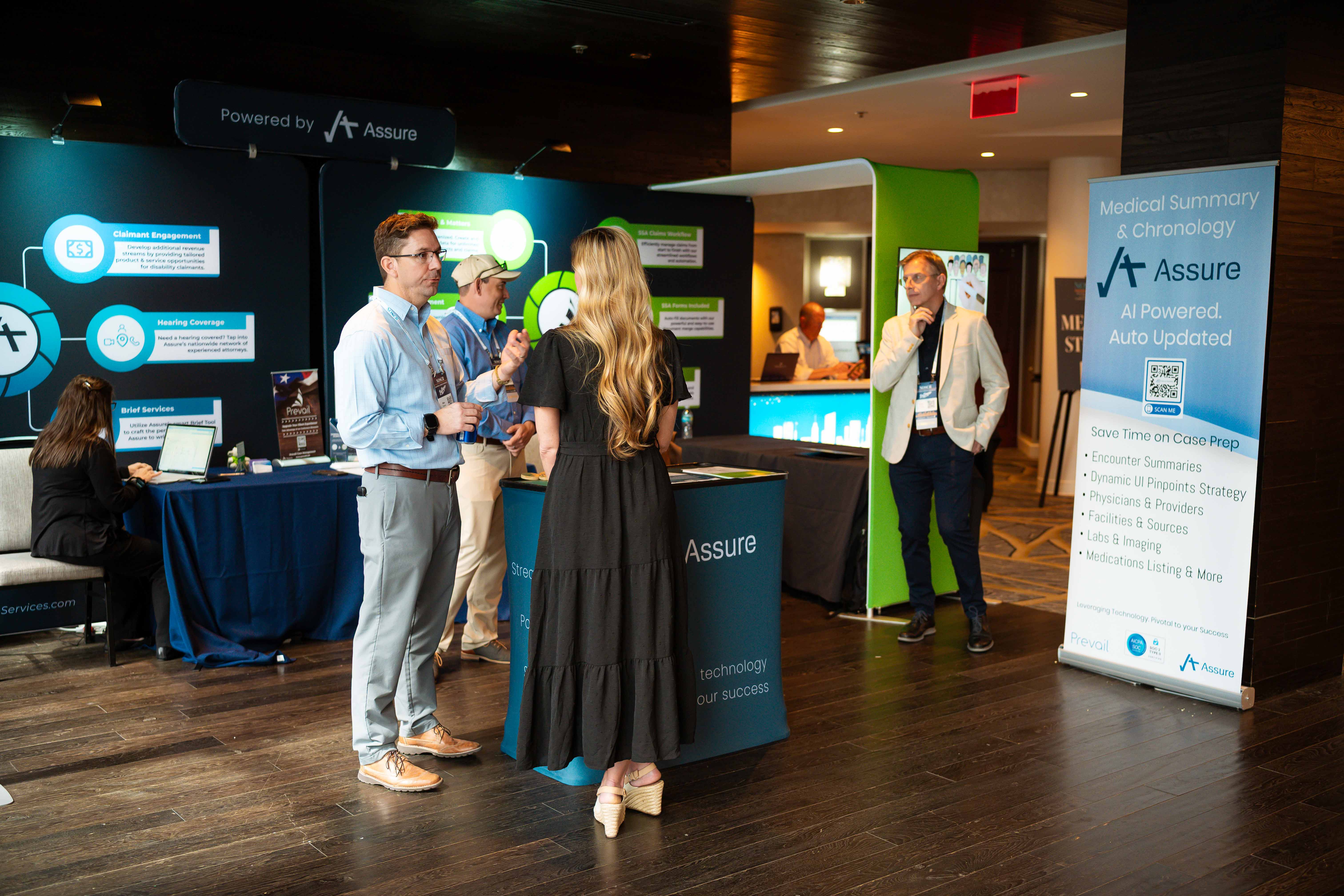
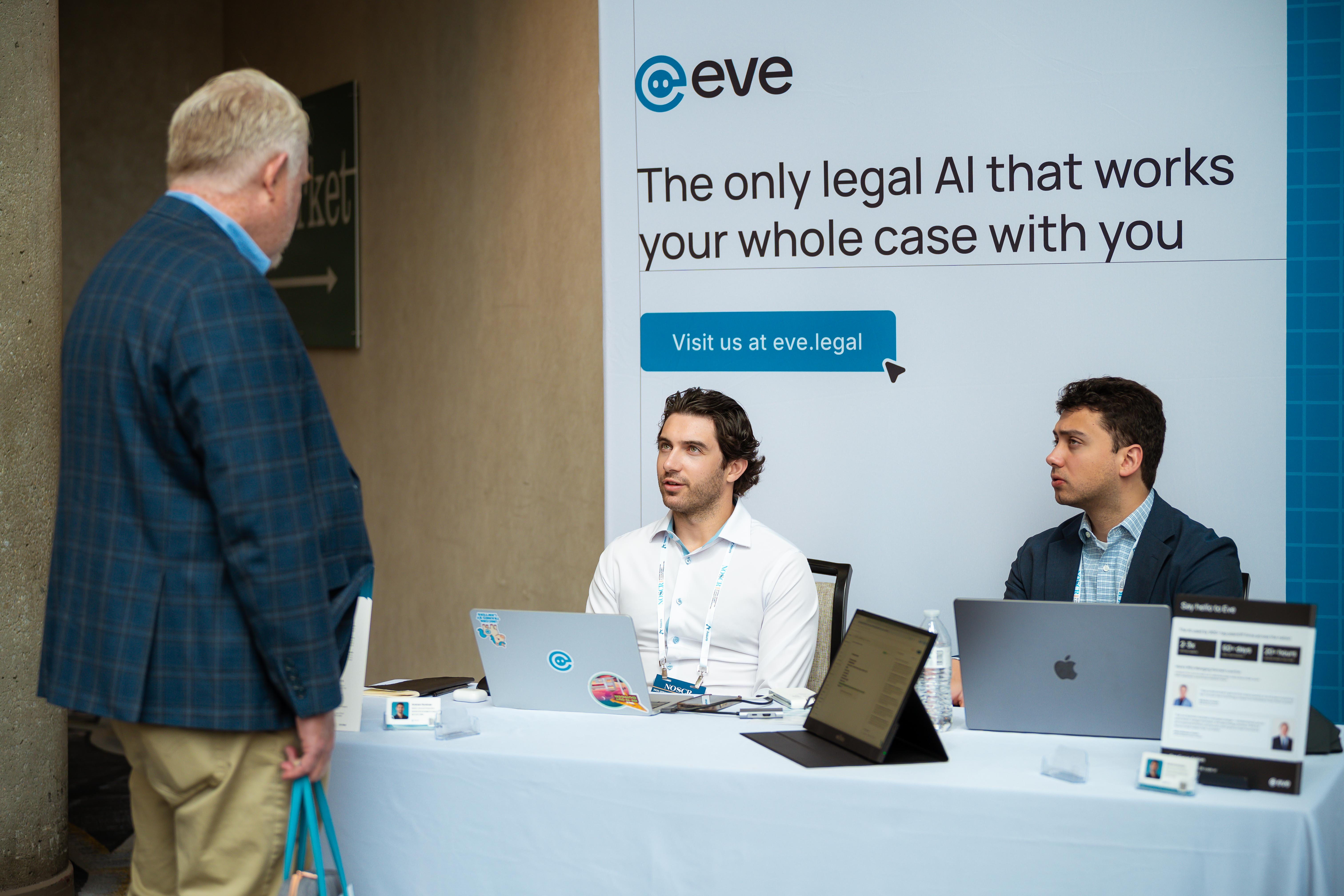
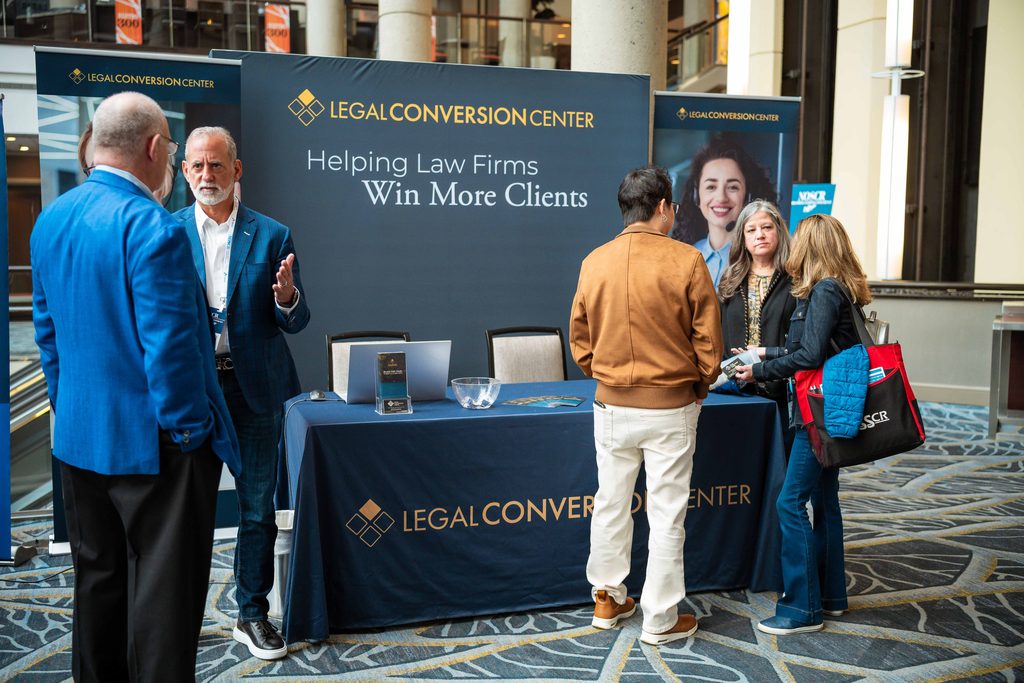
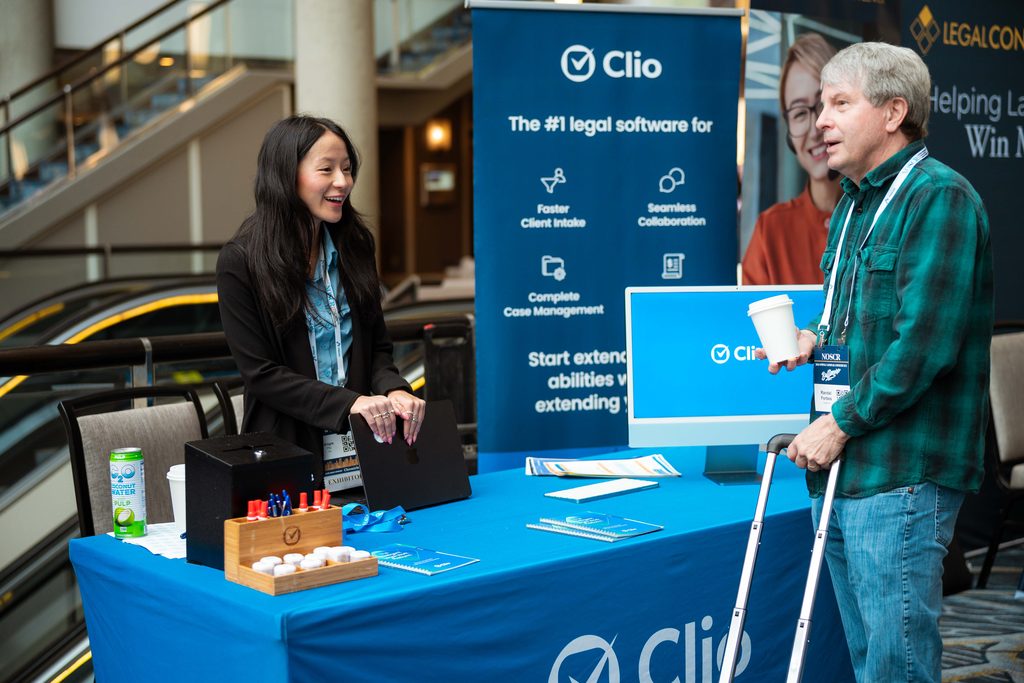
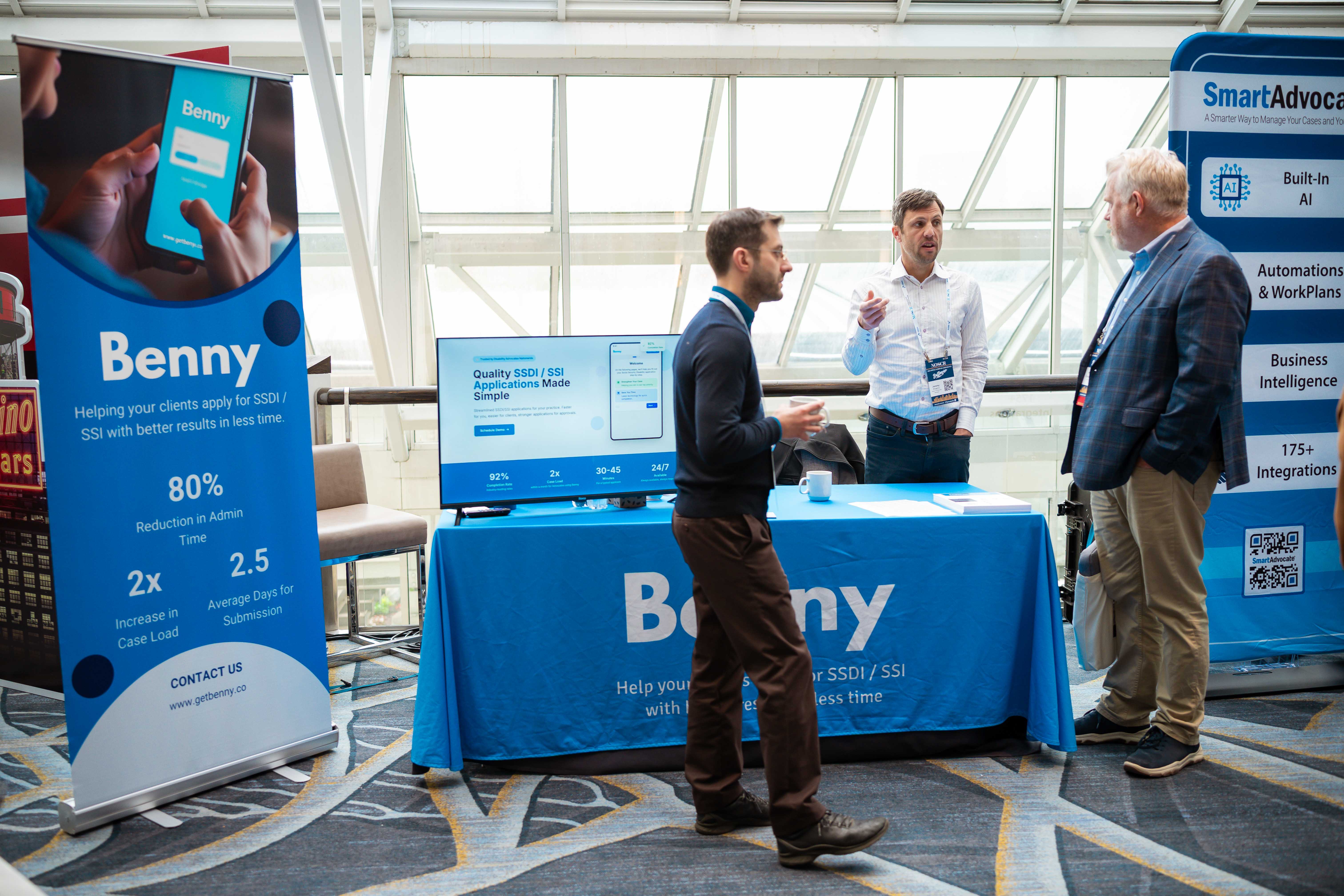
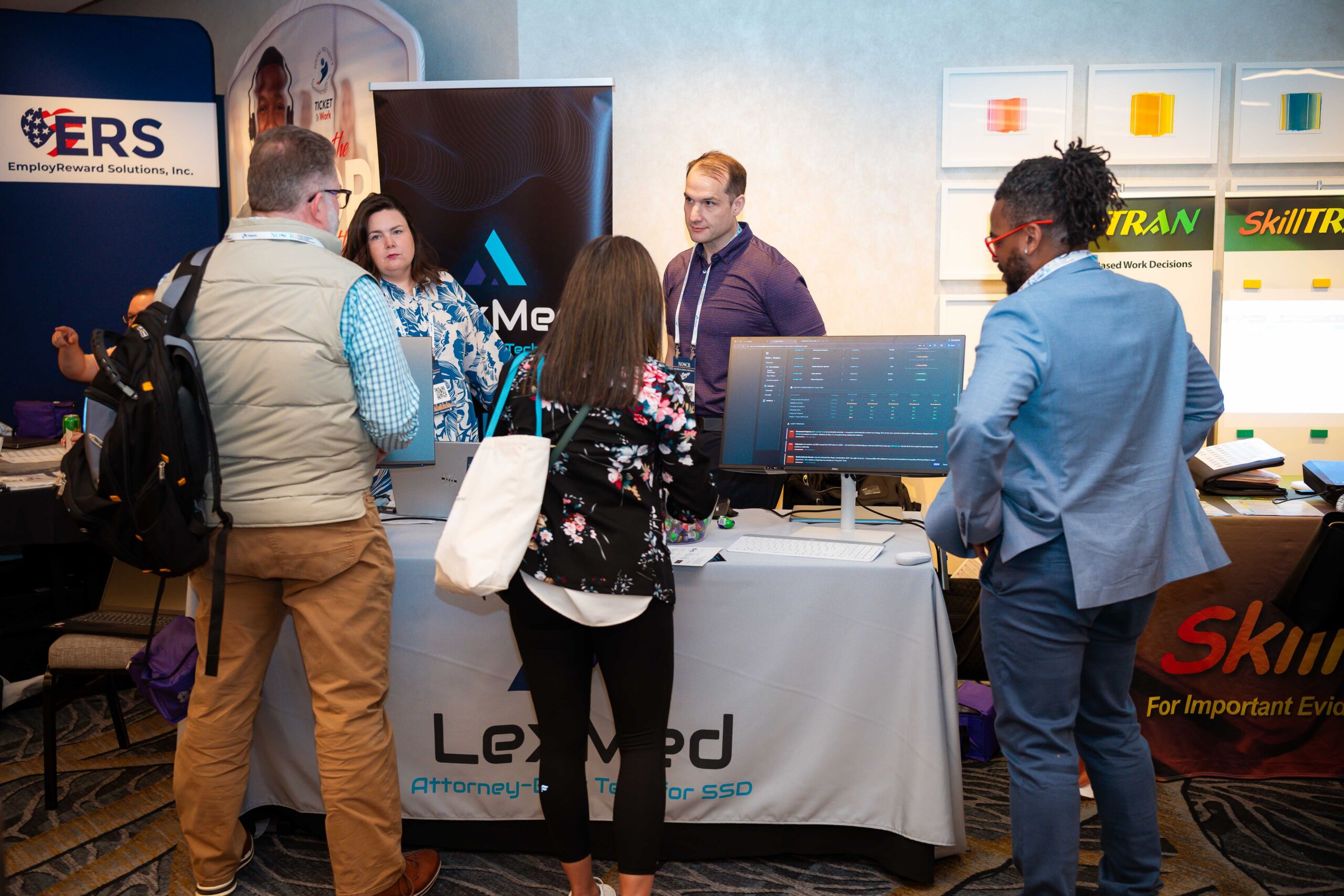
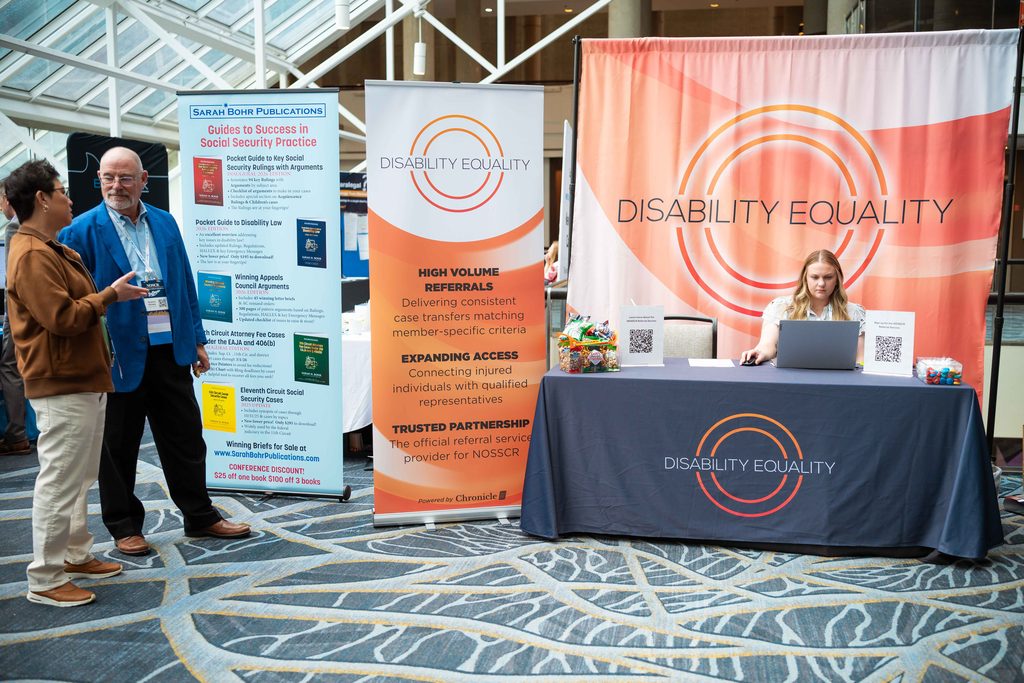
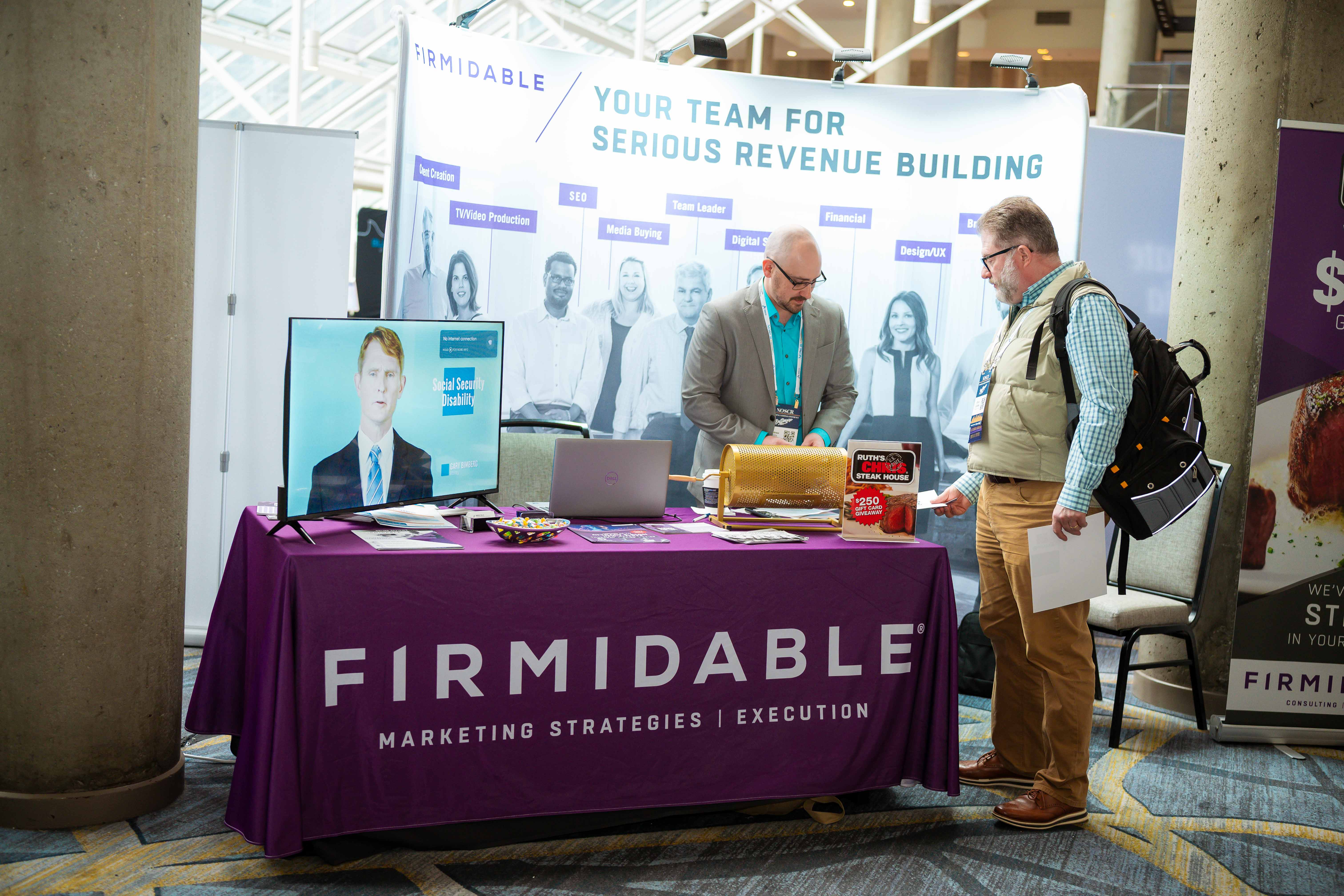
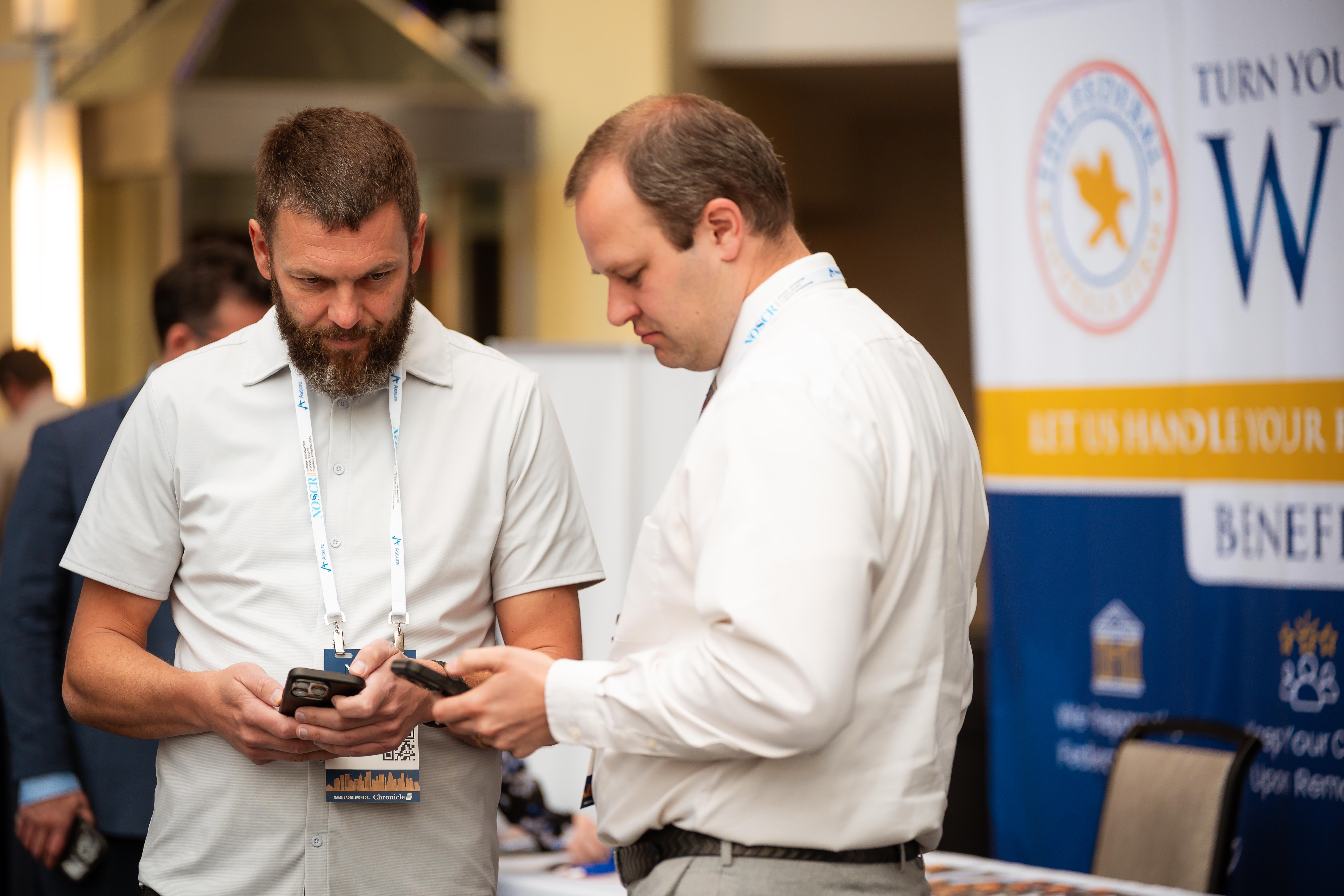
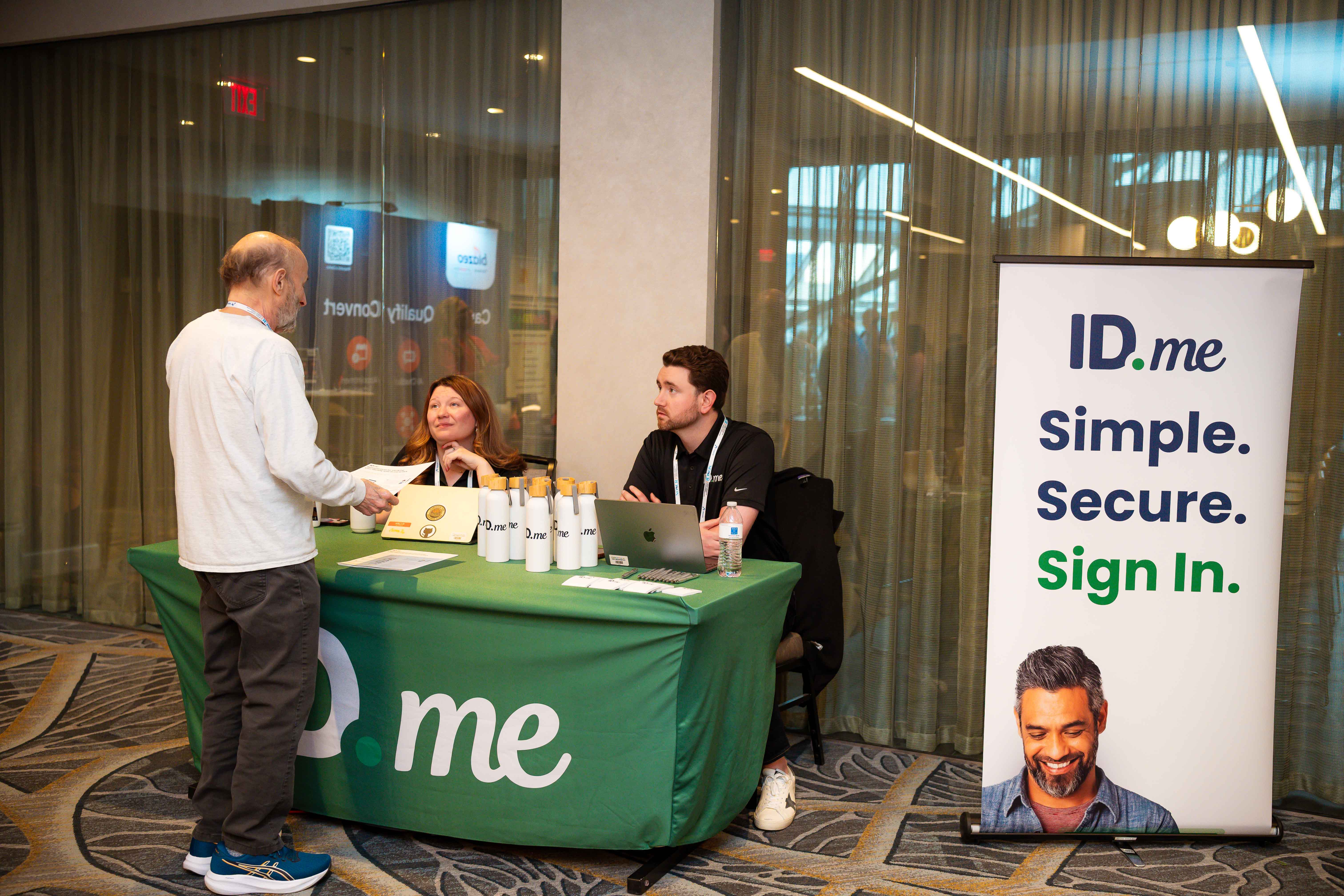
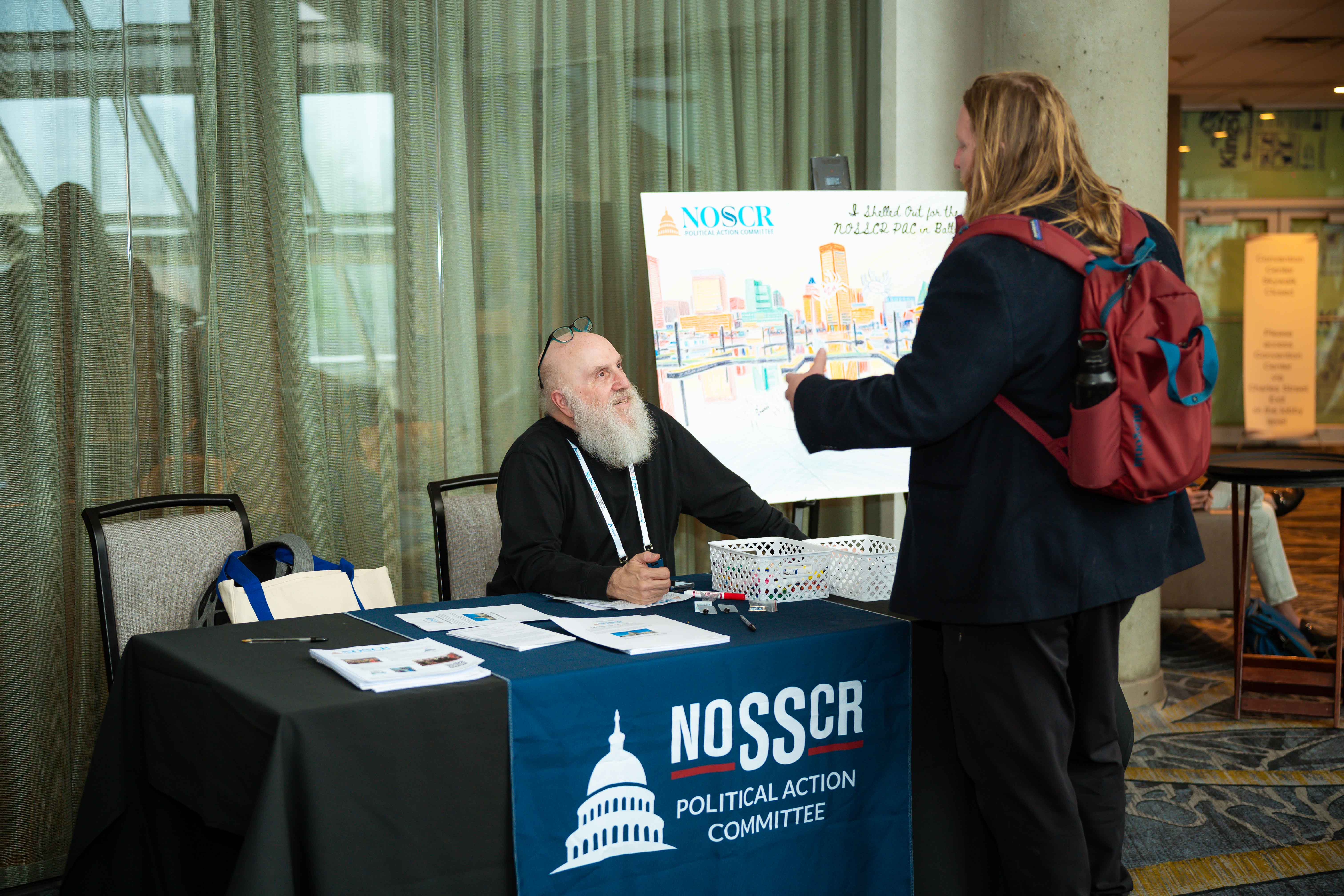
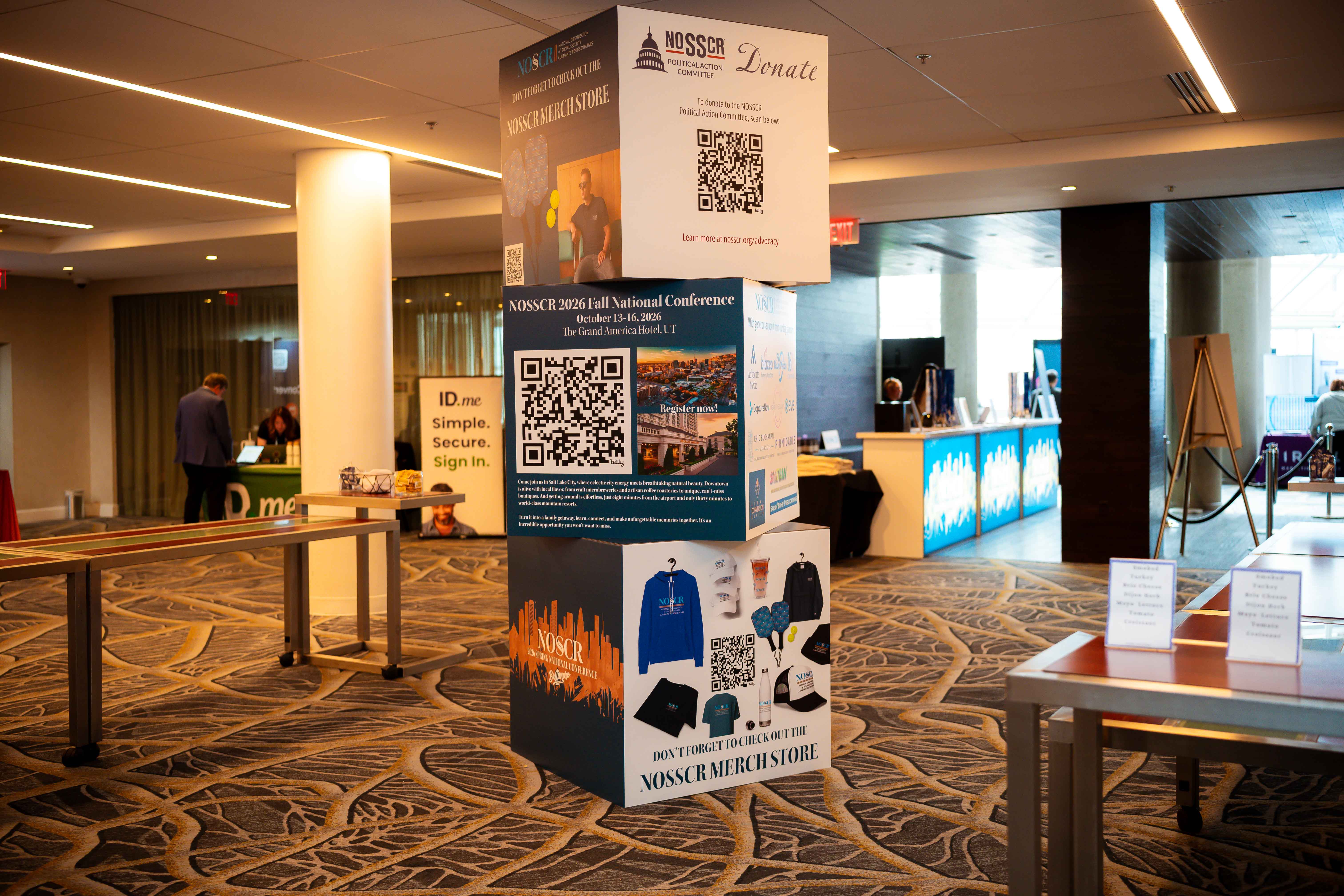
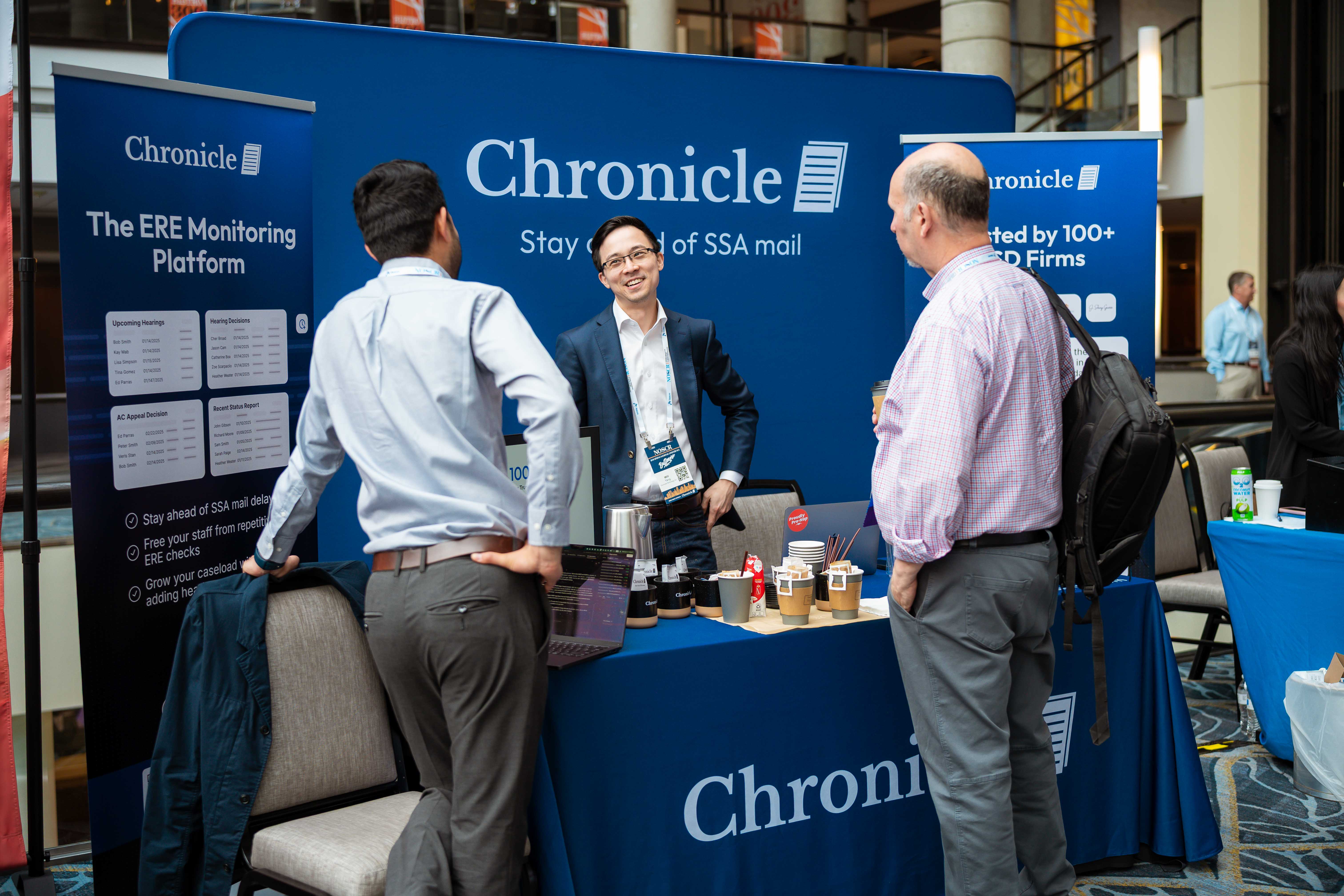
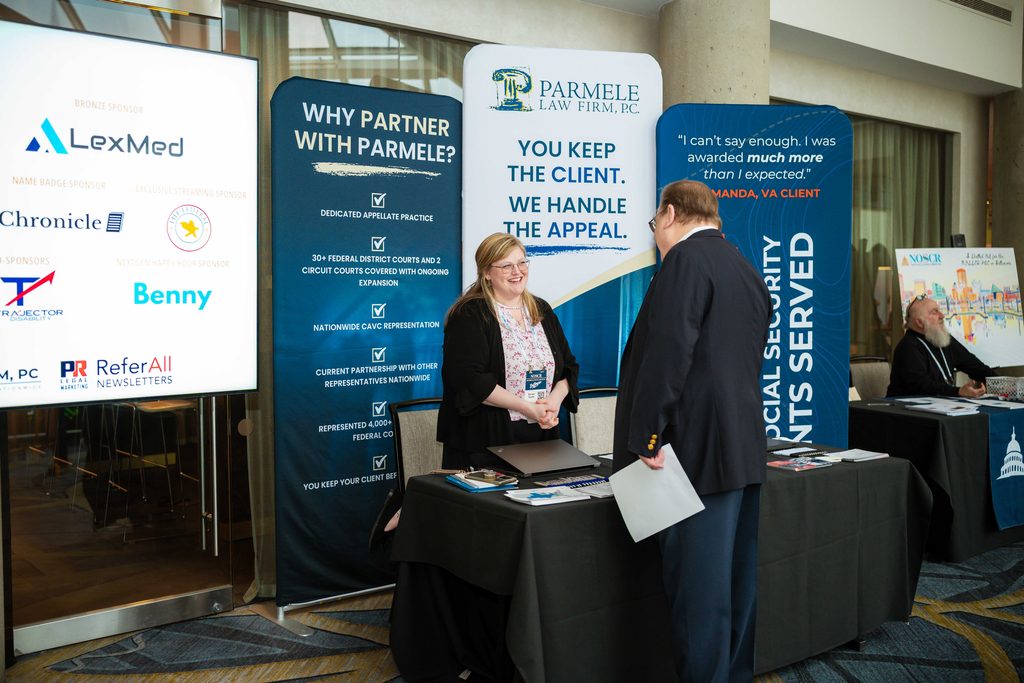
Our Spring Conference wouldn’t be what it is without the incredible support of our sponsors and exhibitors, and the members who took the time to truly engage with them throughout the week.
Those conversations matter. Whether it was discovering a new service, asking thoughtful questions, or simply making a connection, these interactions are a key part of staying informed about the tools, ideas, and innovations shaping our field. The exhibit hall isn’t just a place to pass through. It’s where practical solutions meet real-world challenges and where meaningful partnerships begin. We encourage everyone to keep those conversations going and continue exploring resources that support your work and best serve your clients.
Of course, this year we added a little extra fun to the mix.
Our exhibitor bingo game brought a new level of energy to the hall, giving attendees a chance to connect in a more interactive and slightly competitive way. It was great to see so many of you diving in, meeting new exhibitors, and maybe even discovering a few unexpected favorites along the way. Based on the enthusiasm, it’s safe to say this won’t be the last time we add something like this to the experience.
In fact, we’re already thinking about how to build on that momentum. More interactive elements, more opportunities to connect, and maybe even a few surprises. A talent show, anyone?
Thank you again to everyone who helped make the exhibit hall such a vibrant and valuable part of the conference. We’re already looking forward to what we can create together next.

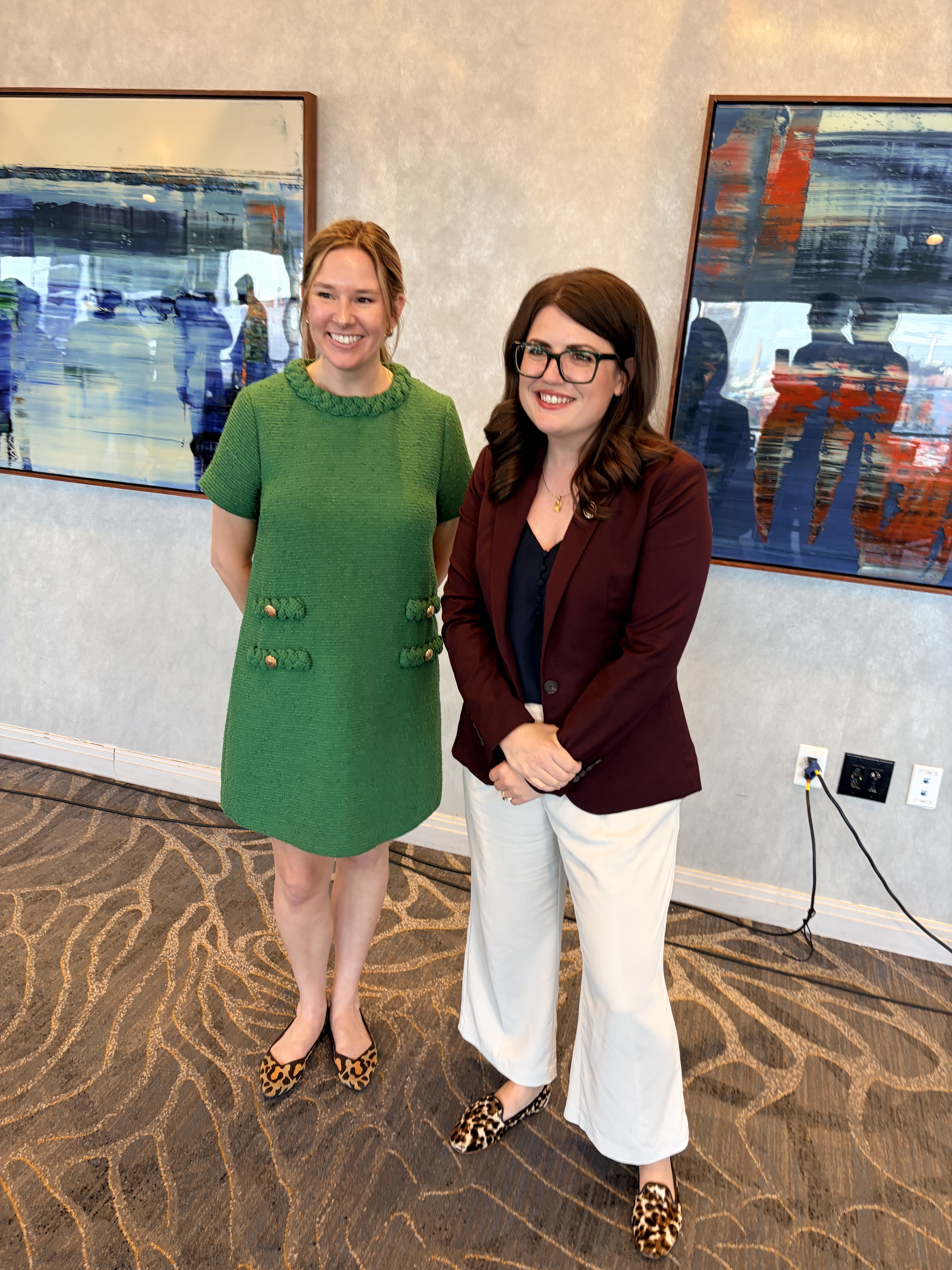
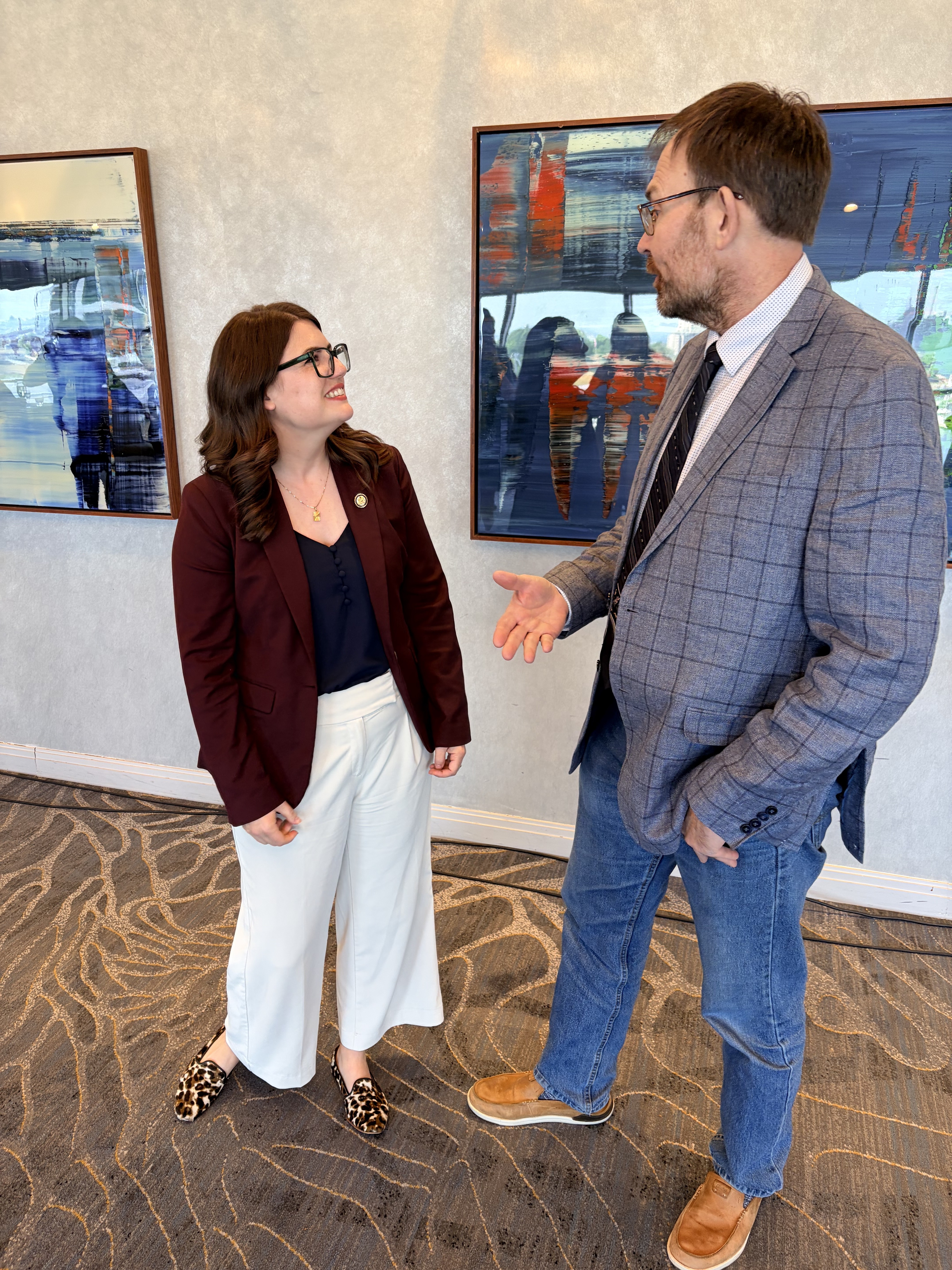
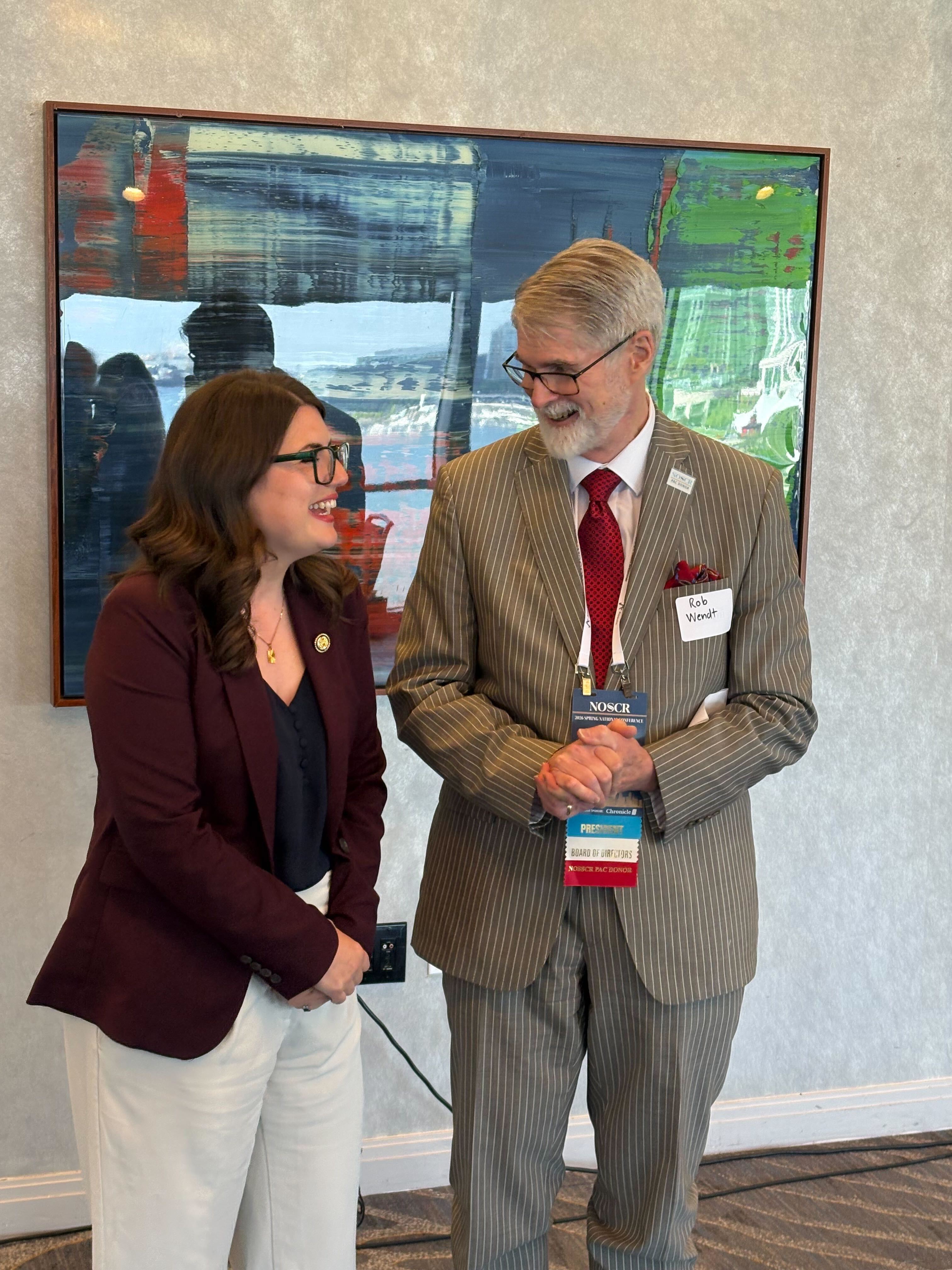
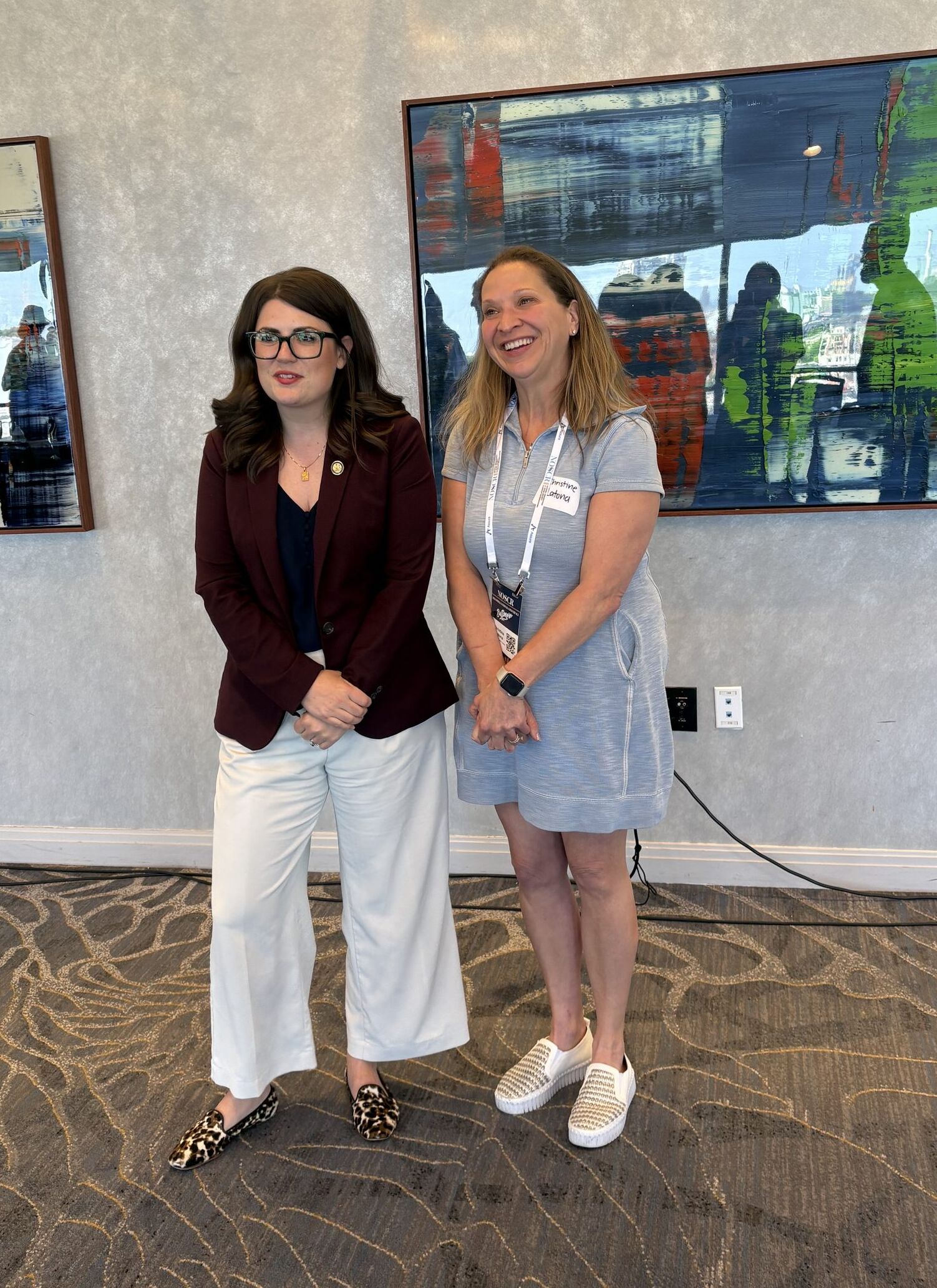
Strengthening Connections in Congress: NOSSCR PAC Reception with Representative Sarah Elfreth
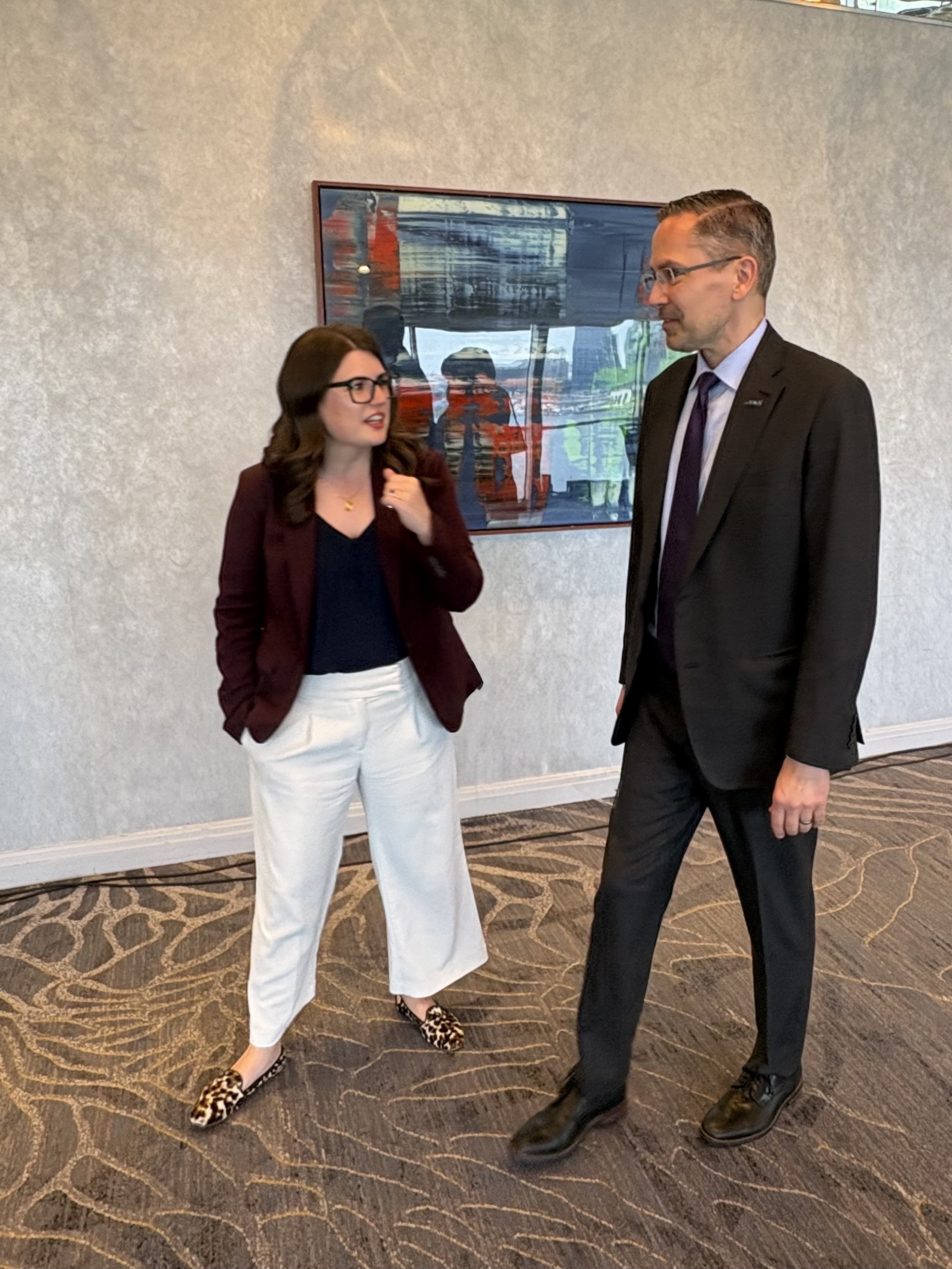
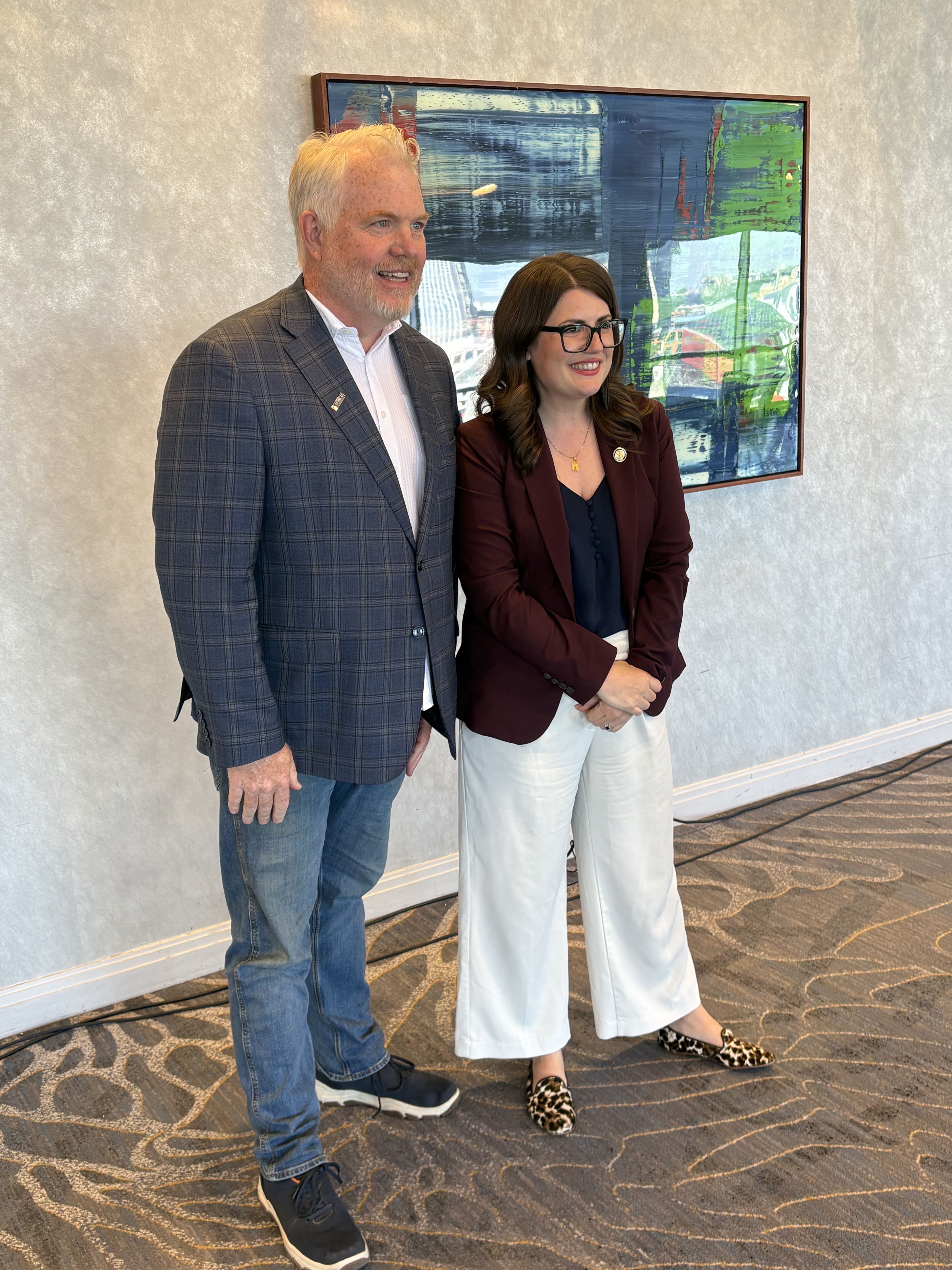
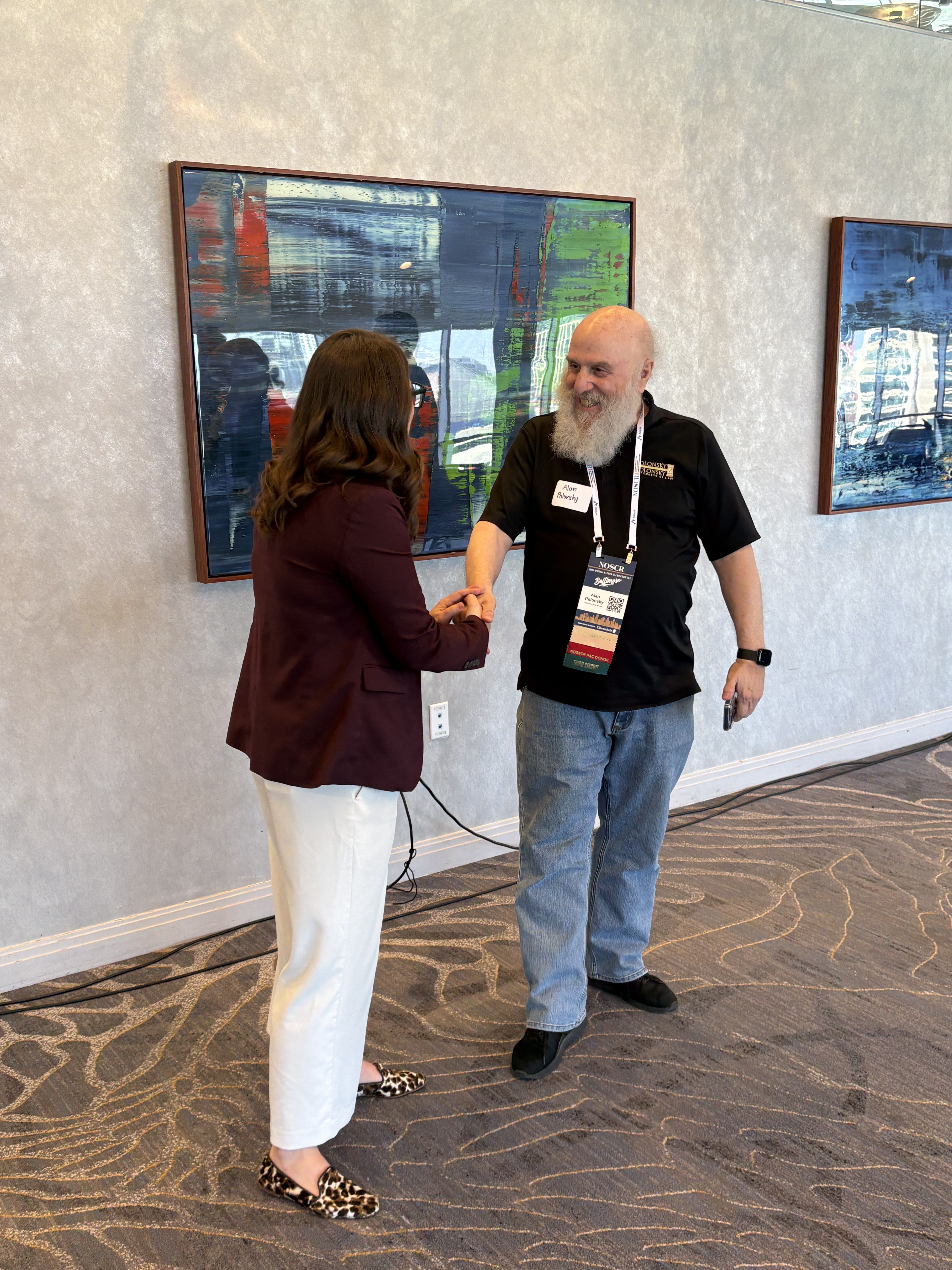
There is a unique energy that only comes from being in the same room with the colleagues and advocates who fight this fight every day. During our conference in Baltimore, the NOSSCR PAC hosted a reception and fundraiser for Congresswoman Sarah Elfreth (D-MD-3), and the experience was a powerful reminder of why our presence on Capitol Hill matters. Representative Elfreth was not only present; she was deeply engaged, demonstrating a sophisticated understanding of the administrative hurdles that stand between our clients and their access to benefits. She spoke with a clear-eyed passion for protecting the Social Security system through bipartisan cooperation, moving past the political posturing that often stalls meaningful reform.
The conversation felt less like a standard political pitch and more like a strategy session between partners. Elfreth specifically leaned into the idea that Social Security is, at its core, an insurance program—one that many Americans unfortunately do not understand until they are forced to rely on it. She challenged NOSSCR to work with her on a roadmap to better educate the public about the existence and vital necessity of Social Security Disability Insurance (SSDI) and Supplemental Security Income (SSI). This includes finding constructive ways to help Social Security expand the my Social Security portal, ensuring it serves as a proactive tool for workers to remain connected to their coverage throughout their careers. She offered to work with NOSSCR on educating other elected officials about these tools.
The “wins” from this dialogue centered on a shared vision for a more accessible agency:
- Public Education Strategy: Developing a framework to move the “insurance” conversation into the mainstream, ensuring workers recognize the value of their premiums before a disability occurs.
- Bipartisan Defense: Committing to a coalition-based approach to protect the trust funds and ensure that Social Security remains a stable, non-partisan promise for the 70 million Americans who rely on it.
As practitioners, you understand that an antiquated agency system or an outdated regulation can be just as devastating as a medical diagnosis. Having our members—the representatives who see these systemic challenges first-hand—speaking directly to a Member of Congress in her home state provided a level of context that no white paper can replicate. Whether we are discussing the SSI “marriage penalty” or optional reconsideration, our message is always more effective when it is delivered with the weight of our collective experience.
NOSSCR Awards Lifetime Membership to Tom Krause
Jennifer Cronenberg, Interim CEO
During NOSSCR’s 2026 Spring Conference, it was my privilege to recommend Tom Krause for the honor of Lifetime NOSSCR Membership. The Board unanimously supported this recommendation, and I was thrilled to announce Tom’s new membership status during NOSSCR’s Nonprofit Meeting.
Tom’s contributions to NOSSCR are too voluminous to properly count, and we are thrilled to know that he will now be a permanent part of this great organization. Here’s a reminder of Tom’s journey with NOSSCR in his own words:
I started working for the Legal Services Corp. of Iowa (LSCI) on November 29, 1982. There were no computers in the office, but lots of books. You know, lots of pieces of paper bound together with leather covers.
I took three weeks off for an Iowa bar review course where I met a guy named Ray Cebula, who was starting in our Mason City office.[2] After that, I took the Iowa Bar – 2 1/2 days, all essay questions, and graded immediately. We finished the bar exam at noon on Wednesday, learned the results on Thursday evening, and were admitted on Friday morning. I’ve heard the bar exam has changed a little since then.
I first learned about Social Security Disability benefits at Legal Services. One of my first assignments was to help draft the brief in Baugus v. Sec’y of Health & Hum. Servs.[3] I drafted one small part of the brief and can’t remember my issue. Fortunately, Chief Judge Donald Lay and Judge Richard Arnold, two excellent judges friendly to our clients, were on the panel. They reversed the ALJ’s decision and awarded benefits.
This was an exciting time to learn Social Security law. To put everything in context, this was the height of the Reagan Administration’s efforts to cut off as many disability claimants as possible.[4] In 1982, the Eighth Circuit ruled the Secretary of Health and Human Services did not exceed his statutory authority in issuing the Medical-Vocational guidelines (the Grids), including a provision limiting the duty to call a vocational expert.[5] Congress passed the Social Security Disability Benefits Reform Act of 1984,[6] establishing the Medical Improvement Standard for Continuing Disability Reviews and requiring SSA to consider pain as a factor in determining disability. Later that year, the Eighth Circuit decided Polaski v. Heckler.[7] The Polaski decision defined the pain standard in the Eighth Circuit and was cited in virtually every ALJ decision for the next 30+ years. In 1986, the Supreme Court decided Bowen v. City of New York,[8] outlining the requirements for class actions against Social Security. There was a lot to learn!
One day, I was looking around our library. I don’t remember what I was looking for, but I remember what I found – a 3-ring binder with copies of the NOSSCR Forum. I had never heard of NOSSCR, but the articles looked interesting. I should note that our program had one subscription to the Forum. Our Central Office photocopied the Forum every month and mailed out copies to the 10 Regional Offices. Every month, our secretary circulated the latest copy of the Forum, then punched holes in it and put it in the binder. I read every issue from cover to cover.
A few years later, LSCI’s Social Security Task Force met in Des Moines. A private attorney named Bob Pratt gave an articulate, knowledgeable, moving, and insightful presentation. And he spoke of the virtues of NOSSCR membership![9] I wanted to join NOSSCR, but it was too expensive for our legal services group (and, at that time, NOSSCR did not offer a reduced rate for non-profit members).
Fast forward a few more years to 1995. I left LSCI and went into private practice. One of the first things I did was join NOSSCR as a Sustaining Member. My first NOSSCR conference was amazing! I had never been to a conference like that and had never been to Seattle!
While in private practice, I litigated and settled a class action against the Iowa Disability Determination Services (DDS) that I had filed before leaving LSCI.[10] I also filed a similar class action against the Nebraska DDS.[11] A young attorney from Gateway Legal Services came up to see me and talk about those class actions. That’s when I first met David Camp. More about that later.
I became a fervent NOSSCR supporter, attended many NOSSCR conferences, spoke at many NOSSCR conferences, and served on the NOSSCR Board for eight years. When I left private practice in 2018 to work for the Southern Minnesota Regional Legal Services (SMRLS), I maintained my NOSSCR Sustaining Membership.
Tom then joined NOSSCR for a year as our Litigation Director. This is where I first had the opportunity to meet and learn from Tom. In addition to his great legal mind, his near monthly contributions to our Forum, and his ongoing willingness to mentor young attorneys, he is also a walking encyclopedia of NOSSCR’s history. If you are looking for an old presentation from one of NOSSCR’s conferences, chances are Tom can tell you when the presentation occurred, who gave it, and how to locate the materials. He is a kind and generous man and we are better as an organization knowing we can count him as a lifetime member.
SSA’s FY 2025 Waterfall Data: What the Numbers Tell Us
Thomas A. Krause, NOSSCR Lifetime Member
Social Security Administration has released its Fiscal Year 2025 disability decision data, offering a comprehensive look at outcomes across every level of the appeals process. Here is what practitioners should know.
- Federal Court: Record Remand Rising, Shrinking Docket
The headline number from FY 2025 is the federal court remand rate, which reached 65%, the highest in at least the past 20 years of available data. To put that in perspective, the remand rate was 44% in FY 2006, climbed steadily through the teens, and has accelerated sharply in recent years: 59% in FY 2021, 58% in FY 2022, 61% in FY 2023, and 63% in FY 2024, before hitting this new high. For claimants who reach federal court, the odds of a remand back to SSA for further proceedings have never been better.
At the same time, the federal court docket is shrinking. SSA issued only 13,587 federal court decisions in FY 2025, down from 15,753 in FY 2024 and well below the recent peak of 21,297 in FY 2022. The allow rate at the federal court level has effectively collapsed to just 1%, where it has sat since FY 2021, meaning that when courts act favorably, they are almost always reversing and remanding for further proceedings rather than reversing and ordering an award of benefits.
- Appeals Council: A Surge in Decisions, Stable Remand Rate
One of the most striking changes in volume in FY 2025 involves the Appeals Council. SSA decided 83,759 requests for review, nearly double the 45,641 decided in FY 2024, and the highest figure since FY 2020’s 126,731. The FY 2024 number appeared anomalously low, and FY 2025 represents a substantial rebound in AC throughput that practitioners should factor into their timeline projections.
The remand rate at the Appeals Council held at 15% in FY 2025, consistent with the range of 11–16% seen from FY 2020 through FY 2024. It is worth noting, however, that this is a notably lower rate than the 18–25% remand rates the AC produced from FY 2006 through FY 2012. Whether that long-run decline reflects changes in Appeals Council review standards, ALJ decision quality, or something else is an open question, but the era of Appeals Council remands approaching one-in-four decisions appears to be behind us. The rate for denial of review held at 80% in FY 2025, and both the allow rate (1%) and dismiss rate (3%) remain negligible.
- ALJ Level: Stability After a Long Decline
The ALJ allowance rate in FY 2025 was 50%, within the 45–51% range that has prevailed since FY 2013. This represents a substantial and sustained decrease from the allowance rates of over 60% that characterized FY 2006 and FY 2009. The ALJ docket itself remains well below its historical highs: 277,740 decisions in FY 2025, compared to a peak of over 668,000 in FY 2012 at the height of the post-recession surge. The dismiss rate held at 16% and the deny rate at 33%.
For attorneys advising clients about their odds at hearing, the current environment is markedly more difficult than it was fifteen years ago, and there is no recent trend suggesting a return to the higher allowance rates of that era.
- Reconsideration and Initial Levels: Remarkable Consistency
The reconsideration and initial levels tell a story of long-run stability. The reconsideration allowance rate has ranged only from 11% to 16% over the entire 20-year period captured in this data, landing at 16% in FY 2025, matching FY 2024 and representing the high end of the historical range. Volume at reconsideration rose meaningfully, to 584,625 decisions in FY 2025 from 495,700 in FY 2024, which may partly explain the increased Appeals Council volume downstream.
At the initial level, the allowance rate was 36% in FY 2025, within the 33–39% band that has held since FY 2006. Initial decisions numbered 2,246,542 in FY 2025, up from 2,086,885 in FY 2024 and continuing a recovery from the trough of 1,765,032 in FY 2022.
- Takeaways for Practitioners
The FY 2025 data reinforce several durable realities about the disability appeals landscape: the most favorable outcomes are concentrated at the ALJ hearing level and, if cases advance that far, in federal court. The record 65% federal court remand rate is genuinely significant. It reflects a judiciary that continues to find ALJ decisions legally deficient at a high rate. We should not be afraid to appeal cases that have been denied at hearing. The Appeals Council’s increased output is a welcome operational development, even if the remand rate there remains modest.
The overarching picture is one of a system where allowance rates are low and relatively flat at every pre-hearing stage, where the hearing level remains the pivotal forum, and where federal court has become an increasingly effective (if slow) recourse for well-documented cases with articulable legal error.
Data source: SSA Office of Decision Support and Strategic Information (ODSSI), FY 2025 Waterfall data published January 8, 2026. Data not available for FY 2007–2008, 2010–2011, and 2015. Federal court figures include CDR appeals.
Circuit Court Considerations: A Ninth Circuit Roadmap for What Not to Do in Childhood SSI Cases
Adriana de la Torre, NOSSCR Sustaining Member
If you represent claimants in childhood Social Security disability cases, the Ninth Circuit’s recent decision in Jenson v. Bisignano is one you’ll want to pull up and annotate. It’s a unanimous affirmance that touches nearly every major stage of the childhood disability analysis, and it sends a clear message about just how much deference ALJs can command when the record is built the right way.
Here’s a close read of what happened, where the claimant’s arguments fell short, and, most importantly, what it means for how you build and present your cases going forward.
Jenson applied for childhood Social Security benefits, arguing that his mental health impairments, including depression, anxiety, and neurodevelopmental disorders, were disabling during a defined closed period. His treating provider submitted a medical opinion supporting marked limitations. The ALJ found the opinion unpersuasive, denied benefits, and the district court affirmed.
On appeal to the Ninth Circuit, Jenson raised five distinct arguments. The court rejected all of them.
Five Key Holdings and Their Practical Implications
- The Treating Provider’s Opinion: Internal Consistency Is Everything
The ALJ found the treating provider’s opinion unpersuasive, not because of a general credibility problem, but because the opinion was contradicted by the provider’s own examination notes.
Those notes reflected that Jenson was oriented to time, place, and person; had clear and normal speech; demonstrated a normal thought process; denied hallucinations and suicidal ideation; and showed good recent and remote recall with sustained attention and concentration. Two of his teachers also reported no limitations in acquiring and using information.
Under the post-2017 regulatory framework, supportability and consistency are the two most important factors an ALJ must consider — and an opinion that conflicts with its own underlying documentation fails on supportability before the analysis even reaches consistency.
Before submitting a treating source opinion, review every examination note from that provider during the relevant period. If routine mental status findings are routinely normal, even while other aspects of functioning are impaired, you need to address those findings head-on in the opinion narrative, not leave them as unexplained contradictions for the ALJ to exploit.
- The Harmless Error Doctrine: Wins on One Point Don’t Always Move the Needle
Jenson scored a legitimate point on appeal: the ALJ had improperly relied on his high school graduation and post-period employment when those events fell outside the closed period at issue.
The court agreed. But it still affirmed, calling the error harmless under Burch v. Barnhart. The remaining record evidence was sufficiently strong to support the ALJ’s determination regardless of the outside-period events.
Procedural wins at the appellate level only matter if the error actually affected the outcome. When substantial evidence independently supports athe ALJ’s finding, the court can, and routinely does, look past the mistake.
Don’t count on a single ALJ error to carry your appeal. The most durable appellate argument isn’t “the ALJ made a mistake”, it’s ‘the ALJ’s mistake infected the entire evidentiary foundation.’ Focus your briefing on errors that are structural, not incidental.
- Listings 112.04, 112.06, and 112.11: The ALJ Doesn’t Have to Discuss Everything
Jenson argued the ALJ failed to adequately address evidence of his self-harm history, suicidal ideation, absenteeism, and failing grades in the Listings analysis. The court disagreed, citing Hiler v. Astrue for the proposition that ALJs are not required to discuss every piece of evidence, and don’t need to discuss evidence that is neither significant nor probative.
The court found that the ALJ had, in fact, considered this evidence, but had weighed it against Jenson’s documented progress at school and repeated reports of mild or moderate symptoms with no active suicidal ideation.
The ALJ’s obligation under Listings is to explain the basis for the finding, not to write a comprehensive record review. What the ALJ says matters — but so does what the record actually shows about symptom severity and trajectory.
If your client’s record contains a mix of acute episodes and periods of relative stability, brief those episodic crises explicitly in your pre-hearing memo or brief. Don’t assume the ALJ will assign them the weight you believe they deserve. Frame the severity argument around the worst periods, and be prepared to address the ‘mild to moderate’ characterizations that often appear in treating notes.
- Teacher Questionnaires: The Ambiguity Problem
This is arguably the most instructive part of the decision for childhood SSI practitioners. Jenson argued that two teacher questionnaires demonstrated marked limitations in at least two domains, which, if credited, would have supported a finding of functional equivalence.
The problem: the same questionnaires that noted absenteeism, lack of organization, and accommodation needs also reflected the teachers’ beliefs that Jenson exhibited “age appropriate” behaviors in most functional dimensions and did not have marked limitations in the majority of categories.
The court applied the familiar rule from Stiffler v. O’Malley: when evidence is susceptible to more than one rational interpretation, it is the ALJ’s conclusion that must be upheld.
Teacher questionnaires are only as strong as the story they tell from start to finish. A form that acknowledges some difficulties but checks ‘age appropriate’ or ‘no marked limitation’ in most domains gives the ALJ exactly what it needs to reject the functional equivalence argument.
Ensure that any questionnaire forms include the legal standard for “marked” limitations. If a teacher believes your client has serious limitations, the form should reflect that across all relevant domains, not just the ones that came up in conversation.
- Subjective Symptom Testimony: Improvement Is a Double-Edged Sword
The ALJ discounted Jenson’s subjective symptom testimony using the specific, clear, and convincing standard from Ferguson v. O’Malley. The reasons given included: objective evidence contradicting claims of marked impairment; routine findings of intact memory, concentration, and attention; repeated reports of mild depression and minimal anxiety symptoms; and, critically, Jenson’s own statements that his medications were effective.
When a claimant tells providers their medication is helping, that self-report becomes part of the record. It can and will be used to undercut the severity argument, even if the claimant’s overall condition remains significantly limiting.
Prepare your clients carefully before their testimony. Statements like “my medication helps” or “I’m feeling better”, while honest, need context. What does “better” mean? Better than the worst episode, or better than a non-disabled person? Help your client articulate the continuing functional impact even on good days.
Jenson v. Bisignano isn’t a bad-facts case that can be set aside. It’s a textbook illustration of how a childhood disability record can unravel at every level when the underlying evidence is mixed and the development work hasn’t been done before the hearing.
The Ninth Circuit’s message is consistent with where the circuit has been since Woods v. Kijakazi: ALJs have meaningful authority to evaluate the record, and appellate review under the substantial evidence standard gives them a wide lane to operate in. The work that wins childhood SSI cases happens before the hearing, in the medical records, the source opinions, the school records, and the preparation of witnesses.
If this case raises questions for your practice, or if you’re navigating similar fact patterns in the Ninth Circuit, we welcome the conversation.
Got any questions? Schedule a consultation with us. I’m here to help. It’s a lot to take in, but we’ll get through it together. After all, navigating these waters is always easier when you’ve got someone to chat with.
The views and opinions expressed in this article are the author’s own and do not necessarily reflect the views of NOSSCR, its leadership, or staff.
SSA OIG Report: Employees Did Not Accurately Process 38 Percent of Critical Payments Issued in Fiscal Year 2023
On April 16, 2026, the Office of the Inspector General for the Social Security Administration released the following press release:
A new audit by the Social Security Administration Office of the Inspector General (SSA OIG) found that SSA accurately processed about 44,000 critical payments issued in Fiscal Year 2023 but did not accurately process about 27,000—making over 28,000 errors when they processed the payments.
SSA initiates a critical payment when a beneficiary or representative payee notifies SSA of a critical case or special situation, such as when regular monthly benefits are not being paid, additional benefits are due, or a beneficiary reports not receiving a monthly benefit. These situations include cases of dire need, court orders, legislative mandates, and preliminary and expedited payments.
Based on their review of a random sample of critical payments SSA issued in Fiscal Year 2023, auditors estimate employees made about 8,100 errors resulted in SSA improperly paying beneficiaries $12 million because employees did not accurately adjust beneficiary records. Auditors also estimate SSA issued approximately 10,500 beneficiaries a Form SSA-1099, Social Security Benefit Statement, with a benefit total that was over- or understated by about $14 million because employees did not manually adjust records for replacement checks.
SSA OIG found that stronger internal controls, particularly over manual inputs, could help reduce errors and improve the accuracy of beneficiaries’ records.
“We identified opportunities for SSA to strengthen its policies, procedures, and oversight to improve accuracy in payment processing,” said Michelle L. Anderson, Assistant Inspector General for Audit as First Assistant. “Effective systems and clear guidance are important to ensuring payments are processed correctly.”
SSA OIG made seven recommendations to improve guidance and strengthen system controls to prevent future errors. SSA agreed to implement all seven SSA OIG recommendations and plans to take corrective action.
Read the full report here.
Join Our NextGen Coffee Break May 5
Don’t miss your next chance for a quick check-in with fellow NOSSCR NextGen members—Tuesday, May 5, at 12pm Eastern. These monthly gatherings (held on the first Tuesday of every month) are an informal chance to network, ask questions, run hypotheticals, and just check-in with our community. These sessions are intended for new(ish) practitioners—those with fewer than 10 years in the field of Social Security disability, or those who are under 40 years old. The virtual gathering is free, but registration is required to get the link—so please register today, mark your calendars, and join us!
PAC Contributor List
THANK YOU TO OUR NOSSCR PAC CONTRIBUTORS
As of April 2026
| First Circuit David Ferrari (CC) Michael Levin (CC) Sandra Serra (CC) Second Circuit Crysti Farra (CC) Sarah Frederick (CC) Maurice Maitland (C) Lino Medina Mendez (C) Third Circuit Marianne Brown (CC) Melissa Green (C) Alicia Hutchinson (CC) Sheryl Mazur (CC) Timothy Mello (CC) Judson Perry (CC) Alan Polonsky (PC) Joseph Silver (C) Christine Trotz-Cosgrove (CC) Fourth Circuit Jonathan Blair Biser (CC) Ben Clauson (CC) Vaughn Clauson (DC) Rick Fleming (DC) Brian Gillette (CC) Christine Latona (C) George Piemonte (CC) Michelle Pritchard (CC) Ashley Hartman Sappenfield (CC) Andrew Sindler (CC) Joanna Suyes (CC) Laura Beth Waller (CC) Robertson Wendt (DC) Fifth Circuit Paul Burkhalter (CC) Matthew Edwards (C) John Heard (CAP) Jacob Hugentobler (CC) Patrick O’Neal (CC) David Pogue (CC) David Lance White (CC) |
| Sixth Circuit Edward Ahlers (CC) Gary Bimberg (PC) Donald Busta (PC) Lorenzo D’Agostini (PC) Bobby Ficklin, Jr. (C) Joseph Houle (PC) Michael Alexander Rake (DC) Debra Shifrin (CAP) Donna Simpson (CC) Seventh Circuit Eric Farr (CC) Richard Feingold (CC) Brian Harmon (PC) Avram Sacks (CC) Lindsay Solon (CC) Thomas Thompson (CC) |
Key:
CAP=Capitol Club, $5,000/monthly contribution of $416
PC=Platinum Club, $2,500-$4,999/ monthly contribution of $208-415
DC=Diamond Club, $1,000-$2,499/monthly contribution of $83-207
CC=Century Club, $100-$999
C=Contributor, all other contributions
| Eighth Circuit Jeffrey Bunten (PC) Julie Burkett (CC) David Camp (CAP) Patrick Cavanaugh (CC) Sean Cuddigan (PC) Meghan Gallo (DC) Matthew Grundy (CC) Theodore Norwood (PC) Daniel Parmele (CAP) J. Asha Sharma (C) Michael Tracy (CC) Tim Tripp (CC) Felicia Von Holten (C) Ninth Circuit Mark Bunch (DC) Sara Carroll (CC) Paul Clark (CC) Richard Gutstadt (DC) Marc Kalagian (DC) Kevin Kerr (CC) Audrey Miller (C) Eric Penar (DC) Maggie Schott (CC) Jose Vera (CC) Timothy Walker-Dupler (CC) Tenth Circuit Ann Atkinson (DC) Dan Bott (PC) John Harlan (CC) Nick Huntsman (PC) Gary Jones (CC) Philip Ryan (PC) Gayle Troutman (DC) Steve Troutman (DC) Eleventh Circuit Carol Avard (CC) Jason Bailey (CC) Sarah Bohr (CC) Kevin Hall (CC) Doug Mohney (CC) David Wright (CAP) |
Contributions to the National Organization of Social Security Claimants’ Representatives PAC (NOSSCR PAC) are not tax-deductible as a charitable contribution for federal income tax purposes. Contributions to NOSSCR PAC will be used to support federal and state candidates, political parties, and other political committees. Contributions are strictly voluntary. You may refuse to contribute without reprisal. Any proposed contribution level is merely a suggestion, and you are free to contribute more or less than suggested. You will not benefit or be disadvantaged by reason of the amount of your contribution or a decision not to contribute. Federal law requires NOSSCR PAC to use its best efforts to collect and report the name, mailing address, occupation and employer of persons whose contributions exceed $200 in a calendar year. You must be a U.S. citizen or lawfully admitted for permanent residence in the U.S. to contribute.
Daily Dose of Data from SSA
This month, Social Security released the following data:
- Congressional Statistics, 2025: Annual fact sheets providing statistics on the Social Security and Supplemental Security Income programs, including the number of people receiving benefits and the amount of total monthly payments, in each state, territory, and Congressional district.
- Monthly Statistical Snapshot, March 2026: Monthly snapshot of statistics on Social Security beneficiaries and Supplemental Security Income recipients.
- SSI Monthly Statistics, March 2026: These monthly tables provide statistics for federally administered payments and awards under the Supplemental Security Income (SSI) program.
- Annual Statistical Supplement, 2025: The Supplement is the most comprehensive resource for statistics on programs administered by the Social Security Administration—the Old-Age, Survivors, and Disability Insurance program (known collectively as Social Security) and the Supplemental Security Income program. These summary statistics, derived from administrative records, primarily focus on the demographics and economics related to program beneficiaries and covered workers.
- OASDI Beneficiaries by State and ZIP Code, 2024: An annual publication focusing on the Social Security beneficiary population at the ZIP Code level in tables showing the number and type of beneficiaries and the amount of benefits paid in each state, Social Security Administration field office, and ZIP Code. It also shows the number of beneficiaries aged 65 or older.
Useful Resources
OHO Caseload Analysis Report — not currently being updated by SSA
State Medical Records Payment Rates
Social Security Rulings and Acquiescence Rulings by Year
HALLEX Contents & Recent Changes