

March 2026 Print Edition
President’s Corner
Rob Wendt, NOSSCR President
Have you ever thought about becoming board certified as a specialist in Social Security disability law? There are only 74 of us nationwide, including your current president and three current board members, four past NOSSCR presidents, multiple past board members and numerous regular and sustaining members.
Many NOSSCR members have the experience and skills to become board certified, and with that in mind, NOSSCR will hold a board certification workshop during our upcoming national conference in Baltimore. The workshop will be led by NOSSCR’s immediate past president Paul Burkhalter, who is board certified in Social Security Disability Law by the National Board of Trial Advocacy (NBTA). We will deliver a presentation on how board certification helps prospective disability clients and your law practices, the requirements to become board certified, and the application and examination process. We will also answer your questions.
Additionally, we hope to get your feedback about a hot topic in the legal board certification community – whether the current standards should be modified in light of recent changes in the legal industry. Currently, Social Security disability certification requires both administrative and federal court experience, but more and more Social Security disability lawyers are limiting their practices to only one or the other. If you are interested in board certification but haven’t applied because your practice is exclusively administrative or federal court practice, but not both, we’d like to hear from you during or after the workshop.
There are only two Social Security disability board certification programs in the U.S. – a national certification offered by the NBTA, a private non-profit certifier, and a state certification administered by the North Carolina State Bar Board of Legal Specialization. The NBTA certification is accredited by the American Bar Association Standing Committee on Specialization, and the North Carolina certification meets ABA standards as well.
ABA standards require applicants for board certification to demonstrate the following:
- Substantial involvement in the specialty area during the five years prior to application.
- Peer review with a minimum of five references, a majority of which are from attorneys or judges who are knowledgeable about the practice area and familiar with your competence in the specialty area.
- Satisfactory score on written examination – typically involving multiple choice questions and written essays.
- Educational experience with minimum of 36 CLE hours in the specialty area within three years prior to application, or equivalent teaching experience or publication of books or articles.
- Admission to practice and in good standing in one or more states or territories or the District of Columbia.
- Initial certification is effective for five years, subject to recertification based on similar standards for initial certification, except for written examination which is not required.
For more information concerning board certification, please follow these links:
- https://www.nbtalawyers.org/
- http://www.nclawspecialists.gov/
- https://www.americanbar.org/groups/specialization/
I look forward to seeing you all at the Baltimore conference, and hope that you will be able to attend the board certification workshop where we can provide more detailed information.
Just Ask Jennifer: Tax Refresher
Jennifer Cronenberg, Interim CEO
Well friends, it’s time again for the SSA-IRS alphanumeric soup that brings us all joyless tears once a year. The good news is, now that the assignment to entities process is in full swing, we are all now extremely familiar with the relevant “16-9 forms” (as SSA calls them) that impact our taxes. Here’s a refresher:
SSA-1694 – Request for Business Entity Taxpayer Information – this form should be completed by every firm or organization who employs appointed representatives that may be paid more than $600 by Social Security for their representation in association with a firm or organization. It allows SSA to obtain the name, employer identification number (EIN), banking information, and address of the business entity so that the representatives can then be properly associated with the firm or organization. It also allows the entity to establish a Point of Contact (POC) so that fee assignment to the entity is possible. If you’re running a Social Security firm or organization, you should have one of these on file and up to date with SSA at all times.
SSA-1695 – obsolete since 2020, this form previously associated the individual representative with the firm – this is now accomplished via Section 5 Part B of the SSA-1696.
SSA-1696 – Claimant’s Appointment of a Representative – this form attaches you to your claimant’s case and indicates if you intend to collect a fee. If you are a salaried (or contract) employee of a firm or organization, and are either affiliating with or assigning fees to an entity, proper completion of Section 5 Parts B and C is essential. This form must be filed in every case.
SSA-1699 – Registration for Appointed Representative Services and Direct Payment – this form should be completed by all representatives who wish to be listed by name on a SSA-1696. This form should be updated any time the individual representative’s information or firm association (or information) changes. If you perform contract work for multiple firms simultaneously and are paid by the firm instead of by Social Security, your 1699 should include multiple Section Vs to reflect this (Section V: Your Information When You Are Working for a Firm or Organization). This form is a one-time filing unless your information or firm association or contact information changes.
IRS 1099-MISC – This is the form you should receive if you were an appointed representative that was paid more than $600 by Social Security AND were properly associated to a firm or entity as an employee at the time of those payments. These payments should appear in Box 10 and are NOT reported as income to you.
IRS 1099-NEC – If you receive this form as an individual, any monies that are reported in Box 1 are considered “nonemployee compensation” and have been reported to the IRS as income to you. If you receive this form as a firm or entity, the form should show the total direct fee payments made to employees affiliated with your firm, which is taxable income for the firm or entity.
SSA offers this handy PowerPoint that provides additional information on the tax form process for appointed representatives. POMS GN 03913.050 outlines the details for proper registration of business entities, and POMS GN 03913.010 outlines how to properly update representative registration.
How the process should work:
Each January, SSA issues a Form 1099-MISC to each representative who received aggregate fee payments of $600 or more by direct payment in the previous year. If that representative is affiliated with an entity, the fee payments may be deemed income to the firm.
The Form 1099-MISC sent to the individual representative will include fees paid in his or her name in the previous calendar year reported in box 10 (Gross proceeds paid to an attorney, previously box 14). These amounts are not reported to the IRS as personal income to the individual representative.
Since 2021, if the firm is properly registered (i.e., it has submitted a Form SSA-1694), SSA will issue a Form 1099-NEC to the firm, as identified by the firm’s taxpayer identification number (i.e., Employer Identification Number (EIN)). The firm’s Form 1099-NEC includes the total direct fee payments made to employees affiliated with the firm in the previous year, but only for those cases in which the employees properly filed Form SSA-1696, “Claimant’s Appointment of Representative,” specifically Section 5 on the old 1696, Section 5 Part B on the new 1696. This amount is reported in box 1 of the Form 1099-NEC (Nonemployee compensation) and the IRS considers this taxable income to the firm.
Since January 1, 2015, SSA does not provide the Fee Detail Summary along with the 1099 form. Representatives and firms should maintain an accounting system to account for these fees. You can also utilize the AARPS portal to review your earnings and double check your accounting.
Representatives who work as sole proprietors, or who work for business entities that have not registered with SSA by submitting a Form SSA-1694, will receive a Form 1099-NEC, with income reported in box 1 (Nonemployee compensation). Prior to January 2021, SSA reported these earnings in box 7 on the previous version of the IRS 1099-MISC.
Troubleshooting errors:
Erroneous reporting may occur if the representative has not properly completed Section 5, Part B of Form SSA-1696.
Tax errors primarily occur due to a lack of firm registration (i.e., Form SSA-1694) or proper linking between the individual representative and firm affiliation (i.e., Form SSA-1699 – Section V). This is why it is very important for each firm to register with SSA via the Form SSA-1694, and for employees of the firm to indicate affiliation with the firm through the Form SSA-1699. Individual representatives and firms should also resubmit/update these forms whenever their information changes.
What about user fees?
When reviewing your Form 1099-MISC or Form 1099-NEC information, remember that the user fees are included on these forms. The IRS considers the gross amount as the amount that should be reported on the Form 1099-MISC and Form 1099-NEC. The representatives and firms should then report the gross amounts in their income tax returns (e.g., Sch C for sole proprietor; Form 1065 for partnerships, etc.) with the user fee assessments reflected as a deductible business expense (similar to commissions, fees, etc.). The regulatory authority for reporting the gross amount is in section 1.6041-1(f) of the Internal Revenue Code regulations.
Why is the representative’s SSN on the Form 1099-MISC or Form 1099-NEC?
Slide 25 of SSA’s PowerPoint explains that “[t]he Internal Revenue Service (IRS) requires that [SSA] use your Social Security number to identify you. Your Social Security number will always appear on the Form 1099-MISC. If you are a sole proprietor and have an Employer Identification Number (EIN), your Social Security number will appear in the Recipient’s Identification Number box, and your EIN will appear in the Account Number box. If you do not have an EIN, only your SSN will appear. If you work for a firm or organization, your Social Security number will appear in the Recipient’s Identification Number block, and the EIN for the firm will appear in the Account Number box.”
What can you do if your forms are wrong?
If an individual representative receives a Form 1099-NEC with amounts reported that should be income to the firm and not to the individual representative, the individual representative is considered a nominee recipient. The individual representative should file a new Form 1099-NEC and Form 1096 “Annual Summary and Transmittal of U.S. Information Returns” with the IRS. The individual representative should also provide the new Form 1099-NEC to the firm. On the new Form 1099-NEC, the individual representative should be indicated as the “payer” and the firm as the “recipient.” On the new Form 1096, the individual representative should be indicated as the “filer.”
The IRS has published the instructions above for Nominee/Middleman returns in the General Instructions for Certain Information Returns – Section A – Who Must File for the Form 1099-MISC (pg. 3). Although the IRS provides specific instructions for completing the different types of 1099 forms and Form 1096 on its website, we suggest working with an accountant.
What can you do to avoid potential reporting issues?
According to SSA’s Office of the Deputy Commissioner for Budget, Finance, Quality, and Management, one preventive measure representatives can take to avoid possible reporting mistakes is to verify their affiliations and their firms’ registration with the RCC at 1-877-626-6363. NOSSCR has been told that the RCC is able to review and confirm whether a representative is properly registered and affiliated with his/her firm and whether the representative’s firm is properly registered with SSA. However, the RCC cannot make any corrections or updates to this information; if any changes are required, an updated SSA-1699 or SSA-1694 must be submitted.
If you have additional questions, SSA has instructed representatives to contact the RCC or the IRS at 1-866-455-7438. Additional information is also available online and via SSA’s PowerPoint presentation. Please also refer to POMS GN 03913.050 and POMS GN 03913.010 for added clarity.
What about the tax issues our clients face because of their SSA benefits?
The IRS provides the following information on their website regarding taxes and Social Security benefits. Please share this information with your clients:
Social Security benefits include monthly retirement, survivor and disability benefits. They don’t include supplemental security income (SSI) payments, which aren’t taxable. The net amount of Social Security benefits that you receive from the Social Security Administration is reported in Box 5 of Form SSA-1099, Social Security Benefit Statement, and you report that amount on line 6a of Form 1040, U.S. Individual Income Tax Return or Form 1040-SR, U.S. Tax Return for Seniors. The taxable portion of the benefits that’s included in your income and used to calculate your income tax liability depends on the total amount of your income and benefits for the taxable year. You report the taxable portion of your Social Security benefits on line 6b of Form 1040 or Form 1040-SR.
Your benefits may be taxable if the total of (1) one-half of your benefits, plus (2) all of your other income, including tax-exempt interest, is greater than the base amount for your filing status.
The base amount for your filing status is:
- $25,000 if you’re single, head of household, or qualifying surviving spouse,
- $25,000 if you’re married filing separately and lived apart from your spouse for the entire year,
- $32,000 if you’re married filing jointly,
- $0 if you’re married filing separately and lived with your spouse at any time during the tax year.
If you’re married and file a joint return, you and your spouse must combine your incomes and Social Security benefits when figuring the taxable portion of your benefits. Even if your spouse didn’t receive any benefits, you must add your spouse’s income to yours when figuring on a joint return if any of your benefits are taxable.
Generally, you can figure the taxable amount of the benefits in Are my Social Security or railroad retirement tier I benefits taxable?, on a worksheet in the Instructions for Form 1040 (and Form 1040-SR) or in Publication 915, Social Security and Equivalent Railroad Retirement Benefits. However, if you made contributions to a traditional Individual Retirement Arrangement (IRA) for 2024 and you or your spouse were covered by a retirement plan at work or through self-employment, use the special worksheets in in Appendix B of Publication 590-A, Contributions to Individual Retirement Arrangements (IRAs), to see if any of your Social Security benefits are taxable and to figure your IRA deduction.
If you did not receive your SSA-1099 from Social Security, also called a Social Security Benefit Statement, you can request one online with a my Social Security account. Replacement SSA-1099s are available beginning February 1 for the previous year. You can also contact Social Security directly if you cannot request it online or if your SSA-1099 needs a correction.
The IRS also provides an Interactive Tax Assistance Tool on their website. SSA provides additional Information for Tax Preparers on their site should your clients have additional questions.
Spring Conference: Workshop Agenda is Live
In less than a month, we’ll be together in Baltimore for NOSSCR’s 2026 Spring Conference! We are so excited to see everyone and to bring you four days of dynamic programming and opportunities for learning and connection.
If you haven’t registered yet, there is still time! Click the button below and make plans to join us April 21-24. Registration prices increase on April 13, so don’t delay!
A few highlights:
- The latest agenda (linked below) features our Workshop schedule. These roundtable-style sessions focus on specific topics, giving you the chance to dig deeper into the real issues impacting your practice. You’ll leave with practical strategies, fresh perspectives, and tools you can put to work right away. Workshops are only available to in-person participants and are not for CLE credit.
- The Scully dinner is Wednesday night, April 22 at 6:30pm. This ticketed dinner ($90) is located on-site at the conference hotel. It’s a wonderful opportunity for fellowship and community-building with your fellow NOSSCR members. We hope you’ll join us!
- We will be providing light refreshments each morning, lunch on Tuesday and Wednesday, and appetizers and drinks at the President’s Reception. Lunch on Thursday will be on your own.
- The conference hotel is holding discounted rooms for NOSSCR conference attendees, but the discount is only good through tomorrow, Friday March 27 – so act quickly to secure your room. While the conference hotel is already sold out for Monday, April 20, there’s still availability for all other nights—just begin your booking with Tuesday, April 21. Need a room Monday night? We’ve secured discounted rooms at a nearby hotel just for that evening, and the conference hotel will gladly hold your luggage Tuesday morning.
- Sessions start Tuesday morning, April 21 at 9am and run through Friday, April 24 at 12pm.
Dispatches from Camp: The Long Road to Territorial Equality
David Camp, NOSSCR Senior Policy Advisor & General Counsel
This month, I want to focus on a systemic exclusion NOSSCR has fought to dismantle for years: the denial of Supplemental Security Income (SSI) to our fellow citizens in Puerto Rico and other U.S. territories. For hundreds of thousands of Americans, the SSI aspect of our safety net isn’t available—because of a failure in the statute (and the Supreme Court’s interpretation of it).
US v. Vaello-Madero
NOSSCR’s commitment to this issue is long-standing. We were proud to join our colleagues at Justice in Aging and AARP Foundation in filing an amicus curiae brief in the Supreme Court in US v. Vaello-Madero. Our brief argued that it was fundamentally irrational to classify the nation’s poor and medically needy as “second tier” simply because they reside in Puerto Rico.
Unfortunately, the Supreme Court disagreed in April 2022. Writing for the majority, Justice Kavanaugh reasoned that the Territory Clause of the Constitution affords Congress “broad authority” to create different tax and benefits programs for the territories. The Court’s logic was largely tethered to a “tax status” trade-off: because residents of Puerto Rico are generally exempt from most federal income, gift, estate, and excise taxes, Congress had a “rational basis” to exclude them from certain federal benefit programs like SSI.
The Court further cautioned that requiring identical treatment on the benefits side could lead to “far-reaching consequences,” potentially forcing the imposition of full federal taxes on a Puerto Rican economy that might not be able to bear the burden. In her dissent, Justice Sotomayor called this reasoning “irrational,” noting that SSI is a program of last resort for the neediest citizens who, by definition, lack the income to pay those federal taxes anyway.
The human cost of this legal distinction is staggering. While the average SSI recipient on the mainland receives nearly $600 a month, those in Puerto Rico are relegated to the Aid to the Aged, Blind, and Disabled (AABD) program. Under AABD, the average benefit is a mere $82 per month—a fraction of what is needed to survive in an area where nearly half of residents live below the poverty line.
The SSI Restoration Act of 2026
The Supreme Court made one thing clear: while the Constitution does not compel SSI expansion to the territories, Congress has the full discretion to do so through legislation. A statutory edit is the only way forward.
NOSSCR has endorsed the SSI Restoration Act of 2026 (S. 4001 / H.R. 7828), a major bipartisan push introduced this March. This bill would permanently fix the geographic exclusion by amending the Social Security Act to include Puerto Rico, Guam, the U.S. Virgin Islands, and American Samoa in the definition of the “United States” for SSI purposes.
Beyond territorial expansion, the bill offers a wholesale modernization of a program that has not been meaningfully updated in over five decades:
- Updating Asset Limits: It raises resource limits to $10,000 for individuals and $20,000 for couples, finally moving past the archaic limits that have trapped beneficiaries in poverty.
- Eliminating the “Marriage Penalty”: It ensures married couples receive a rate equal to twice the individual rate.
- Ending ISM Penalties: It repeals rules regarding In-Kind Support and Maintenance (ISM), meaning a claimant won’t be penalized for receiving a meal or a place to sleep from family.
- Poverty Level Benefits: It increases the monthly benefit rate to 100% of the federal poverty level.
Your Voice
As practitioners, you see the hurdles that drain your clients’ resources every day. But the territorial exclusion is a barrier of a different kind: a total denial of a lifeline based solely on residence.
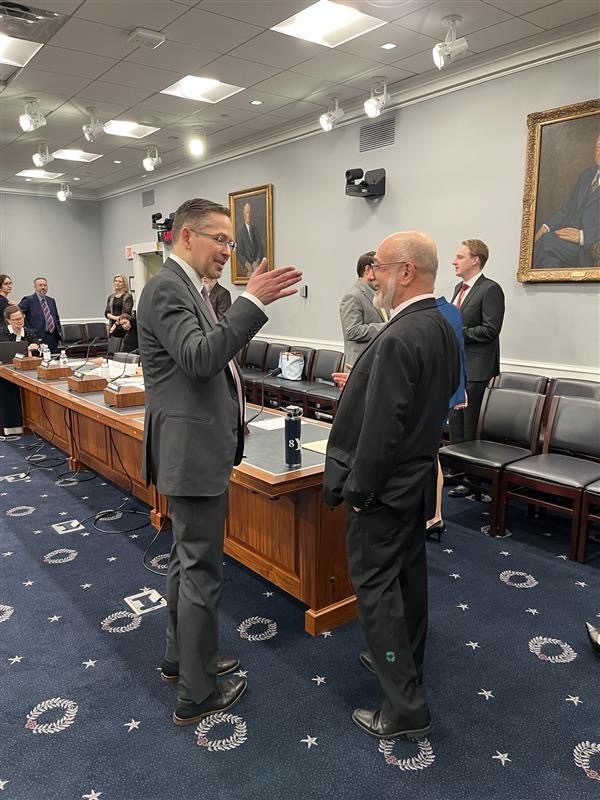
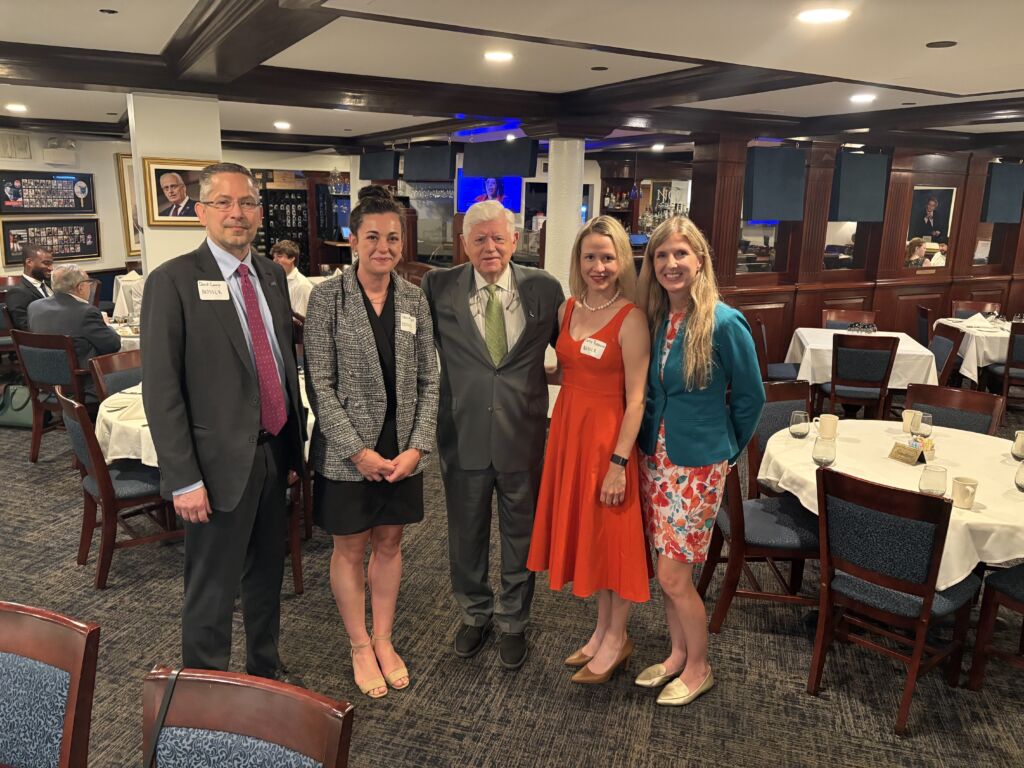
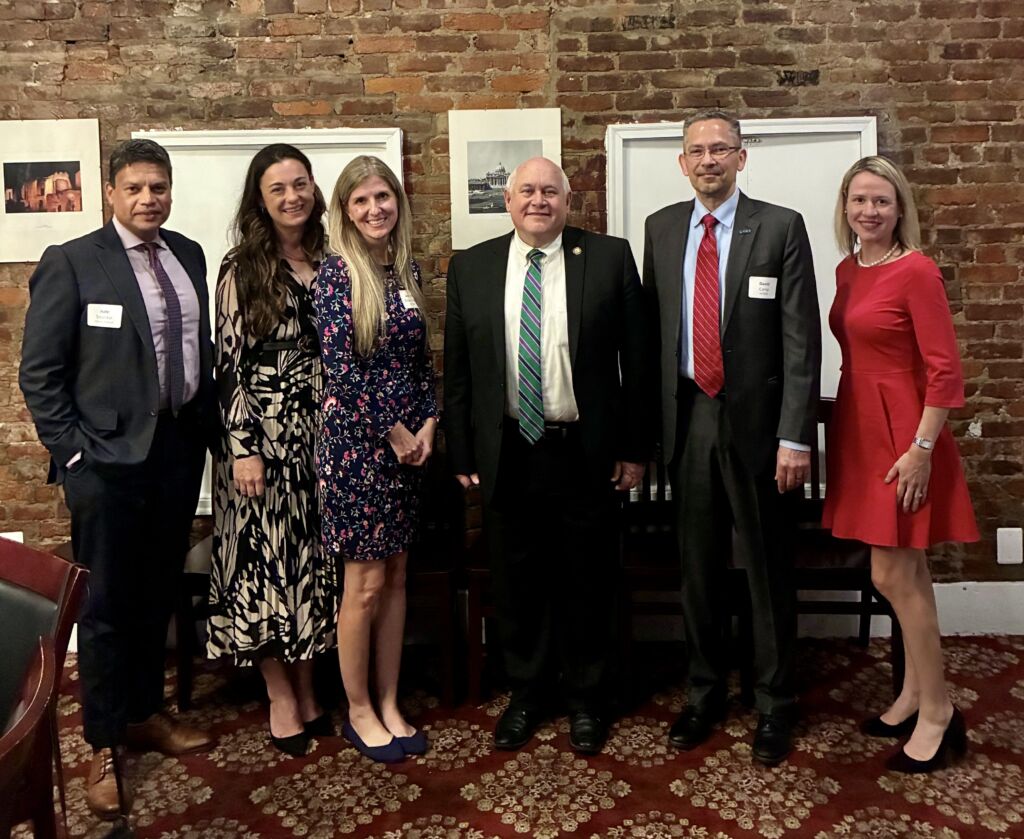
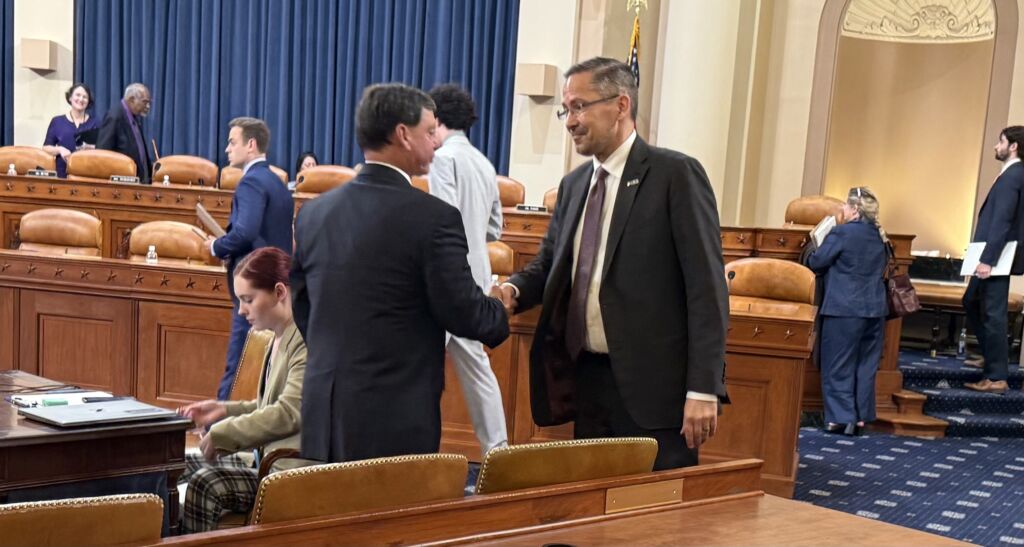
NOSSCR needs your help to move this legislation. We are organizing advocacy days in Washington, DC, to meet with Members of Congress. There is no substitute for a lawyer explaining to a Hill staffer exactly how an outdated asset limit or a geographic technicality prevents a disabled American from meeting their basic needs.
To arrange your visit to Washington to support this legislation, contact us at nosscr@nosscr.org.
For daily updates on the latest Social Security happenings, follow me:
SSA FY2025 Waterfall Chart Now Available
Each year, SSA releases its “waterfall” chart—an in-depth snapshot of how disability claims move through the system. It breaks down approval and denial rates at every level, while also shedding light on how many cases drop off along the way.
This year, overall approval and denial rates remained largely consistent with last year. The most notable shifts occurred in the volume of cases moving through the system, particularly at the Reconsideration and Appeals Council levels. Both saw a significant increase in incoming appeals, though interestingly, these higher volumes did not meaningfully impact approval or denial percentages.
Take a closer look and download the chart below to explore the data in more detail.
Piemonte’s Perspective
George Piemonte, NOSSCR Past President
Last month, I discussed two foundational premises for challenging the Marker job. The second premise was that the job, as described, no longer exists in the modern economy as set forth in the DOT. This month, I turn to practical ways to cross-examine the vocational expert on that point.
A brief disclaimer at the outset: what follows is not an exhaustive list. You will not necessarily need to use every question, and you should expect to adapt, add to, or modify them based on the VE’s testimony. These questions are intended as a guide, tools to help you shape a focused and effective cross-examination, not a script to be followed verbatim.
I. Foundational Questions (Lock the VE Into Their Sources and Methodology)
These questions establish what the VE actually relied upon, which SSR 24‑3p now makes critical.
- Before offering your testimony today, what specific occupational information sources did you rely upon to identify the job of Marker, DOT 209.587‑034?
- Did you rely on the DOT description itself as written, without modification?
- Did you consult any post‑DOT sources, such as O*NET, employer surveys, labor market software, or job analyses, to evaluate whether the DOT description reflects how this work is currently performed?
- Can you identify, with specificity, which source you relied on to determine that the Marker occupation still exists in significant numbers in today’s economy as an unskilled job?
- What steps, if any, did you take to evaluate whether technological changes have altered the core tasks of this occupation since the DOT was last updated?
Purpose:
SSR 24-3p requires transparency regarding sources and reasoning. If the VE relied solely on the DOT or cannot articulate a modern source, the record is already compromised.
II. Obsolescence and Technological Change (Attack the DOT Description Itself)
These questions expose the disconnect between the DOT’s manual‑labeling description and the modern retail economy.
- The DOT describes Marker as manually marking prices using tickets, tags, or labels. Are you aware that most retail pricing today is controlled electronically through UPC barcodes and centralized databases?
- In your professional experience, do modern retail establishments generally change prices by manually tagging each item, or through electronic price updates linked to barcode systems?
- Can you identify industries today where manual price marking, as described in the DOT, is the primary method of pricing goods?
- Would you agree that the DOT description of Marker does not mention barcode scanners, inventory software, or electronic pricing systems?
- If those technologies are now integral to the job, would that mean the DOT description does not fully describe how the job is performed today?
Purpose:
You are establishing factual obsolescence, not merely “conflict,” which SSR 24‑3p recognizes as a legitimate reliability issue.
III. Skill Level and SVP Assumptions (Challenge the “Unskilled” Classification)
These questions target the SVP 2 classification, a frequent weak point.
- Unskilled work is defined as requiring little or no judgment and a short demonstration to learn, correct?
- Does operating handheld scanners, navigating inventory systems, or reconciling electronic price changes require interaction with computerized systems?
- Would those tasks require workers to understand menus, prompts, or system feedback?
- Do those requirements involve judgment beyond simple, repetitive manual tasks?
- Did you perform any analysis to determine whether these modern tasks are consistent with unskilled work as defined in the regulations?
- Is your classification of Marker as SVP 2 based on the DOT alone, rather than on how the job is actually performed today?
Purpose:
This lays the groundwork for arguing that even if the job exists, it is misclassified, making the RFC/job match legally defective.
IV. Methodology for Job Numbers (Expose Speculation and Aggregation)
SSR 24-3p places greater emphasis on reasoned explanation, especially for job-number testimony.
- What is your methodology for estimating the number of Marker jobs in the national economy?
- Do your job‑numbers estimate distinguish between manual price marking and electronically assisted inventory or pricing work?
- Are the numbers you provided derived from a broader occupational group rather than this specific DOT title?
- If so, what steps did you take to ensure that the numbers you cited correspond only to work matching the DOT description?
- Can you identify any data source that separately tracks manual price‑marking jobs as described in DOT 209.587‑034?
Purpose:
You are setting up a numbers-reliability challenge, which courts increasingly scrutinize post-SSR 24-3p.
V. SSR 24‑3p Compliance (Force the VE to Admit Gaps)
These questions explicitly frame the issue for judicial review.
- Under current SSA policy, vocational testimony must be supported by a reasoned explanation tied to reliable occupational information sources, correct?
- Can you explain how your testimony accounts for the technological changes that have occurred since the DOT was last updated?
- Did you provide the ALJ with any explanation reconciling the DOT’s manual‑labeling description with modern, computerized pricing systems?
- If no such explanation was provided, would you agree that the record contains no analysis of whether this occupation still matches the DOT description?
Purpose:
This squarely tees up a legal insufficiency argument under current policy.
VI. Preservation Questions (For District Court Review)
These questions are designed purely to lock in reversible error.
- As you sit here today, can you point to any written vocational source confirming that the Marker occupation, as described in the DOT, still exists in its original form?
- Is it fair to say your testimony assumes, rather than demonstrates, that the DOT description remains accurate?
- If the DOT description no longer reflects how the work is performed, would your testimony necessarily be unreliable?
Purpose:
These questions preserve arguments that the ALJ relied on unsupported vocational testimony, a classic basis for remand.
The views and opinions expressed in this article are the author’s own and do not necessarily reflect the views of NOSSCR, its leadership, or staff.
Practice Tip: The Three Special Medical-Vocational Profiles
Ed Olson & Tom Krause
Note: At the NOSSCR Spring Conference in Baltimore, Ed and Tom will present “Using SSA’s Own Playbook: Underutilized Policies That Strengthen Disability Claims.” Their presentation is on Friday, April 24, at 8:30 a.m.
Practitioners often focus their Step Five arguments on the Medical-Vocational Guidelines (“the Grids”). But there is a set of three profiles that can produce a favorable finding without consulting the Grids. These are the Special Vocational Profiles, 20 C.F.R. § 404.1562, 416.962; see SSR 24-1p, POMS DI 25010.001. At step five, adjudicators must consider these medical-vocational profiles before referring to the Grids. SSR 24-1p.
The profiles apply only after the claimant is found unable to perform past relevant work at Step Four. Once past PRW is ruled out, these profiles look at age, education, work history, and the inability to continue in past relevant work (PRW) due to a severe medically determinable impairment. But the profiles do not require any RFC finding.
Don’t be fooled by the emphasis on “unskilled” work. An individual with PRW for semi-skilled or skilled work can still meet these profiles.
We use the arduous unskilled work profile for an individual whose work experience includes very short periods of semi-skilled or skilled work, as long as the individual did not acquire any transferable skills from those periods of work. We also use this medical-vocational profile for an individual whose work experience includes longer periods of semi-skilled or skilled work if the skill(s) acquired is not readily transferable to lighter work.
SSR 24-1p; see, e.g., Walston v. Sullivan, 956 F.2d 768, 773 (8th Cir. 1992).
Practice Tip: Build the record on the lack of transferability by asking the vocational expert at the hearing to identify specifically what skills would transfer and to what jobs, and challenge those skills and jobs.
- Profile One: Arduous Unskilled Work
The first profile is the “Worn-Out Worker Rule.” POMS DI 25010.001B1. This profile applies to claimants who have spent their working lives doing physically demanding and, generally, unskilled work and can no longer do it. The specific criteria are:
The claimant is not currently working at SGA levels. The claimant has 35 or more years of arduous unskilled work, or unskilled work with skills that are not transferable to less demanding employment. The claimant is unable to continue doing that work because of a severe medically determinable impairment. And the claimant has a marginal education (sixth-grade level or below). Actual educational achievement and functioning, not years of schooling, is what counts.
A claimant with eight or nine years of formal schooling may still have a marginal education if their actual reading and math skills are at that level. The regulations at 20 C.F.R. § 404.1564 make clear that the focus is on educational abilities, not credentials.
Practice Tip: Do not accept a client’s years of schooling at face value. If your client completed seventh or eighth grade but reads at a third-grade level and cannot do basic arithmetic, document that carefully and argue marginal education. Request school records and consider a reading or math achievement test administered by a psychologist or adult education program if the record is thin on this point.
Practice Tip: For the work history element, “arduous” generally means work at the medium, heavy, or very heavy exertional level. Document the physical demands of the claimant’s entire work history and establish that substantially all of those 35 years involved that level of exertion. A vocational expert can be helpful here, but the record should also include the claimant’s own detailed description of lifting, carrying, standing, and the physical conditions of the work.
- Profile Two: No Work Profile
The second profile, at POMS DI 25010.001B2, requires that the claimant has a severe medically determinable impairment, has no past relevant work, is 55 or older, and has a limited education (generally, seventh through eleventh grade level) or less. This profile is becoming more common since SSA now looks back only 5 years for PRW.
Practice Tip: When a client meets these criteria, establish each element explicitly in your pre-hearing brief or on-the-record request and ask the ALJ to address the profile directly on the record. Make sure the record contains a clear statement of the claimant’s age, the absence of PRW, the education level, and the severe impairment. All four elements should be flagged.
- Profile Three: Lifetime Commitment
The third profile, at POMS DI 25010.001B3, is the most demanding in terms of work history but covers an important population. It applies when the claimant has 30 or more years in a single field of work, the skills from that work are not transferable to less demanding employment, the claimant is 60 or older, the claimant has a limited education, and the claimant is unable to continue in that field due to a severe medically determinable impairment.
The key concept here is the “lifetime commitment” to a field of work. The claimant’s entire vocational identity has been built around one type of work, such as construction, farming, manufacturing, or mining, and their skills do not transfer to something else. At age 60 or above, the combination of that narrow work history and the inability to continue in it supports a finding of disability.
- The Common Advocacy Framework
Across all three profiles, the practical approach is the same: identify the profile early, build each element into the record deliberately, and name the profile explicitly in your pre-hearing brief and at the hearing. ALJs are not always prompt to apply these profiles sua sponte, and a vague argument about the claimant’s difficult circumstances will not substitute for a focused analysis of the specific POMS criteria.
Especially for older claimants, run through the profile checklist before defaulting to a Grids analysis. The profiles exist because SSA and the courts have recognized that certain combinations of age, education, and work history create a kind of vocational dead end that the standard Grid rules do not always capture. Your job is to show the ALJ that your client meets one of those profiles.
The views and opinions expressed in this article are the authors’ own and do not necessarily reflect the views of NOSSCR, its leadership, or staff.
Powley v. Bisignano: Huge 9th Circuit Win Revitalizes Efficacy of VE Rebuttal Evidence
Sara Rose Carroll, NOSSCR Member and Conference Presenter
Background
Kevin Kerr, a NOSSCR board member and a managing partner at Kerr Robichaux & Carroll, submitted 91 pages of vocational expert (VE) rebuttal evidence to the ALJ immediately after the hearing. The rebuttal evidence included print outs from the then most recent versions of Skilltran’s Job Browser Pro (JBP) and data from U.S. Census Bureau County Business Patterns. The sources reported job numbers and data directly in conflict with those provided by the VE at hearing. Alyson Young, a partner at Kerr Robichaux & Carroll, did the oral arguments in the 9th Circuit.
The VE testified that he relied solely on JBP for the job numbers he provided for jewelry preparer (700.687-062) and fishing reel assembler (732.684-062). Both occupations are in OES group 51-9199, which contains 1,527 DOT codes. JBP estimated that 0% of the OES group works as a jewelry preparer, and .8% (19) work as a fishing reel assembler. The VE testified that there were 24,700 jobs for the occupation of jewelry preparer and 14,700 jobs for the occupation of fishing reel assembler.
The VE testified that he used both JBP and consulted a “manufacturer” database for final assembler, optical goods (713.687-018). He said the database showed the number of jobs in various industries. However, he also acknowledged on cross examination that assembler, optical goods would be just one of many occupations making up the specific industry. He testified that there are 39,425 people working as a final assembler, optical goods. The 2014 U.S. Census Bureau’s County Business Pattern data that Mr. Kerr submitted showed there were only 24,910 jobs in the entire Ophthalmic goods manufacturing industry (NAICS code 33915). JBP estimated there were 27 jobs for the DOT title final assembler, optical goods.
The court ultimately found that there was an unresolved direct conflict between the VE’s testimony and the rebuttal evidence that Mr. Kerr submitted.
The court distinguishes Powley from prior 9th Circuit cases like Kilpatrick v. Kijakazi, 35 F.4th 1187 (9th Cir. 2022) and Wischmann v. Kijakazi, 68 F.4th 498 (9th Cir. 2023). In Kilpatrick, the court held that the attorney had not identified their expertise in calculating the figures he submitted as a part of his rebuttal and that the attorney had conceded that his figures may not be “completely accurate.” In Wischmann, the court held that the six pages of printouts submitted by the attorney were not probative because there was no explanation of how the job numbers were produced other than the software name and the attorney did not indicate whether they used the same methodology as the VE. Also, the vocational rebuttal evidence in Wischmann was not submitted to the ALJ before the decision was issued and was only submitted to the Appeals Council.
It is also important to note that the court does more than to distinguish Powley from Kilpatrick and Wischmann. Most notably, the court goes further and holds that we do not have to be “experts” and that we do not have to use the exact same methodology and sources as the VE, as long as the vocational rebuttal evidence is “significant and probative.”
Decision Summary
- Whether or not we as attorneys are “experts” is only one factor to be considered when evaluating whether the rebuttal evidence we present is probative.
- ALJ’s cannot only “address” that there is a discrepancy, they also must “resolve” the discrepancy if it is significant and probative.
- VE testimony about relying on their “experience” to come up with job numbers is not in of itself sufficient to explain a direct conflict between the VE’s job numbers and probative evidence we submit.
- We must make sure we clearly explain who “created the data” used in our rebuttal evidence (usually the hearings attorney), how they did so, and make sure that anyone looking at the rebuttal evidence can clearly tell the source the information came from (in this case Skilltran JBP and the US Census Bureau).
- The court notes that the JBP printouts contained the name of the position and corresponding DOT, that those matched the DOT title testified to by the VE, and that Mr. Kerr included JBP’s methodology for generating job numbers and their data sources.
- The court also notes that the census data provided details on the geography covered, the industry it concerns, and other information about the data therein.
- We are not required to mirror the VE’s methods and sources for generating job numbers. It was sufficient that the attorney used sources like Skilltran and census data from the U.S. Census. The court notes that Skilltran JBP and US Census data are two sources frequently relied upon by the Agency.
Insights
We urge representatives to get some kind of VE rebuttal evidence into the file immediately after the hearing. Making argument and crossing VEs during the hearing is likely not going to be sufficient to set your client up for appeal if it appears that is the way things are heading.
The court seems to be most comfortable with evidence that is generated by sources routinely relied upon the Agency and that is clearly in conflict with the Agency’s vocational expert testimony.
In discussing Kilpatrick, the court further explains their finding that the evidence submitted by the attorney in that case was not probative. “For instance, Kilpatrick’s attorney conceded that his figures ‘may not be completely accurate’ and that he had used a seemingly self-created equation to calculate his job numbers with no evidence that the SSA frequently relied on such a method.”
Thus, you may want to consider hiring a vocational expert if you intend to submit VE rebuttal that requires mathematical computations beyond what sources like JBP directly generate. Fortunately in this case, and hopefully in others in the future, using evidence generated by JBP appears to be enough.
The views and opinions expressed in this article are the author’s own and do not necessarily reflect the views of NOSSCR, its leadership, or staff.
Be Part of What’s Next: Salt Lake City
As we gear up for an incredible few days in Baltimore, we’re already looking ahead to what’s next—our Fall Conference in Salt Lake City. The energy, ideas, and conversations sparked in Baltimore are just the beginning, and we want you to be part of carrying that momentum forward.
While attending sessions and connecting with colleagues this spring, we invite you to think about the insights, strategies, and experiences you could share. Inspired speakers are what make our conferences exceptional—and Salt Lake City is your opportunity to take the stage.
Start planning now, register to reserve your spot, and consider submitting a proposal to join our top-tier presenters.
Legislative Spotlight
This month, we are focusing on H.R. 1877, the “Protecting Americans’ Social Security Data Act.” Introduced by Representative John Larson (D-CT-1) on March 5, 2025, this bill seeks to tighten the reins on who can access the vast repositories of sensitive information maintained by the agency. NOSSCR (with the NOSSCR PAC) has been a longtime supporter of Congressman Larson, who is widely understood to be one of Social Security’s strongest defenders in Congress.
At its core, H.R. 1877 aims to prohibit political appointees and special government employees from accessing “beneficiary data systems” that contain personally identifiable information (PII). The bill defines these systems broadly to include any database used to issue Social Security numbers, determine eligibility for benefits, or process payments. This includes the Numident (the master file of SSN holders), the Master Beneficiary Record (MBR), and the Supplemental Security Income Record.
Beyond access restrictions, the legislation proposes a new civil right of action for individuals whose data is negligently accessed or disclosed. If the bill becomes law, affected individuals could bring a suit in U.S. District Court within two years of discovering a violation. The bill outlines specific monetary damages, including a minimum of $5,000 per act of unauthorized access, or the sum of actual damages plus punitive damages in cases involving gross negligence or willful misconduct.
To ensure transparency, H.R. 1877 requires the SSA Office of the Inspector General (OIG) to investigate every unauthorized access or disclosure and report these findings to Congress within 30 days of discovery. Furthermore, if an employee is subject to disciplinary action or criminal charges for a data breach, the Commissioner of Social Security would be required to notify the affected beneficiary. The bill also seeks to codify existing privacy regulations into law to ensure they remain in effect.
The legislation has seen a steady increase in support within the House of Representatives. As of late March 2026, the bill has amassed 147 cosponsors, all from the Democratic caucus. Recent additions to the cosponsor list include Representatives Maxwell Frost (D-FL-10), Jesús “Chuy” García (D-IL-4), and Angie Craig (D-MN-2), reflecting continued legislative interest in the security of the SSA’s data infrastructure.
While the bill is currently with the House Ways and Means Committee, its future remains a point of observation for those of us in the advocacy community. Regardless of the legislative outcome, the conversation surrounding the protection of claimant PII remains a critical component of maintaining the integrity of the Social Security system for the 70 million Americans who rely on it.
Circuit Court Considerations: When “Substantial Evidence” Wins
Adriana de la Torre, NOSSCR Sustaining Member
In Shillington v. Bisignano, the Ninth Circuit offers a clear, if sobering, reminder of how difficult it is to overturn an Administrative Law Judge’s (ALJ) denial of Social Security Disability Insurance (SSDI) benefits.
While the case does not break new doctrinal ground, it reinforces several practical realities that continue to shape disability litigation: the dominance of the “substantial evidence” standard, the centrality of consistency in medical opinions, and the increasingly decisive role of the harmless error doctrine.
This case is less about what the ALJ did perfectly, and more about how much imperfection appellate courts are willing to tolerate.
Case Overview
The claimant appealed the denial of SSDI benefits, challenging the ALJ’s evaluation of:
- Treating and examining medical opinions
- State agency medical findings
- His own subjective symptom testimony
- Third-party lay witness statements
The Ninth Circuit reviewed the district court’s decision de novo and ultimately affirmed the denial, finding that the ALJ’s conclusions were supported by substantial evidence and free of reversible legal error.
1. Medical Opinion Evidence: Consistency Is Still King
At the heart of the court’s analysis emphasizes two primary factors when evaluating medical opinions: supportability and consistency.
The ALJ discounted multiple provider opinions on the basis that their conclusions were not adequately supported by their own treatment notes and were inconsistent with the broader medical record.
For instance, one provider opined that the claimant could not sustain an eight-hour workday due to a combination of physical and cognitive impairments. However, the provider’s own clinical findings reflected largely normal physical examinations, minimal objective abnormalities, and little documentation of mental health limitations.
The Ninth Circuit found this discrepancy sufficient to uphold the ALJ’s decision.
Practical Implication
For practitioners, the lesson is straightforward but critical: medical source statements must align with treatment records. Any internal inconsistency, no matter how subtle, creates an opening for the ALJ to discount the opinion.
2. Mental Health Evidence: The Power of “Improvement”
The court also addressed the evaluation of mental health opinions, particularly those describing “severe” or “moderately severe” limitations.
Here, the ALJ found those opinions unpersuasive in light of treatment notes showing:
- Improved memory
- Increased focus
- Cooperative behavior during sessions
- Limited treatment with positive response
The Ninth Circuit agreed, concluding that evidence of improvement, even if partial, can undermine claims of disabling severity.
Practical Implication
“Improvement” does not need to equate to full recovery. It simply needs to introduce enough inconsistency to weaken the claimed level of impairment. This makes it essential for practitioners to contextualize improvement within the broader longitudinal record, rather than allowing isolated notations to define the narrative.
3. Subjective Symptom Testimony: Still Anchored to Objective Evidence
The claimant also challenged the ALJ’s rejection of his subjective symptom testimony. The ALJ found the testimony inconsistent with:
- Benign imaging results
- Normal physical examinations
- Evidence of intact gait and mobility
- Documented daily activities
- Overall improvement with treatment
The Ninth Circuit upheld this analysis, reiterating a long-standing principle: contradiction with the medical record is a sufficient basis to discount subjective complaints.
Practical Implication
While subjective testimony remains an essential component of disability claims, it rarely prevails where the objective record trends toward mild or moderate findings. Bridging that gap remains one of the central challenges in SSDI litigation.
4. Harmless Error Doctrine: The Deciding Factor
One of the most notable aspects of the decision is the court’s treatment of a clear legal error.
The ALJ failed to properly explain the rejection of third-party lay witness testimony, a requirement under Ninth Circuit precedent. Under normal circumstances, this could warrant remand.
However, the court deemed the error harmless because the third-party statements largely mirrored the claimant’s own testimony, which had already been properly discounted.
Practical Implication
This is a critical reminder: not all errors are created equal. On appeal, identifying error is not enough. The claimant must demonstrate that the error had a meaningful impact on the outcome.
5. RFC and Step Five: Derivative Arguments Will Not Carry the Day
Finally, the court rejected the claimant’s challenge to the residual functional capacity (RFC) assessment and Step Five findings.
The reasoning was straightforward: these arguments were entirely dependent on earlier claims that the ALJ improperly evaluated the evidence. Once those claims failed, the RFC challenge collapsed with them.
Practical Implication
RFC arguments must stand independently. Simply repackaging earlier evidentiary challenges is unlikely to succeed at the appellate level.
Shillington v. Bisignano reinforces several enduring truths about Social Security disability appeals:
- The substantial evidence standard remains highly deferential
- Internal inconsistencies in medical evidence are often dispositive
- The harmless error doctrine frequently preserves flawed ALJ decisions
For practitioners, the takeaway is clear: demonstrate that the errors were consequential, capable of altering the outcome.
In a system where deference is the rule, precision in building and presenting the record is not just helpful, it is essential.
Got any questions? Schedule a consultation with us. I’m here to help. It’s a lot to take in, but we’ll get through it together. After all, navigating these waters is always easier when you’ve got someone to chat with.
The views and opinions expressed in this article are the author’s own and do not necessarily reflect the views of NOSSCR, its leadership, or staff.
Join Our NextGen Coffee Break April 7
Don’t miss your next chance for a quick check-in with fellow NOSSCR NextGen members—Tuesday, April 7, at 12pm Eastern. These monthly gatherings (held on the first Tuesday of every month) are an informal chance to network, ask questions, run hypotheticals, and just check-in with our community. These sessions are intended for new(ish) practitioners—those with fewer than 10 years in the field of Social Security disability, or those who are under 40 years old. The virtual gathering is free, but registration is required to get the link—so please register today, mark your calendars, and join us!
PAC Contributor List
THANK YOU TO OUR NOSSCR PAC CONTRIBUTORS
As of March 2026
| First Circuit David Ferrari (CC) Michael Levin (CC) Second Circuit Crysti Farra (CC) Sarah Frederick (CC) Maurice Maitland (C) Lino Medina Mendez (C) Third Circuit Melissa Green (C) Alicia Hutchinson (CC) Sheryl Mazur (CC) Timothy Mello (CC) Judson Perry (CC) Alan Polonsky (PC) Joseph Silver (C) Christine Trotz-Cosgrove (CC) Fourth Circuit Jonathan Blair Biser (CC) Ben Clauson (CC) Vaughn Clauson (DC) Rick Fleming (CC) George Piemonte (CC) Michelle Pritchard (CC) Ashley Hartman Sappenfield (CC) Andrew Sindler (CC) Joanna Suyes (CC) Laura Beth Waller (CC) Robertson Wendt (CC) Fifth Circuit Paul Burkhalter (CC) Matthew Edwards (C) John Heard (CAP) Jacob Hugentobler (CC) Patrick O’Neal (CC) David Lance White (CC) |
| Sixth Circuit Edward Ahlers (CC) Gary Bimberg (PC) Donald Busta (PC) Lorenzo D’Agostini (PC) Bobby Ficklin, Jr. (C) Joseph Houle (PC) Michael Alexander Rake (DC) Debra Shifrin (CAP) Donna Simpson (CC) Seventh Circuit Eric Farr (CC) Richard Feingold (CC) Brian Harmon (PC) Avram Sacks (CC) Lindsay Solon (CC) Thomas Thompson (CC) |
Key:
CAP=Capitol Club, $5,000/monthly contribution of $416
PC=Platinum Club, $2,500-$4,999/ monthly contribution of $208-415
DC=Diamond Club, $1,000-$2,499/monthly contribution of $83-207
CC=Century Club, $100-$999
C=Contributor, all other contributions
| Eighth Circuit Jeffrey Bunten (PC) Julie Burkett (CC) David Camp (CAP) Patrick Cavanaugh (CC) Sean Cuddigan (PC) Meghan Gallo (DC) Matthew Grundy (CC) Theodore Norwood (PC) J. Asha Sharma (C) Tim Tripp (CC) Felicia Von Holten (C) Ninth Circuit Mark Bunch (DC) Sara Carroll (CC) Paul Clark (CC) Richard Gutstadt (DC) Marc Kalagian (DC) Kevin Kerr (CC) Audrey Miller (C) Eric Penar (DC) Maggie Schott (CC) Jose Vera (CC) Timothy Walker-Dupler (CC) Tenth Circuit Ann Atkinson (DC) Dan Bott (PC) John Harlan (CC) Nick Huntsman (PC) Gary Jones (CC) Philip Ryan (PC) Gayle Troutman (DC) Steve Troutman (DC) Eleventh Circuit Carol Avard (CC) Jason Bailey (CC) Sarah Bohr (CC) Kevin Hall (CC) Doug Mohney (CC) David Wright (CAP) |
Contributions to the National Organization of Social Security Claimants’ Representatives PAC (NOSSCR PAC) are not tax-deductible as a charitable contribution for federal income tax purposes. Contributions to NOSSCR PAC will be used to support federal and state candidates, political parties, and other political committees. Contributions are strictly voluntary. You may refuse to contribute without reprisal. Any proposed contribution level is merely a suggestion, and you are free to contribute more or less than suggested. You will not benefit or be disadvantaged by reason of the amount of your contribution or a decision not to contribute. Federal law requires NOSSCR PAC to use its best efforts to collect and report the name, mailing address, occupation and employer of persons whose contributions exceed $200 in a calendar year. You must be a U.S. citizen or lawfully admitted for permanent residence in the U.S. to contribute.
FY2025 Annual Report from the SSAB
Social Security Advisory Board (the Board) published its Fiscal Year (FY) 2025 Annual Report, summarizing its work during the past FY. The Board fulfilled the statutory requirement to meet at least four times over the FY in support of its ongoing projects. This work includes five Board reports and one letter with recommendations to the Social Security Administration (SSA) and Congress on the following topics:
- Social Security Survivors Insurance Benefits for Children
- Social Security: Improving Hiring Processes at State Disability Determination Services
- Trust Fund Buildings
- Supplemental Security Income and Incarceration
- Social Security Benefits for People Aged 62 to Full Retirement Age
Office of the Inspector General Audit Recommendations Not Implemented
As of January 29, 2026, SSA’s Office of the Inspector General identified 183 unimplemented audit recommendations. Take a look at the report that the OIG submitted to Commissioner Bisignano this month reflecting those unimplemented recommendations and the associated costs.
Daily Dose of Data from SSA
This month, Social Security released the following data:
Useful Resources
OHO Caseload Analysis Report — not currently being updated by SSA
State Medical Records Payment Rates
Social Security Rulings and Acquiescence Rulings by Year
HALLEX Contents & Recent Changes