

September 2026 Print Edition
Just Ask Jennifer: Learn to Love Learning Again…with NOSSCR!

Jennifer Cronenberg, Interim CEO
For those of us who went to law school, there was probably a point in our lives where we were very good at school. Maybe we even liked it. Now, to be clear, I’m not saying that either of those points was during law school—but at some point before that, our enjoyment of and/or excellence at school was likely apparent.
Here at NOSSCR, we hope to tap back into that prior passion and celebrate your excellence at learning. One of our main goals as an organization is to ensure that our members are up to date on the rules, policies, and procedures that govern our practice. While we offer year-round education courses, certainly our most comprehensive learning opportunities are our conferences.
Next month, we’ll gather together in Salt Lake City with the goal of bettering ourselves, our practices, and ultimately, the lives of our clients. We’ve added a few fun learning opportunities that differ from years’ past, and I’d like to highlight those for you:
- Breakfast table-talks. Join us Tuesday, Wednesday, and Thursday mornings at 7:45am for non-CLE early-bird sessions. Grab some delicious food and coffee from our exhibit hall, then meet in the Venezia room for a guided open discussion. Here’s what you can expect:
- Esterien and I will kick things off on Tuesday morning with alternating fun facts about the conference and current goings-on at SSA.Wednesday the Rohlfing family will open the day with what’s sure to be a lively discussion.
- Thursday, Laura Beth Waller and Ted Norwood will chat with folks about how to win in the room but preserve the issue for appeal.
- Workshops. Running concurrently with the CLE sessions, we will also be offering a series of interactive workshops. Here’s some of what you can look forward to:
- Meet with NOSSCR’s Senior Policy Advisor, David Camp, to hear about NOSSCR’s policy initiatives and share your thoughts on what topics NOSSCR should prioritize over the next year.
- Spend an hour with Vocational Expert, John Yent, in his “Ask a VE Anything” session.
- Learn more about how your clients can build long-term financial security through ABLE accounts from Jolene Wyler, who dedicated 25 years to Utah Work Incentive Planning Services (UWIPS) within the Utah Department of Workforce Services, including 12 years serving as Director.
- Staff Track. We’ve selected a series of courses intended for office support staff, though all conference sessions are open to all in-person attendees. Here’s a taste:
- Learn how to create boundaries, engage in active and empathetic listening, and de-escalate clients in crisis with Sara Carroll and Amanda Robichaux.
- Understand how to best use social media to boost your firm’s image with Christine Burnside.
- Make a plan to create consistency across teams with Julie Smith as she teaches you how to unify goals, expectations, and standards.
- Evenings. We have a variety of post-session activities for you to enjoy during the week.
- On Tuesday, directly following CLE sessions, we’ll host Circuit Meetings for all Circuits. Then we ask that you join us for our (free) President’s Welcome Reception where we’ll play get-to-know-your-fellow-attendees Bingo for some fun NOSSCR prizes, while enjoying some live music and delicious bites.
- On Wednesday, following our General Session, we’ll host our (free) Scully Reception and Talent Show. Enjoy food and drinks while your fellow attendees dazzle with singing, dancing, stand-up, and a few surprises. Don’t forget to take part in our Exhibitor Passport game. Some great Exhibitor-sponsored prizes will be handed out during this event.
- On Thursday, don’t forget to sign up for the Golden Hour tour, but before you leave the hotel, check out Marc Raifman’s after-hours session, “Let’s Talk About Difficult Judges and What To Do.” Much like our breakfast session, this will be a chance to share wisdom (and maybe a few war stories) in a loosely guided setting.
More conference details will be arriving soon, so for those registered, watch your inboxes (and download our App!). For those who haven’t registered yet, please make plans to join us! It’s never too late to reinvigorate your love for learning!
Only 2.5 Weeks Left—Join us in Salt Lake City!
We can’t wait to see you in just a couple of weeks! We have so many exciting things planned. If you haven’t registered yet, take a moment to do it now.
Here’s a snapshot of what to expect:
A Beautiful Setting
- The Grand America Hotel is simply breathtaking. Enjoy their traditional English afternoon tea or treat yourself to a service at their relaxing spa—and be sure to check out their complimentary wellness classes.
State-of-the-Art Education
- With up to 32 hours of CLE, hands-on workshops, table talks, and education designed just for support staff, you’ll head home ready to conquer your caseload.
Networking in Style
- Join us Tuesday and Wednesday nights for two receptions, both free and included with your registration. Get to know your fellow attendees while playing games, winning prizes, and enjoying seasonal fare.
Tools to Enhance Your Practice
- Stop by the exhibit hall to discover products and services that can complement your day-to-day work.
Register today and make plans to join us!
Dispatches from Camp: SSA’s AI Buildout—Reading the Tea Leaves in Four New Procurement Signals
David Camp, NOSSCR Senior Policy Advisor
A procurement notice posted by SSA this summer, read alongside the agency’s broader pattern of activity, is among the clearest signals yet that AI-assisted case processing (including medical evidence review and claim triage) is coming to the disability system. Here’s what each one says, and what it means for how your clients’ files may soon be handled.
If SSA’s pattern holds, that means AI touching medical evidence review, screening for consistency or fraud indicators, and eventually the triage decisions that determine how a claim moves through the system. Here are the four notices that point that way.
The Four Signals
First, SSA issued a Request for Information on an Enterprise AI Strategy: the framework that will decide how AI tools eventually reach adjudicators’ desks and claimants’ files, rather than staying siloed in pilot programs (Solicitation No. 28321326RI0000041, posted August 14, 2026 by SSA’s Office of Acquisition and Grants, with responses due September 28). The notice has drawn attention from trade press including FedScoop, ExecutiveGov, and HSToday, and covers governance, data readiness, platform layers, and training for agentic AI tools.
Second, and issued six days later, SSA put out an RFI labeled simply “Request for Information–Ontology,” a term that in SSA’s context likely points toward building a structured data model, the kind of system that could let software reason over unstructured case content rather than merely search it as text (Solicitation No. 28321326RI0000043, posted August 20, 2026, responses due September 10). The public notice itself is a single line, so this reading is my own inference, not something the notice states outright: teaching a computer system how concepts relate to one another so it can reason over a disability file full of medical records, function reports, and vocational evidence, rather than just search it as text. If that inference holds, it would be a necessary step before SSA could meaningfully automate review of medical evidence or flag files for particular handling.
Third, SSA published an RFI on mobile application shielding, the security layer that has to harden before SSA can expand any AI-enabled tool onto mobile-facing platforms claimants and representatives might use (Solicitation No. 28321326RI0000042, posted August 20, 2026, with responses due September 3). This one is less about adjudication directly and more about the infrastructure hardening that has to accompany a larger digital footprint.
Fourth, SSA awarded a contract for a Coder Enterprise Platform, procured through reseller Flywheel Data LLC (PIID 28321326FDX030137, signed August 25, 2026, $117,300, covering premium support for 100 users, with a period of performance running September 1, 2026 through August 31, 2027). This is a modest purchase in dollar terms, and I don’t read much into the size of the award. The signal here is the tool choice itself: a platform for the agency’s own developers and contractors to build, test, and deploy code faster and more uniformly.
What the Pattern Suggests
None of these four items is a rule, and none of them is final. But taken together, an enterprise AI strategy, a possible data model for reasoning over case content, a security posture built for a larger mobile and application surface, and a development platform to build on, describe an agency methodically laying the foundation for AI-assisted case processing at scale.
This is not a new interest for SSA, and it is not one NOSSCR is encountering for the first time. In our May 2025 letter to Commissioner Bisignano on the Disability Determination Ready Claim Process, we proposed that SSA consider a pilot using AI to flag certain case types for reconsideration, precisely because targeted, transparent use of these tools can reduce burden if it is designed with due process in mind. I have also written publicly, including on LinkedIn, about SSA’s IMAGEN tool for analyzing medical evidence as one option worth watching on the claims-processing efficiency front. At our Spring 2026 National Conference in Baltimore, Commissioner Bisignano reported progress on AI applications to accelerate disability casefile review, and we built out conference programming specifically on AI in legal work because the direction of travel was already clear.
What I Am Watching For
The open question is not whether SSA will use AI more heavily in the years ahead. It will. The open question is whether that buildout comes with the transparency, testing, and error-correction pathways that due process requires. A data model that reasons over medical evidence is only as good as the medical and vocational judgment it encodes, and a screening tool that flags cases for extra scrutiny needs an equally rigorous process for flagging cases that deserve less. We have pushed SSA before on making its data-sharing and evidence-gathering tools work for claimants rather than merely for throughput, and we will bring the same lens to this enterprise AI strategy as it develops.
For now, there is nothing in these four notices that changes how you handle a pending claim. But representatives are often the first to notice when an agency’s internal process shifts, whether it is a change in how quickly file reviews come back or a new kind of request buried in a denial notice. If you start seeing anything in your practice that looks like automated triage, unusual patterns in reconsideration timing, or evidence requests that read like they were generated rather than drafted, I encourage you to post it on the NOSSCR Martin Listserv so we can see whether it is isolated or part of a broader rollout. We will keep tracking these procurement notices as they mature into actual system changes, and we will report back when there is something more concrete to act on.

For daily updates on the latest Social Security happenings, follow me:
A Look Back at the 2026 NOSSCR NextGen Retreat
Esterien Keet, NOSSCR Chief Strategy Officer
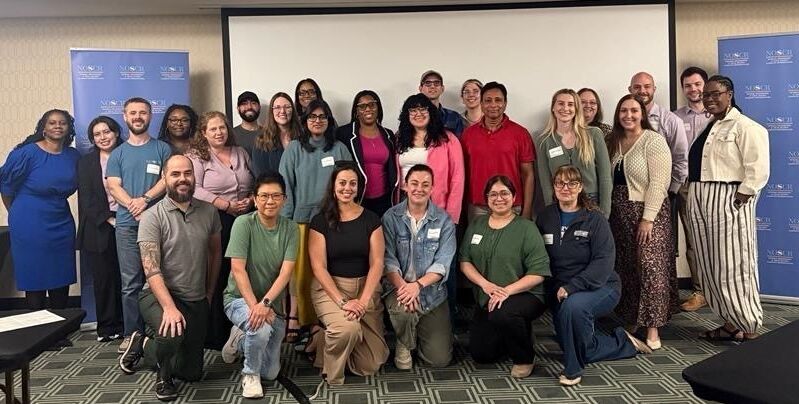
Earlier this month, we brought our NextGen members together in Pittsburgh for three days of learning, real talk, new friendships, and more fun than a CLE agenda usually suggests.
NextGen is for members 40 and under or in their first 10 years of Social Security practice, and it’s deliberately small. The whole point is to give people a place to ask the questions they might not raise at Big NOSSCR (as our NextGen crowd calls it), and to learn from experienced practitioners and each other.
And yes, we met in an actual bank vault. The Main Vault had armored walls and a 34-ton door, which felt a little funny for a weekend that was all about opening things up.
Sessions covered children’s claims, pediatric medical evidence, onset dates, case management from intake through hearing prep, overpayments, LTD, work incentives, and post-entitlement reviews. We wrapped with an open Ask the Experts session where attendees brought their real, messy, in-the-weeds questions.
Huge thanks to our speakers, Melissa Lanouette, Dr. Jennifer Presnar-Piscitella, Jasmine Chandler, James Mitchell Brown, Karl Osterhout, Katrina Tomer, Krysti Monaco, Deondra Sexton, Ashley Sappenfield, and Stephen Sloan, for being so generous with what they know.
Some of the best moments happened outside the Vault, though: exploring Pittsburgh, Rib Fest at Acrisure Stadium, getting competitive at Puttshack, and long dinners where the conversations kept going. A good answer can help with a case today. A peer you can text when you’re stuck can help for your whole career. That’s what NextGen is really about.
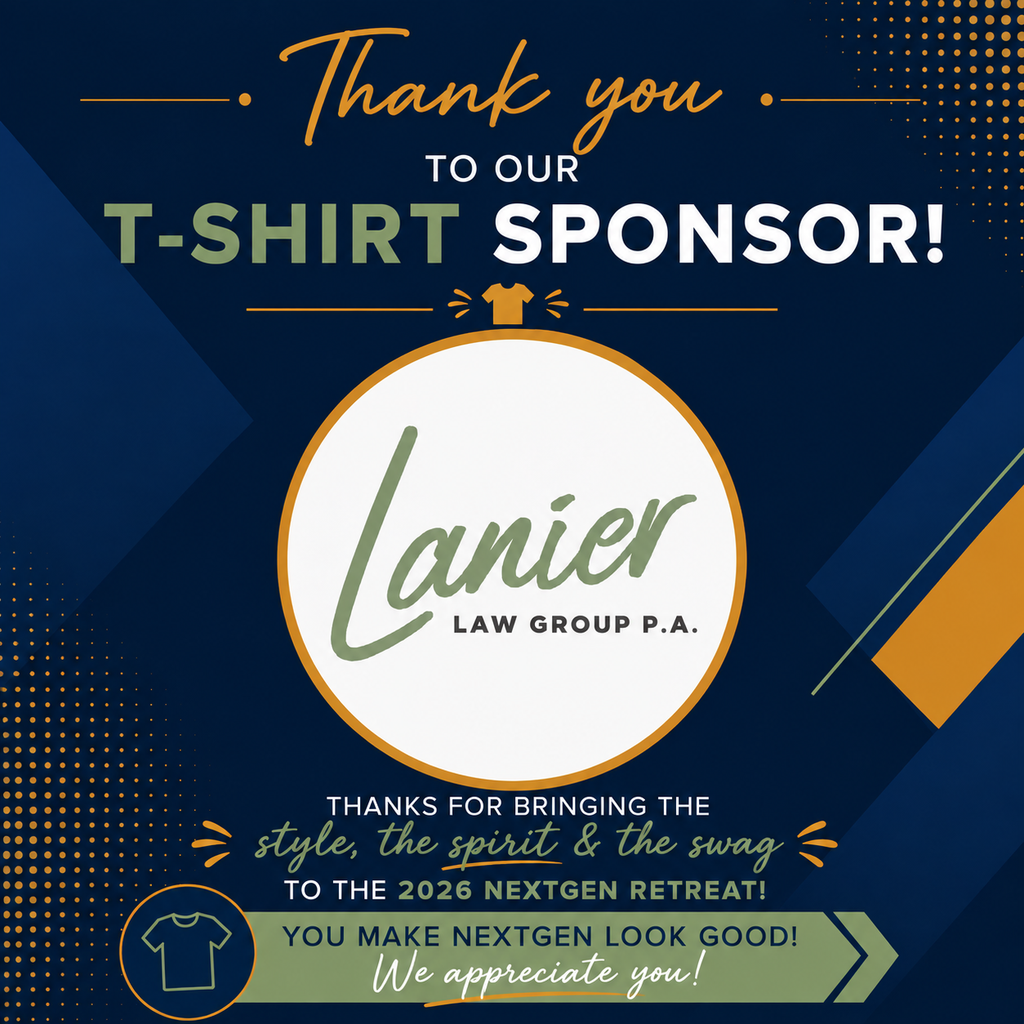
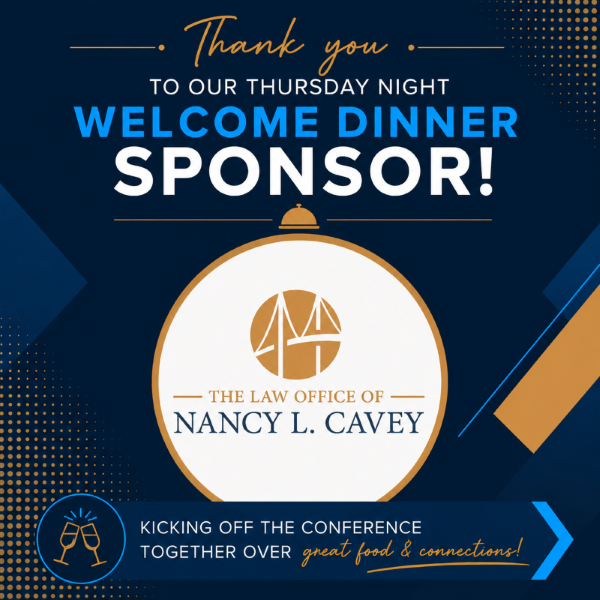
Thank you to our co-chairs, Katrina Tomer and Krysti Monaco, for the ideas, energy, and hands-on work that made this weekend happen. And thank you to our sponsors, Cavey Law, Osterhout, Berger & Daley, Benny, Legal Conversion Center, and Lanier Law Group, for making it possible.
Most of all, thank you to everyone who showed up ready to jump in, ask questions, share their own stories, and pull new people into the conversation. The retreat is over, but the group chat energy lives on (on the listserv, anyway).
So proud of this community and the people who’ll shape the future of this work.
Our NextGen group meets virtually every month on the first Tuesday of the month at noon Eastern. If you’re 40 or under or in the first 10 years of your Social Security practice, join us for our next gathering, Tuesday October 6. Register here.


Piemonte’s Perspective: A Cheat Sheet to Cross a VE on the Router Job
George Piemonte, NOSSCR Past President
We have been discussing how to attack the job Router DOT 222.587-038. Below is a cheat sheet to help you cross-examine a VE about this job.
Vocational Expert Cross-Examination Cheat Sheet: Router (DOT 222.587-038)
Incorporating the Occupational Requirements Survey (ORS) and O*NET
Quick Reference Card
| Field | DOT Says | ORS Says (SOC 43-9061) | O*NET Says (SOC 43-9061) |
| DOT Code | 222.587-038 | — | — |
| SOC Crosswalk | — | 43-9061 (General Office Clerks) | 43-9061.00 (General Office Clerks) |
| DLU | 1977 | Wave 2: 2019–2023; Wave 3 (prelim): 2024 | Updated 2026 (Analyst) |
| Strength | Light | 81.1% sedentary; only 14.9% light (2023) | 60% sit continually/almost continually |
| SVP | 2 (Unskilled) | Only 35.7% are SVP 1–2 (2023); 64.3% require > 1 month training | Job Zone 1–2 (Below 6.0); but top work activity is “Working with Computers” (importance 81) |
| Tasks | Stamps, stencils, tags packages; reads addresses; uses standard charts | BLS economists surveyed actual employers on how this work is performed today | 20 core tasks including operating PCs, maintaining databases, communicating with customers, proofreading, using email |
| OEWS Employment | — | 2,517,350 total (May 2022); 2,496,370 (May 2023) | — |
What Is the ORS and Why Does It Matter?
The Occupational Requirements Survey (ORS) is a nationally representative establishment-based survey conducted by the Bureau of Labor Statistics (BLS) under an interagency agreement with the Social Security Administration (SSA). Unlike the DOT, which was last updated in 1991 and reflects job descriptions from as far back as the 1970s, the ORS collects current data directly from employers about the actual requirements of work as it is performed today. The ORS measures four categories of job requirements:
- Physical demands (strength, sitting, standing, reaching, lifting)
- Environmental conditions (noise, temperature, hazards)
- Education, training, and experience (minimum education, SVP, credentials)
- Cognitive and mental requirements (verbal interactions, work pace, supervision)
The SSA funded the ORS specifically to develop a new Occupational Information System (OIS) to replace the DOT. The ORS uses SOC codes, the same classification system used by the OEWS, O*NET, and every major vocational software tool. SSR 24-3p expressly recognizes the SOC system and the ORS as reliable sources of occupational information.
The BLS has published a methodology for combining ORS data with OEWS employment data to calculate the number of jobs in the national economy that meet specific physical, cognitive, and vocational requirements. Practitioners should use this methodology to challenge inflated VE job number estimates.
The ORS Data: What the Numbers Actually Show for SOC 43-9061
A. Specific Vocational Preparation (SVP)
| SVP Category | 2018 (Wave 1 Final) | 2023 (Wave 2 Final) | 2024 (Wave 3 Prelim) |
| Short demonstration only (SVP 1) | 4.4% | 2.0% | 1.1% |
| Beyond short demo, up to 1 month (SVP 2) | 31.3% | 33.7% | 44.6% |
| Total SVP 1–2 (Unskilled) | 35.7% | 35.7% | 45.7% |
| Requiring > 1 month (SVP 3+) | 64.3% | 64.3% | 54.3% |
Translation: The DOT classifies Router as SVP 2. But according to the ORS, based on data collected directly from employers, only 35.7% of General Office Clerks (2023 data) are unskilled (SVP 1–2). The remaining 64.3% require more than one month of training, placing them at SVP 3 or higher (semiskilled or skilled).
B. Strength/Exertion Level
| Strength Level | 2018 (Wave 1 Final) | 2023 (Wave 2 Final) | 2024 (Wave 3 Prelim) |
| Sedentary | 73.3% | 81.1% | 84.6% |
| Light | ~22.7% | 14.9% | ~11.4% |
| Sedentary + Light | ~96.0% | 96.0% | ~96.0% |
Translation: The DOT classifies Router as light work. But according to the ORS, only 14.9% of General Office Clerks perform light work (2023 data). The vast majority (81.1%) perform sedentary work. This creates a significant conflict: if a VE derives job numbers from SOC 43-9061 without accounting for exertion level, the VE is including the 81.1% of sedentary jobs that do not match the DOT’s light-work classification for Router.
C. Other ORS Data Points (SOC 43-9061, 2023 Wave 2)
| ORS Requirement | Value |
| Quiet noise intensity level | 27.0% |
| Supervisor not present | 26.5% |
| Sedentary or light strength | 96.0% |
The BLS-Endorsed Methodology: Calculating Actual Job Numbers
The BLS factsheet explains how to combine ORS percentages with OEWS employment estimates. Using this methodology, we can calculate the actual number of General Office Clerk jobs that match the DOT’s classification of Router as light, unskilled (SVP 1–2) work:
Step 1: Start with total OEWS employment for SOC 43-9061.
- 2,517,350 General Office Clerks (OEWS May 2022).
Step 2: Apply the ORS light-strength percentage.
- Only 14.9% of General Office Clerks perform light work.
- 2,517,350 × 14.9% ≈ 375,085 light exertion General Office Clerk jobs.
Step 3: Apply the ORS SVP 1–2 (unskilled) percentage.
- Only 35.7% of General Office Clerks are SVP 1–2.
- 375,085 × 35.7% ≈ 133,905 light + unskilled General Office Clerk jobs.
Step 4: Account for full-time work only (O*NET data).
- O*NET reports that only 74% of General Office Clerks work full-time (40+ hours).
- 133,905 × 74% ≈ 99,090 full-time, light, unskilled General Office Clerk jobs.
Step 5: Remember, Router is only ONE of many DOT codes mapping to SOC 43-9061.
- There are 73 DOT occupations that crosswalk to SOC 43-9061. Router’s proportional share of ~99,090 jobs is a fraction of that total, not the entire SOC.
- We went from over 2.5 million jobs to approximately 99,000 just by applying the DOT description. Using the ORS to apply the additional limitations in the specific hypothetical the ALJ poses likely will result in further reductions.
Bottom line: Whatever job number the VE testifies to, the ORS data demonstrates that the actual number of jobs matching the DOT’s description of Router (light, unskilled) is a small fraction of the total SOC 43-9061 employment figure. Whatever number the VE testifies to, ask them to show their work using the BLS-endorsed methodology and to take you through that process step by step. If the ALJ interferes, remind them that under SSR 24-3p you have the right and requirement to probe the VE’s methodology during the hearing. If the ALJ continues to block your efforts, note your exception on the record, noting that you are specifically preserving the issue for the Appeals Council.
The O*NET Data: What the Modern Job Actually Requires
Even though O*NET now classifies SOC 43-9061 as Job Zone 1–2 (SVP below 6.0), the O*NET data independently demolishes the DOT’s 1977 description of Router.
Top Work Activities (by Importance Score):
| Importance | Work Activity |
| 81 | Working with Computers — Using computers and computer systems to enter data or process information |
| 76 | Communicating with Supervisors, Peers, or Subordinates |
| 72 | Getting Information from all relevant sources |
| 68 | Performing Administrative Activities |
| 64 | Documenting/Recording Information in written or electronic form |
| 63 | Establishing and Maintaining Interpersonal Relationships |
| 63 | Processing Information — compiling, coding, categorizing, calculating |
| 62 | Communicating with People Outside the Organization |
| 61 | Organizing, Planning, and Prioritizing Work |
The #1 work activity is “Working with Computers.” The DOT description of Router mentions no computers, software, or electronic systems of any kind. It describes stamping packages and reading paper charts.
Work Context (O*NET):
| Work Context | Response |
| Telephone conversations | 93% every day |
| Email use | 89% every day |
| Contact with others | 82% constant contact |
| Face-to-face discussions | 74% every day |
| Being exact or accurate | 77% extremely important |
| Deal with external customers/public | 65% extremely important |
| Sitting | 60% continually or almost continually |
Software Skills (O*NET lists 24 categories), including:
Accounting software (QuickBooks, Sage 50), CRM software (Salesforce, Microsoft Dynamics), database software (Microsoft Access), document management (Adobe Acrobat, SharePoint), email (Microsoft Outlook, IBM Notes), ERP software (Oracle PeopleSoft, SAP), and word processing (Microsoft Word, Google Docs).
None of these appear in the DOT description of Router. A worker who “stamps, stencils, letters, or tags packages” using “standard charts” does not use Salesforce, SAP, or Microsoft Outlook.
Essential Skills (O*NET):
| Importance | Skill |
| 69 | Active Listening |
| 69 | Reading Comprehension |
| 66 | Speaking |
| 53 | Writing |
| 50 | Critical Thinking |
| 47 | Monitoring/Assessing performance |
| 44 | Active Learning |
Critical Thinking (importance 50) and Monitoring (47) are inconsistent with unskilled work requiring “little or no judgment.”
Cross-Examination Questions
First, a brief disclaimer at the outset: what follows is not an exhaustive list. You will not necessarily need to use every question, and you should expect to adapt, add to, or modify them based on the VE’s testimony. These questions are intended as a guide, tools to help you shape a focused and effective cross-examination, not a script to be followed verbatim.
I. Foundational: Lock the VE Into Their Sources
These questions establish what the VE actually relied upon, which SSR 24-3p now makes critical.
- Before offering your testimony today, what specific occupational information sources did you rely upon to identify the job of Router, DOT 222.587-038?
- Did you rely on the DOT description itself, as written, without modification?
- Did you consult any post-DOT sources, such as O*NET, the Occupational Requirements Survey, employer surveys, labor market software, or job analyses, to evaluate whether the DOT description reflects how this work is currently performed?
- Can you identify, with specificity, which source you relied on to determine that the Router occupation still exists in significant numbers in today’s economy, as an unskilled, light-exertion job?
- Are you familiar with the current Vocational Expert Handbook’s requirement that if you name an occupation “that currently exists but that is performed differently from the way the DOT describes it,” you “should explain that there is a difference compared to the way the occupation is performed now and explain it”?
- Did you provide any such explanation today regarding the Router occupation?
II. Introducing the ORS
These questions establish the ORS as a reliable, SSA-funded source that the VE must address.
- Are you familiar with the Occupational Requirements Survey, or ORS?
- If yes: The ORS is a survey of representative employers conducted by the Bureau of Labor Statistics, correct?
If unfamiliar: If I asserted that the BLS Occupational Requirements Survey was a nationally representative survey of employers, do you have any basis to refute that?
- The ORS was developed under an interagency agreement between the BLS and the Social Security Administration, correct?
If unfamiliar: If I asserted that the SSA funded the ORS to develop better occupational information for the disability claims process, do you have any basis to refute that?
- In the ORS, the BLS collected specific information directly from employers about their labor needs and how jobs are actually performed, correct?
If unfamiliar: If I asserted that BLS economists visited workplaces and collected data directly from employers about how jobs are performed, do you have any basis to refute that?
- The ORS collects data on physical demands, environmental conditions, education, training, and experience requirements, as well as cognitive and mental requirements, correct?
- The BLS has published a methodology for combining ORS data with Occupational Employment and Wage Statistics data to calculate the number of jobs in the national economy that meet specific physical and vocational requirements, correct?
- SSR 24-3p recognizes the SOC system and permits vocational experts to rely on “any reliable source of occupational information that is commonly used by vocational professionals,” correct?
- Would you agree that the ORS, published by the BLS under contract with the SSA, qualifies as a reliable source of occupational information?
III. The ORS SVP Conflict: Only 35.7% of the SOC Is Unskilled
These questions use ORS data to demonstrate that the DOT’s SVP 2 classification does not reflect how the work is actually performed.
- You classified Router as SVP 2, unskilled, correct?
- Under the regulations, unskilled work requires “little or no judgment to do simple duties that can be learned on the job in a short period of time,” correct?
- The DOT crosswalks Router to SOC code 43-9061, General Office Clerks, correct?
- Are you aware that, according to the ORS 2023 final second-wave data, only 2.0% of General Office Clerks require only a short demonstration, SVP 1, and only 33.7% require more than a short demonstration, up to one month, SVP 2?
- That means only 35.7% of General Office Clerks are classified as unskilled, SVP 1 or 2, according to the ORS, correct?
- And that means 64.3% of General Office Clerks require more than one month of training, placing them at SVP 3 or higher, which is semiskilled or skilled work, correct?
- Did you apply the ORS SVP data to your job number estimate for Router?
- If you did not, would you agree that your job number estimate necessarily includes jobs that require more training than SVP 2, jobs that would not qualify as unskilled work under the regulations?
IV. The ORS Strength Conflict: Only 14.9% of the SOC Is Light
These questions expose the critical exertion level mismatch between the DOT and the ORS.
- The DOT classifies Router as light work, correct?
- According to the ORS 2023 data for SOC 43-9061, 81.1% of General Office Clerks perform sedentary work, correct?
- And only 14.9% perform light work, correct?
- So the DOT says Router is light, but the ORS, based on data collected from actual employers, shows that only about 1 in 7 General Office Clerks performs light work. The vast majority, more than 4 out of 5, perform sedentary work. Correct?
- Did you account for this exertion level discrepancy when calculating your job numbers for Router?
- If you did not, would you agree that your job number estimate includes the 81.1% of sedentary General Office Clerk jobs that do not match the DOT’s light work classification for Router?
V. The BLS-Endorsed Math: Combining ORS + OEWS
These questions walk the VE through the BLS’s own methodology to demonstrate that the actual number of light, unskilled jobs is a fraction of the total SOC.
- How many Router jobs did you testify exist in the national economy?
- What source did you use to arrive at that number?
- Did you use Job Browser Pro, SkillTRAN, US Publishing, or another software tool?
- Which SOC code did you use to derive the job numbers?
- The Bureau of Labor Statistics reports approximately 2,517,350 jobs under SOC 43-9061, correct?
- SOC 43-9061 encompasses all General Office Clerks, not just Routers, correct?
- The BLS has published a factsheet explaining how to combine ORS percentages with OEWS employment data to calculate the number of jobs with specific requirements. Are you familiar with that methodology?
- Using the BLS methodology: if only 14.9% of General Office Clerks perform light work, then 2,517,350 multiplied by 14.9% equals approximately 375,085 light-exertion General Office Clerk jobs, correct?
- And if only 35.7% of General Office Clerks are SVP 1–2, then 375,085 multiplied by 35.7% equals approximately 133,905 jobs that are both light and unskilled, correct?
- And Router is only one of many DOT occupations that crosswalk to SOC 43-9061, correct?
- So the 133,905 figure represents the entire universe of full-time, light, unskilled General Office Clerk jobs, shared among all 73 DOT codes that map to this SOC, not just Router, correct?
- What proportion of those 133,905 jobs did you allocate to Router specifically, and what methodology did you use to make that allocation?
- Did you apply any further erosion factor for part-time work? O*NET reports that only about 74% of General Office Clerks work full-time, correct?
- If we account for part-time positions, that reduces the estimate to approximately 99,090 full-time, light, unskilled General Office Clerk jobs shared among all DOT codes mapping to this SOC, correct?
VI. The O*NET Conflict: Modern Task Requirements
These questions use O*NET data to show that the modern job bears no resemblance to the DOT description.
- Are you familiar with O*NET, the Department of Labor’s replacement for the DOT?
- The O*NET is a reliable source of occupational information that is commonly used by vocational professionals, correct?
- O*NET identifies the #1 work activity for General Office Clerks, by importance score, as “Working with Computers,” using computers and computer systems to enter data or process information, correct?
- The DOT description of Router does not mention computers, software, or electronic systems of any kind, correct?
- O*NET reports that 93% of General Office Clerks have telephone conversations every day, 89% use email every day, and 82% are in constant contact with others, correct?
- The DOT description of Router involves no telephone conversations, no email, and no contact with customers, correct?
- O*NET lists 24 categories of software skills for this occupation, including Microsoft Outlook, Salesforce CRM, Microsoft Access databases, SAP enterprise software, and Adobe Acrobat, correct?
- None of those software tools appear in the DOT description of Router, correct?
- O*NET lists Critical Thinking (importance 50) and Monitoring/Assessing performance (importance 47) as essential skills for General Office Clerks, correct?
- Would you agree that Critical Thinking and performance Monitoring are inconsistent with unskilled work requiring “little or no judgment”?
- O*NET reports that 65% of General Office Clerks say that dealing with external customers or the public is “extremely important” in their job, correct?
- The DOT description of Router involves no interaction with customers or the public, correct?
VII. Obsolescence: The DOT Description Is Extinct
These questions demonstrate that the specific tasks described in the DOT no longer exist.
- The DOT describes the Router as someone who “stamps, stencils, letters, or tags packages, boxes, or lots of merchandise to indicate delivery routes,” correct?
- And the DOT says the Router “[r]eads addresses on articles and determines route, using standard charts,” correct?
- That is the entire description of the Router occupation, correct?
- The Date of Last Update for this occupation is 1977, nearly fifty years ago, correct?
- Are you aware of any employer in the national economy today where a worker stamps or stencils packages by hand to indicate delivery routes?
- Can you identify any employer where a worker determines delivery routes by consulting a paper wall chart?
- Would you agree that modern distribution and shipping facilities use barcode scanners, RFID readers, warehouse management systems, and GPS-based route-optimization software, rather than rubber stamps and paper charts?
- If the core tasks of stamping, stenciling, and consulting paper charts have been replaced by barcode scanning and computerized systems, would you agree that the Router occupation, as described in the DOT, no longer exists in its original form?
VIII. SSR 24-3p Compliance
These questions establish that the VE failed to meet current policy requirements.
- Are you familiar with SSR 24-3p, effective January 6, 2025?
- SSR 24-3p requires that vocational experts may rely on “any reliable source of occupational information that is commonly used by vocational professionals,” correct?
- SSR 24-3p also requires you to “cite, explain, and furnish” the sources you rely upon, correct?
- Did you cite, explain, and furnish any source other than the DOT to support your testimony that the Router occupation still exists as described, at the light exertion level, and at SVP 2?
- Did you provide the ALJ with any explanation reconciling the DOT’s 1977 description of Router with how routing work is performed in the modern economy?
- Did you address the conflict between the DOT’s classification of Router as light work and the ORS data showing that 81.1% of the corresponding SOC code is sedentary?
- Did you address the fact that the ORS shows only 35.7% of the corresponding SOC code is SVP 1–2, while 64.3% requires more than one month of training?
IX. Preservation Questions: For District Court Review
These questions lock in reversible error for appeal.
- As you sit here today, can you point to any written vocational source confirming that the Router occupation, as described in the DOT, still exists in its original form?
- Is it fair to say your testimony assumes, rather than demonstrates, that the DOT description of Router remains accurate?
- If the ORS shows that only 14.9% of General Office Clerks perform light work, and the DOT classifies Router as light, isn’t it true that your job number estimate overstates the number of light exertion Router positions available in the national economy?
- If the ORS shows that only 35.7% of General Office Clerks are SVP 1–2, and you testified that Router is unskilled, isn’t it true that your job number estimate includes jobs that exceed the skill level in the ALJ’s hypothetical?
- Using the BLS-endorsed methodology, if only approximately 5.3% of General Office Clerks are both light and unskilled (14.9% × 35.7%), and there are 2,517,350 total General Office Clerks, the maximum number of light, unskilled General Office Clerk jobs in the national economy is approximately 133,905, shared among all 73 DOT codes mapping to this SOC, correct?
- Would you agree that if the job numbers you provided significantly exceed what the BLS-endorsed methodology produces, your estimate is unreliable?
Summary: Grounds for Reversal
This cheat sheet supports multiple independent grounds for reversal:
| Ground | Source | Key Data Point |
| Obsolete DOT description | DOT vs. modern logistics technology | Core tasks (stamping, paper charts) no longer exist |
| SVP conflict | ORS 2023 (Wave 2 Final) | Only 35.7% of SOC 43-9061 is SVP 1–2; 64.3% require > 1 month training |
| Strength conflict | ORS 2023 (Wave 2 Final) | Only 14.9% of SOC 43-9061 is light; 81.1% is sedentary |
| Inflated job numbers | BLS methodology (ORS × OEWS) | Maximum ~133,905 light + unskilled jobs across entire SOC, shared among all DOT codes |
| Modern task mismatch | O*NET (updated 2026) | #1 work activity is “Working with Computers”; 93% use phones daily; 89% use email daily; 24 software categories |
| Failure to comply with SSR 24-3p | SSR 24-3p; VE Handbook | No explanation of technological change; no reconciliation of DOT with ORS/O*NET |
Key Sources to Have Ready at the Hearing
- ORS Data: BLS ORS Database, Final Second Wave (2023) and Preliminary Third Wave (2024) data for SOC 43-9061.
- BLS Factsheet: “Calculating Occupational Employment for Job Requirements.” Print and bring to the hearing. Uses SOC 43-9061 as its primary worked example.
- OEWS Employment Data: SOC 43-9061, May 2022 (2,517,350 jobs) or May 2023 (2,496,370 jobs).
- O*NET Details Page: SOC 43-9061.00, including Tasks, Work Activities, Work Context, Software Skills, Essential Skills, and Knowledge.
- SSR 24-3p (effective January 6, 2025).
- SSA OIS Project Page: Documents the SSA’s interagency agreement with BLS to develop the ORS as a replacement for the DOT.
- Kelly P. v. Saul, No. 5:18-cv-00777-MAA (C.D. Cal. Aug. 6, 2019), Router jobs, as described in the DOT, do not exist in significant numbers.
Deployment Notes
Remember, restraint is the best advocacy when the testimony is already favorable. Use this cheat sheet when the VE cites Router at Step Five, and the testimony is unfavorable. The ORS-based cross is most powerful when used in sequence:
- Lock the VE into the DOT (Section I).
- Introduce the ORS as a reliable, SSA-funded source (Section II).
- Use the ORS SVP and strength data to expose conflicts (Sections III–IV).
- Walk the VE through the BLS math (Section V).
- Use O*NET to show the modern job is unrecognizable (Section VI).
- Demonstrate obsolescence (Section VII).
- Preserve the SSR 24-3p compliance issue (Section VIII).
- Lock in the record for appeal (Section IX).
And remember, the burden is on the Commissioner at Step 5. If the VE concedes that Router does not fit the hypothetical, do not ask if there are others that do.
The views and opinions expressed in this article are the author’s own and do not necessarily reflect the views of NOSSCR, its leadership, or staff.
Two Exciting Sightseeing Tours Offered at our Fall Conference
After several days of CLE, workshops, and networking, we’re excited to offer you TWO opportunities to get out and explore beautiful Salt Lake City and the surrounding areas.
Thursday Evening Golden Hour Bus Tour
Join us Thursday, October 15, 2026, for a private evening bus tour through Salt Lake City, timed perfectly for golden hour.
Here’s how it works:
- Departs: The Grand America Hotel at 6:15 PM
- Duration: 2 hours
- Private double-decker bus: Exclusive to our group
- Cost: $43.40 per ticket
What you’ll experience:
- Live guided storytelling through historic downtown
- Sunset over the valley at This Is The Place Heritage Park
- A stop at Pioneer Center
- Local artisan ice cream tasting
- A visit to the Temple Square visitor center
- Round-trip hotel pickup and drop-off
This tour is not included in your conference registration. Seats are limited, so please book and pay directly with the tour company as soon as possible to guarantee your spot.
Friday Afternoon Antelope Island & The Great Salt Lake Tour
Join us Friday, October 16, 2026, for a private afternoon 5 hour experience of Antelope Island, the largest island in Salt Lake, led by an expert local guide.
Here’s how it works:
- Departs: The Grand America Hotel promptly at 12:30 PM
- Duration: 5 hours
- Box lunch included
- Cost: $165 per ticket
- Be sure and wear comfortable walking shoes and bring a light jacket
What you’ll experience:
- Panoramic, breathtaking vistas of the massive Great Salt Lake
- Abundant Wildlife Watching: Spot free-ranging American bison, mule deer, bighorn sheep, pronghorn antelope, and migratory shorebirds.
- Guided visit to the historic Fielding Garr Ranch.
- Eco-Exploration & Hiking: Enjoy plenty of time to hike, explore, and capture stunning photos
- Round-trip hotel pickup and drop-off
This tour is not included in your conference registration. Seats are limited. We are thankful to Sarah Bohr has graciously agreed to arrange this tour. Please visit the link below to submit payment and reserve your seat.
Keeping Medicaid When SSI Gives Way to Social Security: The Pickle Amendment and Its Cousins
Tom Krause, NOSSCR Lifetime Member
For many of our clients, the Medicaid card matters as much as the check and sometimes more. In most states, SSI eligibility carries automatic Medicaid.[1] The danger comes when Title II income displaces SSI. Sometimes the cause is a DIB award, sometimes a cost-of-living adjustment (COLA), and sometimes a childhood disability benefit on a parent’s record. Sometimes it is early retirement at 62.[2] When SSI ends, so does the categorical Medicaid that comes with it. Congress created several “deemed SSI” groups to catch these clients. The oldest and best known, the Pickle Amendment, reaches far more of our clients than its reputation suggests.
A short history
The problem was born with SSI itself. Before Congress created SSI in 1972, with its automatic grant of Medicaid to SSI recipients, the states set their own Medicaid income limits, typically at much lower levels. See Lynch v. Rank, 604 F. Supp. 30, 36 (N.D. Cal.), aff’d, 747 F.2d 528 (9th Cir. 1984), opinion amended on reh’g, 763 F.2d 1098 (9th Cir. 1985). The linkage had an unintended edge: an annual Title II COLA could push a concurrent recipient’s income past the SSI limit, ending the SSI payment and, with it, categorically needy Medicaid. Id. at 33. Congress responded in 1976 with section 503, PL 94–566, October 20, 1976, 90 Stat 2667, codified as a note to 42 U.S.C. § 1396a. The Senate report explained that the amendment was meant to ensure that an increase “intended to benefit the aged and disabled would not have inadvertent harmful effects.” S.Rep. No. 94–1265, 94th Cong., 2d Sess. 28 (1976), reprinted in 1976 U.S.Code Cong. & Ad.News 5997, 6022. (quoted in Lynch, 604 F. Supp. at 32). The provision takes its informal name from its House sponsor, Rep. J.J. “Jake” Pickle of Texas.
The government first read the amendment narrowly, applying it only when a COLA was the sole cause of the loss of SSI. The courts rejected that “solely” test. The First Circuit held that the statute’s “except for” language calls for a mechanical “but for” test. Ciampa v. Sec’y of Health & Hum. Servs., 687 F.2d 518, 524 (1st Cir. 1982). A California district court followed Ciampa, certified a nationwide class, and was affirmed. Lynch, 604 F. Supp. 30. The regulation was rewritten in 1986, 51 Fed. Reg. 12,330 (Apr. 10, 1986), and the provision remains fully in force, implemented at 42 C.F.R. § 435.135 and described in SSA’s POMS SI 01715.015. A 2024 federal decision restates its criteria as live law. A.M.C. v. Smith, No. 3:20-CV-00240, 2024 WL 3956315 (M.D. Tenn. Aug. 26, 2024), on reconsideration in part sub nom. A.M.C. by C.D.C. v. Smith, No. 3:20-CV-00240, 2026 WL 2021986 (M.D. Tenn. July 13, 2026).
How the test works
The regulation requires every state that covers SSI recipients to cover people who (1) currently receive Title II benefits, (2) were eligible for and received SSI or a state supplement but became ineligible after April 1977, and (3) would still be eligible for SSI or the state supplement if all Title II COLAs paid since the last month in which they both received SSI and were entitled to Title II were deducted from their current benefit. 42 C.F.R. § 435.135(a). The regulation speaks of Title II entitlement, not of receiving two checks in the same month; the concurrent month exists if the client was entitled to Title II for a month in which SSI was paid. Any kind of Title II benefit counts, whether disability, retirement, or survivor benefits. COLAs paid to a financially responsible spouse or parent are also deducted, a point screeners frequently miss. 42 C.F.R. § 435.135(b); Lynch v. Dawson, 820 F.2d 1014 (9th Cir. 1987).
In practice, the state “freezes” the Title II benefit at its amount when SSI eligibility was lost, adds the client’s other countable income, and compares the total with the current federal benefit rate plus any state supplement. POMS SI 01715.015(B)(2). The client must otherwise meet SSI rules, including the resource limit. Because the frozen Title II amount never grows while the federal benefit rate rises every year, a former concurrent recipient who does not qualify today may qualify in a few years. Gordon Bonnyman long ago described this as determining eligibility in a “time warp.” Gordon Bonnyman, Medicaid Eligibility in a Time Warp, 22 Clearinghouse Rev. 120 (June 1988). Consider a client whose frozen DIB is $1,000 and who has no other income. After the $20 general income exclusion, $980 counts, which is below the 2026 federal benefit rate of $994. That client is Pickle-eligible in 2026 even though his current, COLA-inflated check is much higher. Pickle also does not end at Medicare entitlement, so it can supply full Medicaid to a dual eligible.
The reason SSI ended does not matter. POMS gives three examples in which Pickle applies even though a COLA did not cause the loss of SSI: other income, windfall offset, and state reductions in supplement levels. POMS SI 01715.015(B)(2)(a)–(c). POMS also confirms that the protection reaches a person who would still be eligible under section 1619(b) but for Title II COLAs. Id. (B)(2).
The limits
There are two limits. First, only COLAs are deducted. The initial Title II benefit is not, and neither is an increase from a new or different entitlement. A client whose Title II entitlement never overlapped a month in which SSI was paid is outside the group. Second, states that have elected the more restrictive section 1902(f) option, known as “209(b)” states, need not cover Pickle-eligible people automatically. They must instead cover them on the same basis as SSI recipients: a client who incurs enough medical expenses to reduce income to the state’s categorically needy standard must be covered, and in computing income the state may deduct the post-SSI COLAs up to the amount that made the client ineligible for SSI. 42 C.F.R. § 435.135(c); see Lynch, 604 F. Supp. at 37. Readers in 209(b) states should check their state plan.
Who are the Pickle clients in our caseloads?
The first group is the classic case: concurrent DIB/SSI recipients who later lose SSI because of a COLA. The second group, probably the largest for disability practitioners, is windfall-offset clients. These clients received SSI while the DIB claim was pending, and then the retroactive DIB award ended SSI. POMS expressly identifies windfall-offset cases as Pickle situations, and the concurrent-entitlement element is ordinarily satisfied because the retroactive award makes the client entitled to Title II for months in which SSI was paid. That is so even when the retroactive Title II benefit exceeded the SSI rate for every one of those months. See Bonnyman, supra; National Health Law Program, A Quick and Easy Method of Screening for Medicaid Eligibility under the Pickle Amendment: 2026 Update. A third group is SSI recipients who begin early retirement, childhood disability, or widow(er)’s benefits and are entitled to both for at least one month. A fourth group is former concurrent recipients who lost SSI for any other reason, such as a spouse’s income, a pension, or excess resources, including those whose resources are now back under the limit. Finally, section 1619(b) participants are covered as well.
How many?
No national count of Pickle enrollees is readily available. SSA informs every state annually, at COLA time, about potential members of the group, POMS SI 01715.015(B)(2), and states must maintain an annual review system to identify them, 42 C.F.R. § 435.136, but we have found no published national total. What is known is the pool of people with current concurrent eligibility: SSA reported about 2.5 million people receiving both Social Security and SSI in June 2026. Every one of them already satisfies the concurrent-entitlement element and would be a potential Pickle member upon losing SSI. To that pool an unknown but substantial number of former concurrent recipients must be added, including windfall-offset cases going back decades, and the pool grows each year as the benefit rate rises.
The eligible population is almost certainly larger than the enrolled population, because state systems do not reliably find these clients. In A.M.C. v. Smith, 2024 WL 3956315, the court found that for several months after Tennessee launched its automated eligibility system in 2019, the system did not consistently load and consider the criteria that trigger Pickle review, and that the indicators for the disabled-adult-child and widow(er) groups were not properly loaded. The court also found that during data conversion the system placed some disabled-adult-child enrollees in the Pickle category, whose income rules differ, which led to termination proceedings against people who remained eligible. A.M.C. v. Smith, 2024 WL 3956315, ECF No. 412, Findings of Fact ¶¶ 58, 68, 72–73. Screening at each COLA remains worthwhile. For hand screening, the National Health Law Program publishes an annually updated method with reduction factors keyed to the month SSI was last received. See National Health Law Program, supra.
The section 1634 cousins
Other provisions of section 1634 of the Social Security Act, 42 U.S.C. § 1383c, protect clients whom Pickle may miss, because they do not require a prior month of concurrent entitlement. Section 1634(c) continues Medicaid for adults who lose SSI on or after July 1, 1987, because of entitlement to, or an increase in, childhood disability benefits. 42 U.S.C. § 1383c(c); POMS SI 01715.015(B)(4).
Section 1634(d) protects widows and widowers who lose SSI because of widow(er)’s benefits and who are not entitled to Medicare Part A; this protection ends when Part A begins. 42 U.S.C. § 1383c(d); POMS SI 01715.015(B)(5). Its regulation, 42 C.F.R. § 435.138, still describes the pre-1991 version of the provision, which applied only to widow(er)s at least age 60. The Omnibus Budget Reconciliation Act of 1990 removed that age condition from the statute, and POMS applies the current statute. An older provision, section 1634(b), implemented at 42 C.F.R. § 435.137, protected disabled widow(er)s who lost SSI when the 1983 amendments eliminated the additional reduction factor, but it required a Medicaid application by mid-1988 and is now largely of historical interest.
Section 1619(b) participants, who no longer receive SSI cash because of earnings, are themselves deemed SSI recipients for Medicaid purposes. 42 C.F.R. § 435.120(c); POMS SI 01715.015(B)(1).
Timing matters for the section 1634(c) and (d) groups. Childhood disability benefits typically begin when a parent retires, becomes disabled, or dies, and widow(er)’s benefits can begin as early as age 60 (age 50 for disabled widow(er)s). Screen for both protections before these claims are filed, and document the client’s SSI status in the month before Title II payments begin.
Expansion Medicaid as a bridge
In the states that have expanded Medicaid under the Affordable Care Act, an adult under 65 who is not entitled to Medicare may qualify with household income up to 133 percent of the federal poverty level (effectively 138 percent after the standard five-percentage-point disregard), with no asset test. Social Security counts in full, because the modified-adjusted-gross-income definition adds back its nontaxable portion. 26 U.S.C. § 36B(d)(2)(B). Expansion coverage now carries a work requirement. The 2025 reconciliation law, H.R. 1 (PL 119-21, July 4, 2025, 139 Stat 72), requires expansion adults aged 19 through 64 to show 80 hours a month of work or similar activity, and most states must begin by January 1, 2027. CMS implemented the requirement through an interim final rule issued in June 2026. The rule narrows the statutory “medically frail” exemption by requiring that the qualifying condition significantly impair the person’s ability to comply.
Twenty-five states and the District of Columbia challenged that test and other provisions of the rule in Massachusetts v. Oz, No. CV 26-12962-RGS, 2026 WL 2192092, at *1 (D. Mass. July 29, 2026). In late July 2026, the court denied a preliminary injunction without prejudice, finding that the states had not shown irreparable harm; it did not decide the merits. Check the litigation’s current status, and document the client’s impairment. Deemed-SSI coverage under Pickle or section 1634 is not expansion coverage and is not subject to the work requirement.
Practice points
For every client who loses SSI, and every former concurrent recipient, ask the state Medicaid agency for a Pickle determination. POMS confirms that Medicaid agencies must also determine whether the client is eligible under any other group, POMS SI 01715.015(A), and the A.M.C. court found that Tennessee’s system failed to consistently consider all eligibility categories, including disability-related categories. Obtain the client’s SSI payment history and any windfall-offset notice, because they establish the concurrent months and the frozen benefit amount. Before a client, or the parent of a disabled adult client, files for retirement, and before a widowed client files for widow(er)’s benefits, screen for sections 1634(c) and 1634(d). In 209(b) states, press for coverage on a spend-down to the categorically needy standard under 42 C.F.R. § 435.135(c). Finally, because poverty figures, benefit rates, and the work-requirement rules change, confirm current law before advising any client.
[1] There are eight 209(b) states: Connecticut, Hawaii, Illinois, Minnesota, Missouri, New Hampshire, North Dakota, and Virginia. POMS SI 01715.020.
[2] SSI conditions eligibility on applying for all other benefits, including retirement benefits, for which the recipient may be eligible. See 20 C.F.R. § 416.210.
The views and opinions expressed in this article are the author’s own and do not necessarily reflect the views of NOSSCR, its leadership, or staff.
Early Advocacy Pays Off
James L. Burgess, NOSSCR Sustaining Member
The Commissioner’s position was simple: a claimant’s attorney has no business drafting an opening brief before the agency files the answer. In Maerz v. Bisignano, 818 F. Supp. 3d 1256 (D. Colo. 2026), District Judge Robert Blackburn firmly rejected that argument.
Background
The ALJ found the claimant disabled at step three under three separate mental-impairment listings. But the ALJ then found she’d returned to SGA in 2023 based on a self-employment earnings record of just over $20,000. The claimant testified she hadn’t worked at all that year; she’d prepared her own taxes and mistakenly reported public assistance as income. The ALJ didn’t credit that explanation, and the Appeals Council never exhibited the tax returns and third-party benefit letters she later submitted to corroborate it.
Rather than wait for the agency to file the certified administrative record and litigate the issue, we reviewed the ERE, researched what qualifies as SGA, and drafted an opening brief before the Commissioner’s answer deadline. We then emailed OGC to flag the error and invite an answer-stage remand. OGC agreed and filed an unopposed motion to remand the same day the CAR was filed, just 2.5 months after the complaint.
The Commissioner’s Objection
At the EAJA stage, OGC didn’t dispute that we were the prevailing party or that the Commissioner’s position was not substantially justified. They objected instead to 18 of the 20.8 hours billed, all of which were spent reviewing the record, researching, and drafting the opening brief two months before OGC filed the CAR. OGC’s theory was that no paying client would authorize speculative brief-writing before the responsive pleading deadline, since the case might have gone a different way via a Rule 12 motion, a sentence-six remand, or affirmative defenses. OGC asked the court to cut the EAJA award to just over $770, i.e., 2.8 hours.
The Court’s Ruling
Judge Blackburn found “no authority” for the proposition that early preparation is per se unreasonable and declined to create one. Several holdings are worth flagging for anyone litigating a similar objection:
- Diligence isn’t punished just because it helps the agency. The court reasoned that our early work “absolve[d] the Commissioner of the burden of filing a response,” which is the opposite of a reason to deny fees.
- The CAR filing date is arbitrary. The order specifically credits the reality of claimants’ practice: solo and small firms juggle many appeals at once, and it would be unfair to require an attorney to “sit on his hands” until the Commissioner files the record before beginning substantive work.
- 20 to 40 hours remain the presumptive range in the Tenth Circuit for a Social Security appeal, and the 20.8 hours here fell within it even though the case never reached full briefing.
- Time spent arguing a fee petition is itself compensable. Citing Supreme Court and Tenth Circuit precedent, the court recognized that “EAJA fees are paid from agency funds to penalize the Commissioner for taking an unjustified legal position,” and that purpose “continues to function when fees are awarded for having litigated fee issues.”
In the end, the court awarded the full amount originally requested, plus another $1,500 for time we spent researching and drafting the EAJA reply.
Why This Matters
This order helps on two fronts. First, it directly rebuts an argument that, if it gained traction, would discourage exactly the kind of early advocacy that gets cases resolved faster and keeps them off the court’s briefing calendar altogether. Second, it confirms that reasonably billed reply time in EAJA litigation is recoverable; if OGC knows that filing a weak EAJA objection will only generate more fees for the claimant, it has less incentive to submit one.
Jim Burgess is the founder of Burgess Disability Law, which represents claimants in federal court appeals. He spent over a decade as an appellate litigator in the SSA’s Office of the General Counsel before opening his own practice in 2025. Learn more at burgessdisabilitylaw.com.
Virtual Registration Now Open for Fall Conference
Not able to join us this fall in Salt Lake City? While we will certainly miss connecting with you in-person, we’ve got great news:
Virtual Registration is now open! By joining us virtually, you’ll have access to all 32 hours of NOSSCR’s CLE programming, plus you’ll be able to watch our General Session live, where we’ll hear directly from top SSA leaders. More info coming soon about this exciting session.
Don’t delay—register today. Prices increase on October 8.
| If you are already registered for in-person and need to change your registration type to virtual, please be aware that transfer fees will apply. Visit our conference policies page for complete details. |
The Medical Source Statement: Why It Remains the Single Most Important Document in Your Client’s File
Neil H. Good and Shawn M. Good, NOSSCR Sustaining Members
A Social Security disability representative is not a passive conduit between a claimant and the agency. Our role is an active one: to marshal the facts in the light most favorable to our client, to develop the record strategically, and to ensure that the evidence before the ALJ tells the most complete and compelling version of our client’s story. The administrative record does not build itself. Treatment notes go unsubmitted, diagnostic findings go unexplained, and functional limitations go undocumented unless the representative takes deliberate steps to develop the evidence that gives those limitations meaning.
One of the most powerful—and most underutilized—ways to actively marshal the record in a client’s favor is to obtain a medical source statement (MSS) from the treating physician. The MSS is not a formality. It is the instrument through which a treating doctor’s clinical knowledge is translated into the specific functional terms the agency is required to evaluate, and it is often the difference between a record that compels a finding of disability and one that leaves an ALJ with room to deny. This article explores three foundational reasons why obtaining an MSS from your client’s treating source should be a non-negotiable part of your hearing preparation in every case.
I. The Treating Source Brings a Unique Relationship—and Specialized Expertise—That State Agency Reviewers Cannot Replicate
The most obvious—but often underappreciated—advantage of a treating source opinion is that it comes from a physician who has actually examined and treated the claimant, often over months or years. The State agency medical consultants (SAMCs) retained by Disability Determination Services (DDS) and the testifying medical experts sometimes called at hearings never meet the claimant. They review paper records. They form opinions in the abstract, without the clinical texture that comes from watching a patient struggle to rise from a chair, observing gait abnormalities, or witnessing the affect of someone in chronic pain.
Moreover, treating sources are frequently specialists—cardiologists, neurologists, rheumatologists, oncologists, psychiatrists—who possess domain expertise that a SAMC generalist cannot match. When an ALJ is asked to weigh the RFC opinion of a treating cardiologist who has managed a claimant’s heart failure for three years against a non-examining internist who spent forty minutes reviewing a PDF record summary, the treating specialist’s opinion should carry decisive weight—provided it is well-supported and explained.
Under 20 C.F.R. §§ 404.1520c and 416.920c, the two most important factors in evaluating any medical opinion are supportability and consistency. A treating specialist who has authored the underlying treatment notes, ordered and reviewed the diagnostic testing, and personally observed the patient’s functional decline is uniquely positioned to produce an MSS that scores highly on both dimensions. The MSS translates that clinical knowledge into the specific RFC terms—pounds lifted, minutes stood, hours seated, episodes of off-task behavior—that the agency actually needs to make a disability determination. Without the MSS, that knowledge dies in the treatment record, untranslated and often unnoticed.
II. When DDS Finds Insufficient Evidence to Formulate an RFC, the Treating Source MSS May Be the Only Medical Opinion in the Record
Practitioners are well aware that DDS does not always produce a medical RFC assessment. When the agency finds that the record contains insufficient evidence to rate functional limitations—most commonly because the claimant has not yet undergone a consultative examination or because the treating records are sparse at the initial and reconsideration levels—the file reaches the hearing level with no formal RFC opinion from any source. In those circumstances, the ALJ is left to construct an RFC from raw treatment notes, diagnostic images, and lab values, with no medical expert to bridge the gap between clinical findings and functional capacity.
This is precisely the scenario in which a treating source MSS becomes not merely helpful but indispensable. If your client’s treating physician submits a completed MSS before the hearing, that opinion stands as the only structured medical RFC in the record. The ALJ cannot simply disregard it. Under the regulations, the ALJ must articulate how persuasive the opinion is and explain the degree to which it is supported and consistent with the evidence. A well-documented MSS from a treating source, absent any competing RFC opinion, creates a powerful record posture—and one that is difficult for an ALJ to overcome without developing additional evidence or calling a medical expert at the hearing.
Representatives should therefore treat every case in which DDS has not issued an RFC assessment as an urgent opportunity to obtain a treating source MSS before the hearing date. Waiting until after the hearing—or relying on the hope that an ALJ will independently recognize the severity of the claimant’s limitations from raw medical records—is a risk no claimant should be asked to bear.
III. On Appeal, the MSS Becomes the Foundation for Demonstrating That the Treating Source Opinion Is the Most Consistent and Most Supported Opinion in the Record
When a case proceeds to the Appeals Council or to federal district court, the analytical framework shifts from de novo development to record review. At that stage, the question is not what the evidence might support—it is whether the ALJ’s RFC determination is supported by substantial evidence and whether the ALJ properly evaluated the medical opinions in the record under the applicable regulatory framework.
A treating source MSS is the ideal instrument for this argument. The treating physician wrote the underlying treatment notes—she is, in the most literal sense, the author of the medical record. She ordered the MRIs, reviewed the lab values, and documented the clinical examinations that form the backbone of the administrative record. When the MSS tracks and explicitly references those records, the opinion does not merely assert that the claimant is limited; it demonstrates why, by connecting each functional restriction to the documented objective findings that support it.
This makes the supportability and consistency analysis straightforward on appeal. Counsel can point to each limitation in the MSS and trace it directly to a treatment note, a diagnostic result, or a clinical observation authored by the same physician. The SAMC opinion, by contrast, can only point to records it reviewed—records written by the same treating source. In any coherent application of 20 C.F.R. §§ 404.1520c and 416.920c, the treating source’s own interpretation of her own records should be accorded greater weight than an outside reviewer’s interpretation of those same records, particularly when the treating source has documented her reasoning in the MSS itself.
When an ALJ discounts a treating source MSS in favor of a non-examining SAMC opinion, the MSS gives appellate counsel a concrete target: the ALJ’s supportability and consistency analysis can be challenged line by line, pointing to the specific clinical findings the ALJ either failed to address or inadequately weighed. Without an MSS, that argument is far more difficult to construct. The treating source’s views are scattered across dozens of treatment notes, and the ALJ has far more latitude to characterize those notes as consistent with a lighter RFC than the treating source would recognize.
IV. Conclusion
The medical source statement is not a luxury or an optional supplement to your client’s file. It is the mechanism through which a treating physician’s clinical knowledge is converted into the language the Social Security Administration is required to evaluate. It fills the evidentiary void when DDS fails to produce an RFC. And it is the cornerstone of any meaningful appellate challenge to a denial, because it places the treating source’s supported and consistent opinion squarely before any reviewing tribunal.
Obtaining a completed MSS from every treating source capable of opining on your client’s functional limitations is not merely good practice. It is the difference between building a record and leaving one to chance.
V. A Practical Tool: Educating Clients and Treating Physicians Before the MSS Is Sent
Our office has had meaningful success pairing the MSS form itself with a one-page plain-language explanation when we send the package to a client or directly to the treating physician. The explanation—attached to this article—is titled Your Doctor’s Opinion Can Make or Break Your Disability Case. It serves two distinct purposes.
First, it conveys the significance of the statement in terms that resonate with both clients and physicians who are unfamiliar with the SSA adjudicative process. Many treating doctors genuinely do not understand that SSA’s reviewing physicians never examine the claimant, that objective test results alone do not establish functional limitations, or that ALJs routinely expect a completed RFC from the treating source before granting benefits. The one-pager explains all of this plainly and quickly—increasing the likelihood that the physician will treat the request as meaningful rather than administrative busywork.
Second, and perhaps more importantly, it addresses myths and misconceptions that commonly cause physicians to decline or delay completing an MSS. A frequent source of resistance is the belief that a doctor can simply write a letter stating the patient is “unable to work”—and that doing so fulfills the same function as a completed RFC form. In fact, under 20 C.F.R. § 404.1520b(c)(3)(i), such conclusory statements on issues reserved to the Commissioner are neither valuable nor persuasive. The attached document explains this directly: what SSA needs is not a bottom-line conclusion but a functional description—how long can the patient sit, stand, walk, lift, concentrate. Once physicians understand that distinction, resistance to completing the form typically diminishes.
Other common physician concerns—fear of liability, uncertainty about what SSA will do with the opinion, or the mistaken belief that the treating relationship disqualifies them from opining on disability—are also addressed in the attached sheet. We have found that physicians who receive this explanation alongside the MSS form are substantially more likely to return a completed statement, and to complete it with the specificity that makes the opinion genuinely useful at the hearing and on appeal.
Representatives are welcome to adapt the attached document for use in their own practices.
Neil H. Good and Shawn M. Good are attorneys at The Good Law Group, P.C., in Palatine, Illinois, where they practice Social Security disability law and civil litigation. They can be reached at (847) 577-4476 or info@thegoodlawgroup.com.
Legislative Spotlight: Fixing the ‘Marriage Penalty’ for Adult Disabled Children
David Camp, NOSSCR Senior Policy Advisor
On July 22, 2026, Representative Debbie Dingell (D-MI) introduced the Childhood Disability Benefits Fairness Act, H.R. 9846. The bill has been referred to the House Committees on Ways and Means and Energy and Commerce, and it takes direct aim at the penalty adult disabled children pay, in benefits and in Medicaid coverage, simply for getting married.
The problem this bill addresses
Childhood Disability Benefits, more commonly called Disabled Adult Child (DAC) benefits, are paid on a parent’s earnings record to an adult who became disabled before age 22, once that parent retires, becomes disabled, or dies. Marriage generally terminates DAC entitlement, but Section 202(d)(5) of the Social Security Act, 42 U.S.C. § 402(d)(5), provides that a child’s entitlement “shall, notwithstanding the provisions of paragraph (1) of this subsection, not be terminated by reason of such marriage” if the child marries an individual entitled to benefits under specified Title II categories, including old-age, disability, widow’s, or parent’s insurance benefits. That rule alone has long discouraged DAC recipients from marrying anyone who is not also drawing benefits, a dynamic our members have described for years as the “marriage penalty.”
H.R. 9846 focuses on a related and less-understood gap: Medicaid continuation. Many DAC recipients keep Medicaid coverage through Section 1634(c) of the Social Security Act, which treats them as though they were still receiving SSI even after their SSI cash payment stops because the DAC benefit amount is too high. Under current law, that protection is tied to how a beneficiary’s SSI and DAC entitlement dates happen to sequence. When marriage interrupts that sequencing, whether because a beneficiary lost SSI due to spousal deeming or because SSI and DAC entitlement did not line up cleanly, some claimants fall through a gap and lose Medicaid entirely, even though nothing about their disability or functional needs has changed. This is the “sequencing gap” the bill is designed to close.
This is a subject our members have raised repeatedly. NOSSCR published a post responding to a New York Times article on the DAC marriage penalty, identifying elimination of that penalty as part of our advocacy agenda, and NOSSCR has endorsed the Work Without Worry Act, which addresses a separate work-related disincentive facing DAC beneficiaries. Members have also brought the marriage penalty directly to lawmakers, including in discussions with Representative Sarah Elfreth at a NOSSCR PAC event, and NOSSCR’s December 2024 “Love Stinks” member presentation walked through these same marriage-penalty mechanics in detail. That history places H.R. 9846 squarely within ground our members have been working for years.
What the bill would do
H.R. 9846 is short. Section 1 sets out the title. Section 2 contains the entire substantive change: it rewrites Section 1634(c) of the Social Security Act (42 U.S.C. 1383c(c)) to provide that any individual entitled to child’s insurance benefits under section 202(d) “shall be treated for purposes of title XIX as receiving benefits under [Title XVI] so long as such individual would be eligible for benefits under this title in the absence of such child’s insurance benefits.”
The bill would:
– Replace the current sequencing-based rule, under which Medicaid continuation depends on the order in which a beneficiary’s SSI and DAC entitlement dates happened to fall, with a straightforward counterfactual test: would this person qualify for SSI if the DAC benefit did not exist. If yes, Medicaid continues.
– Eliminate the exact statutory mechanic that produces the sequencing gap our members encounter when a marriage disrupts SSI and DAC timing, since the new rule no longer asks about sequencing at all.
– Apply to any Medicaid eligibility determination or redetermination made on or after the date of enactment, meaning the new standard would govern new determinations and redeterminations going forward rather than reopening closed eligibility decisions that predate enactment.
Status and what to watch
The bill has been referred to Ways and Means and Energy and Commerce. Bills addressing narrow, technical eligibility gaps like this one sometimes move faster than comprehensive reform packages because they are easier for committee staff to score and explain, but that is not guaranteed, and companion Senate language has not yet appeared.
The marriage penalty in Title II disability programs has been a fixture of NOSSCR’s policy agenda for years, and H.R. 9846 represents a genuine, if partial, step toward addressing it. We will continue to monitor the bill’s progress through committee and will update you if it moves.
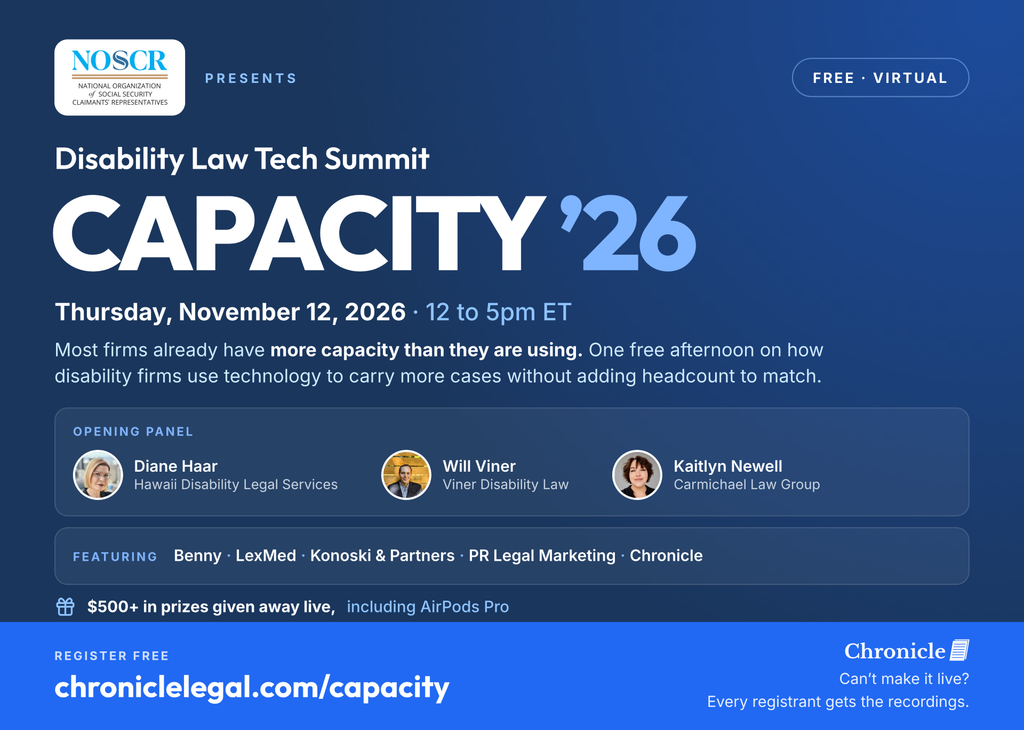
Register for CAPACITY ’26, the Disability Law Tech Summit (Nov. 12, Free)
We are proud to present CAPACITY ’26, a free virtual Disability Law Tech Summit on Thursday, November 12, from 12 to 5pm Eastern, produced by Chronicle.
The idea behind the day: most firms already have more capacity than they are using. It hides in the hours spent on each case, the cases a firm turns down, and the relationships it already has.
The summit is one afternoon on where that capacity sits and how disability firms are using technology to get it back without adding headcount to match.
What is on the agenda:
- An opening practitioner panel with Diane Haar (Hawaii Disability Legal Services), Will Viner (Viner Disability Law) and Kaitlyn Newell (Carmichael Law Group), on the specific decisions they made instead of hiring.
- Education sessions with Benny, LexMed, Konoski & Partners and Chronicle, covering how technology can assist with intake, getting through a long record, reviewing more files than a team can read, and the client status calls that fill a case manager’s week.
- A closing panel with PR Legal Marketing, Konoski & Partners and Chronicle, with time for your questions.
It is free, and open to anyone working in disability law: attorneys, non-attorney representatives, paralegals, case managers, intake and operations staff, and firm owners. Every registrant gets the recordings, and $500+ in prizes will be given away live, including a pair of AirPods Pros.
Circuit Court Considerations: Harmless Error at Step Five, a “Modest” Logical Bridge, and a Dissent Worth Your Time
Adriana de la Torre, NOSSCR Sustaining Member
Calhoun v. Commissioner of Social Security, No. 24-1315 (4th Cir. Sept. 3, 2026) (published), is a split decision that touches three issues we see constantly: how much weight a one-time consultative exam gets under the 2017 regulations, how far the “logical bridge” requirement goes, and when harmless error will save an ALJ’s decision. Judge Richardson wrote for the majority, joined by Judge Harris. Judge Gregory dissented.
The facts
Calhoun applied for SSI in September 2019, at age 23, alleging blood clots, migraines, leg and foot numbness, high blood pressure, obesity, and agoraphobia. The ALJ found several severe impairments, including obesity, hypertension, right-knee dislocation, agoraphobia, anxiety, and depression. She still denied benefits, assessing an RFC for light work with restrictions. Those included unskilled, routine, repetitive tasks at a non-production pace, only occasional public interaction, and, critically, up to six hours of standing and walking. The district court granted summary judgment to the Commissioner.
What the majority held
The consultative exam. Dr. Broman-Fulks examined Calhoun once and opined that she was “severely impaired” in relating to others and tolerating work stress. Two state-agency psychologists reviewed the record, including his report, and found lesser limitations. The ALJ found his opinion less persuasive.
The majority affirmed. Under the 2017 regulations, no opinion gets deference or controlling weight. Supportability and consistency are the key factors, and the ALJ must address both. The court emphasized that Dr. Broman-Fulks based his severity rating on the history Calhoun and her father reported rather than on his own clinical findings, which were fairly narrow. That meant its persuasiveness turned on whether the rest of the record backed it up. The ALJ pointed to primary-care notes documenting normal mental status and to the lack of ongoing mental-health treatment, and the court found that sufficient. It also treated the case as materially similar to Drumgold v. Commissioner, 144 F.4th 596 (4th Cir. 2025).
Standing and walking. This is the practical takeaway. Both reviewing physicians limited Calhoun to four hours of standing and walking, and the ALJ’s RFC gave her six. The court called this a close question and noted that Calhoun argued “with some force” that the ALJ hadn’t adequately explained the departure. It also repeated its warnings about extrapolating from daily activities to sustained work capacity. But it never decided whether the explanation was adequate, because any error was harmless.
At step five, the ALJ had asked the vocational expert about a four-hour hypothetical, and the jobs she relied on (mail clerk, router, and marker) were the ones the expert gave for that more restrictive limit. She did not rely on the housekeeping cleaner job or the larger marker number available at six hours. The court held that Calhoun bore the burden of showing harm and couldn’t meet it, since the VE’s testimony showed the outcome wouldn’t have changed.
Education. The regulations make completed grade level the default measure of education unless other evidence contradicts it. Calhoun repeatedly reported graduating high school and later pursued cosmetology coursework. The court acknowledged her special-education services but noted that the ALJ accounted for her limitations by restricting her to unskilled, routine work at a non-production pace.
The “logical bridge.” The court reaffirmed that the requirement is real, but called it “a modest one.” The ALJ’s reasoning must be discernible so the court isn’t left to guess. It doesn’t demand a particular level of detail.
The dissent
Judge Gregory would have reversed on two grounds.
Step three and the “stock language” problem. The dissent argued the ALJ lacked substantial evidence to find that Calhoun didn’t meet Listing 12.06. It stressed that Dr. Broman-Fulks was the government’s own expert, and that his “severe” ratings mapped onto the “extreme” limitations the listing’s B criteria require. It also argued that the “normal” psychiatric exam entries in the primary-care notes appeared to be stock language in a rarely updated section of the chart. Its example: for about sixteen months, the visit summaries said Calhoun “has been on the Keto diet for four months.” The dissent also read the record as showing carefully managed symptoms, with Calhoun’s agoraphobia controlled by a sheltered routine and her parents’ presence, and argued that her hobbies (painting, crafts, one friend) were consistent with that.
The majority answered in footnote 6: “normal” wasn’t the only description in the notes, the two reviewing psychologists read them differently, and choosing among competing readings is the ALJ’s task.
Regular and continuing work. The dissent also argued that the ALJ never made an explicit finding on Calhoun’s ability to sustain work under SSR 96-8p, despite testimony about headaches roughly ten days a month and her history of dropping programs because of anxiety. The VE had testified that more than five unexcused absences a year would preclude employment, and the dissent noted that neither reviewing consultant addressed her capacity for a full 8-hour, 5-day schedule. The majority rejected this in footnote 8, reasoning that an RFC finding implicitly contains a finding that the claimant can work on a regular and continuing basis.
Practical takeaways
- Read the VE transcript before building an appeal around an RFC inconsistency. If the ALJ posed a more restrictive hypothetical and relied on the jobs given for it, an unexplained RFC discrepancy may not get you a remand, and you carry the burden of showing harm.
- Don’t count on stock-language arguments first surfacing on appeal. The dissent’s version didn’t carry a majority. Raising chart issues at the hearing level, while there’s still a chance to build the record, gives the argument a better chance.
- Build the “regular and continuing basis” record with specifics. After Calhoun, a bare “no explicit finding” argument is harder to win in this circuit. Concrete testimony on frequency of headaches and missed programs, tied to the VE’s absenteeism testimony, gives the argument something to stand on.
- Don’t overread the decision. The majority itself called it narrow and said it wasn’t suggesting the record compelled the ALJ’s conclusions.
Got any questions? Schedule a consultation with us. I’m here to help. It’s a lot to take in, but we’ll get through it together. After all, navigating these waters is always easier when you’ve got someone to chat with.
The views and opinions expressed in this article are the author’s own and do not necessarily reflect the views of NOSSCR, its leadership, or staff.
SSA’s Office of the Inspector General Issues Several Reports
Social Security’s Office of the Inspector General issued several reports during the month of September that are worth a read. Find the full reports at the links below.
Participate in our New Partner Pages
Stay in front of NOSSCR members year-round.
Partner Pages is a monthly advertising email that provides organizations serving the Social Security disability community with an affordable way to promote products, services, webinars, events, educational programs, software, and other announcements directly to NOSSCR members.
Whether you’re introducing a new product, inviting members to an upcoming webinar, or sharing the latest developments from your organization, Partner Pages helps keep your message visible between conferences and other events.
What’s Included
- Your company logo
- A featured image or graphic (375px x 325px)
- Up to 150 words of promotional content
- One clickable website, registration, or landing page link
- Distribution in the monthly Partner Pages email
Investment: $500 per issue
Space is limited in each edition to provide advertisers with maximum visibility.
Please note: Partner Pages contains paid advertising and promotional content submitted by participating organizations. Inclusion in Partner Pages does not constitute endorsement, approval, or recommendation by NOSSCR of any advertiser, product, or service.
PAC Contributor List

As of September 2026
First Circuit
L. David Ferrari (CC)
Michael Levin (CC)
Sandra Serra (CC)
Second Circuit
Crysti Farra (CC)
Sarah Frederick (CC)
Maurice David Maitland
Lino Medina Mendez
Third Circuit
Marianne Brown (CC)
MaryJean Ellis
Rich Frankel (CAP)
Melissa Green
Alicia Hutchinson (CC)
Sheryl Mazur (CC)
Timothy Mello (CC)
Judson Perry (CC)
Alan Polonsky (CAP)
Joseph Silver
Christine Trotz-Cosgrove (CC)
Fourth Circuit
Jonathan Biser (CC)
Ben Clauson (DC)
Vaughn Clauson (DC)
Rick Fleming (DC)
Brian Gillette (CC)
Ashley Hartman Sappenfield (CC)
Christine Latona
George Piemonte (CC)
Michelle Pritchard (CC)
Andrew Sindler (CC)
Joanna Suyes (CC)
Laura Beth Waller (CC)
Rob Wendt (DC)
Fifth Circuit
Paul Burkhalter (CC)
Matthew Edwards
John Heard (CAP)
Jacob Hugentobler (CC)
Patrick O’Neal (CC)
David Pogue (CC)
David White (CC)
Sixth Circuit
Edward Ahlers (CC)
Gary Bimberg (CAP)
Donald Busta (PC)
Lorenzo D’Agostini (PC)
Bobby Ficklin
Joseph Houle (PC)
Michael Rake (DC)
Debra Shifrin (CAP)
Donna Simpson (CC)
Seventh Circuit
Eric Farr (CC)
Richard Feingold (CC)
Brian Harmon (PC)
Avram Sacks (CC)
Lindsay Solon (CC)
Thomas Thompson (CC)
Key:
CAP=Capitol Club, $5,000/monthly contribution of $416
PC=Platinum Club, $2,500-$4,999/ monthly contribution of $208-415
DC=Diamond Club, $1,000-$2,499/monthly contribution of $83-207
CC=Century Club, $100-$999
C=Contributor, all other contributions
Eighth Circuit
Jeffrey Bunten (PC)
Julie Burkett (CC)
David Camp (CAP)
Patrick Cavanaugh (CAP)
Sean Cuddigan (PC)
Hugh Field (DC)
Meghan Gallo (DC)
Matthew Grundy (CC)
Ted Norwood (PC)
Daniel Parmele (CAP)
J. Asha Sharma
Michael Tracy (CC)
Timothy Tripp (DC)
Felicia Von Holten
Frank Williams (CC)
Ninth Circuit
Mark Bunch (DC)
Sara Carroll (CC)
Paul Clark (CC)
Richard Gutstadt (CAP)
Marc Kalagian (DC)
Kevin Kerr (CC)
Audrey Miller
Eric Penar (DC)
Maggie Schott (CC)
Jose Vera (CC)
Timothy Walker-Dupler (CC)
Tenth Circuit
Ann Atkinson (DC)
Dan Bott (PC)
John Harlan (CC)
Nick Huntsman (PC)
Gary Jones (CC)
Philip Ryan (PC)
Gayle Troutman (DC)
Steve Troutman (DC)
Eleventh Circuit
Carol Avard (CC)
Jason Bailey (CC)
Sarah Bohr (CC)
Kevin Hall (CC)
Doug Mohney (CC)
David Wright (CAP)
Contributions to the National Organization of Social Security Claimants’ Representatives PAC (NOSSCR PAC) are not tax-deductible as a charitable contribution for federal income tax purposes. Contributions to NOSSCR PAC will be used to support federal and state candidates, political parties, and other political committees. Contributions are strictly voluntary. You may refuse to contribute without reprisal. Any proposed contribution level is merely a suggestion, and you are free to contribute more or less than suggested. You will not benefit or be disadvantaged by reason of the amount of your contribution or a decision not to contribute. Federal law requires NOSSCR PAC to use its best efforts to collect and report the name, mailing address, occupation and employer of persons whose contributions exceed $200 in a calendar year. You must be a U.S. citizen or lawfully admitted for permanent residence in the U.S. to contribute.
Limited Sponsorships Left for Fall Conference
Want to ensure your fellow conference attendees have all day coffee? Want to make sure everyone has a drink in hand during our President’s reception? We’re looking for a few more sponsors to really make our conference sparkle, and we’d love to feature you!
Your support keeps the coffee flowing, the receptions lively, and the conference running strong. In return, your firm or business gets front-and-center recognition.
All level sponsorships welcome. Reach out to Esterien (esterien.keet@nosscr.org) today to discuss ideas, and help make this conference NOSSCR’s best yet!
Navigating Work and Social Security Disability Benefits: A Guide to the Ticket to Work Program
Live free webinar. Friday November 6, 2pm Eastern.
NOSSCR is pleased to partner with Genex, an Enlyte company, to host an upcoming informational webinar on the Social Security Administration’s Ticket to Work (TTW) program. Building on the strong momentum from this year’s Conferences, this session will provide members with a practical, high-level overview of how TTW can support SSDI and SSI beneficiaries in exploring a safe return to work while maintaining critical benefits.
This live webinar—led by Sarah Deaver, Esq., Senior Director of Disability Programs, and Alyssa Tease, MS, CRC—will walk through key components of the program, including eligibility, common misconceptions, and the protections and work incentives available to beneficiaries. Attendees will gain a clearer understanding of how TTW empowers clients to pursue employment opportunities while preserving essential supports like Medicare and Medicaid, all within a structured and SSA-aligned framework.
Daily Dose of Data from SSA
This month, Social Security released the following updates:
- Estimated Change in Federal SSI Program Cost for a proposal aimed at reducing elderly poverty, requested by Speaker Emerita Nancy Pelosi
Useful Resources
OHO Caseload Analysis Report August 2026
Social Security Rulings and Acquiescence Rulings by Year