

September 2025 Print Edition
Conference Recap!

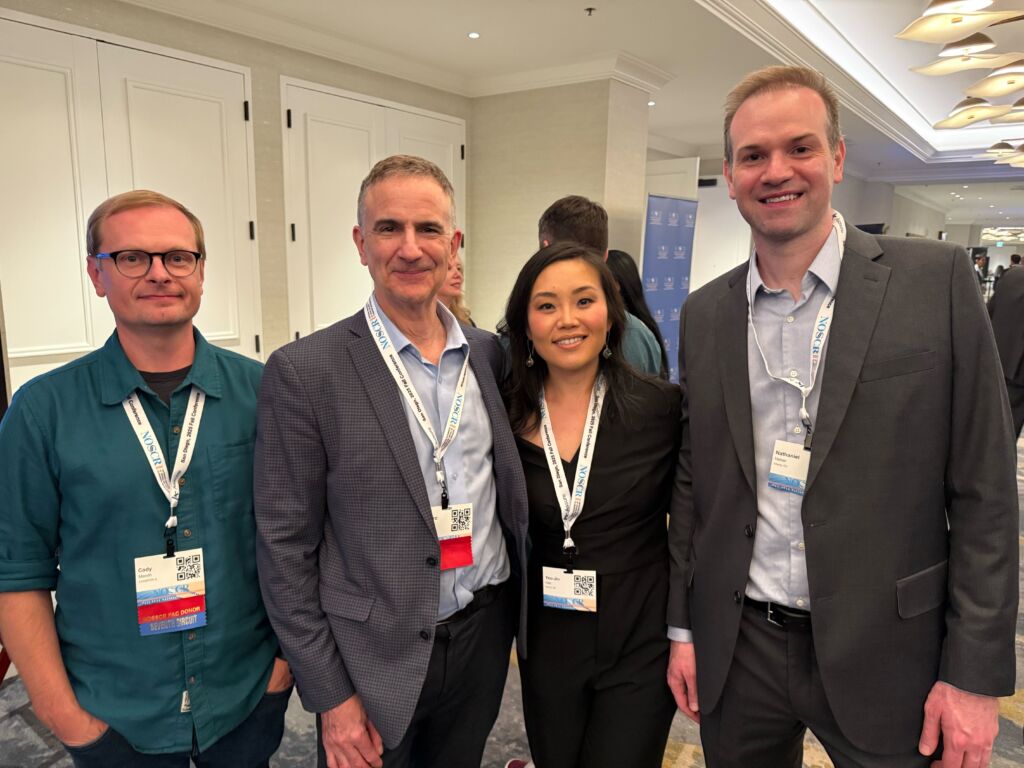
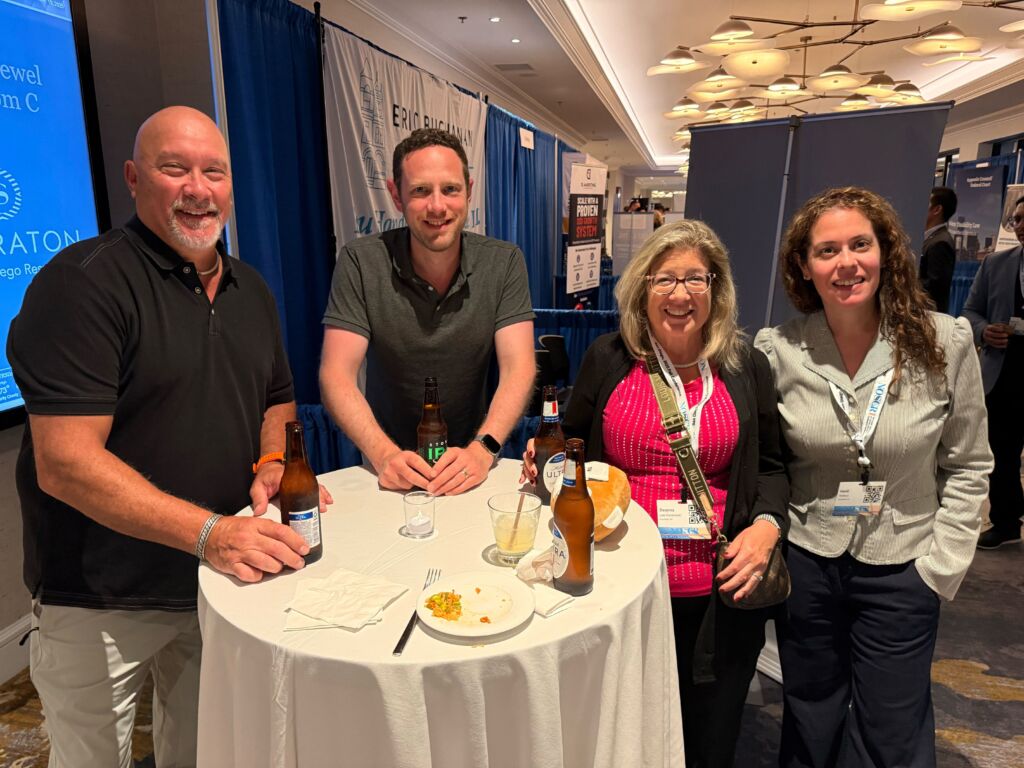
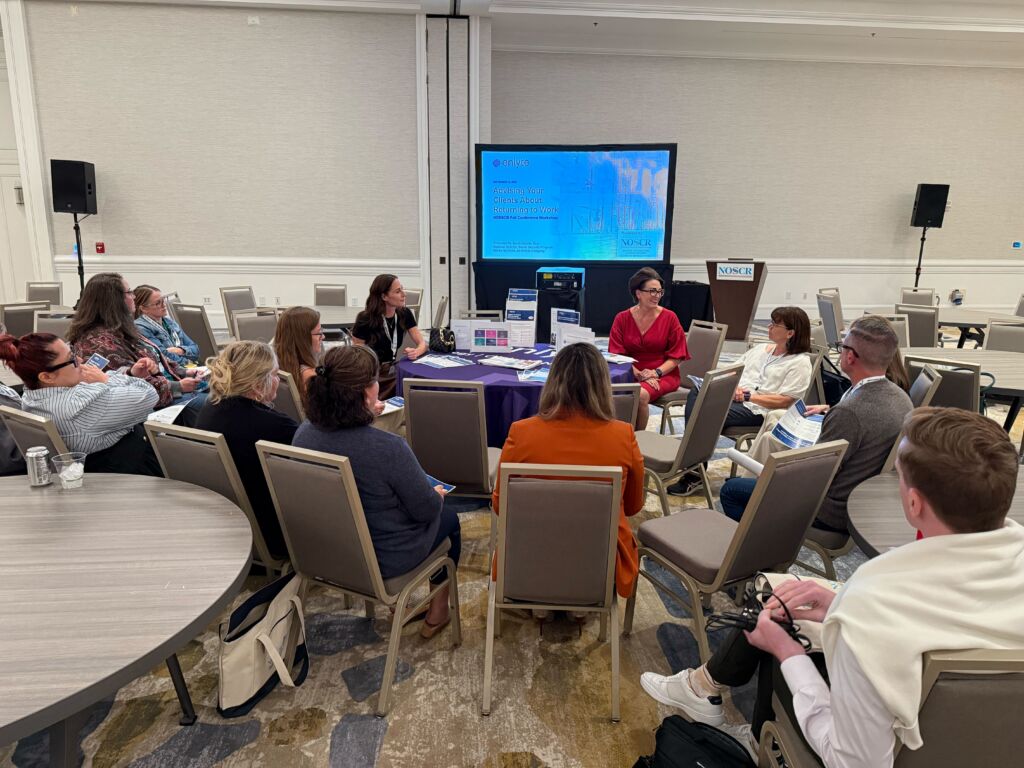
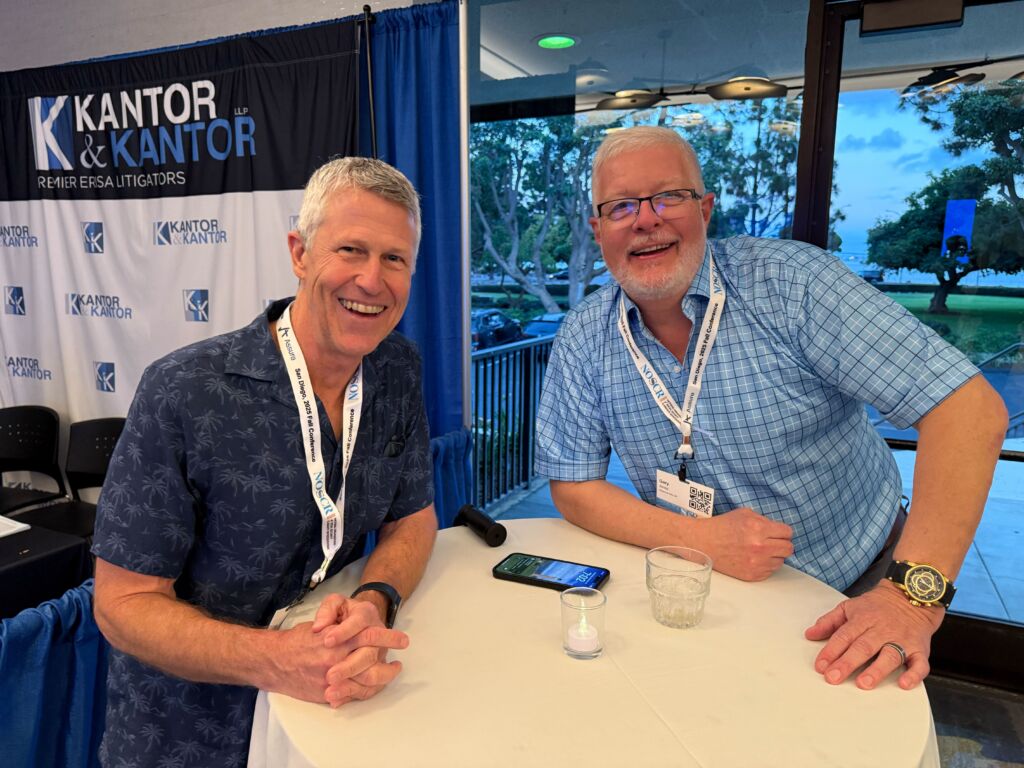
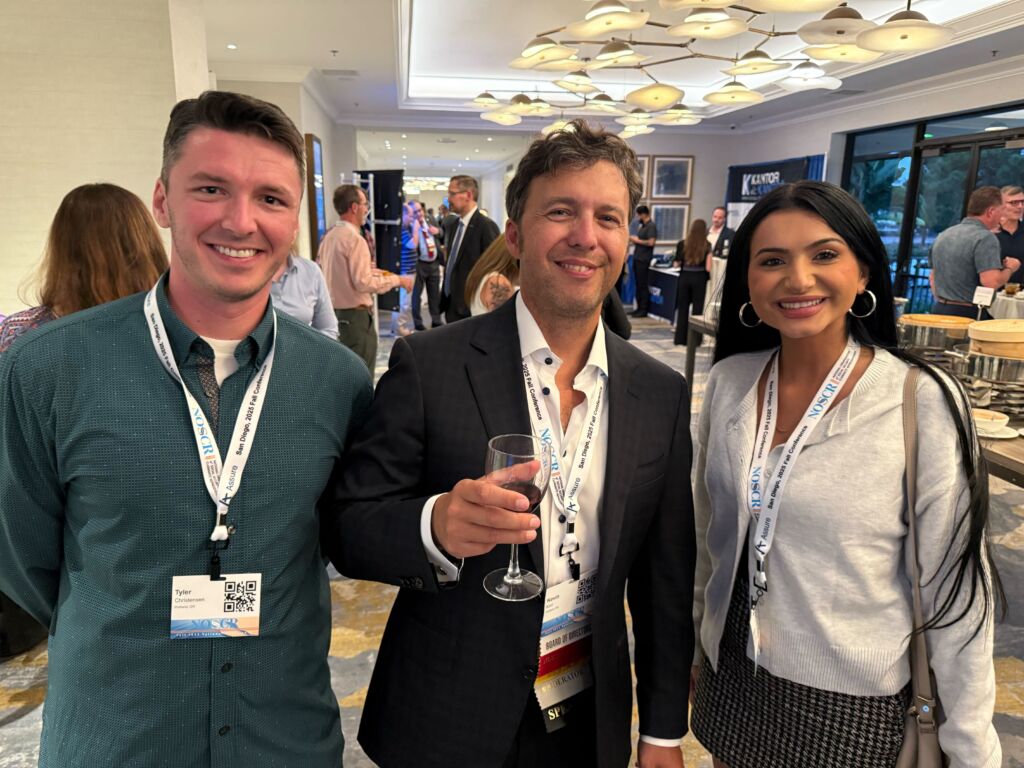
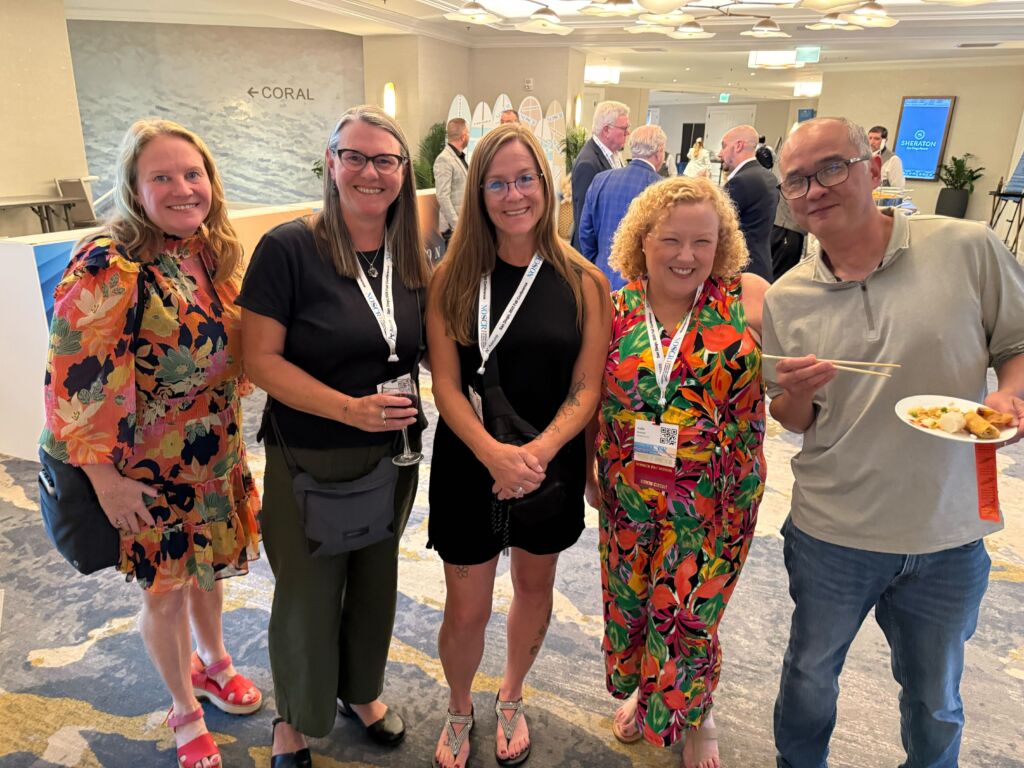
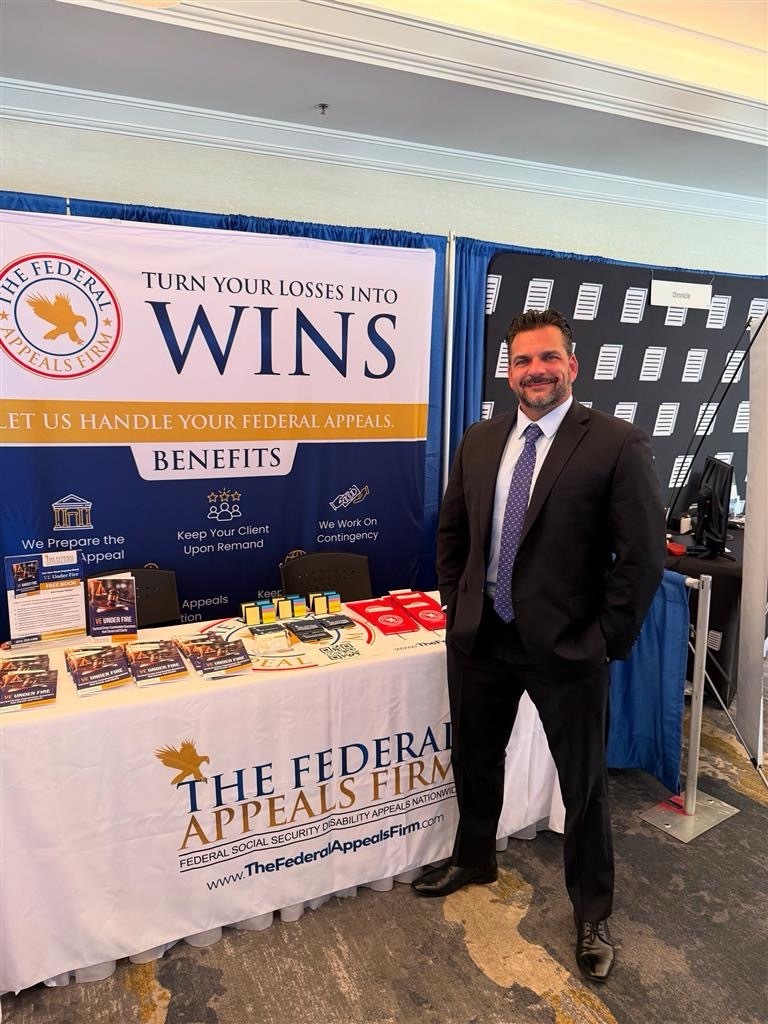
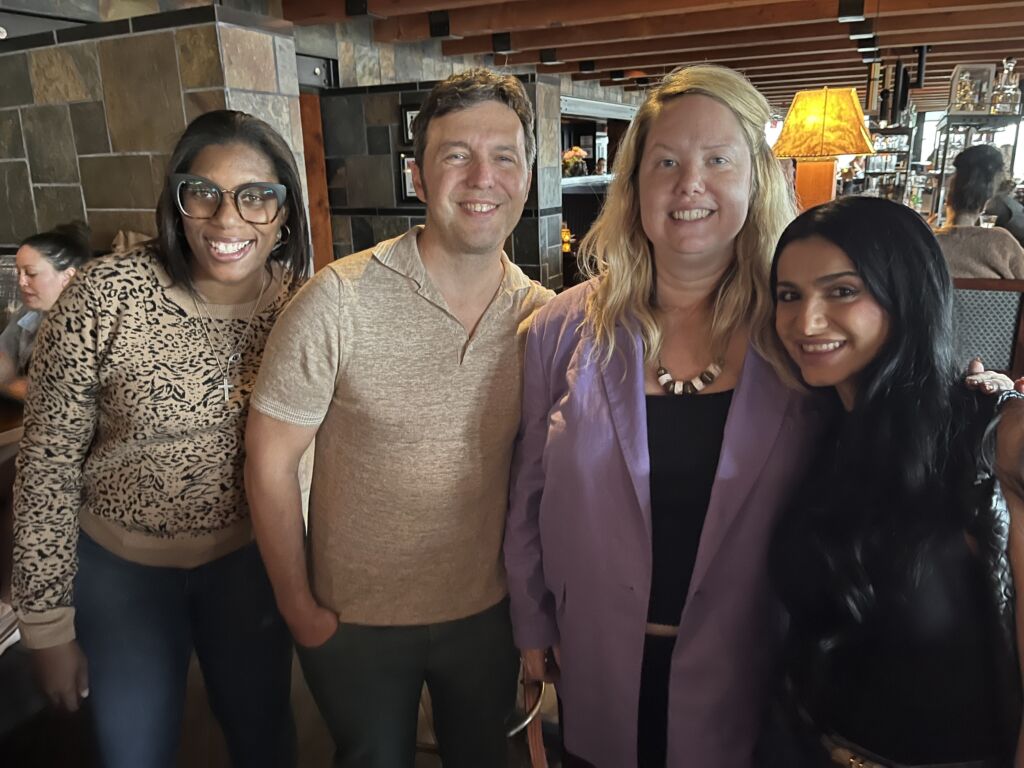
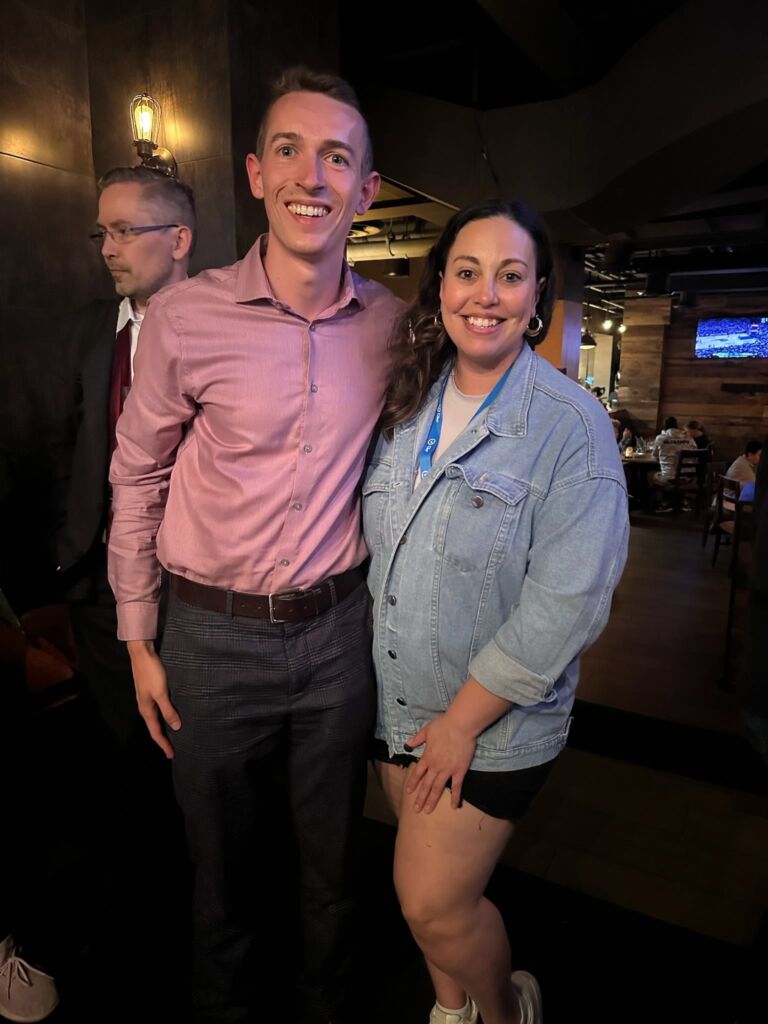
Still glowing from the magic of our shared time in San Diego? We are too! Your compassion for your clients, your colleagues, and the field of Social Security disability law was on full display. From casual hallway conversations, a keynote from the Commissioner, mentor/mentee meetups, sessions with sing-alongs and retirement toasts, father-son duos, workshops where practitioners were able to collectively take a deeper dive, seaside walks, and al fresco dining, this conference was truly one to remember! Enjoy this lookback, and be sure to register now for our Spring National Conference in Baltimore, April 21-24, to continue the connections!















The Brief with Laura Beth
Laura Beth Waller, NOSSCR Interim Chief Executive Officer & Deputy General Counsel
Happy fall, y’all!
If you joined us in San Diego, I hope you left feeling recharged and inspired. It was incredible to witness the energy and passion NOSSCR members bring to their work. And, as always, it was great to connect and reconnect with many of you. I hope you returned to your practice with a new tip to help you tackle whatever your caseload brings.
As we look to the future, we continually seek ways to enhance your membership and support your professional development. I’m excited to introduce NOSSCR’s new relationship with myLawCLE. This relationship will significantly enhance your access to continuing legal education.
Working with myLawCLE offers a seamless and affordable solution for your CLE needs. For a single annual flat rate of $395, you get unlimited access to all NOSSCR-presented webinars, both live and on-demand. This flat rate not only simplifies your CLE but also directly supports NOSSCR, allowing us to continue providing the high-quality resources and advocacy you’ve come to expect. You’ll also have access to a wide range of content on many other topics, including ethics, technology, and mental health, helping you meet all your bar requirements. Our goal is to make your continuing education simpler and more convenient than ever before. Your myLawCLE login credentials will be separate from your NOSSCR login credentials, and you can create an account by visiting www.nosscrcle.org.
We’re also excited to invite you to share your expertise. We’re looking to provide engaging, year-round content, and we want to feature YOU! If you have a topic you’d like to present, we encourage you to propose a webinar. Our members are our greatest resource, and we want to provide a platform for your knowledge and experience. Submissions are accepted on a rolling basis and can be submitted here! You can also contact Jennifer directly at jennifer.cronenberg@nosscr.org to discuss any education ideas.
Thank you for your dedication to NOSSCR. We are committed to providing you with the resources and support you need to succeed.



Dispatches from Camp
David Camp, NOSSCR Senior Political Advisor & General Counsel
In a year where federal workers have been subjected to chaos undermining careers and entire agencies, last week’s Service to the Citizen awards was the exact opposite.
Each year, the public servant award winners are honored at a gala in downtown Washington—this year was the Waldorf. The awards are generally for “exemplary public servants who excel in delivering impactful services that positively affect the lives of the public.” They honor the public’s need for “a 21st century experience and a government that works for them.” There are six award categories: government executive of the year, industry executive of the year, lifetime achievement, CX trailblazer, rising star of the year, and multiple categories where there are many winners. The categories for multiple winners include building a customer-focused building, delivering excellence in digital services, using innovation and data, using innovative technologies, and serving other government agencies. This volume of award categories produces a long list of annual winners, which manages to create an atmosphere of enthusiasm and excitement in a large ballroom of federal agency staff, their families, and coworkers (and me!).
This year highlighted the Social Security Administration in several ways. Commissioner Bisignano delivered the keynote address. He tossed aside his script and expressed admiration for the organizers of the event and the general theme of supporting government service. He told a personal story of respecting his family’s work in government, and his childhood dependence on Social Security benefits. SSA’s Dustin Brown (currently, head of Legislative Affairs) won the award “Lifetime Achievement for Delivering Service to the Citizens.” Dustin is well known throughout the federal government, having served at OMB through four administrations.
One of my heroes is Laura Walker—a Claims Specialist at the SSA Prescott Arizona District Office. She won the Rising Start of the Year award, and her acceptance speech did not leave a dry eye in the room. She told a moving story of meeting a beneficiary whose wife had become so severely injured that the family needed information on adjusting to government benefits and services in order to provide care. Laura reminded all of us of the power of compassionate customer service–and we all know how important it is to foster that approach in our frontline SSA offices. The Prescott Arizona SSA District (led by District Manager Michelle Felicetta) also received an award for building a customer-focused culture. They were joined by field office leadership from Colorado River Basin, Flagstaff, Show Low, and Cherry Hill, New York. Jeff Walsh, Program Manager for Digital Identity won for delivering excellence in digital services. SSA’s “Slam the Scam” team won too. SSA’s Office of Transformation Service Design Team and Office of Health Information Technology and Electronic Policy also won.
At a time when many of the best federal agency staff have been feeling unappreciated or like their careers have been threatened without justification–the approach of the awards gala was refreshingly the opposite. Great work was honored, as was focus on mission and honoring the oath to the Constitution.
I also met one of the most interesting people I’ve ever met–a physician who sat next to me. Dr. Rona Relova is a research scientist at the VA. Her title is a mile long, but she was only interested in one thing—finding out how to tell people about her breakthrough that could save all of us time, money, and the bad outcomes (and side effects) of trial and error with medications and dosing. Her program is called the Pharmacogenomics (PGx) Initiative, and it enables the use of an individual’s genetic make-up to identify which medication in a class of drugs will or will not work, with accurate guidance on the effective dose. She told me about the effect this simple genetic test is already having on veterans treated at 40 VA facilities, and her hope that someday agency heads and lawmakers could learn of how much money this will save Medicare and Medicaid—in addition to solving the problem most of us face—needing to change medications and doses until the “just right” is found. I had no idea this was possible, but her work has established that our genes contain a roadmap that can prevent medication guesses—along with a warning for some that entire classes of medications may not work (where particular care is warranted to avoid, for example, tuberculosis). Because I specialize in getting messages to heads of agencies, Senators, etc.—we’re already fast friends!



For daily updates on the latest Social Security happenings, follow me:
President’s Corner
Paul Burkhalter, NOSSCR President
We can wait…
During the last 9 months, rumors of upcoming changes to the Social Security Disability system have been circulating. The outline of the coming changes is starting to come into focus. Some changes are necessary, but others are likely detrimental to our clients. Last week, the Urban Institute issued a report giving us insight into potential changes.
First, the good (?) news. Pretty much everyone now admits the Dictionary of Occupational Titles is dead, outdated, and unhelpful in providing information about jobs. Rightfully, this admission is leading to change. These changes are now encompassed in Social Security Ruling 24-3p, which is confusing enough to lead to four different presentations at our recent conference in San Diego. (Viewing these presentations is almost mandatory to understanding how to ensure reliable vocational information is being used to evaluate whether there are a significant number of jobs your client can perform). It is hard to see how our current position is the final stop in reforming how job data is used in the process.
The move forward is to figure out how to implement the Occupational Requirements Survey (ORS) by the Bureau of Labor Statistics, so there is a rational process for determining the number of jobs that exist at different exertional and skill levels. With the ORS telling us that the same job can be performed at many different exertional levels, the old method of deciding whether a claimant can do a single type of occupation is breaking down. The unfortunate result is that whether there is a significant number of jobs for claimants with the same RFC is now becoming more inconsistent and, to some degree, determined by the quality of the vocational expert who testifies at the claimant’s hearing.
Second, and more worrisome, are possible changes to how age, education, and other factors continue to be used as eligibility factors. The Urban Institute report notes that “changes to reduce the role of age as a determination factor, via changes to the ‘grids’… are expected to be one of the main issues in SSA’s rulemaking….” As representatives, we are acutely aware that age is already a factor that is likely given too little weight. Our older clients are right when they tell us, “At my age, with my problems, who would hire me?”
According to the Urban Institute’s estimates, these changes could reduce eligibility for new claims by as much as 20% overall, and up to 30% among older claimants. Furthermore, the Urban Institute estimates that a 10% reduction in the grant of benefits would result in 500,000 claimants losing access to disability benefits over 10 years, including 80,000 widows and children.
The Urban Institute reports there have been discussions that reducing costs in the disability program is “an overriding policy objective.” What makes this effort misguided is that the number of claims for disability benefits is declining, and now there are over a million fewer people requiring disability benefits than in 2011. So, at a time when claims are down and fewer Americans are getting disability benefits, why do we need to make it more difficult to get benefits?
The good news? We are not powerless. NOSSCR is on top of this. Our Senior Political Advisor and General Counsel, David Camp, has connections within SSA, and our voices are being heard. Even if we cannot stop these changes from happening, we can work to mitigate the impact so that the worst possible outcomes are avoided. And remember, proposed regulations are not law. In the future, we will all need to speak out to educate policymakers, the public, and the press on how these changes will impact those who have worked hard all their lives but cannot continue due to illness or injury. These are our friends, our neighbors, and our relatives.
Be ready—NOSSCR will be. We will notify members as soon as the language is available. After the notice is released, there will be an open comment period, and we will be working with a committee of members and other allied organizations to equip all of you with a comment template so that we can elevate our voices.
But we can wait until then. Meanwhile, continue to fight the good fight for our clients.
Piemonte’s Perspective
George Piemonte, NOSSCR Past President
Proving Limitations: Responding to Supervision
Over the next few issues, I’ll be sharing some of my favorite functional limitations and practical strategies for proving them. Let’s start with an important one: a limited ability to respond appropriately to supervision.
Why This Matters
An inability to accept supervision can stem from physical or mental impairments. Conditions like chronic pain or depression often lead to irritability, making workplace interactions difficult. According to SSR 85-15, the basic mental demands of competitive, unskilled work include the ability—on a sustained basis—“to respond appropriately to supervision, coworkers, and usual work situations.” Similarly, POMS DI 25020.010(B)(2)(c) lists “the ability to accept instructions and respond appropriately to criticism from supervisors” as essential for any job.
What Employers Will Not Tolerate
Some behaviors are deal-breakers, even if they happen only once. Examples include:
- Verbally abusing or cursing at a supervisor
- Physical aggression
- Walking away during instruction or criticism
- Emotional outbursts such as crying or saying, “I can’t deal with this right now.”
These reactions typically make sustained employment impossible.
How to Prove It
Building a strong case requires evidence from multiple sources:
- Claimant Testimony: Get detailed descriptions of how the claimant reacts to stress or criticism. Specific examples are powerful.
- Medical Source Statements: Ask doctors or therapists to document limitations in handling supervision.
- Lay Witness Statements: Family, friends, and former coworkers can provide real-world observations of angry outbursts, crying spells, or avoidance behaviors.
Final Thoughts
Proving an inability to respond appropriately to supervision can be a compelling way to establish disability. Use every tool available to paint a clear picture of what supervision looks like for your claimant—and why it prevents them from maintaining employment. Creativity and thoroughness make all the difference.
The views and opinions expressed in this article are the author’s own and do not necessarily reflect the views of NOSSCR, its leadership, or staff.
NOSSCR Hosts Dinner Fundraiser for Congressman Ron Estes to Discuss Social Security Issues
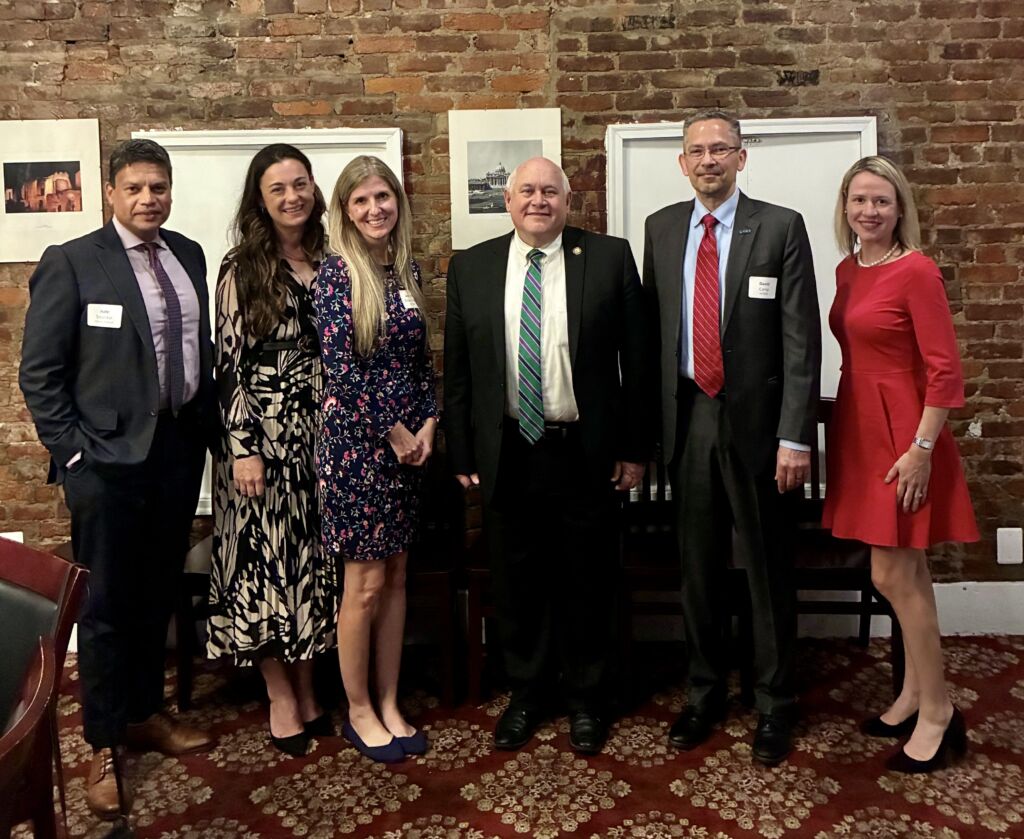
On September 16, 2025, the NOSSCR PAC hosted a small dinner fundraiser for Congressman Ron Estes (R-KS) at an Italian restaurant on Capitol Hill. The intimate gathering allowed for meaningful conversation between NOSSCR and key congressional staff about pressing Social Security issues.
Attendees from NOSSCR included David Camp, Esterien Keet, Jennifer Cronenberg, and Betsy Rosecan. Congressman Estes was joined by his Chief of Staff, Joshua Bell, and Legislative Director, Elizabeth Young.
Discussion topics ranged from electronic medical records and modernization initiatives at the Social Security Administration (SSA) to improving efficiencies and streamlining SSA’s signature requirements. Attendees also emphasized Congress’ ongoing role in ensuring high-quality customer service from the agency for claimants and representatives alike.
As Chairman of the Social Security Subcommittee of the House Ways and Means Committee, Congressman Estes plays a central role in shaping legislation and oversight related to Social Security. Events like this dinner, made possible by the generous support of NOSSCR members who contribute to the PAC, provide crucial opportunities to engage directly with policymakers and advocate for policies that benefit Social Security claimants.
NOSSCR is grateful to its members for helping make these conversations possible, reinforcing the organization’s ongoing commitment to improving the Social Security system and ensuring that claimants’ voices are heard in Congress.
Contributions to the National Organization of Social Security Claimants’ Representatives PAC (NOSSCR PAC) are not tax-deductible as a charitable contribution for federal income tax purposes. Contributions to NOSSCR PAC will be used to support federal and state candidates, political parties, and other political committees. Contributions are strictly voluntary. You may refuse to contribute without reprisal. Any proposed contribution level is merely a suggestion, and you are free to contribute more or less than suggested. You will not benefit or be disadvantaged by reason of the amount of your contribution or a decision not to contribute. Federal law requires NOSSCR PAC to use its best efforts to collect and report the name, mailing address, occupation and employer of persons whose contributions exceed $200 in a calendar year. You must be a U.S. citizen or lawfully admitted for permanent residence in the U.S. to contribute.
NEW Hands-on Training Sessions with Former ALJ Start Tomorrow!
We’re excited to launch A Judge’s Perspective, a new training series led by retired SSA Administrative Law Judge and trainer Gina Carpenter. These interactive webinars are designed for small groups, giving you the opportunity to gain practical insights, real-world strategies, and direct feedback.
Important: All currently available dates for registration are part of Course 1 of this series, and every session available right now covers the same topic: SSR 24-3p. Each date will offer multiple time slots—9:00 AM, 11:00 AM, and 1:00 PM (ET)—but the content is the same in every slot. Participants should register for only one session.
Future topics for the series will be announced soon, but for now, every open session is focused solely on SSR 24-3p. This is your chance to get real-time feedback and practical tips from experienced ALJ as she teaches you how to best implement the principles of SSR 24-3p into your practice (including what questions to ask the VE during cross!). Space is limited to 35 participants per session, so secure your spot today!
Session Options:
- September 26 | 9:00 AM, 11:00 AM, 1:00 PM (ET)
- October 3 | 9:00 AM, 11:00 AM, 1:00 PM (ET)
- October 31 | 9:00 AM, 11:00 AM, 1:00 PM (ET)
- November 14 | 9:00 AM, 11:00 AM, 1:00 PM (ET)
Registration Information:
To register, select your preferred date below, then select your preferred time. You must be signed in to register.
Seats are limited, only a handful of spots remain for tomorrow’s sessions, so don’t delay!
Just Ask Jennifer: Advising Your Clients Post-Award
Jennifer Cronenberg, NOSSCR Chief Counsel for Legal Education & Disability Law
You won your client’s case. They’ve been paid, and all is well. You send them a closure letter asking them to refer friends and family, and urge them to notify SSA at once if they return to work. But could you be doing more? Should you be? What if they call you in a year or two with questions about working? Are you armed with the needed information to guide them through their options?
Debora Wagner from Cornell’s Yang-Tan Institute is an expert in Social Security’s work incentives programs (and an excellent conference speaker—seek out her sessions whenever possible!). At NOSSCR’s Washington, DC conference, several members expressed a desire for representatives to be armed with more information regarding post-work programs. We asked Debora if she could help and, lucky for all of us, she sprang into action. Below are the resources that she created. There are three documents. The first is a checklist that you should go over with a Title II claimant after award, the second is for an SSI claimant, and the third is a handout that you can mail to your client with the closure letter providing them with additional resources.
These documents are not intended to force you into work that you do not have time to complete, or to speak on matters where you aren’t comfortable. Rather, they are a roadmap so that you can provide the basic needed information, offer some hope for the future, and point claimants to the correct programs and resources. We encourage you to download the handouts below. Make copies. Pass them out to everyone in your office. Put them into use with your clients. And email us if you have any questions. The post-award landscape can feel very daunting and the urge to refer clients who ask about options elsewhere is understandable. But hopefully, with these resources, you’ll be better armed to guide claimants through their options at the time of award so that they know where to turn should their circumstances improve.
Call for Speakers: Share Your Expertise at NOSSCR’s Spring Conference in Baltimore!
We’re looking for dynamic, diverse, and innovative presenters to join us in Baltimore this April 21-24 for NOSSCR’s Spring National Conference. This is your opportunity to share insights, strategies, and specialized knowledge with fellow Social Security disability practitioners from across the country.
We welcome proposals across a wide range of topics, including:
• Practical tips and tools for improving advocacy
• Niche areas of Social Security disability law and practice
• Business development strategies for a thriving practice
• Medical expertise to strengthen RFCs and case outcomes
• Cutting-edge updates and creative problem-solving
If you have ideas that will energize, educate, and equip practitioners, we want to hear from you. Whether you’re a seasoned expert or have a fresh perspective to share, your voice can help shape the future of disability representation.
Submit your proposal today and help us build an engaging, practical, and diverse program in Baltimore! The deadline for proposals is December 1.
Not ready for the podium but have thoughts on content that could enhance your experience? Share them with us today!
Legislative Spotlight
Betsy Rosecan, NOSSCR Government Relations Director
September Legislative Spotlight
On March 11, 2025, Representatives Tom Suozzi (D-NY) introduced H.R. 2082, the Well-Being Insurance for Seniors to be at Home Act, or “WISH Act.” The bipartisan bill has three cosponsors—two Republicans and one Democrat—and was referred to the House Committee on Ways and Means.
The legislation seeks to create a federal catastrophic long-term care insurance program that provides financial support for disabled seniors while fostering a more vibrant private-sector insurance market.
If enacted, the bill would help address the looming long-term care crisis as the population ages, offering seniors the ability to remain at home with needed supports while reducing reliance on Medicaid. After an elimination period of one to five years based on income—during which individuals would use private insurance or other resources—disabled seniors would become eligible for a monthly federal benefit to help cover long-term care costs. NOSSCR supports H.R. 2082.
Bill Details:
SECTION 1. Short title.
This Act may be cited as the “Well-Being Insurance for Seniors to be at Home Act” or the “WISH Act”.
SEC. 2. Findings; purpose.
(a) Findings.—Congress finds the following:
(1) More than half of Americans entering old age today will have a long-term services and supports (in this section referred to as “LTSS”) need, averaging $298,000 costs per person for about 2 years of serious self-care disability, and more than half will be out-of-pocket, according to the U.S. Department of Health and Human Services (in this section referred to as “HHS”).
(2) The population age 85 or older (which is a proxy for the number of elders needing LTSS) will double between 2022 and 2035, and nearly triple by 2050. This aging will outpace the number of working-age people, including family members, who can help seniors financially or with unpaid care.
(3) Research has shown that most U.S. seniors could only afford less than a year of nursing home care, assisted living care, or extensive home care using their financial resources. Some can get by using unpaid (family) care, but most rely on a combination of paid and unpaid care.
(4) More than 1 in 5 middle-income seniors will end up impoverished, Medicaid eligible, and mostly using Medicaid to cover their LTSS costs.
(5) Millions of older Americans—1 in 5—will need LTSS for more than 5 years, with a price tag that would impoverish nearly all American households if they faced that need. HHS projections show that older adults who need LTSS for more than 5 years incur nearly half of all LTSS expenses and 60 percent of Medicaid’s LTSS spending.
(6) Only 1 in 10 American adults (11 percent) have any private coverage for LTSS expenses, leaving almost all middle-class American families to exhaust their nest-eggs and become impoverished before qualifying for Medicaid.
(7) The Nation urgently needs to create methods for ordinary Americans to be able to take responsibility to plan for the risk of a substantial period of disability during retirement years.
(8) Given that Americans move and work across State lines so frequently, State-based LTSS plans encounter difficult administrative issues. Therefore, a solution to address LTSS needs for seniors must be anchored in a Federal insurance plan. Additionally, since the time just after onset of disability is more predictable and manageable, a Federal insurance plan should cover the risk of especially long periods of long-term care, leaving the early period of need to personal responsibility.
(9) Those methods must also responsibly support the workforce providing supports and services.
(b) Purpose.—The purpose of this Act is to enable most Americans to make plans that protect themselves and their families, to enable disabled older adults to support themselves in their communities during periods of serious disability, to support the workforce providing direct services to elders living with disabilities, and to reduce what is now necessary reliance on Medicaid.
SEC. 3. Long-term care insurance benefits.
(a) In general.—Title II of the Social Security Act (42 U.S.C. 401 et seq.) is amended by adding at the end the following:
“SEC. 235. Long-term care insurance benefits.
“(a) In general.—Every individual who—
“(1) has attained retirement age (as defined in section 216(l)(1));
“(2) has filed an application for long-term care insurance benefits;
“(3) is insured for long-term care insurance benefits (as determined under subsection (c)) at the time such individual’s application is filed; and
“(4) has a continual serious functional disability (as defined in subsection (d)) and, at the time such individual’s application is filed, has had such disability for a substantial period of time (as determined under subsection (e)),
shall be entitled to a long-term care insurance benefit for each month beginning with the 1st month in which the individual meets the criteria specified in paragraphs (1) through (4), and ending with the earlier of the month in which the individual dies or the 1st month in which the individual no longer has a continual serious functional disability (as so defined).
“(b) Benefit amount.—Such individual’s long-term care insurance benefit for each month shall be an amount equal to the product of—
“(1) an estimate, to be determined by the Secretary of Health and Human Services in consultation with the Department of Labor, of the median cost of 6 hours per day of paid personal assistance in the United States, indexed to wages in the long-term care sector, multiplied by
“(2) the ratio (not greater than 1) of the number of quarters of coverage the individual has during the applicable base period (as defined in subsection (c)(2)) to 40.
“(c) Definition of insured status.—
“(1) IN GENERAL.—For purposes of subsection (a), an individual shall be insured for long-term care insurance benefits in any month if the individual has 6 quarters of coverage during the applicable base period.
“(2) APPLICABLE BASE PERIOD.—For purposes of this subsection, the term ‘applicable base period’ means the period that begins with the 1st quarter of 2026.
“(d) Definition of continual serious functional disability.—For purposes of subsection (a), an individual shall be considered to have a continual serious functional disability if the person is a chronically ill individual (as determined under section 7702B(c)(2) of the Internal Revenue Code of 1986) and is expected to remain a chronically ill individual (as so determined) for at least 1 year or until the individual’s death.
“(e) Definition of substantial period.—
“(1) IN GENERAL.—For purposes of subsection (a), a substantial period of time means—
“(A) in the case of an individual who, at the time described in paragraph (3), has average indexed monthly earnings for long-term care equal to or less than the dollar amount representing the 40th percentile in the table established under subsection (f) for such calendar year, 12 months; and
“(B) in the case of an individual who, at such time, has average indexed monthly earnings for long-term care greater than such dollar amount, 12 months plus 1 additional month for each 1.25 percentile interval above the 40th percentile for which the individual’s average indexed monthly earnings for long-term care would attain (as specified in such table).
“(2) TABLE OF EARNINGS.—
“(A) IN GENERAL.—The Commissioner of Social Security shall establish a table, for each calendar year beginning with calendar year 2026, setting forth—
“(i) the dollar amount representing the 40th percentile among the average indexed monthly earnings for long-term care (as determined under subparagraph (B)) of each individual who has attained age 62 and whose primary insurance amount is first computed during such calendar year (or, for calendar year 2036, during any previous calendar year); and
“(ii) the dollar amounts representing percentiles over 40 (increasing linearly from 40 in intervals of 1.25) among the average indexed monthly earnings for long-term care (as so determined) of each such individual.
“(B) DETERMINATION OF AVERAGE INDEXED MONTHLY EARNINGS FOR LONG-TERM CARE.—For purposes of this subsection, the average indexed monthly earnings for long-term care of an individual shall be determined under section 215(b) (as in effect on the date of enactment of this Act) as if such section were amended—
“(i) in paragraph (2)(A), by striking ‘reduced—’ and all that follows through the end and inserting ‘reduced by the number of benefit computation years for which no wages were paid in and no self-employment income credited.’; and
“(ii) in paragraph (2)(B)(ii), by striking ‘1950’ and inserting ‘2025’.
“(3) TIME OF CALCULATION.—The time described in this paragraph is—
“(A) in the case of an individual who has 40 quarters of coverage during the applicable base period (as defined in subsection (c)(2)) prior to becoming entitled to old-age insurance benefits, the time at which the individual’s primary insurance amount was first computed with respect to the individual’s application for such benefits; and
“(B) in the case of any other individual, the time at which the individual files an application for long-term care insurance benefits under this section.
“(f) Provision of information relating to obtaining long-Term care.—The Commissioner of Social Security shall provide to each individual entitled to a long-term care insurance benefit under this section, as soon as practicable following the first day of the first month of such entitlement, information describing the steps the individual may take to obtain long-term care, including an explanation of the services (including care planning, care management, and administrative services for hired care providers, by referral or in-house, for a fee) provided by, and the appropriate contact information for, the Aging and Disability Resource Centers described in section 202(b)(8) of the Older Americans Act of 1965 and the area agencies on aging (as defined in section 102(6) of such Act).
“(g) Provision of beneficiary information by any person.—Any person may submit applicable information with respect to an individual’s application for long-term care insurance benefits, an annual statement described under subsection (i)(2), or any other information required to be submitted by the individual under this title, including, as applicable, the individual’s representative, or any family member or other appropriate person.
“(h) Treatment of long-Term care insurance benefit payments.—A long-term care insurance benefit payment shall not be regarded as income and shall not be regarded as a resource for any month, for purposes of determining the eligibility of the recipient (or the recipient’s spouse or family) for benefits or assistance under any Federal program or under any State or local program financed in whole or in part with Federal funds.
“(i) Additional requirements.—
“(1) RELATING TO WAGES AND WITHHOLDING RULES.—An individual entitled to a long-term care insurance benefit for a month during a calendar year shall, in any case in which such individual hires an employee who is not a family member to provide paid personal care to the individual during such month, comply with all applicable State and Federal laws relating to—
“(A) the payment of a minimum wage; and
“(B) the withholding of payroll taxes and other employment-related taxes.
“(2) ANNUAL STATEMENT.—An individual entitled to a long-term care insurance benefit for a month during a calendar year shall submit a statement to the Commissioner of Social Security at least once during such calendar year, as directed by the Commissioner—
“(A) affirming that the individual—
“(i) continues to have a continual serious functional disability (as defined in subsection (d)); and
“(ii) is in compliance with the laws described in paragraph (1); and
“(B) specifying the country of residence of the individual.
“(3) NONPAYMENT OF BENEFITS IN CERTAIN CASES.—No long-term care insurance benefit shall be payable to an individual for any month—
“(A) with respect to which the individual fails to satisfy any of the requirements described in the preceding paragraphs of this subsection; or
“(B) beginning after the fifth consecutive year with respect to which the individual has reported, in the annual statement required under paragraph (2), a country of residence other than the United States (including any territory of the United States).”.
(b) Estimates of benefits.—Section 1143(a)(2) of the Social Security Act (42 U.S.C. 1320b–13) is amended—
(1) in subparagraph (D), by striking “and” at the end;
(2) in subparagraph (E), by striking the period at the end and inserting “; and”; and
(3) by adding at the end the following:
“(F) an estimate of the potential long-term care insurance benefits payable to the individual.”.
SEC. 4. Establishment of Federal Long-Term Care Insurance Trust Fund.
(a) In general.—There is hereby created on the books of the Treasury of the United States a trust fund to be known as the “Federal Long-Term Care Insurance Trust Fund”. The Federal Long-Term Care Insurance Trust Fund shall consist of such gifts and bequests as may be made as provided in section 201(i)(1) of the Social Security Act (42 U.S.C. 401(i)(1)) and such amounts as may be appropriated to, or deposited in, the Federal Long-Term Care Insurance Trust Fund as provided in this section.
(b) Appropriation.—There is appropriated to the Federal Long-Term Care Insurance Trust Fund out of moneys in the Treasury not otherwise appropriated—
(1) for each of fiscal years 2026, 2027, and 2028, $12,000,000 for the initial establishment of the Long-Term Care Insurance program and payment of benefits during such fiscal years; and
(2) $50,000,000 for public education relating to the Long-Term Care Insurance program as described in section 6(a).
(c) Management of Trust Fund.—The provisions of subsections (c), (d), (e), (f), (i), and (m) of section 201 of the Social Security Act (42 U.S.C. 401) shall apply with respect to the Federal Long-Term Care Insurance Trust Fund in the same manner as such provisions apply to the Federal Old-Age and Survivors Insurance Trust Fund and the Disability Insurance Trust Fund, except that the Managing Trustee (within the meaning of subsection (d) of such section) may invest such portion of the Federal Long-Term Care Insurance Trust Fund as the Managing Trustee considers appropriate in conservative market securities.
(d) Administration.—There are authorized to be made available for expenditure, out of the Federal Long-Term Care Insurance Trust Fund, such sums as may be necessary to pay the costs of the administration of section 3, including start-up costs, technical assistance, outreach, education, evaluation, and reporting.
(e) Report.—Not later than 5 years after the date of enactment of this Act and every 5 years thereafter, the Board of Trustees (as defined for purposes of title II of the Social Security Act) shall submit a report to Congress evaluating the impact of long-term care insurance benefits under section 235 of such Act and making recommendations relating to potential geographical adjustments of the amount of such benefits.
(f) Allowing gifts To be made to the Federal Long-Term Care Insurance Trust Fund.—Section 201(i)(1) of the Social Security Act (42 U.S.C. 401(i)(1)) is amended—
(1) by striking “, or the Federal” and inserting “, the Federal”; and
(2) by inserting after “in such Trust Fund)” the following: “, or the Federal Long-Term Care Insurance Trust Fund established under the Well-Being Insurance for Seniors to be at Home Act”.
SEC. 5. Education and outreach.
(a) Public education plan.—
(1) IN GENERAL.—Not later than 90 days after the date of enactment of this Act, the Secretary of Health and Human Services, in consultation with the Commissioner of Social Security, shall publish in the Federal Register a 10-year plan to educate the public about the likelihood of needing long-term care, the nature of the experience of long-term care in various situations, the costs of long-term care, the availability of long-term care insurance benefits, and the importance of planning and considering private insurance coverage alongside family support and savings (especially during the first years of a serious disability). Such plan shall be modified as necessary based on research on the effectiveness of various strategies and modifications with experience.
(2) FUNDING.—There are appropriated, out of the Federal Long-Term Care Insurance Trust Fund, to the Secretary of Health and Human Services $50,000,000 to carry out paragraph (1).
(b) Individual notices.—
(1) IN GENERAL.—Beginning 1 year after the date of enactment of this Act and in accordance with paragraph (2), the Commissioner of Social Security shall provide to each eligible individual a notice that specifies—
(A) (i) the average indexed monthly earnings for long-term care that would be calculated for the individual under paragraph (2)(B) of section 235(e) of the Social Security Act if such average indexed monthly earnings for long-term care were calculated in the month before the month such notice is provided; and
(ii) for purposes of applying such section to the individual, the percentile in which such average indexed monthly earnings for long-term care of the individual would fall among the average indexed monthly earnings for long-term care (as determined under such paragraph (2)(B)) of each individual whose average indexed monthly earnings for long-term care are calculated in such month;
(B) the number of quarters of coverage the individual has in the month before the month such notice is provided for purposes of attaining insured status for long-term care insurance benefits under such Act; and
(C) in any case in which the individual has a continual serious functional disability (as defined in section 235(d) of such Act), the date on which such disability began.
(2) TIMING.—A notice described in paragraph (1) shall be provided—
(A) by mail—
(i) to each eligible individual not later than 540 days of the date of enactment of this Act; and
(ii) to each eligible individual in the month the individual attains age 45, age 55, age 65, and retirement age (as defined in section 216(l) of such Act); and
(B) for each eligible individual who has attained age 35, by making such notice available on the individual’s account on the website of the Social Security Administration, to be updated annually.
(3) ELIGIBLE INDIVIDUAL.—In this subsection, the term “eligible individual” means an individual—
(A) who has a social security account number; and
(B) (i) who has wages or net earnings from self-employment; or
(ii) with respect to whom the Commissioner has information that the pattern of wages or self-employment income indicate a likelihood of noncovered employment.
SEC. 6. GAO Report on Performance of the WISH Program.
Not later than 5 years after the date of enactment of this Act and every 3 years thereafter, the Comptroller General shall submit a report to Congress including—
(1) a description of the likelihood of manipulation of eligibility criteria by beneficiaries or beneficiary advisors and recommendations as to the merits of possible remedies;
(2) a description of the likelihood of financial exploitation or elder mistreatment by others on whom a beneficiary is dependent or otherwise connected and recommendations as to the merits of possible remedies, including the merits of imposing a financial management service or fiscal intermediary as has often been implemented by states in Medicaid’s Cash and Counseling program; and
(3) a description of the marketplace and consumer understanding of long-term insurance offerings and recommendations as to the merits of possible remedies, including the merits of standardizing insurance offerings to improve consumer understanding.
SEC. 7. Report on remaining long-term supports and services needs.
Not later than 3 years after the date of enactment of this Act and every 3 years thereafter, the Secretary of Health and Human Services, acting through the Administrator of the Administration on Community Living and in consultation with the Commissioner of Social Security, shall submit a plan to Congress that includes—
(1) estimates of the long-term services and supports needed by individuals who are not eligible for benefits under section 235 of the Social Security Act, including individuals disabled in childhood, individuals living with disabilities before retirement age, and individuals who are not insured for benefits under such section; and
(2) proposed strategies and costs of mitigating unmet needs for such individuals.
Final Reminder! Switch to Direct Deposit NOW
As we detailed in July’s Forum, the government will no longer be issuing paper checks effective September 30. We encourage everyone to review that prior Forum article and switch to Direct Deposit as soon as possible. Please don’t hesitate to email jennifer.cronenberg@nosscr.org with any questions. In case you missed it, copied below is SSA’s most recent Dear Colleague Letter on the topic.
Dear Colleague,
Effective September 30, in accordance with Executive Order 14247, Modernizing Payments To and From America’s Bank Account, federal benefit payments will primarily be issued electronically, with paper checks being phased out in most cases. To prevent any disruption in payments, we are reaching out to beneficiaries who currently receive paper checks and encouraging them to switch to electronic payment options before the deadline (see Paper Check Insert). Additionally, we are no longer offering a temporary check option when processing initial claims. Beneficiaries who request an exemption from the electronic payment requirement must file a waiver with the U.S. Treasury by calling 1-800-967-5042. SSA technicians are available to assist beneficiaries with this transition and to answer any questions.
Electronic payments offer significant advantages over paper checks, including faster access to funds, increased security, and greater convenience. Payments are deposited directly into a bank account or onto a prepaid debit card, eliminating the need to wait for mail delivery or visit a bank.
There are two easy ways to receive federal benefit payments electronically:
- Direct Deposit to a checking or savings account. Old-Age, Survivors, and Disability Insurance (OASDI) beneficiaries can use or sign up for a my Social Security online account to manage direct deposit information and access benefit details. Supplemental Security Income (SSI) recipients and international beneficiaries can call 1-800-772-1213 for assistance.
- Direct Express® Card, a safe and convenient prepaid debit card option for those without a bank account. To enroll, call 1-800-333-1795 or visit www.usdirectexpress.com.
Please share this information with your clients and encourage those preparing for initial claims to set up bank accounts for direct deposit. This will ensure new beneficiaries receive their benefits securely and without interruption.
Thank you for your continued support and commitment to those we serve.
Sincerely,
Nick Perrine
Chief Communications Officer
External.Relations@ssa.gov
Affordable, Fun, and Focused: NextGen Is Calling Your Name!
Ready to level up your Social Security disability practice? Don’t miss the NOSSCR NextGen Retreat in Charlotte, North Carolina, from October 16-18!
The NextGen Retreat is specifically designed for practitioners who are new to the field or under the age of 40. It’s a fantastic opportunity to build a strong foundation for your career while connecting with a community of your peers.
Why should you register?
- Affordable & Accessible: At just $75 for NOSSCR members, this conference offers incredible value. And just 7 miles away from the Charlotte airport makes travel a breeze!
- Targeted Learning: The retreat features half-day CLE sessions with an agenda tailored to new practitioners. You’ll gain practical, actionable knowledge that you can apply to your cases right away.
- Invaluable Networking: This is more than just a conference—it’s a chance to connect and build relationships. The smaller group size is perfect for getting to know colleagues on a deeper level. The agenda is packed with opportunities for networking, including a casual dinner, a happy hour, and fun group events like a tour and an escape-room style game. You’ll leave with new friends and a strong support network.
- It’s FUN! In addition to the great learning and networking, the retreat is designed to be a fun, engaging experience.
Tentative Agenda:
- Day 1: Thursday, October 16
- 5:30 pm – Dinner at Bella Ciao, Sponsored by: Trajector
- Day 2: Friday, October 17
- 7:00 am – Breakfast at Residence Inn
- 8:00 am – Session 1 – Age 18 Re-Determinations by Kara Neaton of LANC
- 9:00 am – Session 2 – Common Additional Medical Docs To Request by Ashley Sappenfield of Lanier Law Group
- 10:00 am – Session 3 – Breaking into Federal Court from Admin Court by Joanna Symkowski of Green And Greenberg Law
- 11:00 am – Session 4 – Judges
- 12:00pm – Lunch – Sponsored by: Legal Conversion Center
- 4:00pm – Networking Group Event: Beat the Bomb Charlotte
- 5:00pm – Happy Hour – Sponsored by: Legal Conversion Center
- 6:30pm – Dinner at Phat Burrito
- Day 3: Saturday, October 18
- 7:00 am – Breakfast at Residence Inn
- 8:00 am – Session 1 – VE Testimony by VE Katherine Jett
- 9:00 am – Session 2 – Medical Records Demystified by Dr. John Schwabe
- 10:00 am – Session 3 – Step 5 Strategies from Meghan Gallo of GCC Law Firm
- 11:00 am – Session 4 – Ask Us Anything! Panel by Christine Burnside of Deuterman Law Group and Stephen Sloan of Osterhout Berger Daley
- 2:00 pm – Networking and Site Seeing Group Event: Fender Bender Charlotte Tour Bus
If you’re under 40 or have been practicing in this field fewer than 10 years, the NextGen Retreat is the place to be. We can’t wait to see you in Charlotte!
Register now to secure your spot!


Circuit Court Considerations: A Recent 7th Circuit Remand
Adriana de la Torre, NOSSCR Sustaining Member
Fibromyalgia and the Need for a Longitudinal Review
Fibromyalgia continues to challenge both claimants and adjudicators in Social Security disability law. The Seventh Circuit’s recent decision in Swiecichowski v. Leland (7th Cir. 2025) underscores the importance of how Administrative Law Judges (ALJs) must approach these cases, specifically, the requirement for a longitudinal review under SSR 12-2p.
Background
Christine Swiecichowski worked in a warehouse for over thirty years before stopping in 2018 due to fibromyalgia, depression, spinal disorders, and arm/wrist issues. She applied for disability insurance benefits, alleging her symptoms prevented sustained employment.
The ALJ recognized fibromyalgia as a severe medically determinable impairment but denied benefits. The denial rested on several findings:
- Diagnostic testing (EMGs, MRIs) showed only “mild” abnormalities.
- Clinical exams were described as “mixed,” with many reports noting normal strength, sensation, and reflexes.
- Swiecichowski’s activities of daily living (limited housework, simple meal prep, driving short distances) were viewed as inconsistent with disabling pain.
On that basis, the ALJ concluded she could perform light work with restrictions. The district court affirmed.
The Seventh Circuit’s Majority Opinion
The appellate court vacated and remanded. While acknowledging the ALJ’s detailed record review, the majority emphasized that fibromyalgia is unique:
- Symptoms are subjective and often fluctuate (“good days and bad days”).
- Objective tests (like MRIs) are rarely useful; the trigger-point exam remains the only recognized diagnostic tool.
- SSR 12-2p requires ALJs to take a longitudinal approach—evaluating the totality of the record over time, not just isolated medical visits.
Here, the ALJ cited only a handful of visits to conclude the clinical findings were “mixed.” But the record reflected dozens of visits with consistent complaints of widespread pain, tenderness, and functional limitations. By failing to acknowledge this longitudinal context, the ALJ did not build the “logical bridge” required between evidence and conclusions.
The majority also cautioned against over-reliance on “conservative treatment” to discredit pain testimony. In fibromyalgia cases, injections, therapy, and medication are often the standard—not evidence that symptoms are mild.
The Dissent
Judge Kirsch dissented, arguing that while the ALJ could have been clearer, the decision still met the deferential substantial evidence standard. He emphasized the limited scope of appellate review, warning against imposing an undefined threshold for how much longitudinal evidence must be discussed.
The Real Battle in Fibromyalgia Cases
In many disability cases, the key dispute is whether the claimant can prove, with objective evidence, the existence of the condition they allege. That’s not usually the sticking point with fibromyalgia. By the time the case reaches the ALJ, the diagnosis is often well-established through trigger-point testing and physician notes.
The real challenge lies in how adjudicators interpret the condition’s impact. Fibromyalgia doesn’t present neatly on an MRI or lab report. Instead, it shows up in ways that are:
- Variable – symptoms wax and wane, producing both “good days” and “bad days.”
- Inconsistent – claimants may manage certain tasks one day but be unable to function the next.
- Invisible – physical exams often look normal even when pain is debilitating.
This disconnect leads ALJs to discount subjective complaints as inconsistent with the record, even when those fluctuations are hallmark features of fibromyalgia itself. That’s why SSR 12-2p is critical: it requires ALJs to evaluate the condition longitudinally, considering patterns over time rather than cherry-picking isolated exams.
Practical Takeaways for Attorneys
- Preserve Issues Early – Most of Swiecichowski’s challenges were waived because they weren’t raised in district court. Make sure you raise all the issues.
- Push for Longitudinal Analysis – Point ALJs to SSR 12-2p and highlight the waxing/waning nature of fibromyalgia. A single “good day” entry shouldn’t dominate the record.
- Challenge Over-Reliance on Normal Exams – Normal reflexes, gait, and strength are not inconsistent with disabling fibromyalgia.
- Address Treatment Critiques – Preempt “conservative treatment” arguments by showing the limited medical options available for fibromyalgia patients.
This decision reinforces what many practitioners already know: fibromyalgia requires a different lens. For claimants, the battle often isn’t about proving the diagnosis, it’s about ensuring adjudicators view the condition as it truly is: variable, inconsistent, and invisible, yet capable of being profoundly disabling.
Got any questions? Schedule a consultation with us. I’m here to help. It’s a lot to take in, but we’ll get through it together. After all, navigating these waters is always easier when you’ve got someone to chat with.
The views and opinions expressed in this article are the author’s own and do not necessarily reflect the views of NOSSCR, its leadership, or staff.
Fall Into Learning in Minneapolis: Don’t Miss NOSSCR’s 8th Circuit Conference!
Crisp air, colorful leaves, and top-notch CLE—what’s not to love? Join us in Minneapolis this November 6-7, for two full days packed with opportunities to grow, connect, and recharge before the year wraps up.
- Expert insights: Learn from leading Social Security disability professionals across the Eighth Circuit, gaining practical strategies, updates, and tips to strengthen your practice.
- Networking with peers and leaders: Build meaningful connections, swap ideas, and forge relationships that will benefit your career for years to come.
- Downtown charm: Experience Minneapolis in its fall glory, surrounded by cozy cafés, top-notch restaurants, and the city’s vibrant autumn energy—perfect for both conference sessions and after-hours exploration.
Don’t miss this chance to learn, connect, and be inspired. Register today—seats are filling fast, and you won’t want to be left out of the season’s most charming Social Security conference!
SSAB Releases Two New Reports (and a Letter) Related to Social Security
This month, the Social Security Advisory Board (SSAB) released the following:
- Social Security: Improving Hiring Processes at State Disability Determination Services
- Social Security Survivors Insurance Benefits for Children
- Trust Fund Buildings
The SSAB was established by the Social Security Independence and Program Improvements Act of 1994 (Public Law 103-296), creating a bipartisan Board, appointed by Congress and the White House, in order to provide advice and recommendations to the White House, Congress, and the Commissioner of Social Security on matters related to Social Security. You can access the latest reports and letter at the links above, or read and download them below.
Member Matters: A Toast to Jim Brown
NOSSCR’s success is driven by our members—we love featuring you, your stories, your accomplishments, and your passions. One of the highlights of our time together in San Diego was long-time NOSSCR member and Past President Jim Brown’s self-proclaimed “final NOSSCR speech.” His session was jam-packed with advice learned across his long and storied career, and he capped it off, as only Jim can, with an original song and full room sing-along. Take a look back at this beautiful moment below.
If you know of a fellow member who is retiring soon and deserves a celebration—or if there is an exciting business move or a publication that is worthy of recognition—or if there’s a celebration of a life to be shared, please reach out to NOSSCR so that we can feature your stories and celebrations here.
Save the Date: NOSSCR’s 11th Circuit Conference!
Mark your calendars for February 27–28, 2026 at the beautiful One Ocean Resort in Atlantic Beach, Florida! Join colleagues from across the 11th Circuit for two energizing days of learning, networking, and community.
Expect fresh circuit court updates, practical tips for your practice, and plenty of opportunities to connect with fellow Social Security disability practitioners. Whether you’re looking to sharpen your skills, expand your network, or simply recharge with your NOSSCR community, this conference has it all.
Stay tuned for registration details — and plan to be there!
PAC Contributor List
THANK YOU TO OUR NOSSCR PAC CONTRIBUTORS
As of September 2025
| First Circuit David Ferrari (C) Second Circuit Sarah Frederick (CC) Maurice Maitland (CC) Third Circuit Maryjean Ellis (CC) Melissa Green (C) Alicia Hutchinson (CC) Timothy Mello (CC) Judson Perry (CC) Alan Polonsky (PC) Joseph Silver (C) Fourth Circuit Jonathan Blair Biser (C) Leah Broker (CC) Timothy Clardy (CC) Vaughn Clauson (DC) Rick Fleming (DC) George Piemonte (CAP) Michelle Pritchard (CC) Ashley Hartman Sappenfield (CC) Joanna Suyes (CC) Stephanie Thomas (C) Laura Beth Waller (DC) Robertson Wendt (DC) Fifth Circuit Paul Burkhalter (CC) Angela Davis Morris (CC) John Heard (CAP) Jonathan Heeps (CC) Ronald Honig (CC) Jacob Hugentobler (CC) Patrick O’Neal (CC) David Pogue (CC) David Lance White (CC) |
| Sixth Circuit Edward Ahlers (CC) Mary (Beth) Bates (CC) Gary Bimberg (PC) Donald Busta (PC) Lorenzo D’Agostini (CAP) Jennifer Harris (CC) Steve Perrigo (CC) Michael Alexander Rake (CC) Debra Shifrin (CAP) Donna Simpson (CC) Seventh Circuit Eric Farr (C) Richard Feingold (CC) Brian Harmon (PC) Joseph Houle (PC) Meredith Marcus (C) Cody Marvin (DC) Avram Sacks (CC) Thomas Scully (CC) Lindsay Solon (CC) Thomas Thompson (CC) |
Key:
CAP=Capitol Club, $5,000/monthly contribution of $416
PC=Platinum Club, $2,500-$4,999/ monthly contribution of $208-415
DC=Diamond Club, $1,000-$2,499/monthly contribution of $83-207
CC=Century Club, $100-$999
C=Contributor, all other contributions
| Eighth Circuit Julie Burkett (DC) David Camp (CAP) Patrick Cavanaugh (DC) Sean Cuddigan (PC) Meghan Gallo (CC) Thomas Krause (PC) Theodore Norwood (DC) Kyle Sciolaro (CC) J. Asha Sharma (CC) Tim Tripp (CC) Ninth Circuit Mark Bunch (DC) Sara Carroll (CC) Paul Clark (CC) Richard Gutstadt (DC) Marc Kalagian (DC) Kevin Kerr (DC) Audrey Miller (C) Eric Penar (PC) Matthew Pope (CC) Maggie Schott (C) Jose Vera (C) Timothy Walker-Dupler (CC) Tenth Circuit Ann Atkinson (DC) Jay Barnes (CC) Thomas Feldman (CC) John Harlan (DC) Gary Jones (CC) Philip Ryan (CC) Gayle Troutman (DC) Steve Troutman (DC) William Viner (CC) Eleventh Circuit Jason Bailey (CC) Sarah Bohr (CC) Kevin Hall (CC) Sarah White Park (CC) David Wright (CAP) |
Contributions to the National Organization of Social Security Claimants’ Representatives PAC (NOSSCR PAC) are not tax-deductible as a charitable contribution for federal income tax purposes. Contributions to NOSSCR PAC will be used to support federal and state candidates, political parties, and other political committees. Contributions are strictly voluntary. You may refuse to contribute without reprisal. Any proposed contribution level is merely a suggestion, and you are free to contribute more or less than suggested. You will not benefit or be disadvantaged by reason of the amount of your contribution or a decision not to contribute. Federal law requires NOSSCR PAC to use its best efforts to collect and report the name, mailing address, occupation and employer of persons whose contributions exceed $200 in a calendar year. You must be a U.S. citizen or lawfully admitted for permanent residence in the U.S. to contribute.
NOSSCR’s Mentorship Program Opens November 1st!
Ready to connect and grow? Applications for the NOSSCR’s Mentorship Program will be opening on November 1! Whether you’re seeking guidance or eager to share your expertise, this is your chance to make a difference. For more information about the mentorship program, visit our site here. Stay tuned for more information coming soon on how to sign-up for this year’s program!


Daily Dose of Data from SSA
This month, Social Security released the following data:
Now Accepting Proposals for NOSSCR’s Publications!
As a member-driven advocacy and education organization, we invite you to share your voice with your peers. We are always accepting submissions for the NOSSCR Forum, Member Monthly, and our Blog.
Consider sharing your insights on topics like:
- An analysis of a recent District or Circuit Court decision.
- A practice tip that has worked well for you and your firm.
- A preview of your in-depth research on a key disability topic.
Whatever your area of expertise, we want to feature your perspective! Please send your proposals to Jennifer Cronenberg at jennifer.cronenberg@nosscr.org. We can’t wait to hear from you!
Useful Resources
OHO Caseload Analysis Report, August 2025
State Medical Records Payment Rates
Social Security Rulings and Acquiescence Rulings by Year
HALLEX Contents & Recent Changes