

May 2026 Print Edition
Just Ask Jennifer: The Power of Graduation

Jennifer Cronenberg, Interim CEO
Do you remember the last time you graduated? Maybe you were at the top of your class, proudly wearing your special stoles or cords, or maybe you just barely eked your way through and were secretly hoping no one was going to realize they had made a mistake before you had a diploma in hand. Either way, you graduated.
In a way, graduations are the ultimate equalizer. Yes, you may have had differences during school. Yes, some of you may have had an easier path, better grades, more friends. But on graduation day, for at least a moment, none of that really matters. You all reached the same finish line, and you’re all crossing it together. Everyone cheers for everyone else. There’s a moment of beautiful unity.
Last night, at my 5-year-old’s pre-K graduation, as a slideshow rolled showing each kid with their baby picture, all of the other kids shouted out the kid-on-screen’s name and cheered and giggled with delight. To be clear, not all of these kids like each other on the daily. Just last week my kid told me that all of the girls in his class are his mortal enemies. But on graduation day, there he was, cheering proudly for his “enemies.” They were unified by their collective accomplishment.
The trouble is, after a certain point, we don’t have graduations anymore. We don’t have any moments where, despite our different paths, we take a moment to celebrate the amazing feat that is reaching the same finish line together. And I know that once you’re a real grown-up out here in the working world, the work continues year-round – there isn’t a clear finish line – but that doesn’t mean we shouldn’t pause and collectively celebrate one another.
That pre-K graduation I mentioned? It’s a year-round school. This morning, those new “graduates” woke up, got dressed, and went back to the very same classroom that they just graduated from. But do you know what my kid said to me this morning, with pride in his voice, as he got ready to return to that very same classroom? “I can’t believe I graduated last night! We did it!” He was taking a moment to relish how far he had come (even as he was getting ready to go back and do more of the same). You, and your colleagues, deserve this moment of pride and reflection too.
This work is hard. It can be maddening and frustrating and devastating all in the same day. But the work we do matters. We matter – to our clients, to our colleagues, and to this entire disability adjudication process. And we deserve a collective moment of recognition and celebration. That’s what I hope NOSSCR can be for all of you – a place where we can celebrate together as a team. It may not be a finish line, per se – the work continues, the phone is still ringing, the outdated jobs are still getting listed – but that doesn’t mean your work and your path isn’t celebration worthy.
Is this a long-winded way of encouraging you to come to our conferences? Maybe. Most things I say eventually circle back to that. But not just because of the CLEs or the networking receptions. I encourage you to come because this work can feel isolating, and it’s easy to forget that there are thousands of other people out there carrying the same frustrations, the same responsibilities, and the same commitment to helping claimants through an incredibly difficult system.
Our conferences are among the rare moments when we all get to pause together. To swap stories with people who truly understand this work. To celebrate victories that no one outside this field can fully appreciate. To reconnect with the reason we keep doing it, even on the hardest days. There may not be a true finish line in this profession, but there is something meaningful about looking around a room and realizing you’re not running the race alone.
So, in the spirit of graduation, my takeaway is this: take a moment and appreciate how far you’ve come. Cheer for the guy next to you and how far he’s come. Consider joining us for our next conference so that we can celebrate with you in person. While you may be past your season of caps and gowns, it’s never too late to pause and admire all that you’ve accomplished this year – the people you’ve helped, the folks you’ve employed, the connections you’ve made, the new skills you’ve acquired. You’re doing great work, and we’re proud of you. Now…keep going.
President’s Corner: NOSSCR Referral Service
Rob Wendt, NOSSCR President
Here’s an important question for all NOSSCR members: What are you doing with potential clients whose cases you decline? The short answer: Have them call the NOSSCR referral service to find another NOSSCR member who may be interested.
The NOSSCR referral service assists claimants in need of representation while also helping NOSSCR members grow their practices. The NOSSCR referral service is also an important source of income for NOSSCR through the affordable subscription fees that NOSSCR members pay to participate. In short, this is a win-win-win situation for claimants, NOSSCR members, and NOSSCR as an organization.
The types of cases you decline to take, and the reasons for saying no to a potential claimant are varied. You’re getting calls about federal court appeals, but you do not handle cases at that level; SSI cases when you handle only Title II claims; a case where you have a conflict; or calls from claimants in states where you don’t practice. If you are unable to represent someone who reaches out to your office for assistance, why not give the caller the opportunity to connect with another NOSSCR member who will? Sometimes the best client service is providing a referral to another qualified representative.
The NOSSCR referral service is available to all NOSSCR members. If you cannot assist a prospective client please provide them with the NOSSCR Social Security Disability referral service number (845-682-1881) which can be found on the NOSSCR website.
Every month the NOSSCR referral service connects hundreds of prospective claimants with NOSSCR members. Connecting claimants in need with qualified representatives is one of the ways NOSSCR fulfills its mission, helps our members grow their practices, and generates important monthly income for NOSSCR operations. Positive outcomes like this exemplify the exceptional value of NOSSCR to our membership and to the disabled Americans we are dedicated to serve. Please join us in this effort.
Important Representative Survey: Share Your SSA Experience
During our most recent meeting with Commissioner Bisignano, we had a productive conversation about our experiences with SSA’s customer service. We explained that, while SSA has greatly improved the average customer’s experience when interfacing with the agency, the representative community has specific customer service needs that not yet being met.
In response, the Commissioner suggested a small group conversation to share advocates’ experiences resolving client issues with SSA. To help inform that conversation, SSA leadership asked us to gather stories from a broad swath of advocates and representatives.
To that end, please complete this survey by June 1, sharing your recent experiences. It should take less than 5 minutes to complete. We appreciate your time on this! We hope that the survey will lead to some helpful next steps by SSA.
Dispatches from Camp: The Trust Funds Are on the Ballot
David Camp, NOSSCR Senior Policy Advisor
Five and a half months until the midterms. Less than eight years until the Social Security trust funds run dry. Both of those clocks are running, and they should be running together this fall.
I have written before that the actuarial choices in front of Social Security are math problems, and the choices are a political question. The math has only gotten clearer since I last wrote that.
The numbers
Per the 2025 Trustees Report, the combined OASI and DI trust fund reserves are projected to be depleted in 2034. If Congress does nothing, ongoing payroll-tax and benefit-tax revenue would still cover roughly 81% of scheduled benefits at that point. The OASI fund alone runs out in 2033—just 77 percent of benefits payable then. DI on its own is fine for the entire 75-year window, which is one reason any the solvency conversation treats OASI and DI together. The Chief Actuary lays the depletion math out plainly at ssa.gov/oact/trsum.
Since the Trustees Report came out, the OBBBA tax law has accelerated the timetable. On August 5, 2025, Chief Actuary Karen Glenn told Senator Wyden the combined trust funds are now projected to deplete in the first quarter of 2034 (half a year sooner because of the OBBBA). The 75-year actuarial shortfall widened from 3.82% of taxable payroll to 3.98%. That memo is here: ssa.gov/oact/solvency/RWyden_20250805.pdf. Whatever your views on OBBBA, the actuary’s score is the actuary’s score.
The dials Congress can turn
Solvency is not magic. There are a finite number of dials that can be turned to restore solvency, and the Chief Actuary has scored most of the realistic combinations. The big categories are: COLA changes, the level of monthly benefits (the PIA formula), retirement age, family benefits, payroll-tax rate, coverage of additional earnings (including raising or eliminating the cap), trust-fund investment policy, taxation of benefits, and various forms of general-revenue infusion. The Chief Actuary’s full menu, with 75-year and 75th-year scoring on each option, is at ssa.gov/OACT/solvency/provisions. A summary booklet is at ssa.gov/oact/solvency/provisions/summary.pdf.
Closing the 3.82% shortfall with payroll taxes alone would mean a contribution rate of roughly 8% on workers and employers each, up from 6.2% today. Closing it with benefit cuts alone would mean a roughly 22% across-the-board cut—which is essentially what happens automatically if Congress does nothing. Nearly every serious proposal mixes revenue and benefit changes. The National Academy of Social Insurance walks through the choices in Social Security at 90, a 2025 report that draws on the Chief Actuary’s scoring throughout.
One sobering point from NASI: nearly the entire deterioration of Social Security’s outlook since the 1983 Greenspan amendments traces back to rising earnings inequality eroding the payroll-tax base. The 1977 framers expected 90 percent of earnings to fall under the cap; we are now at about 83 percent.
On the Hill
There are real bills in front of committees. None are likely to pass before November, but every one of them is a legitimate way for a candidate to plant a flag. Four worth knowing about:
• Social Security Expansion Act, S. 770 (Sanders, Warren, Merkley, Welch, Padilla, Smith, Van Hollen, Markey, Booker, Gillibrand, Whitehouse) and H.R. 1700 (Hoyle and 37 cosponsors)—applies the payroll tax to earnings above $250,000, taxes investment income at the OASDI rate for high earners, improves the minimum benefit and switches to CPI-E. This would extend solvency past the 75-year window.
• S.Res. 579 (Cassidy, Kaine, King, Curtis, Grassley, Durbin)—a bipartisan Senate resolution agreed to in January, affirming that Social Security must be preserved, protected, and strengthened. A resolution is not a fix, but a half-dozen senators of both parties signing the same piece of paper on this question is more than we have had in a while.
• The Cassidy-Kaine Big Idea framework—a $1.5 trillion sovereign-wealth-style investment fund seeded with general revenue, with returns credited to Social Security after 75 years, paired with repeal of the automatic 2034 benefit cut. The Bipartisan Policy Center’s explainer is at bipartisanpolicy.org/explainer/whats-the-big-idea. Reasonable people disagree on the math, but this is the most prominent bipartisan framework currently in circulation.
• Social Security and Medicare Lock-Box Act, H.R. 1221 (Walberg)—a House Republican proposal to hold OASDI surpluses in a protected account and stand up an investment commission. Again, not a complete fix, but a marker.
Then there is Congressman Larson’s Social Security 2100 framework, which NOSSCR has endorsed when it was pending in prior congresses. In the 118th Congress, these were the 189 cosponsors. Larson has been the most consistent Democratic voice on solvency-plus-benefit-enhancement for the better part of a decade and has signaled he will reintroduce the bill. Watch for it.
What this means for November
NOSSCR isn’t partisan, and this column isn’t going to tell you who to vote for. But there is a fair question every NOSSCR member can take into a voting booth this fall, and it goes like this: does the candidate on this ballot take Social Security trust fund solvency seriously?
Three concrete tests:
1. Has the candidate published a proposal—on their own campaign site, in an op-ed, in a town-hall document—that engages the dials? Not “protect Social Security,” which is what every candidate says. An actual proposal with numbers, even outlines.
2. Has the candidate cosponsored a bill on point? Any of those above, or another scored proposal, is evidence they are willing to put their name on something.
3. Has the candidate made public statements—on the floor, in a debate, in committee—that show they understand the math and intend to legislate, not just to issue press releases? “We will not cut benefits” without a financing answer does not clear the bar. “We will not raise the payroll tax on anyone” without a benefit answer does not either.
This is not a demand that every candidate sign onto a single plan. It is a demand that every candidate has a plan. The longer Congress waits, the steeper every option on the Chief Actuary’s list becomes. A solvency package enacted in 2026 looks a lot different—and easier—than one enacted in 2032 with a deadline three months out.
For daily updates on the latest Social Security happenings, follow me:
LAST CALL: Submit Your Fall Conference Speaker Proposals by May 31
Many of us are probably still reflecting on the energy and momentum from our time together in Baltimore — but at NOSSCR, we’re already looking ahead with excitement to our next opportunity to connect this fall in Salt Lake City (October 13–16).
Do you have a fresh topic idea or a new perspective on a familiar issue that you’d like to share with your colleagues? We’d love to hear from you. The proposal submission window is open now until the end of the day May 31 — so don’t delay!
As we build this fall’s program, we are especially interested in sessions featuring medical experts (particularly those skilled at helping legal audiences better understand medical records), presentations focused on the practical side of running a Social Security disability practice (including day-to-day operational guidance for staff), and sessions eligible for ethics, technology, or mental health CLE credit.
Of course, we also welcome innovative and engaging ideas beyond these areas.
Conference registration is open now, and whether or not you decide to present, we hope you’ll plan to join us in Salt Lake City. And when making your plans, please prioritize staying onsite at the beautiful Grand America Hotel — being at the conference hotel helps ensure you won’t miss any of the conversations, networking, and moments that make these gatherings so valuable.
Bring Your Team to Salt Lake City — New Staff Rates Are Here!
We’re excited to introduce a brand-new staff registration option for NOSSCR’s Fall Conference in Salt Lake City! Because we know the best conference experience often happens when your whole team can learn together.
We’re also planning dedicated staff training opportunities during the conference, making this a great chance for your team to learn, connect, and grow together. In today’s increasingly virtual work environment, there’s real value in bringing your team together in person to collaborate, build relationships, and share ideas face-to-face.
Here’s how it works:
Once a representative has registered for a full conference registration, they may register staff members at a special discounted rate.
- The first eligible staff member may register for just $495
- Additional staff members may also register for $495
- But if additional staff members book at the conference hotel, their conference rate drops to just $395!
That $395 rate applies to the second and any subsequent staff members who:
- Register under the same representative, and
- Have a confirmed hotel booking within the NOSSCR hotel block.
To take advantage of staff pricing, the registered representative should email esterien.keet@nosscr.org with:
- The conference-registered representative’s name
- A list of staff members to be registered
- Hotel confirmation information (if requesting the additional discount)
This special staff rate is intended for non-member staff who are not Social Security disability representatives, and who are not seeking CLE credit.
And one more exciting possibility: firms registering more than 15 attendees may be eligible for access to a private meeting room during the conference for team gatherings or strategy sessions, based on availability.
We can’t wait to welcome your whole team to Salt Lake City this October!
Piemonte’s Perspective: The Router Job
George Piemonte, NOSSCR Past President
The Router (DOT 222.587-038): A 1977 Job Description in a 2026 Economy
Introduction
With the issuance of Emergency Message 24027 and the growing judicial recognition that occupations like Addresser, Document Preparer, and Surveillance System Monitor are obsolete, vocational experts have been forced to migrate to a new set of “safe harbor” jobs at Step Five. Among the most frequently cited replacements is the occupation of Router (DOT 222.587-038). But as with its predecessors, the Router job description is a relic of a bygone era, and practitioners who fail to challenge it are leaving winnable arguments on the table.
The DOT Description: A Snapshot from 1977
The Dictionary of Occupational Titles describes the Router as follows:
“Stamps, stencils, letters, or tags packages, boxes, or lots of merchandise to indicate delivery routes. Reads addresses on articles and determines route, using standard charts.”
That is the entire description. The occupation is classified as light work, SVP 2 (unskilled), with reasoning level 2, math level 1, and language level 2. Its Date of Last Update (DLU) is 1977, nearly fifty years ago.
The picture the DOT paints is clear: a worker stands at a table, reads an address on a package, consults a paper wall chart to identify the correct delivery route, and then physically stamps, stencils, or tags the package accordingly. No computer. No scanner. No software. Just a rubber stamp and a chart on the wall.
The Modern Reality: How Routing Work Is Actually Performed Today
The world of package routing and logistics in 2026 bears no resemblance to the DOT’s 1977 description. The “standard charts” contemplated by the DOT have been replaced entirely by sophisticated, technology-driven systems. Consider what modern routing work actually looks like:
Barcode Scanning and Automated Sortation. Today, packages entering a distribution center or shipping facility are scanned, not stamped. Workers use handheld barcode scanners or radio-frequency identification (RFID) readers to capture package data. That data is transmitted to a warehouse management system (WMS) or transportation management system (TMS), which determines the correct route algorithmically. Companies like Zebra Technologies now offer automated scan tunnels that perform “efficient, error-free package sorting and routing” at high speed, using centralized processing, AI-powered hazmat detection, optical character recognition, and dimensioning, all in a single pass. Automated sortation systems from companies like Dematic integrate barcode scanning, load tracking, and computerized divert control to route packages without any manual stamping, stenciling, or tagging.
GPS and AI-Powered Route Optimization. The “standard charts” of 1977 have been replaced by GPS-based route optimization software. Modern routing decisions are made by algorithms that account for real-time traffic conditions, delivery windows, fuel efficiency, driver availability, and customer preferences. Amazon’s Vision-Assisted Package Retrieval (VAPR) system uses computer vision and projectors mounted in delivery vans to identify packages at each stop, reducing drivers’ cognitive and physical demands and eliminating the need for manual route identification.
Computer Literacy and Software Navigation. Even in facilities where a human worker still plays a role in routing decisions, that worker is interacting with computer terminals, scanning devices, inventory databases, and electronic shipping systems, not rubber stamps and wall charts. Operating these systems requires the ability to navigate menus, interpret system prompts, troubleshoot errors, and make decisions based on electronic data. These are not “simple, routine tasks” requiring only a “short demonstration.”
AI and Machine Learning. The logistics industry has moved aggressively toward artificial intelligence. AI-powered robotic arms now sort thousands of parcels per hour. Vision-guided sorting systems combine high-resolution cameras, neural networks, and machine learning to classify parcels and decode information in real time. Last-mile parcel sorting solutions process over 21,000 parcels per hour with 99.9% accuracy, reducing manual labor requirements by 80%. The rote, manual task of stamping a package and consulting a paper chart has been functionally eliminated.
The O*NET Conflict: SVP 2 vs. Job Zone 3
The DOT classifies Router as SVP 2, unskilled work requiring no more than a short demonstration (up to 30 days of training). However, when we consult the Department of Labor’s own replacement for the DOT, the Occupational Information Network (O*NET), a very different picture emerges.
The DOT crosswalks Router to O*NET SOC code 43-9061, General Office Clerks. O*NET classifies this occupation as Job Zone 3, “Medium Preparation Needed,” which generally corresponds to an SVP of 6.0 to less than 7.0. That is semiskilled-to-skilled work.
The O*NET description of General Office Clerks requires workers to, among other things: operate office machines including photocopiers, scanners, and personal computers; maintain and update filing, inventory, mailing, and database systems using a computer; communicate with customers and employees to answer questions and address complaints; compute, record, and proofread data; and review files, records, and documents to respond to requests. These tasks require knowledge of office systems and procedures, computer literacy, and independent judgment, far exceeding the “little or no judgment” threshold for unskilled work under the regulations.
The conflict is stark: if an ALJ limits a claimant to “simple, routine, repetitive tasks” (i.e., SVP 2/unskilled), the modern equivalent of the Router job, as classified by the Department of Labor’s own current database, does not fit that hypothetical.
The Legal Framework: SSR 24-3p Opens the Door
A common VE defense when confronted with O*NET data is: “I use the DOT, not O*NET.” Social Security Ruling 24-3p, which replaced SSR 00-4p effective January 2025, dismantles that shield. SSR 24-3p clarifies that vocational experts may rely on “any reliable source of occupational information that is commonly used by vocational professionals.”
O*NET is not a fringe publication. It is the official replacement for the DOT, sponsored and maintained by the U.S. Department of Labor. The DOT has not been updated since 1991, and the Department of Labor no longer supports it. If the SSA permits VEs to use “reliable sources,” there is no source more reliable than the federal government’s current standard for occupational classification.
Moreover, the SSA’s own Vocational Expert Handbook now instructs VEs that when they cite an occupation “that currently exists but that is performed differently from the way the DOT describes it,” they “should explain that there is a difference compared to the way the occupation is performed now and explain it.” The burden is on the VE to address technological transformation, not on the claimant to accept a 1977 job description at face value.
Courts Have Already Flagged the Router
The Router occupation is not flying under the judicial radar. In Kelly P. v. Saul, No. 5:18-cv-00777-MAA (C.D. Cal. Aug. 6, 2019), the court noted that “it is readily conceivable that technological advances in computers and cellular phones have led to the reduction, at least to a modest extent, in the number of router jobs that used to be performed with ‘standard charts'” and concluded that “a reasonable mind would not accept the VE’s testimony that there are a sufficient number of router jobs, as they are described in the DOT, in the national economy to constitute a significant number.”
Similarly, the NOSSCR has documented a growing pattern of Appeals Council remands in which ALJs rely on outdated DOT occupations without obtaining VE testimony on whether those occupations are “performed with more modern tools or processes.” The Appeals Council has made clear that when the record “does not contain information regarding whether these occupations are performed with more modern tools or processes,” the hearing decision lacks an adequate evaluation of the apparent conflict.
Practical Implications: What Practitioners Should Do
When a VE cites Router at Step Five, practitioners should be prepared to challenge the citation on two independent grounds:
First, the occupation as described no longer exists. The core tasks of the DOT Router, stamping, stenciling, and consulting paper charts, have been replaced by barcode scanning, automated sortation, and computerized route-optimization systems. The VE should be asked: What specific source did you rely on to determine that the Router occupation still exists as described in the DOT? Have you consulted any post-DOT source to evaluate whether the DOT description reflects how this work is currently performed? Can you identify any employer in the national economy where a worker stamps or stencils packages and consults a paper wall chart to determine delivery routes?
Second, the modern equivalent is not unskilled work. Even if the VE concedes that the job is now performed with modern technology, the follow-up question is whether the job, as actually performed, still qualifies as SVP 2/unskilled. The O*NET data demonstrates that it does not. Under SSR 24-3p, the representative should introduce the O*NET Job Zone classification and require the VE to reconcile the DOT’s SVP 2 rating with the Department of Labor’s current assessment that the corresponding work requires medium preparation (Job Zone 3, which equates to SVP 6).
Conclusion
The Router is the next domino to fall. It shares the same fatal flaw as Addresser, Document Preparer, and the other phantom jobs that VEs relied upon for decades: the DOT description from 1977 simply does not match the reality of the modern labor market. The tools are different. The skills are different. The complexity is different. With SSR 24-3p providing the legal authority to introduce O*NET and other reliable sources, and with courts already questioning the viability of the Router occupation, practitioners have every reason and every tool to challenge this citation effectively.
The DOT is a history book, not a vocational tool. It is time we treated it that way.
The views and opinions expressed in this article are the author’s own and do not necessarily reflect the views of NOSSCR, its leadership, or staff.
Krause Chronicles: When “Light” isn’t Light
Tom Krause, NOSSCR Lifetime Member
SSR 24-3p and Standing-and-Walking in Vocational Testimony
[This is the first of a 2-part series. Next month, we will look more closely at a flowchart for cross-examining the VE at hearing.]
A claimant’s RFC says, “light work.” The vocational expert identifies three jobs the Dictionary of Occupational Titles calls “light.” The ALJ accepts the testimony, finds no disability, and the case ends. That sequence has been a standard step-five script for over forty years. As of January 6, 2025, SSR 24-3p disrupts it. The ruling requires the VE to explain any difference between SSA’s definition of an exertional or skill level and the definition used by the data source she relied on, and it requires the adjudicator to develop the record when the VE does not. The biggest definitional difference, and one many attorneys have not been litigating, is the gap between SSA’s approximately six-hour standing-and-walking limit for light work and the open-ended treatment of standing and walking in both the DOT and the Bureau of Labor Statistics’ (BLS’) Occupational Requirements Survey (ORS). This article walks through the gap, the cases that frame it, and what to do at the hearing and on appeal.
The three definitions of “light.”
SSA’s regulations define light work largely by lifting: no more than 20 pounds occasionally, no more than 10 pounds frequently. 20 C.F.R. § 404.1567(b). The regulation says nothing on its face about how long the worker must be on her feet. The standing-and-walking requirement comes from SSR 83-10, which provides that “the full range of light work requires standing or walking, off and on, for a total of approximately 6 hours of an 8-hour workday.” SSR 96-9p restates the figure when describing what it takes to expand the occupational base from sedentary to light. The six-hour limit is baked into a finding that a claimant can perform light work.
The DOT works differently. It rates exertion by force alone. A job qualifies as “Light Work” when it requires up to 20 pounds of force occasionally, lesser forces more often, or “when it requires walking or standing to a significant degree.” DOT app. C, § IV (4th ed. rev. 1991). The DOT places no cap on how long the worker must stand or walk; “constantly” (2/3 or more of the time) is fully consistent with a “light” rating. A DOT “light” job may, in other words, require standing or walking for the entire shift.
ORS, the BLS-produced survey that SSR 24-3p now authorizes as a vocational data source, defines “light” still differently. Under the ORS strength-level framework, a job is “light” on standing-and-walking grounds whenever “[w]hen the sedentary lifting or carrying requirements are met, and more than 1/3 of the workday is spent standing, light work is required.” ORS Strength Levels factsheet, Table 1, note 3 (available at https://www.bls.gov/ors/factsheet/pdf/strength.pdf). ORS imposes no upper limit. And by ORS’s own definition, “Standing estimates includes time spent standing, walking, and in low postures,” meaning crawling, crouching, kneeling, or stooping. 2024/2025 ORS News Release, Table 4 note available at https://www.bls.gov/news.release/pdf/ors.pdf; ORS Physical Demands Visual Overview at 2 (available at https://www.bls.gov/ors/factsheet/pdf/physical-demands-visual-overview.pdf). An ORS “light” classification can attach to a job that requires the worker to be on her feet or in a low posture for the entire workday, and to a job where the only basis for the classification is that the worker is on her feet for just over one-third of the day. Neither matches SSA’s six-hour limit.
Why the gap matters
The gap matters because vocational testimony at step five must rest on a hypothetical that captures the claimant’s actual limitations. Every circuit applies the rule. The Eighth Circuit demands a “high degree of accuracy” in an ALJ’s RFC assessment and questioning of vocational experts. Hogg v. Shalala, 45 F.3d 276, 278 (8th Cir. 1995). The ALJ must include in the hypothetical “all the claimant’s impairments supported by substantial evidence in the record as a whole,” Swope v. Barnhart, 436 F.3d 1023, 1025 (8th Cir. 2006), and testimony elicited from imprecise hypotheticals “cannot constitute substantial evidence.” Montgomery v. Shalala, 30 F.3d 98, 100 (8th Cir. 1994).
Other circuits are in accord. The Ninth Circuit recently held that a hypothetical that does not reflect all of the claimant’s limitations strips the testimony of “evidentiary value” and prevents it from “constitut[ing] substantial evidence.” Conway v. O’Malley, 96 F.4th 1275, 1278 (9th Cir. 2024) (quoting Leach v. Kijakazi, 70 F.4th 1251, 1255 (9th Cir. 2023)). See also Pearson v. Colvin, 810 F.3d 204 (4th Cir. 2015); Prochaska v. Barnhart, 454 F.3d 731 (7th Cir. 2006); Washington v. Comm’r of Soc. Sec., 906 F.3d 1353 (11th Cir. 2018). When an ALJ finds a claimant limited to “light work” and the VE then identifies DOT or ORS jobs without addressing whether those jobs respect SSA’s six-hour limit, the testimony does not, on its face, reflect the claimant’s actual capacity.
SSR 24-3p, in short
Effective January 6, 2025, SSR 24-3p requires the VE to acknowledge and explain any definitional differences between the data source she uses and SSA’s regulations. “[I]f the VS [DDS-level Vocational Specialist] or VE uses a data source that defines exertion, education, or skill levels differently than our regulations, we expect the VS or VE to explain the difference.” The expert “is expected to acknowledge the difference and explain whether or how they have accounted for the difference.” SSR 24-3p, 89 Fed. Reg. 97,158 (Dec. 6, 2024); accord HALLEX I-2-6-74(C)(3). When the VE does not, “the adjudicator will usually need to develop the record with sufficient evidence to make a supported finding at step four or step five.” Id.
That command exceeds SSR 00-4p. SSR 00-4p requires the ALJ to ask about, and resolve, “apparent conflicts” between VE testimony and the DOT. See SSR 00-4p; Jones v. Astrue, 619 F.3d 963, 977-78 (8th Cir. 2010); Massachi v. Astrue, 486 F.3d 1149, 1153 (9th Cir. 2007). SSR 24-3p layers on top: even where the VE’s testimony does not visibly conflict with anything, definitional differences must be affirmatively explained. The standing-and-walking gap between SSA’s light work and DOT/ORS light is precisely the kind of definitional difference the rule targets.
At the hearing: what to do
Cross-examination has three goals: pin down the data source the VE used, expose any unexplored definitional gap, and preserve the issue for appeal.
First, ask which sources the VE relied on. The DOT? ORS? OEWS? A combination? Personal experience? SSR 24-3p singles out ORS and OEWS by name as sources whose definitional structure differs from the DOT’s, so a VE who used either has triggered the explanation requirement.
Second, ask whether the VE understands that under SSA’s definition, light work requires no more than approximately six hours of standing and walking in an eight-hour day. SSR 83-10 is well-established, and Conway treats the agency’s well-established term-of-art definitions as presumptively known to experienced experts. Conway, 96 F.4th at 1278. Note also that the Prior Administrative Medical Findings (PAMF) from the State Agency Medical Consultant (in the “A” section of the exhibit file) limit the claimant to 6 hours (they almost always do, if there is a “severe” physical impairment). Then ask, for each job identified, whether the job as actually performed in the national economy requires standing or walking for more than six hours. If the VE says no, ask the basis. If the VE says yes, you have your conflict on the record.
Third, ask the VE to identify on the record the definitional difference between her source’s classification and SSA’s. SSR 24-3p requires her to do this. If she does not, the affirmative duty under SSR 24-3p shifts to the ALJ. Either way, you have built the record.
Fourth, if your claimant has any standing-and-walking limit short of six hours, ask the VE what happens to the job numbers if the claimant cannot stand or walk for more than four hours, three hours, or two hours. Get specific numbers if she will give them.
Sample question. “Are you aware that under SSR 83-10, the full range of light work requires standing or walking, off and on, for a total of approximately six hours of an eight-hour workday? Of the three jobs you identified, can you confirm that each, as performed in the national economy, requires no more than six hours of standing or walking? What is the basis for that testimony?”
On appeal: the argument
The argument writes itself once the record reflects the gap. It runs in three steps. First, SSA defines light work as requiring approximately 6 hours of standing and walking. Second, the DOT and ORS do not cap standing or walking for jobs they call light, so an unexplained classification cannot tell you whether the identified job respects the ALJ’s RFC. Third, SSR 24-3p required the VE to explain the difference and required the ALJ to develop the record when the VE failed to do so. Where neither occurred, the substantial-evidence standard is not satisfied.
Anticipate two counterarguments. The Commissioner will often invoke the regulation’s statement that the exertional terms “have the same meaning as they have in the Dictionary of Occupational Titles.” 20 C.F.R. §§ 404.1567, 416.967. That response misses the point. The DOT’s definition contains no standing-and-walking durational limit, so importing it does not import the six-hour figure; the six hours comes from SSR 83-10, which is not part of the regulation. The “same meaning” clause aligns weight; it does not supply duration. ORS is not incorporated by the regulation at all. And the ambiguity is inconsistent with the “high degree of accuracy” expected. See Hogg, 45 F.3d at 279.
The Commissioner may also invoke the presumption that experienced experts know the agency’s terms of art definitions. See Conway, 96 F.4th at 1278 (quoting Terry v. Saul, 998 F.3d 1010, 1011 (9th Cir. 2021)). At most, that establishes the VE knows SSA’s definition; it does not establish that the jobs she identified satisfy it. The presumption is rebuttable, id. at 1279, and a known, unexplained conflict between the identified jobs’ demands and the claimant’s capacity rebuts it.
The other gaps
Standing and walking are the cleanest gaps, but they are not the only ones. As to sitting, SSA’s sedentary definition limits sitting to about six hours, but the DOT’s sedentary definition turns on sitting “most of the time,” with no cap. As to lifting, ORS classifies certain occupations as light, requiring occasional lifting of 21 to 25 pounds, one to five pounds above SSA’s 20-pound cap for light. See POMS HA 01260.074(C)(3). As to full-time work, SSA assumes an 8-hour day and 40-hour week, while OEWS counts workweeks as few as 35 hours as full-time, inflating the available job numbers. Each is a definitional difference that SSR 24-3p obliges the VE to address. Run through them at the hearing if your claimant’s RFC may be affected.
The bottom line
Light work is not necessarily light. It has not been since SSA first wrote its term-of-art definition into SSR 83-10, but for decades, VEs have classified jobs under sources that define the term differently, and ALJs have rarely been pressed to explain the gap. SSR 24-3p has now put the burden squarely on the VE and, failing that, on the ALJ. The cross-examination is straightforward; the legal argument follows from the regulations and the well-established standards every circuit applies to vocational testimony. The gap has been there all along. The new ruling makes it litigation-ready.
The views and opinions expressed in this article are the author’s own and do not necessarily reflect the views of NOSSCR, its leadership, or staff.
Legislative Spotlight: ABLE Tomorrow Act
David Camp, NOSSCR Senior Policy Advisor
On May 12, 2026 Senators Jerry Moran (R-KS), Chris Van Hollen (D-MD), Tom Tillis (R-NC), and Amy Klobuchar (D-MN) introduced the ABLE Tomorrow Act (S. 4498).
ABLE accounts are tax-free savings accounts used to cover qualified disability expenses. This legislation would make permanent the temporary ABLE account statutory provisions, while increasing ABLE account contribution flexibility. The bill prohibits states from seizing remaining ABLE funds for Medicaid reimbursement after a beneficiary’s death. It allows for one-time lump-sum contributions from trusts or life insurance distributions, and it enables employers to contribute directly to employee ABLE accounts in lieu of retirement plans. Additionally, it mandates that federal agencies educate eligible individuals about these tax-advantaged accounts to increase program utilization and long-term stability.
For more information about ABLE accounts, review Social Security’s summary and this from the National Disability Institute. The Arc recently summarized the 2026 updates to ABLE’s provisions, including expansion of the age rule (an able account may now be opened if disability began before age 46, an increase from the original threshold age of 26) and the increased annual contribution limit of $20,000.
S. 4498 has been referred to the Senate Committee on Finance.
Join Our NextGen Coffee Break June 2 Featuring Special Guest Speaker Debora Wagner
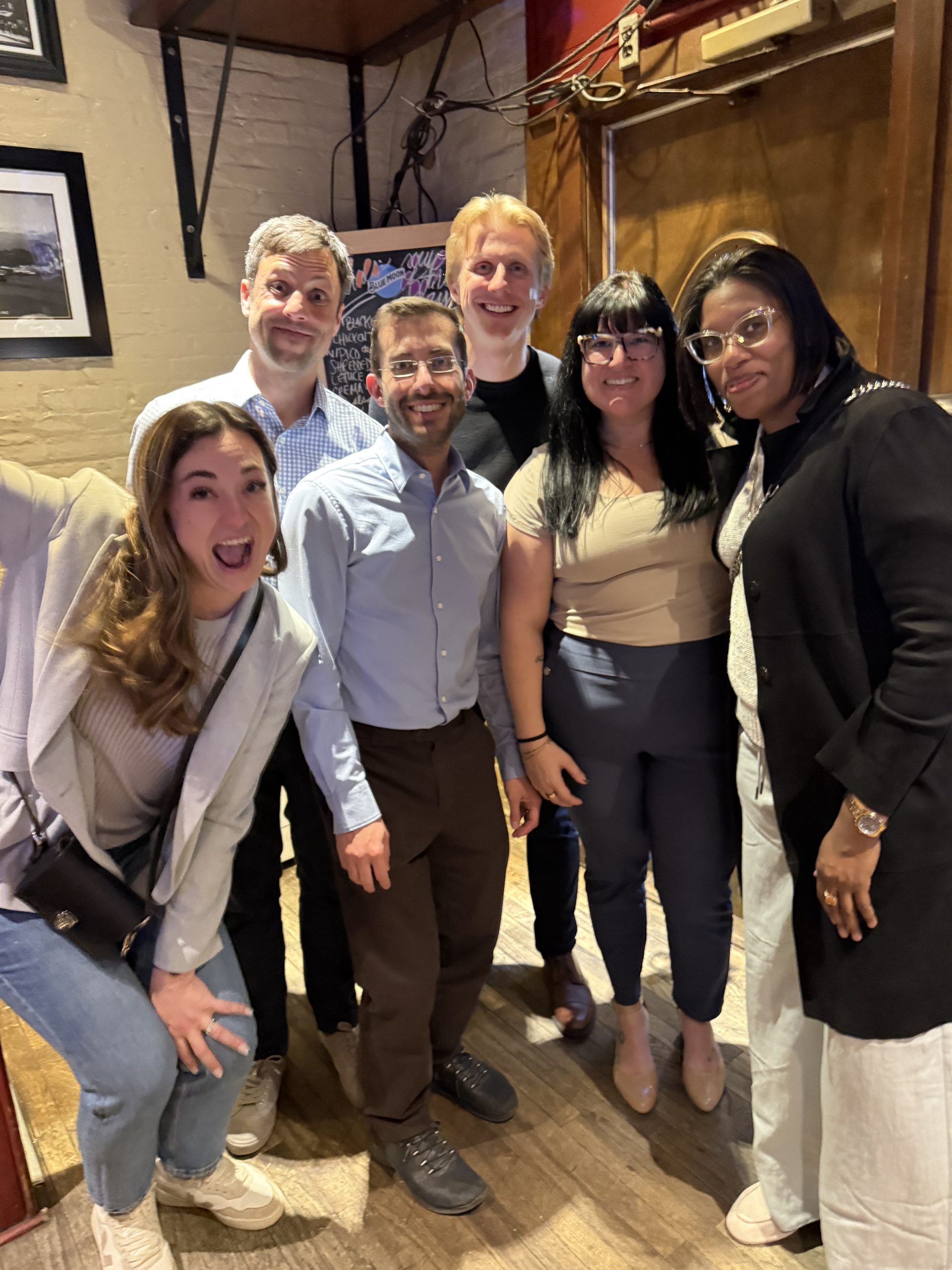
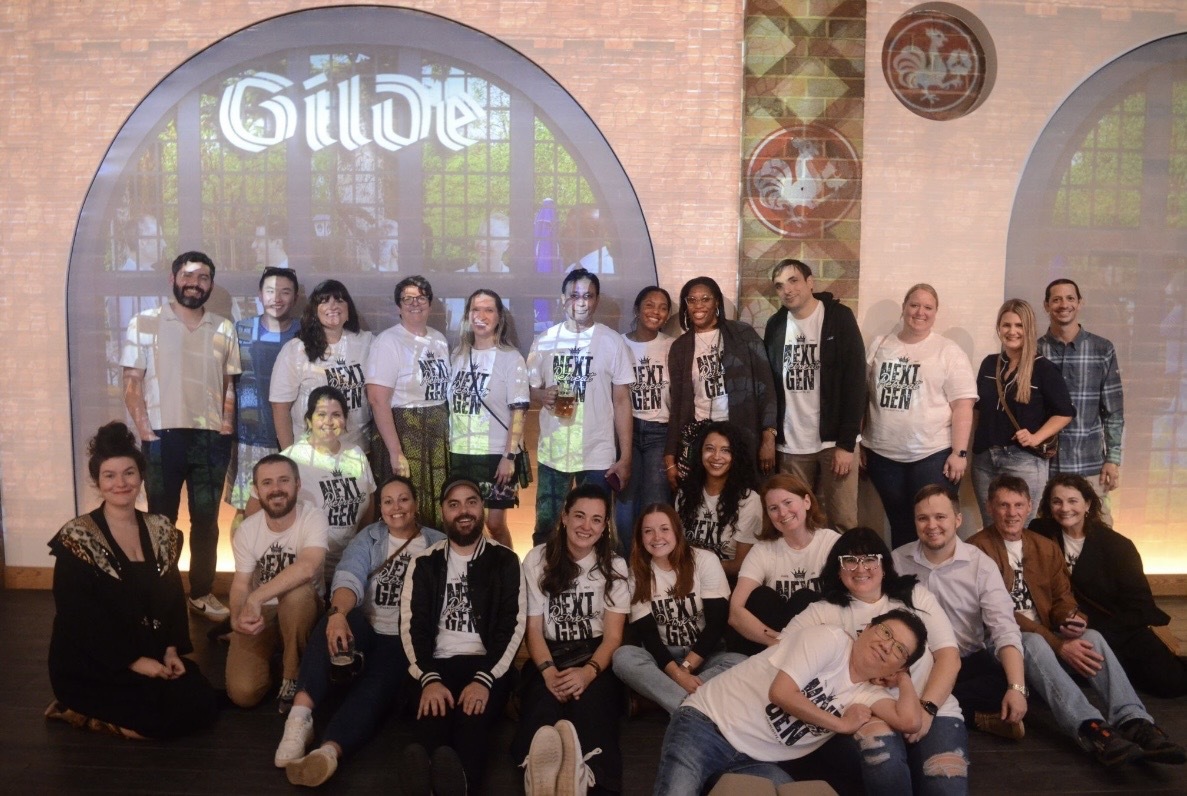
Don’t miss your next chance for a quick check-in with fellow NOSSCR NextGen members—Tuesday, June 2, at 12pm Eastern. These monthly gatherings (held on the first Tuesday of every month) are an informal chance to network, ask questions, run hypotheticals, and just check-in with our community.
This month, we’re excited to announce that work incentives expert, Debora Wagner, will join us for a special “ask me anything” about expedited reinstatement, overpayments, and all things return to work.
These sessions are intended for new(ish) practitioners—those with fewer than 10 years in the field of Social Security disability, or those who are under 40 years old. The virtual gathering is free, but registration is required to get the link—so please register today, mark your calendars, and join us!

Circuit Court Considerations: When the ALJ’s Logical Bridge Holds
Adriana de la Torre, NOSSCR Sustaining Member
If you represent claimants in childhood Social Security disability cases, the Ninth Circuit’s recent decision in Jenson v. Bisignano is one you’ll want to pull up and annotate. It’s a unanimous affirmance that touches nearly every major stage of the childhood disability analysis, and it sends a clear message about just how much deference ALJs can command when the record is built the right way.
Here’s a close read of what happened, where the claimant’s arguments fell short, and, most importantly, what it means for how you build and present your cases going forward.
Jenson applied for childhood Social Security benefits, arguing that his mental health impairments, including depression, anxiety, and neurodevelopmental disorders, were disabling during a defined closed period. His treating provider submitted a medical opinion supporting marked limitations. The ALJ found the opinion unpersuasive, denied benefits, and the district court affirmed.
On appeal to the Ninth Circuit, Jenson raised five distinct arguments. The court rejected all of them.
Five Key Holdings and Their Practical Implications
- The Treating Provider’s Opinion: Internal Consistency Is Everything
The ALJ found the treating provider’s opinion unpersuasive, not because of a general credibility problem, but because the opinion was contradicted by the provider’s own examination notes.
Those notes reflected that Jenson was oriented to time, place, and person; had clear and normal speech; demonstrated a normal thought process; denied hallucinations and suicidal ideation; and showed good recent and remote recall with sustained attention and concentration. Two of his teachers also reported no limitations in acquiring and using information.
Under the post-2017 regulatory framework, supportability and consistency are the two most important factors an ALJ must consider — and an opinion that conflicts with its own underlying documentation fails on supportability before the analysis even reaches consistency.
Before submitting a treating source opinion, review every examination note from that provider during the relevant period. If routine mental status findings are routinely normal, even while other aspects of functioning are impaired, you need to address those findings head-on in the opinion narrative, not leave them as unexplained contradictions for the ALJ to exploit.
- The Harmless Error Doctrine: Wins on One Point Don’t Always Move the Needle
Jenson scored a legitimate point on appeal: the ALJ had improperly relied on his high school graduation and post-period employment when those events fell outside the closed period at issue.
The court agreed. But it still affirmed, calling the error harmless under Burch v. Barnhart. The remaining record evidence was sufficiently strong to support the ALJ’s determination regardless of the outside-period events.
Procedural wins at the appellate level only matter if the error actually affected the outcome. When substantial evidence independently supports athe ALJ’s finding, the court can, and routinely does, look past the mistake.
Don’t count on a single ALJ error to carry your appeal. The most durable appellate argument isn’t “the ALJ made a mistake”, it’s ‘the ALJ’s mistake infected the entire evidentiary foundation.’ Focus your briefing on errors that are structural, not incidental.
- Listings 112.04, 112.06, and 112.11: The ALJ Doesn’t Have to Discuss Everything
Jenson argued the ALJ failed to adequately address evidence of his self-harm history, suicidal ideation, absenteeism, and failing grades in the Listings analysis. The court disagreed, citing Hiler v. Astrue for the proposition that ALJs are not required to discuss every piece of evidence, and don’t need to discuss evidence that is neither significant nor probative.
The court found that the ALJ had, in fact, considered this evidence, but had weighed it against Jenson’s documented progress at school and repeated reports of mild or moderate symptoms with no active suicidal ideation.
The ALJ’s obligation under Listings is to explain the basis for the finding, not to write a comprehensive record review. What the ALJ says matters — but so does what the record actually shows about symptom severity and trajectory.
If your client’s record contains a mix of acute episodes and periods of relative stability, brief those episodic crises explicitly in your pre-hearing memo or brief. Don’t assume the ALJ will assign them the weight you believe they deserve. Frame the severity argument around the worst periods, and be prepared to address the ‘mild to moderate’ characterizations that often appear in treating notes.
- Teacher Questionnaires: The Ambiguity Problem
This is arguably the most instructive part of the decision for childhood SSI practitioners. Jenson argued that two teacher questionnaires demonstrated marked limitations in at least two domains, which, if credited, would have supported a finding of functional equivalence.
The problem: the same questionnaires that noted absenteeism, lack of organization, and accommodation needs also reflected the teachers’ beliefs that Jenson exhibited “age appropriate” behaviors in most functional dimensions and did not have marked limitations in the majority of categories.
The court applied the familiar rule from Stiffler v. O’Malley: when evidence is susceptible to more than one rational interpretation, it is the ALJ’s conclusion that must be upheld.
Teacher questionnaires are only as strong as the story they tell from start to finish. A form that acknowledges some difficulties but checks ‘age appropriate’ or ‘no marked limitation’ in most domains gives the ALJ exactly what it needs to reject the functional equivalence argument.
Ensure that any questionnaire forms include the legal standard for “marked” limitations. If a teacher believes your client has serious limitations, the form should reflect that across all relevant domains, not just the ones that came up in conversation.
- Subjective Symptom Testimony: Improvement Is a Double-Edged Sword
The ALJ discounted Jenson’s subjective symptom testimony using the specific, clear, and convincing standard from Ferguson v. O’Malley. The reasons given included: objective evidence contradicting claims of marked impairment; routine findings of intact memory, concentration, and attention; repeated reports of mild depression and minimal anxiety symptoms; and, critically, Jenson’s own statements that his medications were effective.
When a claimant tells providers their medication is helping, that self-report becomes part of the record. It can and will be used to undercut the severity argument, even if the claimant’s overall condition remains significantly limiting.
Prepare your clients carefully before their testimony. Statements like “my medication helps” or “I’m feeling better”, while honest, need context. What does “better” mean? Better than the worst episode, or better than a non-disabled person? Help your client articulate the continuing functional impact even on good days.
Jenson v. Bisignano isn’t a bad-facts case that can be set aside. It’s a textbook illustration of how a childhood disability record can unravel at every level when the underlying evidence is mixed and the development work hasn’t been done before the hearing.
The Ninth Circuit’s message is consistent with where the circuit has been since Woods v. Kijakazi: ALJs have meaningful authority to evaluate the record, and appellate review under the substantial evidence standard gives them a wide lane to operate in. The work that wins childhood SSI cases happens before the hearing, in the medical records, the source opinions, the school records, and the preparation of witnesses.
If this case raises questions for your practice, or if you’re navigating similar fact patterns in the Ninth Circuit, we welcome the conversation.
Got any questions? Schedule a consultation with us. I’m here to help. It’s a lot to take in, but we’ll get through it together. After all, navigating these waters is always easier when you’ve got someone to chat with.
The views and opinions expressed in this article are the author’s own and do not necessarily reflect the views of NOSSCR, its leadership, or staff.
PAC Contributor List
THANK YOU TO OUR NOSSCR PAC CONTRIBUTORS
As of May 2026
First Circuit
L. David Ferrari (CC)
Michael Levin (CC)
Sandra Serra (CC)
Second Circuit
Crysti Farra (CC)
Sarah Frederick (CC)
Maurice David Maitland
Lino Medina Mendez
Third Circuit
Marianne Brown (CC)
Melissa Green
Alicia Hutchinson (CC)
Sheryl Mazur (CC)
Timothy Mello (CC)
Judson Perry (CC)
Alan Polonsky (CAP)
Joseph Silver
Christine Trotz-Cosgrove (CC)
Fourth Circuit
Jonathan Biser (CC)
Ben Clauson (DC)
Vaughn Clauson (DC)
Rick Fleming (DC)
Brian Gillette (CC)
Ashley Hartman Sappenfield (CC)
Christine Latona
George Piemonte (CC)
Michelle Pritchard (CC)
Andrew Sindler (CC)
Joanna Suyes (CC)
Laura Beth Waller (CC)
Rob Wendt (DC)
Fifth Circuit
Paul Burkhalter (CC)
Matthew Edwards
John Heard (CAP)
Jacob Hugentobler (CC)
Patrick O’Neal (CC)
David Pogue (CC)
David White (CC)
Sixth Circuit
Edward Ahlers (CC)
Gary Bimberg (CAP)
Donald Busta (PC)
Lorenzo D’Agostini (PC)
Bobby Ficklin
Joseph Houle (PC)
Michael Rake (DC)
Debra Shifrin (CAP)
Donna Simpson (CC)
Seventh Circuit
Eric Farr (CC)
Richard Feingold (CC)
Brian Harmon (PC)
Avram Sacks (CC)
Lindsay Solon (CC)
Thomas Thompson (CC)
Key:
CAP=Capitol Club, $5,000/monthly contribution of $416
PC=Platinum Club, $2,500-$4,999/ monthly contribution of $208-415
DC=Diamond Club, $1,000-$2,499/monthly contribution of $83-207
CC=Century Club, $100-$999
C=Contributor, all other contributions
Eighth Circuit
Jeffrey Bunten (PC)
Julie Burkett (CC)
David Camp (CAP)
Patrick Cavanaugh (CC)
Sean Cuddigan (PC)
Meghan Gallo (DC)
Matthew Grundy (CC)
Ted Norwood (PC)
Daniel Parmele (CAP)
J. Asha Sharma
Michael Tracy (CC)
Timothy Tripp (DC)
Felicia Von Holten
Hugh Field (DC)
Ninth Circuit
Mark Bunch (DC)
Sara Carroll (CC)
Paul Clark (CC)
Richard Gutstadt (DC)
Marc Kalagian (DC)
Kevin Kerr (CC)
Audrey Miller
Eric Penar (DC)
Maggie Schott (CC)
Jose Vera (CC)
Timothy Walker-Dupler (CC)
Tenth Circuit
Ann Atkinson (DC)
Dan Bott (PC)
John Harlan (CC)
Nick Huntsman (PC)
Gary Jones (CC)
Philip Ryan (PC)
Gayle Troutman (DC)
Steve Troutman (DC)
Eleventh Circuit
Carol Avard (CC)
Jason Bailey (CC)
Sarah Bohr (CC)
Kevin Hall (CC)
Doug Mohney (CC)
David Wright (CAP)
Contributions to the National Organization of Social Security Claimants’ Representatives PAC (NOSSCR PAC) are not tax-deductible as a charitable contribution for federal income tax purposes. Contributions to NOSSCR PAC will be used to support federal and state candidates, political parties, and other political committees. Contributions are strictly voluntary. You may refuse to contribute without reprisal. Any proposed contribution level is merely a suggestion, and you are free to contribute more or less than suggested. You will not benefit or be disadvantaged by reason of the amount of your contribution or a decision not to contribute. Federal law requires NOSSCR PAC to use its best efforts to collect and report the name, mailing address, occupation and employer of persons whose contributions exceed $200 in a calendar year. You must be a U.S. citizen or lawfully admitted for permanent residence in the U.S. to contribute.
Salt Lake City Sponsorship & Exhibit Opportunities
Sponsorship and exhibitor opportunities for our Fall National Conference in Salt Lake City are open and getting picked up fast. We’d love to have you join us! Space is limited, so now is the time to secure your spot.
Whether you’re a longtime partner or considering exhibiting with us for the first time, this conference is a fantastic opportunity to connect with decision-makers, strengthen relationships, and showcase your products and services to the NOSSCR community.
A quick, but important, reminder as booths begin filling up:
- Your sponsorship or exhibitor registration is not considered finalized until your invoice has been paid.
- Booth selection order is determined by the date payment is received, so the sooner payment is completed, the sooner you’ll be able to choose your booth location.
If you’ve already submitted your agreement, don’t forget to complete payment to secure your place in line. And if you’ve been thinking about joining us, this is the perfect time to jump in before prime booth locations are gone!
We’re looking forward to another incredible conference and can’t wait to see everyone in Salt Lake City.
If you have any questions about sponsorships, exhibits, or available opportunities, feel free to reach out directly to Esterien at esterien.keet@nosscr.org. We’re always happy to help.
See you in Salt Lake City!
Share Your Perspective: Pulmonary Function Testing
The National Academies are seeking perspectives related to the role of pulmonary function testing in the Social Security disability determination process.
As representatives, we have a unique perspective to offer, and the National Academies are welcoming our input. Learn more and submit comments here. Submissions are due June 15, 2026.
Resource for RECON Act Advocacy
NOSSCR is working on Capitol Hill in support of RECON Act–introduced in the House of Representatives as H.R. 8478 on April 24, 2026. This legislation would add one sentence to both Title II (DI) and Title XVI (SSI) for new claims: “The Commissioner may not require reconsideration of the initial decision or determination prior to the hearing.” This would give our clients optional reconsideration–not just in some states, but all of them; and not just as a pilot but permanently.
Please take a look at the linked NOSSCR one-pager and consider reaching out to your federal elected officials to ask them to support this important bill. To find your member, check this: https://www.congress.gov/members/find-your-member. To arrange to visit Capitol Hill in person with NOSSCR’s help, just reach out to us a nosscr@nosscr.org.
NOSSCR Board of Directors Elections
As a reminder, we are in the process of electing circuit representatives for NOSSCR’s Board of Directors. This year there will be elections in the 4th, 6th, 7th, 9th, and 11th circuits. The Nominations and Elections Committee’s list of named candidates will be emailed in June to all NOSSCR members eligible to vote, following our annual member census. Election day will be June 28, 2026, preceded by a week of online voting using our longstanding secure provider Simply Voting. Please be aware that ballots may originate from NOSSCR@simplyvoting.com and it can help if you add that address to your saved contacts. You will have access to the ballots and voting through a link provided to you in your email. NOSSCR also accepts votes by other means, but they will all be recorded in your Simply Voting portal.
SSA OIG Finds Social Security Processed Small Overpayments It Could Not Cost-Effectively Recover
On May 11, 2026, SSA released the following press release:
The Social Security Administration (SSA) Office of the Inspector General (OIG) has issued an audit report finding SSA spent more to recover certain low-dollar Old-Age, Survivors, and Disability Insurance (OASDI) overpayments than the amounts it ultimately recovered.
The audit, Follow-up on Cost-benefit Analysis of Processing Low-dollar Overpayments, reviewed SSA’s efforts to implement prior recommendations related to capturing the average cost of collecting overpayments and determining whether additional actions could improve the processing of low-dollar overpayments.
SSA previously agreed to update its methodology for calculating the average cost to collect overpayments and to reevaluate its process for pursuing overpayments when collection costs exceed the amount owed. However, as of the date of the review, SSA had not implemented those recommendations. According to SSA, establishing a new workload tracking system to address the prior recommendations would require additional resources the Agency did not currently have available.
For the current audit, OIG reviewed a sample of 250 low-dollar OASDI overpayments and found SSA took collection actions on 50 cases that auditors determined were not cost-beneficial because collection efforts likely exceeded the overpayment amounts. Auditors estimated SSA spent approximately $14,492 attempting to recover these 50 overpayments, which totaled $8,129.
Projected across the broader population, OIG estimated SSA spent approximately $4.6 million to recover nearly 16,000 low-dollar OASDI overpayments totaling about $2.6 million—roughly $2 million more than the Agency could recover.
The report also found SSA policy does not clearly specify the criteria Agency employees should use to determine when collection costs are likely to exceed recovery amounts and should therefore be suspended or terminated.
“Effective stewardship of taxpayer funds requires agencies to ensure collection efforts are cost‑beneficial and consistently applied,” said Michelle L. Anderson, Assistant Inspector General for Audit as First Assistant. “This audit highlights the need for clearer guidance and more consistent methodologies to help SSA make informed decisions regarding low-dollar overpayments.”
The audit makes recommendations for SSA to:
- Ensure consistency in methodologies used to calculate the average cost of processing overpayments;
- Take appropriate actions on identified low-dollar overpayments that are not cost-beneficial to pursue; and
- Update Agency policy to establish criteria employees should use to determine when collection actions are not cost-beneficial.
SSA agreed to implement the recommendations.
Read the full report here.
Daily Dose of Data from SSA
This month, Social Security released the following updates:
- Direct Express payments have transitioned to a new bank, Fifth Third Bank. Find more details here, and please alert your clients who use Direct Express that they may experience changes.
- The AARPS Portal has moved to a new web address. Please update your bookmarks to this page: https://secure.ssa.gov/aarps/aarps-ar-ui/home
- Monthly Statistical Snapshot, April 2026: A monthly snapshot of statistics on Social Security beneficiaries and Supplemental Security Income recipients.
- SSI Monthly Statistics, April 2026: These monthly tables provide statistics for federally administered payments and awards under the Supplemental Security Income (SSI) program.
Useful Resources
OHO Caseload Analysis Report April 2026
State Medical Records Payment Rates
Social Security Rulings and Acquiescence Rulings by Year
HALLEX Contents & Recent Changes