

July 2025 Print Edition
Dispatches from Camp: Updates from the CEO
David Camp, NOSSCR CEO and General Counsel
This month I’d like to focus on just one aspect of our nationwide advocacy for better health information in Social Security cases. We’re taking a many-track advocacy approach, including a public benefits use case under TEFCA, individual access use case under TEFCA, expansion of MEGAHIT, eliminating costs by HHS direction, and state legislation.
A highlight–and this month’s focus–is House Bill 1226 in Missouri. NOSSCR member Felicia Von Holten of Parmele Disability has been lobbying locally in support of this proposed state legislation. Missouri’s legislature is dominated by Republicans, and this bill is sponsored by Bill Hardwick, a Republican who represents the area around Fort Leonard Wood.
The bill proposes this new language for Missouri’s medical records statute: “a health care provider or health care facility shall not charge a fee for medical or mental health records requested by a patient, former patient, or attorney or other authorized representative of a patient or former patient for use in supporting an application for benefits under … [the Social Security Act] ….”
HB 1226 was introduced on February 6th, and referred to a committee on May 15th.
If you’re in Missouri and want to help lobby for this bill, please reach out to NOSSCR and we can connect a local group. If you’re in another of the many burdened states allowing absurd medical records costs, we would love to provide you with this and other examples of legislative language. (And don’t miss our Workshop on this very topic at our September Conference, led by Andrew Sindler of Maryland and Emma Webb of Tennessee, both of whom lobbied for and won meaningful changes in their states). As we move forward with this aspect of our advocacy–a state-by-state fix–we will provide our national resources to train on lobbying techniques, media materials, witnesses that could help a hearing, and preparation on the opposition we’ve seen from the outsourced HIM companies that have opposed these bills in the past.
Let’s go Missouri!
For daily updates on the latest Social Security happenings, follow me:


President’s Corner
Paul Burkhalter, NOSSCR President
“I have friends everywhere.”
A great thing about being a NOSSCR member is that you have friends across the country that are willing to offer a quick word of advice, to help you think through a legal issue, or share insights about a new ALJ or medical expert.
Even after 33 years of experience in Social Security disability law, SSA still throws me some curve balls. Just last week I went to NOSSCR’s Martin list serve for guidance from hundreds of my friends in our community. Both a former NOSSCR president and an experienced NOSSCR conference speaker came to my aid with great advice and case law that I had not considered. That kind of generosity and collective wisdom is one of the greatest strengths of our organization. (To join the NOSSCR listserv, click here, or email Alyssa at alyssa.pimentel@nosscr.org).
Starting this week, many of us will be voting on new leadership to NOSSCR’s Board of Directors. The First, Fourth/DC, Fifth, and Eleventh Circuits all have competitive elections to elect a representative for their Circuit. I would encourage everyone to vote so that your voice is heard.
If you don’t already know your Circuit Representative as a prominent local advocate, you’ve likely seen them lead your Circuit meeting at a NOSSCR conference or during a virtual session. (Upcoming virtual meetings are currently scheduled for the Third and Ninth Circuits, and all Circuits will have in-person meetings during our September Conference in San Diego). These gatherings give you a chance to raise your concerns directly to NOSSCR leadership and stay informed about developments at SSA and in the courts.
If you have not had to opportunity to get know you NOSSCR Circuit Representative personally, hopefully, you have heard them present on continuing legal education topics on SSD law at either national, regional, or local conferences. Several of our NOSSCR Board members have deep ties to NOSSCR founders, being part of second or third generations of lawyers from firms that helped found NOSSCR in the early 1980s.
Historically, NOSSCR Board members have been at the forefront of seminal Supreme Court and Circuit cases that have reshaped the legal landscape of disability law.
As I mentioned last month, it is remarkable that those in our community care so much about our practices that we have competitive elections and members so willing to serve at their own expense (Board members willingly pay for their own travel to attend Board meetings; sometimes making the trip even when they cannot attend the conference that might be happening during the same week).
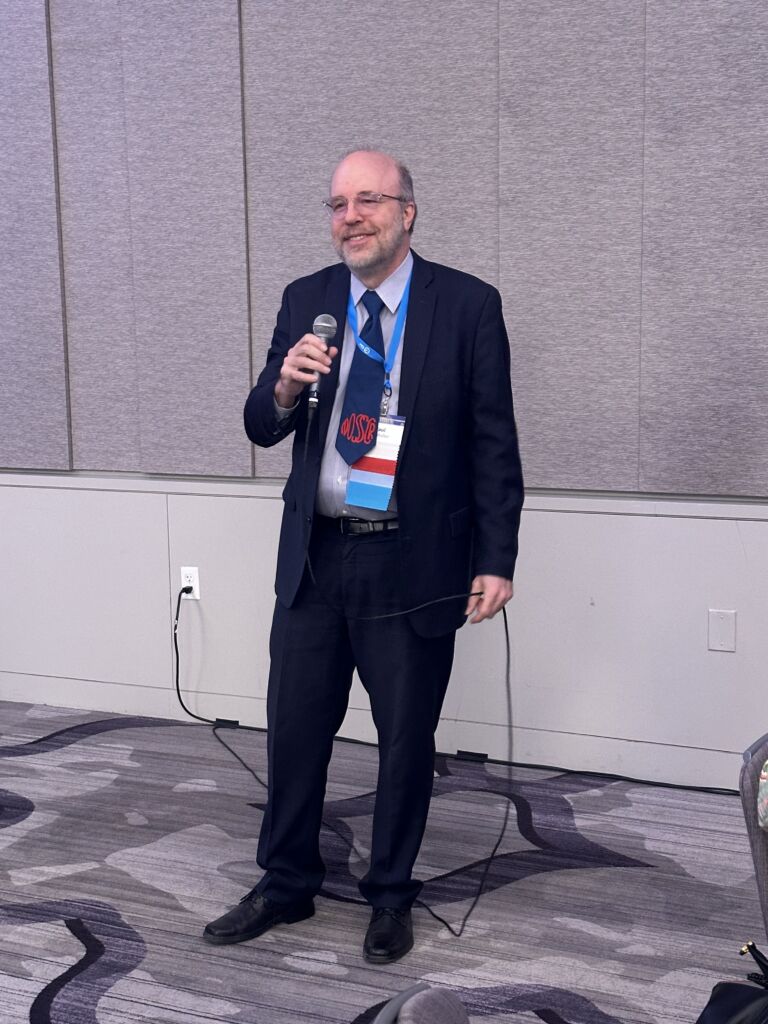
Please vote! Your input matters—and your friends are counting on you.
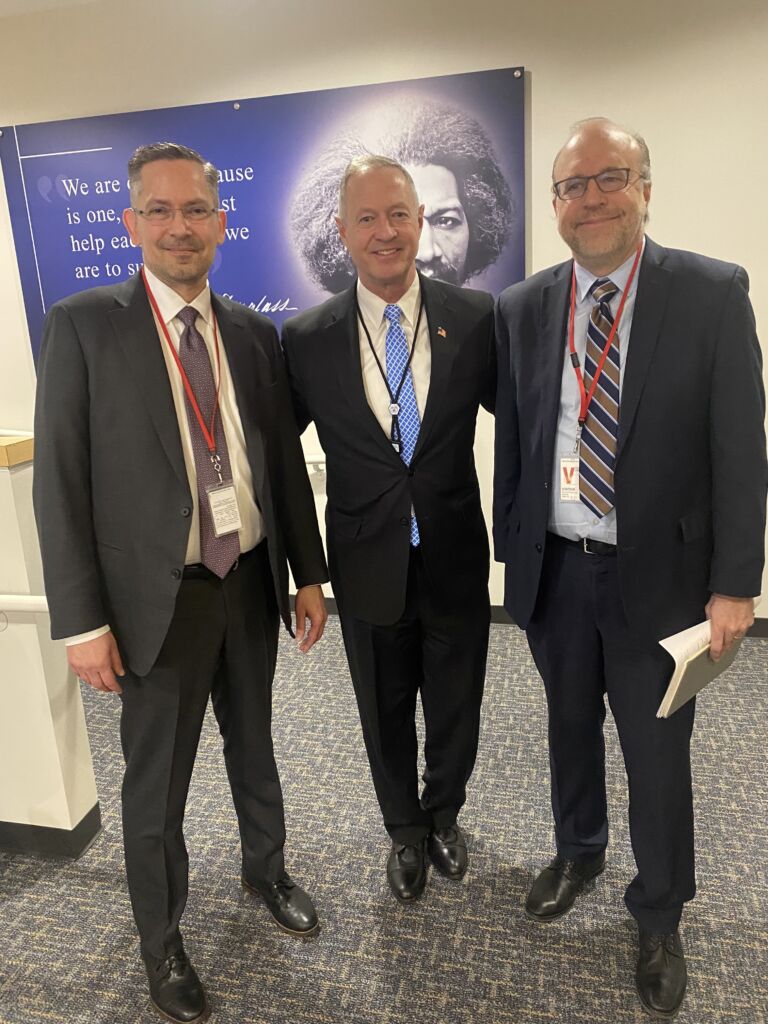
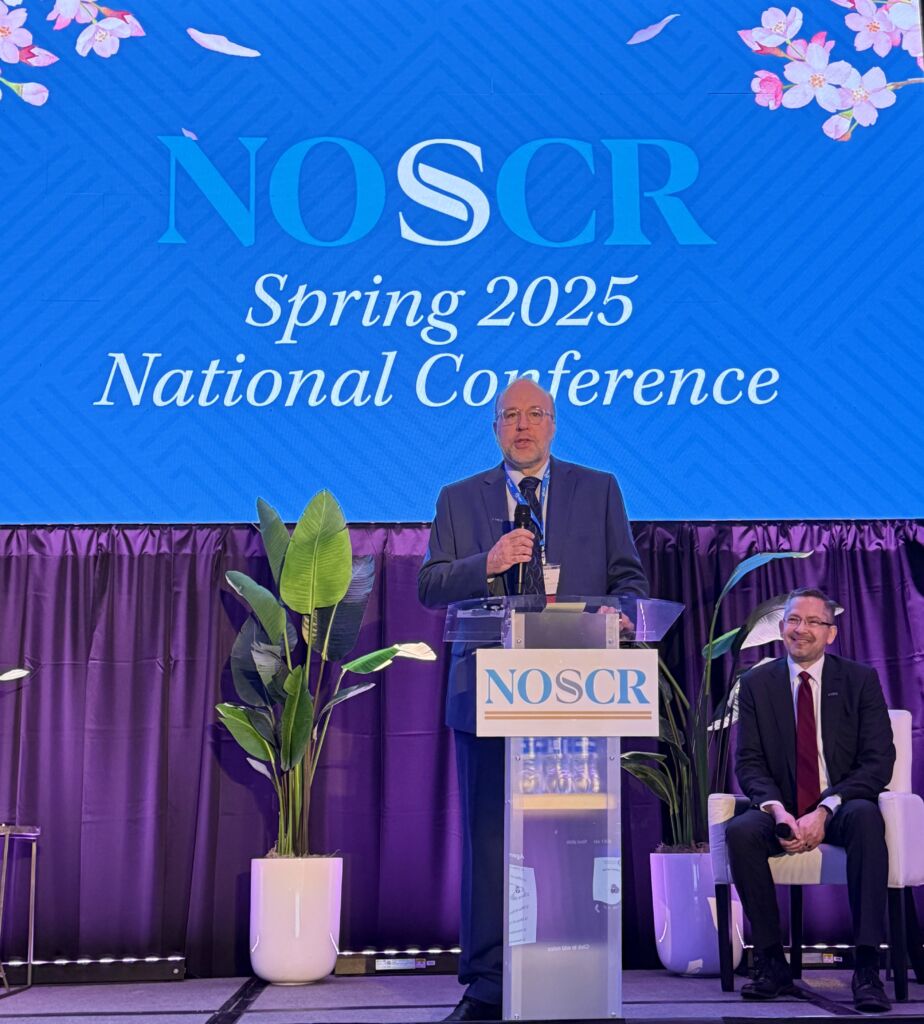
Vote NOW for Your NOSSCR Circuit Representative!
NOSSCR’s Board of Directors election cycle is underway. Voting opened on July 21, with members receiving an emailed ballot from SimplyVoting. As detailed in our bylaws, each member gets one vote in the Circuit where they are registered. If you haven’t received a ballot from SimplyVoting, please check your spam folder. Should you prefer, you can also email your vote to NOSSCR at nosscr@nosscr.org.
There is one vacancy this year in the First, Second, Third, Fourth/DC, Fifth, Sixth, Eighth, Tenth, and Eleventh Circuits.
Voting closes at 11:59pm Eastern on July 31. All votes must be received by this deadline to be counted.
Election results will be announced at NOSSCR’s virtual business meeting, scheduled for August 29, and the winners will join the Board of Directors at the September meeting during our San Diego conference.
Please don’t delay—make your voice heard today!
Piemonte’s Perspective
George Piemonte, NOSSCR 11th Circuit Board Representative & Jonathan Heeps, NOSSCR Sustaining Member
Gridding Out: A Smart Starting Point for Your Disability Case
When you’re building a disability case, one of the first things you should ask yourself is: Can my claimant grid out? Having a clear theory of the case is essential—and if the grids work in your favor, they can be a powerful shortcut to a favorable decision.
Let’s break it down.
The Six “Good” Grid Rules
There are only six grid rules that can directly lead to a finding of disability. Here they are:
- Age 45+, sedentary work, illiterate, unskilled
- Age 50+, sedentary, no transferable skills
- Age 50+, light work, illiterate, unskilled
- Age 55+, light work, no transferable skills
- Age 55+, medium work, limited education, no past work
- Age 60+, medium work, marginal education, unskilled
If your claimant fits into one of these categories, you’re in a strong position. But you’ll need to prove it.
Understanding Illiteracy
Here’s a key point that often gets overlooked: illiteracy means the inability to read or write—not both. According to 20 C.F.R. § 404.1564(b)(1), if your claimant can’t do either one, they qualify as illiterate. That little word “or” can make a big difference.
SSR 20-1p says that someone with at least a 4th-grade education is presumed not to be illiterate. But that’s not the end of the story. If your claimant has a 4th-grade education but truly can’t read or write, it’s your job to gather and submit evidence to prove it.
Education Levels: It’s Not Just About Grades
Per 20 C.F.R. § 404.1564:
- Marginal education = 6th grade or less
- Limited education = 7th to 11th grade
But here’s the twist: SSR 83-11 makes clear that educational testing can override the number of years completed in school. So, if your claimant made it to 8th grade but functions at a 5th-grade level, you’ll need testing to support that. And don’t be surprised if you have to walk the ALJ through SSR 83-11—many aren’t familiar with it.
What About Skills?
Transferable skills are a whole topic on their own. Preparation and cross-examination of the VW, our favorite topic, are crucial. Anticipate the classification of your client’s past work and look up the Materials, Products, Subject Matter, and Services (MPSMS) and Work Field (WF) codes in advance. During the hearing, make sure you ask the vocational witness what the MPSMS and WF codes are for all jobs the VW says your client’s skills can transfer to. If you need a refresher, check out George’s earlier posts on that topic. But in short: if your claimant doesn’t have transferable skills, that can be a key factor in gridding out.
Bottom line: Keeping these grid rules in mind from the start helps you shape your case strategy and gives you a clear path to show the ALJ that your claimant qualifies as disabled.
Want help drafting a grid-based theory for a specific case? We’d be happy to help—just let us know! George: gpiemonte@mjpdisability.com, Jonathan: jheeps@mjpdisability.com.
The views and opinions expressed in this article are the author’s own and do not necessarily reflect the views of NOSSCR, its leadership, or staff.
Our Fall Conference is Filling FAST—Register Today!
Escape to sunny San Diego this September for our flagship Social Security disability conference at the beautiful Sheraton San Diego Hotel & Marina. With average temperatures in the mid-70s, ocean breezes, and endless sunshine, it’s the perfect time to mix professional development with a touch of Southern California relaxation.
Set right on the waterfront, the Sheraton offers stunning marina views, multiple outdoor pools, on-site dining with fresh coastal cuisine, a fitness center, and easy access to downtown and the beach. Whether you’re networking with our community’s top legal minds or unwinding by the water, this is one conference you won’t want to miss.
Our room block is filling fast—secure your spot today!
Whether you’re looking to earn CLE credits, stay ahead of emerging legal trends, or build lasting connections with colleagues from across the country, this event is designed with you in mind.

Sheraton San Diego Resort, San Diego, CA

Tuesday, September 9, through Friday, September 12, 2025

Dynamic CLE Programming

Exclusive Networking Events

Stunning Coastal Views & Social Gatherings
Don’t miss your chance to grow professionally, exchange ideas with fellow members, and enjoy everything San Diego has to offer. Mark your calendar and make plans to join us—your future self will thank you!
Peruse the tentative agenda, check out our FAQ, and register NOW. We can’t wait to see you there!




NOSSCR Urges HHS to Act on Medical Records Costs
This month, NOSSCR CEO and General Counsel, David Camp, submitted comments on behalf of our members urging the Department of Health and Human Services to protect disabled Americans and their representatives from unreasonable medical records fees. Read the full comments below.
Just Ask Jennifer: No More Paper Checks
Jennifer Cronenberg, NOSSCR Senior Counsel and Director of Legal Information
Key Takeaway:
The Federal Government is not kidding about paper checks going away. Everyone (representatives included) needs to switch to electronic payments ASAP.
What options are available?
Direct Deposit, Direct Express (more on this option below), or a waiver from Treasury to continue receiving paper checks (very rarely granted and might result in a disruption in payments).
How did we get here and where do things stand?
On March 25, 2025, President Trump released an Executive Order entitled “Modernizing Payments To and From America’s Bank Account” announcing that “Effective September 30, 2025, and to the extent permitted by law, the Secretary of the Treasury shall cease issuing paper checks for all Federal disbursements inclusive of intragovernmental payments, benefits payments, vendor payments, and tax refunds….”
On July 2, 2025, SSA released Emergency Message EM-25040 entitled “Transition to Only Electronic Benefit Payments for Initial Claims” noting that effective immediately (as of July 2), the agency will remove references to an option to receive a paper checks on initial applications, and will instead direct people who insist on a paper check to apply to Treasury for a waiver. Importantly, if individuals choose to apply for a waiver, they must do so directly with Treasury. SSA will not process these requests, and “Treasury has advised that if individuals remain on paper checks after September 30, 2025, while the waiver request is pending or if it is not approved, they may experience a disruption in timely payment delivery.”
On July 14, 2025, SSA published a blog post entitled “Social Security Transition to Electronic Payments—What Beneficiaries Receiving Paper Checks Need to Know.” This post outlines the electronic options for payments and how to sign up for them.
On July 21, 2025, I received confirmation from one of my agency contacts that the “no more paper checks” policy absolutely applies to all representatives (in addition to claimants and beneficiaries).
What is Direct Express?
For people without a bank account, Direct Express is a prepaid debit card designed specifically for federal benefit payments. There are sometimes fees associated with the use of this card, and it should be noted that if there are problems with the card, SSA is now no longer offering to assist with troubleshooting those issues. On June 27, 2025, SSA issued EM-25038 noting that, effective July 7, they have discontinued the agency’s Direct Express call resolution site. Instead, “card holders may request a replacement card through the DEX website at www.USDirectExpress.com, through the DEX mobile app, or through the Direct Express® card toll free Customer Service Department number listed on the back of the card (1-888-741-1115).”
I really want to keep getting paper checks. How do I get a waiver from Treasury?
The U.S. Department of the Treasury will grant exceptions to the rule only in rare circumstances. “To qualify for a waiver, at least one of the following three criteria must be met:
· The check recipient is an individual to whom electronic payments would impose a hardship due to a mental impairment.
· The check recipient lives in a remote geographic location lacking the infrastructure to support electronic financial transactions.
· The check recipient is age 90 or above.
If you do not meet the criteria above, you are required to convert your federal benefit check to electronic payment. For more information or to request a waiver, call the U.S. Treasury Electronic Payment Solution Center – Waiver Line at 1-855-290-1545. You may also print and fill out a waiver form and return it to the address on the form.”
I’ve stuck with paper checks because my bank doesn’t tell me which payment matches which claimant. What can I do?
You should set up Direct Deposit ASAP. Treasury provides the needed information to your banks. If your bank is not providing you with this needed information, we recommend contacting your bank manager to find out how best to access this data. You can also search our listserv for posts on this topic with suggestions for banks that do supply the needed data in a usable format. (To access the listserv search tool, login here. If you are not yet registered for our listserv, sign up here).
Ok fine. I’ll sign up for Direct Deposit. As a representative, what do I need to do?
If you work for a firm or entity that is not yet registered for Direct Deposit, you need to submit an updated Form SSA-1694 by faxing it to the Office of Earnings and International Operations at 1-833-597-1429. You also need to update your Direct Deposit information on your individual representation registration by completing and faxing Form SSA-1699 to the Office of Central Operations at 1-877-268-3827.
But Form SSA-1699 says I must be the owner or co-owner of the bank account, and I’m not. What do I do?
I know. The set-up is very frustrating for salaried representatives who do not co-own the firm’s bank account. I have had this conversation multiple times with multiple people at SSA. They say that, because only an individual can represent a claimant, and they must pay an individual, the bank account listed, even if you’re affiliated with a firm, must be your personal account. The way around this is to assign fees via Part C of Form SSA-1696. If you assign fees back to an entity, SSA will skip the bank account information provided on Form SSA-1699 and will instead jump directly to the bank account information listed on Form SSA-1694 (the firm’s registration and bank account). [For a more robust conversation about these “entities” rules, please see my prior Forum article here].
I have been told that, given the new “no more paper checks” requirements, they are considering revisions to Form SSA-1699; however, you should NOT delay in submitting updated forms now. It’s going to take time for SSA to process all of these changes, but regardless of whether they’ve processed them or not, they are NOT going to issue paper checks after September. You must take action now.
How should beneficiaries and claimants switch to Direct Deposit?
The best option is to create a mySocialSecurity account. Further guidance can be found on SSA’s site here. As a best practice note, you should be encouraging ALL claimants to set up mySocialSecurity accounts (as well as all associates and support staff). SSA is moving more and more system functionality to the mySocialSecurity portal (including adding additional forms that claimants can submit via the portal, and increasing appointment scheduling options via the portal).
Bottom Line:
If you or your clients are still getting paper checks, please take action TODAY to avoid missed payments. If you need help switching, please don’t hesitate to reach out to me at jennifer.cronenberg@nosscr.org.
FALL Into Your NextGen Network!
If you’ve been looking to meet more people in the Social Security space, especially others who are early in their careers, the 2025 NextGen Retreat is the perfect opportunity.
This fall, join fellow advocates from across the country for a weekend designed specifically for the NOSSCR NextGen community: NOSSCR members who are 40 or under or in their first ten years of Social Security practice. Whether you’re new to the field or have already built a foundation, the retreat offers time to connect, reflect, and grow in a supportive, peer-focused setting (while affordably earning CLE credit!).
- Where: Charlotte, NC
- When: October 16–18, 2025
- Member Price: $75
- Tentative Agenda:
- Thursday October 16:
- 5:30 pm, Dinner at Bella Ciao, Sponsored by: Trajector
- Friday October 17:
- 7:00am, Breakfast at Residence Inn
- 8:00 am, Session 1
- 9:00 am, Session 2
- 10:00 am, Session 3
- 11:00 am, Session 4
- 12:00pm, Lunch – Sponsored by: Legal Conversion Center
- 4:00pm, Networking Group Event: Beat the Bomb Charlotte
- 5:00pm, Happy Hour – Sponsored by: Legal Conversion Center
- 6:30pm, Dinner at Phat Burrito
- Saturday October 18:
- 7:00am, Breakfast at Residence Inn
- 8:00 am, Session 1
- 9:00 am, Session 2
- 10:00 am, Session 3
- 11:00 am, Session 4
- 2:00 pm, Networking and Site Seeing Group Event: Fender Bender Charlotte Tour Bus
- Thursday October 16:
This retreat combines professional development with real networking and community building. You’ll have the chance to take part in small-group discussions, share experiences, and learn from others navigating similar stages of their careers. And don’t worry! We’ve left time for you to explore Charlotte or unwind at your own pace. It’s a weekend that will be both professionally and personally productive.
Whether you’re a solo practitioner, working with a firm, or in legal services, the NextGen community is a supportive place to share ideas and build lasting professional relationships. This retreat is a chance to strengthen those connections—and make new ones. We hope to see you there!


NOSSCR PAC Hosts Breakfast with Congressman Larson to Discuss Social Security Challenges
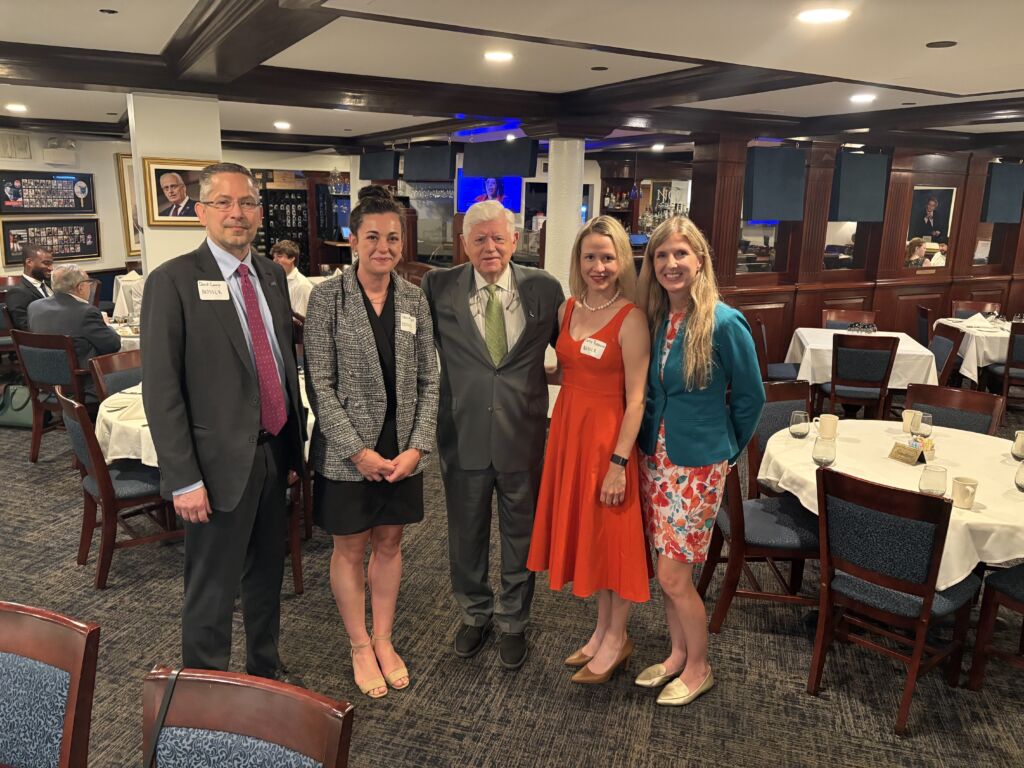
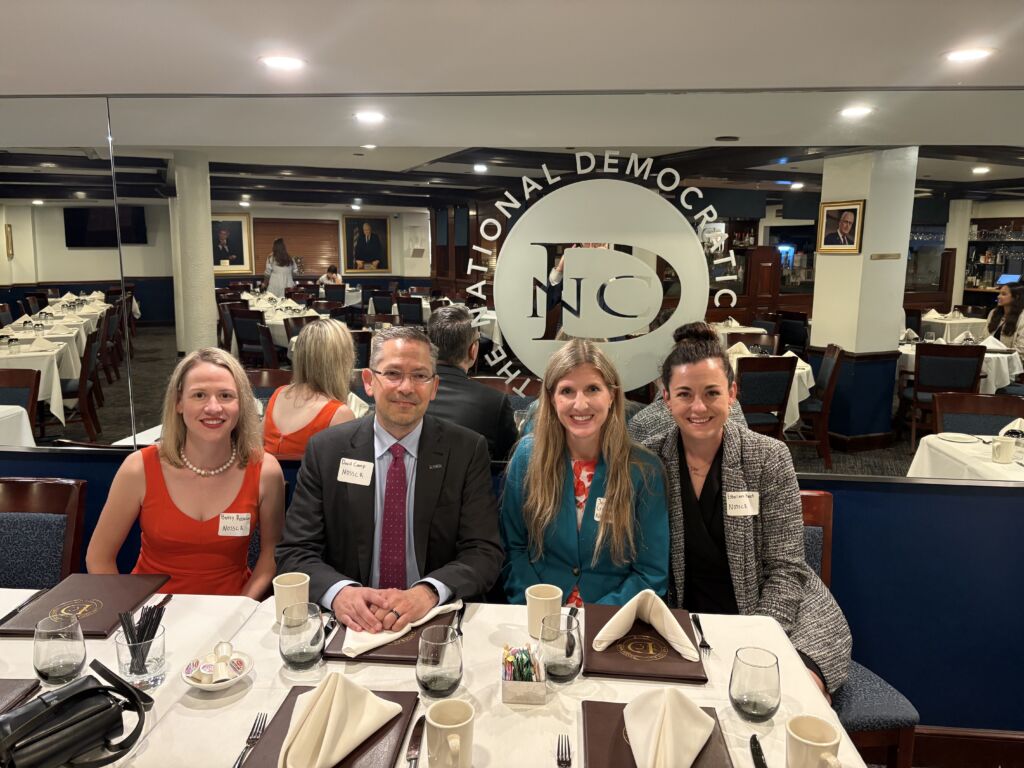
On June 27, 2025, the NOSSCR PAC organized a breakfast meeting at the Democratic Club in Washington, D.C., with Congressman John Larson (D-CT). The event brought together key NOSSCR staff members, including CEO David Camp, Member Services Director Esterien Keet, Senior Counsel & Director of Legal Information Jennifer Cronenberg, and Government Relations Director Betsy Rosecan.
The Democratic Club, a historic venue located just blocks from the U.S. Capitol, serves as a gathering place for Democratic lawmakers and their allies. It provides a space for informal meetings and discussions on policy. Similar to the Democratic Club, Republicans have their own venue, the Capitol Hill Club, where GOP lawmakers and political figures convene to discuss policy matters and engage with constituents and supporters.
At breakfast, discussions centered on pressing issues facing the Social Security Administration (SSA), such as ongoing operational challenges and the long-term solvency of the Social Security program. Congressman Larson, who has been a staunch advocate for Social Security, provided insights into legislative efforts aimed at addressing these concerns. His leadership on the Social Security Subcommittee of the House Ways and Means Committee continues to shape the national conversation on Social Security reform.
This breakfast served as an important opportunity for NOSSCR to engage directly with Congressman Larson, reinforcing its commitment to advocating for policies that support Social Security claimants and ensure the program’s sustainability for future generations.
Looking ahead, NOSSCR will also be hosting a dinner with Congressman Ron Estes (R-KS) in September. As Chairman of the Social Security Subcommittee of the House Ways and Means Committee, Congressman Estes plays a pivotal role in shaping legislation related to Social Security. This dinner will provide another important opportunity to engage directly with policymakers and continue our advocacy efforts on behalf of Social Security claimants.
These events, and NOSSCR’s ongoing advocacy work, would not be possible without the generous support of our members who donate to our PAC. Their contributions allow us to organize such important gatherings and continue engaging with lawmakers on critical issues that affect Social Security claimants. NOSSCR is grateful for the commitment of its members in helping ensure that Social Security remains a priority in the halls of Congress.
Contributions to the National Organization of Social Security Claimants’ Representatives PAC (NOSSCR PAC) are not tax-deductible as a charitable contribution for federal income tax purposes. Contributions to NOSSCR PAC will be used to support federal and state candidates, political parties, and other political committees. Contributions are strictly voluntary. You may refuse to contribute without reprisal. Any proposed contribution level is merely a suggestion, and you are free to contribute more or less than suggested. You will not benefit or be disadvantaged by reason of the amount of your contribution or a decision not to contribute. Federal law requires NOSSCR PAC to use its best efforts to collect and report the name, mailing address, occupation and employer of persons whose contributions exceed $200 in a calendar year. You must be a U.S. citizen or lawfully admitted for permanent residence in the U.S. to contribute.
Legislative Spotlight
Betsy Rosecan, NOSSCR Government Relations Director
On March 5, 2025, Congressman John Larson (D-CT) introduced H.R. 1876, the Keeping Our Field Offices Open Act. The bill has 128 cosponsors, all Democrats; it was referred to the House Committee on Ways and Means, where it is awaiting further action. A companion bill has not yet been introduced in the Senate.
H.R. 1876 is intended to prevent the current Administration from closing field and hearing offices. If enacted, this legislation would place a temporary ban on the closure of Social Security field and hearing offices until January 21, 2029, the day following the conclusion of President Trump’s second term. After this period, the Commissioner of Social Security would be allowed to lift the ban, but only after submitting a comprehensive report to Congress that outlines and justifies a process for closing, consolidating, or reducing access to these offices. Additionally, the bill would require the Commissioner to retain the number of field and hearing offices that were in operation as of January 20, 2025, after the moratorium expires. In considering any future closures, the Commissioner would be required to evaluate potential barriers to transportation and communication for those served by the offices, provide ample notice to the public and Members of Congress, and ensure there are opportunities for public comment and appeals.
Bill Details
SECTION 1. Short title.
This Act may be cited as the “Keeping Our Field Offices Open Act”.
SEC. 2. Preventing closure of field and hearing offices and resident stations.
(a) Moratorium on closure or consolidation of field or hearing offices or new limitations on access to such offices.—
(1) IN GENERAL.—Except as provided in paragraphs (2) and (3), the Commissioner of Social Security shall take no action on or after the date of enactment of this Act to close or consolidate field or hearing offices or resident stations of the Social Security Administration or to otherwise impose any new limitation on access to such offices or stations.
(2) EXCEPTION FOR EMERGENCY CLOSURES.—Paragraph (1) shall not apply with respect to any temporary action by the Commissioner to close or otherwise limit access to field or hearing offices or resident stations in response to an emergency.
(3) CESSATION OF MORATORIUM UPON REPORT TO CONGRESS.—Paragraph (1) shall cease to be effective on the date that is 180 days after the report described in paragraph (4) is submitted.
(4) REPORT REQUIRED.—Not earlier than January 21, 2029, the Commissioner shall submit to the Committee on Ways and Means of the House of Representatives and the Committee on Finance of the Senate a report outlining and justifying the process for selecting field or hearing offices or resident stations to be closed or consolidated or otherwise to have limited access. Such report shall include—
(A) an analysis of the criteria used for selecting field or hearing offices and resident stations for closure, consolidation, or limited access;
(B) a description of how the Commissioner has analyzed and considered relevant factors, including transportation and communication burdens faced by individuals serviced by the offices and stations, including elderly and disabled individuals; and
(C) a description of any method of cost-benefit analysis applied by the Commissioner in connection with closures and consolidations of such offices and stations, and other limitations on access the offices and stations, including any analysis that takes into account—
(i) the anticipated savings resulting from the closure, consolidation, or limitation on access;
(ii) the anticipated costs associated with replacing services lost by the closure, consolidation, or limitation on access;
(iii) the anticipated effects on employees of the offices or stations affected;
(iv) how the loss of access resulting from the closure, consolidation, or limitation on access will be replaced by the establishment of a new field or hearing office or resident station, increased access at a different office or station, or some other means, and the factors considered by the Commissioner in determining how to replace such lost access; and
(v) such other relevant factors as may be determined by the Commissioner, including but not limited to transportation and communication burdens faced by individuals serviced by the offices and stations, including elderly and disabled individuals.
(b) Requirements for future closures, consolidations, and new limitations on access.—
(1) IN GENERAL.—Section 704 of the Social Security Act (42 U.S.C. 904) is amended by adding at the end the following new subsection:
“(f) (1) Field and hearing offices and resident stations.—Subject to paragraph (6), the Commissioner may not close a field or hearing office or a resident station of the Administration, consolidate two or more such offices or stations, or otherwise impose any new limitation on public access to any such office or station, unless the Commissioner complies with the requirements of paragraphs (2), (3), (4), and (5) in connection with the closure, consolidation, or limitation on public access.
“(2) (A) The requirements of this paragraph are met in connection with a closure, consolidation, or new limitation on access referred to in paragraph (1) only if—
“(i) not later than 120 days before the date of the closure, consolidation, or limitation on access, the Commissioner provides effective public notice of the proposed closure, consolidation, or limitation on access (including, to the extent practicable, notice by direct mailing and through community outlets such as newspapers and posting in heavily frequented public spaces) to individuals residing in the area serviced by the affected offices or stations;
“(ii) the public notice issued pursuant to clause (i) includes information on—
“(I) how the Commissioner will, not later than 30 days after the date of the closure, consolidation, or limitation on access, replace the loss in access resulting from the closure, consolidation, or limitation on access by establishing a new office or station, increasing public access to a different office or station, or some other means; and
“(II) how to contact the Administration if an individual experiences service delays or problems as a result of the closure, consolidation, or limitation on access; and
“(iii) not earlier than 30 days after the issuance of public notice pursuant to clause (i) and not later than 45 days before the date of the proposed closure, consolidation, or limitation on access, the Commissioner conducts at least 2 public hearings (scheduled so that the first and last such hearings are separated by at least 10 days), at which the Commissioner presents the justifications for the closure, consolidation, or limitation on access described in subparagraph (B) and provides for attendees an opportunity to present their views regarding the proposed closure, consolidation, or limitation on access.
“(B) The justifications referred to in subparagraph (A)(iii) shall consist of the following:
“(i) an analysis of the criteria used for selecting the field or hearing office or offices, or the resident station or stations, for closure, consolidation, or limited access;
“(ii) a description of how the Commissioner has analyzed and considered relevant factors, including but not limited to transportation and communication burdens faced by individuals serviced by the offices or stations, including elderly and disabled individuals; and
“(iii) a description of a method of cost-benefit analysis which shall be applied by the Commissioner in connection with the closure, consolidation, or limitation on access, and which shall take into account—
“(I) the anticipated savings resulting from the closure, consolidation, or limitation on access;
“(II) the anticipated costs associated with replacing services lost by the closure, consolidation, or limitation on access;
“(III) the anticipated effects on employees of the offices or stations affected; and
“(IV) such other relevant factors as may be determined by the Commissioner, including but not limited to transportation and communication burdens faced by individuals serviced by the offices and stations, including elderly and disabled individuals.
“(C) The notice provided pursuant to subparagraph (A)(i) shall include notice of the time and place of the public hearings to be conducted pursuant to clause (A)(iii) and of the right of aggrieved individuals to appeal to the Commissioner regarding the proposed closure, consolidation, or limitation on access pursuant to paragraph (4).
“(3) The requirements of this paragraph are met in connection with a closure, consolidation, or limitation on access referred to in paragraph (1) only if, not later than 30 days before the date of the proposed closure, consolidation, or limitation on access, the Commissioner submits to the Committee on Ways and Means of the House of Representatives, the Committee on Finance of the Senate, and each Member of the Congress representing a State or congressional district in which the affected office or offices, or station or stations, are located a detailed final report in support of the closure, consolidation, or limitation on access. Such report shall include—
“(A) the justifications described in paragraph (2)(B), (including any amendments made to such justifications after the public hearings conducted pursuant to paragraph (2)(A));
“(B) any findings made by the Commissioner pursuant to the public hearings;
“(C) the status of any appeals regarding the closure, consolidation, or new limitation on access which were commenced pursuant to paragraph (4) before the date of the report;
“(D) the final decision of the Commissioner regarding the closure, consolidation, or new limitation on access; and
“(E) such other information as the Commissioner considers relevant.
“(4) (A) Upon timely request by any individual who makes a showing in writing described in subparagraph (B) in connection with a proposed closure, consolidation, or limitation on access referred to in subparagraph (A), the Commissioner shall give such individual an opportunity for a hearing with respect to the closure, consolidation, or limitation on access. The request for the hearing shall be considered timely only if it is made not later than 30 days before the proposed date of the closure, consolidation, or limitation on access. The Commissioner shall submit to the Committee on Ways and Means of the House of Representatives, the Committee on Finance of the Senate, and each Member of the Congress representing a State or congressional district in which the affected office or offices, or station or stations, are located the Commissioner’s findings based on the hearing and a description of any action taken or to be taken by the Commissioner on the basis of such findings.
“(B) A showing described in subparagraph (A) shall consist of a showing that—
“(i) the determination of the Commissioner to close a field or hearing office or resident station, consolidate field or hearing offices or resident stations, or impose a new limitation on access to such offices or stations is arbitrary, capricious, an abuse of discretion, not in accordance with law, or not based on substantial evidence; or
“(ii) the Commissioner has failed to observe procedures required by law in connection with the closure, consolidation, or new limitation on access.
“(5) The requirement of this paragraph is met in connection with a closure, consolidation, or limitation on access referred to in paragraph (1) only if such closure, consolidation, or limitation on access will not result in the total number of field or hearing offices and resident stations of the Administration falling below the total number of such offices and stations that were in operation on January 20, 2025.
“(6) Paragraph (1) shall not apply with respect to any temporary action by the Commissioner to close or otherwise limit access to field or hearing offices or resident stations in response to an emergency.”.
(2) EFFECTIVE DATE.—The amendment made by paragraph (1) of this subsection shall apply with respect to closures and consolidations of field or hearing offices and resident stations and impositions of new limitations on access to such offices and stations occurring after the cessation of the moratorium under subsection (a) of this section.
You Could Be Reading This On The NOSSCR App
Stay connected, informed, and ahead of the curve with the NOSSCR mobile app! Whether you’re looking for the latest updates, need quick access to key resources, or want to read The Forum newsletter on the go, the app puts it all at your fingertips.
With just a few taps, you can:
- Stay updated on conference details and CLEs
- Read The Forum and Member Monthly anytime, anywhere
- Customize your conference schedule and access course materials
- Get important alerts and updates instantly
Need help getting started? Our App User Guide walks you through everything—from downloading to logging in and making the most of key features. And don’t miss our App Conference FAQs that walk you through how to best use the App during our conferences—in-person and virtually.
Don’t miss out on everything your membership has to offer. Download the NOSSCR app today and take the power of your community with you!
A Recent 9th Circuit Win on Fibromyalgia
Adriana M. de la Torre, NOSSCR Sustaining Member
The Ninth Circuit recently issued a remand on June 12, 2025, in the Lynnae v. Bisignano case.
The Court delivered a strong reminder of how not to evaluate fibromyalgia claims, and why a surface-level read of the record won’t cut it. It’s unpublished but worth a read.
The ALJ in Lynnae had denied benefits, and the district court affirmed. But on appeal, the Ninth Circuit didn’t hesitate to reverse. Let’s unpack why this case was sent back.
Remand, Round Two: Why the ALJ Got It Wrong
- Misinterpretation of Medical Opinions
- The ALJ dismissed the opinions of Drs. Lahtinen and Valley, citing “normal strength, reflexes, and no assistive device use.”
- But as every SSDI attorney handling fibromyalgia knows, normal physical exams don’t negate fibromyalgia. The Ninth Circuit reaffirmed that a person with fibromyalgia can present as alert, oriented, and even strong, and still be significantly impaired.
- Superficial Symptom Evaluation
- The ALJ leaned on treatment notes showing pain improvement. But again, the Court emphasized: fibromyalgia waxes and wanes.
- Temporary relief doesn’t mean sustained improvement or functional recovery.
- Listing 14.09(D) – Unexplained Conclusions
- The ALJ offered no rationale for concluding that fibromyalgia didn’t equal the listing. As the Court stated “less than ideal clarity” is one thing, but no explanation at all won’t fly.
- ADLs and Symptom Testimony
- The ALJ dismissed Plaintiff’s statements about her limitations based on daily activities, but failed to account for the nuance that she could do these activities only with frequent breaks and time off. That’s not inconsistent with disabling limitations; it’s textbook fibromyalgia.
But my favorite quote of all is this:
Nor are medical records stating that Plaintiff was “alert” and “oriented” during her doctor visits a valid reason. Plaintiff’s being alert and oriented is not inconsistent with the physical limitations given by Drs. Lahtinen and Valley.
Far too often we see ALJs citing “alert” and “oriented” findings to deny claims. It is absolute nonsense, and this case calls that out.

Insights:
- If your client has fibromyalgia, frame the record around fluctuation, fatigue, and functional limitation, not just physical exams.
- And if an ALJ skips over the longitudinal context or fails to tie the evidence back to the listings, you may have good appellate ground.
Got any questions? Schedule a consultation with us. I’m here to help. It’s a lot to take in, but we’ll get through it together. After all, navigating these waters is always easier when you’ve got someone to chat with.
This is a guest column. The views expressed in this column are the views of the author alone, and do not represent the views of NOSSCR, NOSSCR’s leadership, or NOSSCR’s staff.
Join Us in Minneapolis this November for the Eighth Circuit Conference!
Think November is too chilly for a getaway? Think again. Minneapolis in the fall is a hidden gem—crisp air, golden foliage, and the perfect setting for focus, reflection, and connection. Cozy up in a vibrant city that embraces the season with warm hospitality, stunning riverfront views, and a dynamic mix of culture, dining, and charm.
Taking place November 6th and 7th, the Eighth Circuit Conference offers more than just top-notch CLEs and networking—it’s your chance to explore a thriving downtown, take in the Minneapolis skyline, and enjoy everything from award-winning restaurants to the iconic Skyway system that keeps you connected and comfortable, no matter the weather.
Don’t miss this opportunity to sharpen your practice, connect with colleagues, and experience Minneapolis at its coziest.
Join us and make the most of November in the North!
SSA’s OIG Releases Report on Staffing, Productivity, and Processing Times at State DDS
This week, SSA’s Office of the Inspector General released a report finding the following:
From FY 2019 to FY 2023, Disability Determinations Services (DDS) productivity, measured as Production Per Work Year, decreased by 21 percent, and average processing time increased by 81 percent from 121 to 219 days. The lower productivity and increase in processing times coincided with the loss of key technical staff, including disability examiners who evaluate disability claims and make disability determinations in accordance with laws, regulations, policies, and procedures governing Social Security Administration (SSA) disability programs.
See their press release here, and read the full report below:
SSA Responds to NOSSCR’s Rate Assessment FOIA Request
On December 19, 2023, the SSA released a document for public inspection entitled “Rate for Assessment on Direct Payment of Fees to Representatives in 2024” [Docket No. SSA-2023-0047] with a Federal Register publication date of 12/20/2023, available at https://federalregister.gov/d/2023-27955.
Therein, the Deputy Commissioner of SSA’s Office of Budget, Finance, and Management noted that “The Act requires us, each year, to set the assessment percentage rate at the lesser of 6.3 percent or the percentage rate necessary to achieve full recovery of the costs we incur to determine and pay representatives’ fees. Based on the best available data, we have determined that the current rate of 6.3 percent will continue for 2024. We will continue to review our costs for these services on a yearly basis.”
Immediately thereafter, NOSSCR submitted a FOIA request to the agency, requesting a copy of this “best available data” in its entirety.
This week, NOSSCR finally received a response to this request, and the requested data is included below for your consideration.
Arrive to the Conference in Style!
Heading to the NOSSCR Conference this September? Make sure you arrive in style by shopping our official NOSSCR Swag Store before you pack your bags!
From sleek water bottles and notebooks to comfortable hoodies and logo wear, the NOSSCR store has everything you need to show your support for the disability advocacy community while staying practical and polished during the conference.
Why Shop Before the Conference?
• Beat the Rush: Avoid long lines and limited sizes at the event by ordering ahead.
• Arrive in Style: Whether it’s a soft tee for travel day or a branded tote for carrying materials, you’ll look ready and professional from day one.
• Stay Comfortable: Many items are designed with conference wear in mind — think cozy zip-ups for chilly meeting rooms and drinkware to keep you caffeinated.
• Represent with Pride: Sporting NOSSCR gear shows your commitment to the work we all care about. It’s a great conversation starter and helps build community.
Bonus: Limited Edition Items
• Some of our designs and items are exclusive to this conference season — once they’re gone, they’re gone!
So don’t wait — shop early, ship it to your door, and show up conference-ready with all the NOSSCR gear you’ll be proud to wear.



PAC Contributor List
THANK YOU TO OUR NOSSCR PAC CONTRIBUTORS
As of July 2025
| First Circuit David Ferrari (C) Second Circuit Sarah Frederick (CC) Maurice Maitland (CC) Third Circuit Maryjean Ellis (CC) Melissa Green (C) Alicia Hutchinson (CC) Timothy Mello (CC) Judson Perry (CC) Alan Polonsky (PC) Joseph Silver (C) Fourth Circuit Jonathan Blair Biser (C) Leah Broker (CC) Timothy Clardy (CC) Vaughn Clauson (DC) Rick Fleming (DC) George Piemonte (CAP) Michelle Pritchard (CC) Ashley Hartman Sappenfield (CC) Joanna Suyes (CC) Stephanie Thomas (C) Laura Beth Waller (DC) Robertson Wendt (DC) Fifth Circuit Paul Burkhalter (CC) Angela Davis Morris (CC) John Heard (CAP) Jonathan Heeps (CC) Ronald Honig (CC) Jacob Hugentobler (CC) Patrick O’Neal (CC) David Pogue (CC) David Lance White (CC) |
| Sixth Circuit Mary (Beth) Bates (CC) Gary Bimberg (PC) Donald Busta (PC) Lorenzo D’Agostini (CAP) Jennifer Harris (CC) Steve Perrigo (CC) Michael Alexander Rake (CC) Debra Shifrin (CAP) Donna Simpson (CC) Seventh Circuit Eric Farr (C) Richard Feingold (CC) Brian Harmon (PC) Joseph Houle (PC) Meredith Marcus (C) Cody Marvin (DC) Avram Sacks (CC) Thomas Scully (CC) Lindsay Solon (CC) Thomas Thompson (CC) |
Key:
CAP=Capitol Club, $5,000/monthly contribution of $416
PC=Platinum Club, $2,500-$4,999/ monthly contribution of $208-415
DC=Diamond Club, $1,000-$2,499/monthly contribution of $83-207
CC=Century Club, $100-$999
C=Contributor, all other contributions
| Eighth Circuit Julie Burkett (DC) David Camp (CAP) Patrick Cavanaugh (DC) Sean Cuddigan (PC) Meghan Gallo (CC) Thomas Krause (PC) Theodore Norwood (DC) Kyle Sciolaro (CC) J. Asha Sharma (CC) Tim Tripp (CC) Ninth Circuit Mark Bunch (DC) Sara Carroll (CC) Paul Clark (CC) Richard Gutstadt (DC) Marc Kalagian (DC) Kevin Kerr (DC) Audrey Miller (C) Eric Penar (PC) Tenth Circuit Ann Atkinson (DC) Jay Barnes (CC) Thomas Feldman (CC) John Harlan (DC) Gary Jones (CC) Philip Ryan (CC) Gayle Troutman (DC) Steve Troutman (DC) William Viner (CC) Eleventh Circuit Jason Bailey (CC) Sarah Bohr (CC) Kevin Hall (CC) Sarah White Park (CC) David Wright (CAP) |
Contributions to the National Organization of Social Security Claimants’ Representatives PAC (NOSSCR PAC) are not tax-deductible as a charitable contribution for federal income tax purposes. Contributions to NOSSCR PAC will be used to support federal and state candidates, political parties, and other political committees. Contributions are strictly voluntary. You may refuse to contribute without reprisal. Any proposed contribution level is merely a suggestion, and you are free to contribute more or less than suggested. You will not benefit or be disadvantaged by reason of the amount of your contribution or a decision not to contribute. Federal law requires NOSSCR PAC to use its best efforts to collect and report the name, mailing address, occupation and employer of persons whose contributions exceed $200 in a calendar year. You must be a U.S. citizen or lawfully admitted for permanent residence in the U.S. to contribute.
Now Accepting Proposals for NOSSCR’s Publications!
As a member-driven advocacy and education organization, we invite you to share your voice with your peers. We are always accepting submissions for the NOSSCR Forum, Member Monthly, and our Blog.
Consider sharing your insights on topics like:
- An analysis of a recent District or Circuit Court decision.
- A practice tip that has worked well for you and your firm.
- A preview of your in-depth research on a key disability topic.
Whatever your area of expertise, we want to feature your perspective! Please send your proposals to Jennifer Cronenberg at jennifer.cronenberg@nosscr.org. We can’t wait to hear from you!
Daily Dose of Data from SSA
This month, Social Security released the following data:
- Monthly Statistical Snapshot, June 2025 — A monthly snapshot of statistics on Social Security beneficiaries and Supplemental Security Income recipients.
- SSI Monthly Statistics, June 2025 — These monthly tables provide statistics for federally administered payments and awards under the Supplemental Security Income (SSI) program.
- “Challenges of Long-Term Social Security Forecasting,” presentation slides from economists Sven Sinclair and Polina Vlasenko.
- SSA’s July 2025 Open Data Plan — Title II of the Evidence Act (also known as the OPEN Government Data Act), requires federal agencies to publish their open data information online in “standardized, machine-readable formats, ensuring that metadata is included in the Data.gov Federal Data Catalog.”
Useful Resources
OHO Caseload Analysis Report, June 2025
State Medical Records Payment Rates
Social Security Rulings and Acquiescence Rulings by Year
HALLEX Contents & Recent Changes